










Plot Explained Spoilers guaranteed!
Plot Explained

Browse by genre

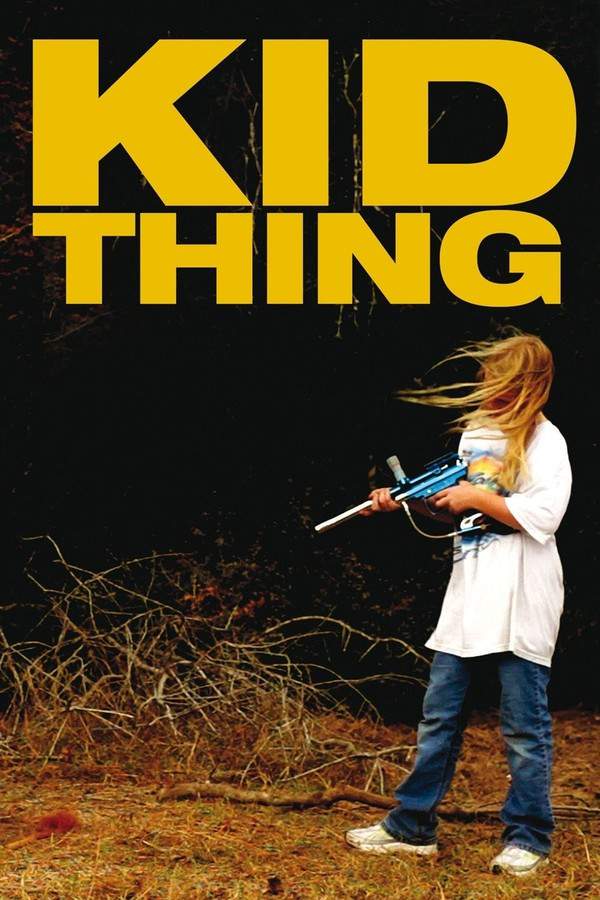
Kid-Thing (2013) movie poster

Plot Summary

Kid-Thing (2013) Plot Summary Explained

Release, runtime and language
2013 · 83 min · English
JustWatch #14,919 11
Directed by
David Zellner

Living outside Austin, ten-year-old Annie experiences a lonely childhood, her father preoccupied with demolition derbies. Her imagination fills the void until she discovers a woman’s desperate plea for help coming from an abandoned well. Faced with a challenging situation, Annie must decide whether to investigate and act, confronting a difficult choice and potential danger.

On this page (6)
  1. 1 Where to watch
  2. 2 What happens: full plot
  3. 3 Plot questions answered
  4. 4 Movie threads
  5. 5 Movies like Kid-Thing
  6. 6 Every angle

Where to watch

Where to Watch Kid-Thing (2013)

Where can you watch Kid-Thing? Stream, rent or buy it in the US, including on Philo, Fawesome and Kanopy: current JustWatch availability with up-to-date prices.

Streaming availability powered by JustWatch

Full plot summary · contains spoilers

What Happens in Kid-Thing: Full Plot Summary

The whole story of Kid-Thing (2013) explained, from the opening scene to the final frame: every key event, every twist and what it all adds up to. Read it as a quick recap before the sequel, to check a scene you missed, or to finally understand what really happened.

In the dusty, sun-baked expanse of rural Texas, 10-year-old Annie lives with her father Marvin on their goat farm, a world seemingly frozen in time with limited possibilities. Her daily life is enveloped in a sense of listlessness, as the motivation for school barely registers, and her father's struggles with intoxication only exacerbate her feelings of isolation. Marvin, more captivated by his demolition derby endeavors and the goats than by his own daughter, leaves Annie to navigate her loneliness.

In search of excitement, she ventures into the surrounding countryside, indulging in a morbid fascination with chaos. One fateful day, while exploring the nearby forest, Annie hears a haunting cry for help. Following the disembodied voice, she discovers a dry well with a woman named Esther trapped inside. Although initially reluctant, Annie is persuaded to rescue Esther, but her skepticism about the stranger's true motives lingers.

At home, Marvin attempts to teach Annie about hypnotizing chickens, aiming to impart lessons on unconditional love. Nevertheless, Annie's perspective remains unchanged; she counters that the animals only respond to Marvin's provisions. The next day, she returns to the well with gifts for Esther – sandwiches, Capri Sun, toilet paper, and even a walkie-talkie. Despite Esther's desperate calls for adult help, Annie holds firm in her resolve.

Days turn into an obsession as Annie finds solace in her new communication with Esther, sharing updates via their walkie-talkies about her offerings. However, when Esther’s responses become cold and accusatory, Annie’s defensiveness skyrockets. A cycle of silent neglect from Esther drives Annie further into her quest for understanding.

As the oppressive silence of the well drags on, Annie continues her offerings – drinks and bananas – but meets only a wall of stillness. In a final act of frustration, she throws a firecracker into the well, yet this explosive attempt fails to provoke any reaction from Esther. It is during this emotionally charged time that Annie witnesses Marvin suffer a heart attack while tending to their goats, and shockingly, she remains frozen in place, hesitant to act.

In the haunting aftermath of this traumatic episode, Annie feels an undeniable pull back to the well. She finds herself precariously perched at its edge, her legs dangling perilously over the chasm below. In a moment of unrestrained impulse, she takes a leap into the shadowy unknown, surrendering herself to whatever darkness awaits.

Last updated: November 17, 2024 at 23:10

Was this helpful?

Plot questions answered

Kid-Thing Plot Explained: Your Questions Answered

The questions people ask most about Kid-Thing (2013): what happens in the confusing scenes, why the characters do what they do, the twists, hidden details and what the ending means. Each answer contains spoilers.

Q1

Why does Annie refuse to get adult help for Esther?

Annie refuses to get adult help because she craves the sense of purpose and control that helping Esther provides. Having felt neglected and invisible by her father, Annie seizes this opportunity to be needed. Getting adults involved would strip away the only meaningful connection she has found, leaving her return to her lonely existence on the goat farm.

Foreshadowing: Earlier, Annie complains about her father's neglect and listlessness at home, establishing her deep need for significance.

  • Annie
  • Esther
  • adult help
  • neglect
  • trapped woman
Q2

Why does Esther's attitude change toward Annie?

Esther's attitude shifts from gratitude to coldness because Annie continues to bring her gifts and communicate but refuses to actually get her out of the well. After days of hoping Annie would bring adult help, Esther becomes frustrated and accusatory, feeling that Annie is playing a game rather than genuinely trying to rescue her.

Foreshadowing: Annie initially hesitates to rescue Esther, showing skepticism about the stranger's motives from the start.

  • Esther
  • Annie
  • communication
  • frustration
  • rescue
Q3

Why does Annie throw a firecracker into the well?

Annie throws a firecracker into the well out of desperation and frustration after weeks of one-sided communication. Despite her continued offerings, Esther has gone silent, and Annie resorts to drastic action to provoke any response, even a negative one.

Foreshadowing: The escalating cycle of silent neglect from Esther builds through previous failed attempts at connection.

  • firecracker
  • well
  • Annie
  • frustration
  • response
Q4

Why does Annie freeze when her father has a heart attack?

Annie freezes because she has been emotionally abandoned by her father for years. His neglect, focusing on demolition derbies and alcohol instead of her, has created a profound emotional distance. When he collapses, she feels paralyzed rather than compelled to help, reflecting the deep psychological impact of his chronic inattention.

Foreshadowing: Marvin's teaching about hypnotizing chickens and his inability to truly connect with Annie foreshadows their broken bond.

  • Annie
  • Marvin
  • heart attack
  • frozen
  • neglect
Q5

What happens when Annie jumps into the well?

The film leaves Annie's fate ambiguous. She leaps into the dark, descending into the same well where Esther was trapped. Whether she survives, finds Esther, or encounters something else remains completely open, the film ends with her surrendering to the unknown.

Foreshadowing: Annie's earlier return to the well edge, dangling her legs precariously, foreshadows this final act of surrender.

  • Annie
  • well
  • jump
  • ending
  • ambiguous
Q6

Why does Annie become so obsessed with Esther?

Annie becomes obsessed because Esther represents the first person who truly needs her. Living in emotional isolation on the goat farm, Annie finds meaning in being the one who can help. This new role, being important to someone, becomes addictive, especially for a child who feels invisible to her own father.

Foreshadowing: Annie's listlessness and disinterest in school stem from her underlying loneliness before discovering the well.

  • Annie
  • Esther
  • obsession
  • connection
  • loneliness
Q7

Why does Annie keep bringing gifts to Esther despite being asked to get help?

Annie continues bringing gifts because the act of giving is what satisfies her need to feel needed. Each sandwich, drink, or roll of toilet paper reinforces her role as Esther's savior. Getting Esther out would end this purpose, leaving Annie without the only thing that makes her feel valuable.

Foreshadowing: Marvin's failed attempt to teach Annie about unconditional love through chicken hypnosis directly contrasts with Annie's conditional, gift-based form of connection.

  • Annie
  • gifts
  • Esther
  • offerings
  • purpose
Q8

What does the ending mean?

The ending is intentionally ambiguous but suggests Annie seeking escape or connection in the only way she knows how, by surrendering to the darkness. After witnessing her father's collapse and feeling responsible for Esther's continued imprisonment, she chooses to descend into the unknown rather than face her fractured reality.

Foreshadowing: The entire film builds toward this moment of surrender, with Annie moving from curiosity to obsession to complete emotional break.

  • ending
  • ambiguous
  • well
  • jump
  • interpretation
Q9

Why is Marvin neglectful of Annie?

Marvin is negligent because he is consumed by his own struggles, his demolition derby obsession and alcohol use. Rather than actively cruel, he is simply emotionally absent, leaving Annie to navigate her loneliness largely on her own. His misguided attempts at connection, like the chicken hypnosis lesson, show he is unaware of how disconnected he has become.

Foreshadowing: The opening scenes establish Annie's listlessness directly stemming from her father's inattention.

  • Marvin
  • father
  • neglect
  • alcohol
  • demolition derby
Q10

Why does Annie decide to rescue Esther?

Annie decides to rescue Esther initially because the cry for help presents an exciting escape from her monotonous life. While she feels some skepticism about the stranger's motives, the possibility of doing something meaningful and adventurous outweighs her hesitation.

Foreshadowing: Annie's exploration of the countryside seeking excitement establishes her motivation for finding the well in the first place.

  • Annie
  • Esther
  • rescue
  • decision
  • help
Q11

What is the significance of the well in the story?

The well serves as a metaphor for Annie's emotional state, a dark place she is drawn to despite the danger. It represents both her desire to escape her lonely life and her unconscious pull toward the same emptiness she perceives in her own existence. The well is where neglected children end up, whether physically or metaphorically.

Foreshadowing: The entire narrative frames the well as the central mystery that pulls Annie away from her listless existence.

  • well
  • symbolism
  • darkness
  • escape
  • metaphor

Movie threads

More Movies Like Kid-Thing, by Mood & Story

Curated lists built around what makes Kid-Thing tick: the same mood, the same kind of story or the same emotional payoff. Each list explains why these movies belong together.

Movies about lonely childhoods and moral dilemmas like Kid-Thing

Neglected children face eerie mysteries that test their morality in bleak settings. If you appreciated the quiet, unsettling atmosphere of Kid-Thing, explore these movies that also feature isolated children confronting eerie mysteries and difficult moral choices. This thread gathers similar dramas set in desolate landscapes where a child's perspective drives a somber and ambiguous narrative.

  • lonely
  • somber
  • unsettling
  • desolate
  • morbid
  • oppressive
  • Tone: melancholic, unsettling, somber
  • Pacing: slow, deliberate
Why these movies?

The story pattern: Stories in this thread typically follow a lonely child protagonist navigating a world of adult neglect. Their mundane existence is punctuated by an encounter with something strange or disturbing—a mystery, a person in peril, or a moral test. The narrative unfolds slowly from the child's point of view, emphasizing their confusion and isolation, and often concludes with an ambiguous resolution that leaves the central dilemma unanswered.

Why they belong together: These movies are grouped together because they share a core focus on childhood isolation, a melancholic and oppressive tone, and a central plot driven by a moral or mysterious dilemma experienced by a young protagonist. The pacing is often deliberately slow, prioritizing atmosphere and character over plot resolution.


Slow burn movies with rural unease like Kid-Thing

Quiet, atmospheric stories where rural emptiness breeds tension and mystery. For viewers who liked the oppressive, quiet atmosphere of Kid-Thing, this list features movies that use rural settings to create a slow-building sense of dread. Discover similar dramas and thrillers where the emptiness of the landscape mirrors the internal isolation of the characters, leading to unsettling discoveries.

  • listless
  • oppressive
  • quiet
  • desolate
  • unsettling
  • atmospheric
  • Tone: melancholic, tense, oppressive
  • Pacing: slow burn, atmospheric
Why these movies?

The story pattern: The narrative pattern here is defined by its setting. A rural or remote location is not just a backdrop but an active element that contributes to a feeling of isolation and impending unease. The plot unfolds slowly, often focusing on a character's internal state or a mundane routine that is gradually disrupted by something strange or threatening lurking within the quiet environment. The climax is often understated, leaving a lingering sense of disquiet.

Why they belong together: These films are connected by their shared use of a rural setting to establish a specific mood of listless dread. The slow pacing, melancholic or tense tone, and focus on atmospheric buildup over fast-paced plot are key unifying factors. They deliver an experience of quiet tension that is more psychological than overtly violent.

If you liked this

Movies Like Kid-Thing

Similar movies to Kid-Thing: the same genre, themes or kind of story. Each one comes with its own plot summary, timeline and ending explained.

Browse all movie summaries

Every angle

Kid-Thing (2013) Explained: Plot, Timeline & Characters

Everything about Kid-Thing in one place: what happens in the plot summary, the timeline in chronological order, the characters and meaning and a spoiler-free summary. What's After the Movie adds the cast, box office and post-credit scenes.

Coming soon on iOS and Android

The Plot Explained Movie Summary App

Plot summaries, endings explained and timelines on your phone. Catch up on any movie in minutes, save your favorites and never miss a twist again.

Be the first to know when we launch. Your email stays private, always.

Learn more about the app