Plot Explained Spoilers guaranteed!
Plot Explained

Browse by genre

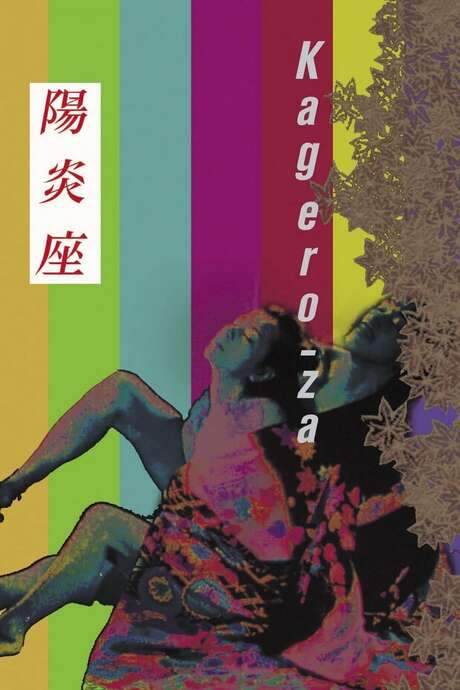
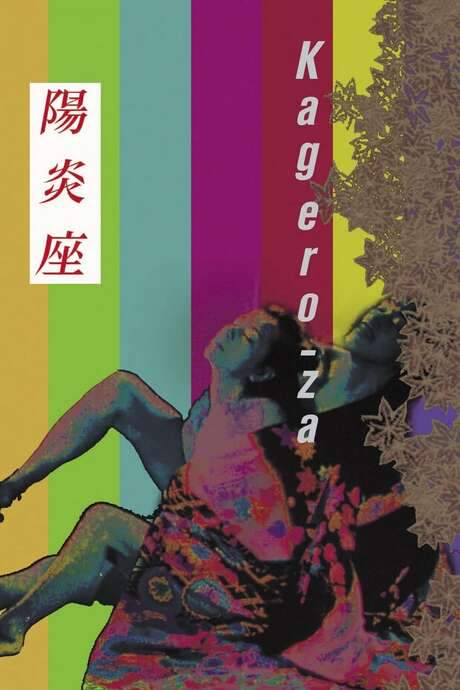
Kagero-za (1981) movie poster

Plot Summary

Kagero-za (1981) Plot Summary Explained

Release, runtime and language
1981 · 139 mins · Japanese
Loading streaming availability…
Directed by
Seijun Suzuki
Starring
Katsuo Nakamura, Yûsaku Matsuda, Michiyo Yasuda, Hyôe Enoki, Akaji Maro, Mariko Kaga

A 1920s playwright meets a beautiful woman who may be the ghost of his patron’s deceased wife.

On this page (6)
  1. 1 Where to watch
  2. 2 What happens: full plot
  3. 3 Plot questions answered
  4. 4 Movie threads
  5. 5 Movies like Kagero-za
  6. 6 Every angle
Loading streaming availability…

Full plot summary · contains spoilers

What Happens in Kagero-za: Full Plot Summary

The whole story of Kagero-za (1981) explained, from the opening scene to the final frame: every key event, every twist and what it all adds up to. Read it as a quick recap before the sequel, to check a scene you missed, or to finally understand what really happened.

In 1926 Tokyo, a Shinpa playwright named Matsuzaki, Yûsaku Matsuda, meets a stunning married woman whose name he never learns. After two chance encounters, they share a night together, only to discover that the room belongs to Shinako, Michiyo Yasuda, the wife of his patron, Baron Tamawaki. The moment twists from a private, almost reckless flirtation into a web of social tension and hidden loyalties that will reshape every character involved.

As the story unfolds, Matsuzaki learns a chilling truth about Tamawaki: he has two wives. His first wife was Irene, a German woman he fell in love with while studying abroad. To feel secure in Japan, he had her hair dyed black, and they returned as a Japanese woman named Ine. Yet Tamawaki’s ambitions do not stop at color or disguise; he later weds Shinako, a count’s daughter, a union he secured with money and status. The complex arrangement casts long shadows over every encounter, and Matsuzaki’s perception of love and obligation grows confounding and urgent. On the stairs outside a hospital, Matsuzaki speaks with Ine, a moment charged with memory and missed chances, though by then Ine should already have breathed her last within her hospital room.

A thread pulls Matsuzaki toward Kanazawa when he receives a letter from Shinako, inviting him to meet and promising a fourth rendezvous that could be life-threatening. Tamawaki also heads toward the same destination, pressing Matsuzaki to consider suicide with Shinako as a final act that would seal their fates. The chase becomes a perilous pursuit of truth, loyalty, and the boundaries of desire, as Matsuzaki makes a desperate escape and arrives at a peculiar theater called Kageroza.

Inside that strange venue, Shinako and Iwaki pursue him, while children perform a stage show about monsters. The performance abruptly shifts from fiction to a personal reckoning: the monsters on stage mirror Irene’s forgotten tragedy, and Shinako steps into the spotlight to voice her anger at being cast as a perpetual second choice. She recounts her own affair with Matsuzaki as a calculated act of revenge against the life that was not hers to claim. The line between stage play and real life blurs, and the theatre itself feels like a pressure cooker where hidden histories surface with terrible clarity.

When the theater collapses, the crowd erupts as news spreads that a body has been found in the pond following a double suicide. The immediate interpretation points to the intertwined fates of Iwaki and Shinako, yet Matsuzaki clings to his belief that Shinako might still be alive. Amid the festive aftermath and the echo of distant music, a quiet, eerie tension lingers: the sense that the truth resides not just in what happened, but in how the living choose to face what they have done.

In the final moments, Matsuzaki reaches a secluded, enigmatic room where Shinako awaits. He bows to his own waking self, acknowledging the confluence of consequence and reflection that has guided their lives. The two sit back-to-back, a visual and emotional convergence that suggests a shared, unresolved fate. The lines between creator and creation, between guilt and confession, between love and possession, are finally drawn in the intimate space where memory and desire press up against reality.

- Tamawaki, Katsuo Nakamura

- Shungo Matsuzaki, Yûsaku Matsuda

- Shinako, Michiyo Yasuda

- Ine, Eriko Kusuta

- Irene (not separately linked to an actor in the provided cast)
Last updated: October 09, 2025 at 14:22

Was this helpful?

Plot questions answered

Kagero-za Plot Explained: Your Questions Answered

The questions people ask most about Kagero-za (1981): what happens in the confusing scenes, why the characters do what they do, the twists, hidden details and what the ending means. Each answer contains spoilers.

Q1

Why does Shinako have an affair with Matsuzaki?

Shinako's affair with Matsuzaki is revealed as an act of revenge against her husband Tamawaki. At the Kageroza theater, she publicly declares that she became Matsuzaki's lover specifically because she was forced to be a second wife, married only for Tamawaki's status and wealth. She resented being treated as inferior to Ine, Tamawaki's first wife, and used the affair to strike back at the life that was not hers to choose.

Foreshadowing: The early scenes establish Shinako's marriage as one of convenience, arranged by Tamawaki for social climbing, planting the seed for her eventual betrayal.

  • Shinako revenge affair motive Tamawaki second wife
Q2

What is the truth about Tamawaki's two wives?

Tamawaki has two wives: Ine and Shinako. Ine was originally Irene, a German woman Tamawaki loved while studying abroad. To bring her back to Japan without social stigma, he dyed her hair black and renamed her Ine, presenting her as a Japanese woman. Later, Tamawaki married Shinako, a count's daughter, solely for her wealth and status. This polygamous arrangement keeps Ine hidden as a shameful secret while Shinako lives openly as his wife.

Foreshadowing: The initial room revelation, where Matsuzaki discovers Shinako using Ine's room, hints at the unusual living arrangement.

  • Tamawaki wives Ine Irene Shinako polygamy German wife
Q3

What happened to Irene/Ine?

Ine is the Japanese name for Irene, Tamawaki's first wife. She was a German woman whom Tamawaki loved abroad, but to keep her in Japan he forced her to dye her hair black and assume a Japanese identity. Ine eventually became ill and was hospitalized. According to the timeline, she dies in her hospital room after Matsuzaki speaks with her on the hospital stairs. Her tragic fate represents the cost of Tamawaki's deception and possession.

Foreshadowing: The hospital stairs encounter where Matsuzaki speaks with Ine foreshadows her imminent death.

  • Irene Ine death hospital Tamawaki German wife tragedy
Q4

Why does Tamawaki push Matsuzaki to commit suicide with Shinako?

Tamawaki travels to Kanazawa specifically to coerce Matsuzaki into a suicide pact with Shinako. This brutal demand reveals Tamawaki's controlling nature, he would rather see them both dead than accept the public humiliation of his wife's affair. The suicide would also eliminate the scandal and preserve his status, treating the lovers' death as a final solution to his honor problem.

Foreshadowing: Tamawaki's earlier control over both wives and his emphasis on social status foreshadow his willingness to use deadly force to maintain his reputation.

  • Tamawaki suicide pact coercion Kanazawa honor control
Q5

What does the play at Kageroza theater represent?

At Kageroza, children perform a play about monsters that directly mirrors Irene's tragic story, a woman hidden away and tormented as a shameful secret wife. The theatrical performance suddenly transforms from fiction into reality when Shinako steps onto the stage. There she confronts the audience and reveals her own resentment at being a second wife, linking her personal suffering to Irene's tragedy. The play collapses the boundary between theater and life, exposing the hidden truths of Tamawaki's household.

Foreshadowing: The choice of a monster story mirrors how Ine/Irene was treated as a shameful secret, hidden from Japanese society.

  • Kageroza play monsters Irene tragedy Shinako stage confession
Q6

Is Shinako actually dead at the end of Kagero-za?

The ending leaves Shinako's fate deliberately ambiguous. After the theater collapses, villagers report finding a body in the pond from a suspected double suicide, initially believed to be Iwaki and Shinako. However, Matsuzaki insists throughout that Shinako might still be alive. In the final scene, he finds her alive in a mysterious room, suggesting the reported suicide may have been mistaken, or never occurred. This ambiguity is central to the film's unresolved tension.

Foreshadowing: Matsuzaki's persistent belief that Shinako survives despite the reports plants doubt about her death from the moment the body is discovered.

  • Shinako death double suicide ambiguous ending alive Kageroza
Q7

Why does the theater collapse in Kagero-za?

The theater collapse serves as a literal and symbolic breaking point. The Kageroza has functioned as a liminal space where hidden truths surface, when Shinako's play reveals Irene's tragedy and her own revenge, the emotional and psychological weight becomes unbearable. The collapse follows immediately after these revelations, as if the theater itself cannot contain the exposed secrets. It also creates the chaotic scene where the double suicide is reported, deepening the mystery.

Foreshadowing: The escalating revelations on stage build toward a breaking point, making the collapse feel like narrative catharsis.

  • theater collapse Kageroza destruction symbolic breaking point secrets
Q9

Why does Matsuzaki go to Kanazawa after receiving Shinako's letter?

Matsuzaki travels to Kanazawa because Shinako explicitly invites him, warning that their fourth meeting would be life-threatening. Despite the danger, he goes driven by love and curiosity about what she wants to tell him. Tamawaki also arrives in Kanazawa with a sinister agenda, pressuring Matsuzaki to commit suicide with Shinako. The city becomes the setting where the affair's consequences reach their climax.

Foreshadowing: The earlier meetings in Tokyo established the risky nature of their relationship, making the life-threatening warning believable.

  • Kanazawa Matsuzaki journey Shinako letter meeting dangerous
Q10

Who is Iwaki and what happens to him?

Iwaki is a character who pursues Matsuzaki into the Kageroza theater alongside Shinako during the chaotic climax. Following the theater collapse, Iwaki is among those believed to have died in the pond from the apparent double suicide. His fate remains tied to the reported deaths, though the film's ambiguity extends to whether he actually perished.

Foreshadowing: Iwaki's pursuit of Matsuzaki into the theatrical space places him at the center of the climactic events.

  • Iwaki death double suicide theater collapse pursuit
Q11

What does it mean when Matsuzaki bows to himself at the end?

In the final moments, Matsuzaki bows to his own waking self, a gesture that symbolizes his acknowledgment of the convergence between his creative world and reality. Throughout the film, he has been navigating blurred lines between truth and fiction, especially at the theatrical climax where the play became reality. The bow represents his reconciliation with this fusion of identities, accepting the consequences and reflections that have shaped his life. Sitting back-to-back with Shinako afterward suggests a shared, unresolved fate between them, neither fully alive nor dead, caught between worlds.

Foreshadowing: The film's consistent blurring of reality and theater prefigured this moment of self-recognition.

  • Matsuzaki bow self identity reconciliation back-to-back Shinako symbolic ending

Movie threads

More Movies Like Kagero-za, by Mood & Story

Curated lists built around what makes Kagero-za tick: the same mood, the same kind of story or the same emotional payoff. Each list explains why these movies belong together.

Erotic ghost stories with psychological tension like Kagero-za

Romantic encounters where love and death are inextricably intertwined. If you liked the ambiguous romance and ghostly presence in Kagero-za, explore more movies like it. This collection features stories where love and death collide, featuring mysterious figures that haunt the living through desire and memory rather than fear.

  • dreamlike
  • erotic
  • melancholic
  • unsettling
  • romantic
  • atmospheric
  • Tone: dark, melancholic, erotic
  • Pacing: variable, atmospheric
Why these movies?

The story pattern: These narratives typically follow a protagonist drawn into an obsessive, often tragic, romance with a spectral or illusory figure. The plot revolves around uncovering the truth behind this mysterious lover, questioning the protagonist's sanity, and exploring themes of memory, loss, and possession, often leading to an ambiguous or tragic conclusion.

Why they belong together: Movies are grouped here for their shared focus on a specific type of haunting—one rooted in eroticism and psychology rather than horror. They create a similar mood of melancholic desire and unsettling ambiguity, where the line between reality and illusion is the central conflict.

Movies with unreliable reality and a dreamlike feel like Kagero-za

Stories where perception fractures and the real world becomes uncertain. For viewers who enjoyed the psychological disorientation of Kagero-za, this list features similar movies where reality is ambiguous. Discover films that challenge perception, blend dreams with waking life, and leave you questioning the narrative's truth.

  • dreamlike
  • claustrophobic
  • anxious
  • unsettling
  • psychological
  • disorienting
  • Tone: dark, unsettling, ambiguous
  • Pacing: variable, slow burn
Why these movies?

The story pattern: The narrative pattern involves a protagonist, often an artist or isolated figure, whose grip on reality weakens as they are drawn into a confusing situation. The plot structure itself may mimic a dream or play with timelines, using visual and narrative techniques to blur lines and prioritize psychological disturbance over clear answers, typically ending without full resolution.

Why they belong together: These films are connected by their core commitment to destabilizing the viewer's sense of reality. They share a dreamlike aesthetic, a complex narrative structure, and a heavy, often dark, emotional weight that comes from the protagonist's (and audience's) struggle to distinguish truth from illusion.

If you liked this

Movies Like Kagero-za

Similar movies to Kagero-za: the same genre, themes or kind of story. Each one comes with its own plot summary, timeline and ending explained.

Browse all movie summaries

Every angle

Kagero-za (1981) Explained: Plot, Timeline & Characters

Everything about Kagero-za in one place: what happens in the plot summary, the timeline in chronological order, the characters and meaning and a spoiler-free summary. What's After the Movie adds the cast, box office and post-credit scenes.

Coming soon on iOS and Android

The Plot Explained Movie Summary App

Plot summaries, endings explained and timelines on your phone. Catch up on any movie in minutes, save your favorites and never miss a twist again.

Be the first to know when we launch. Your email stays private, always.

Learn more about the app