Plot Explained Spoilers guaranteed!
Plot Explained

Browse by genre

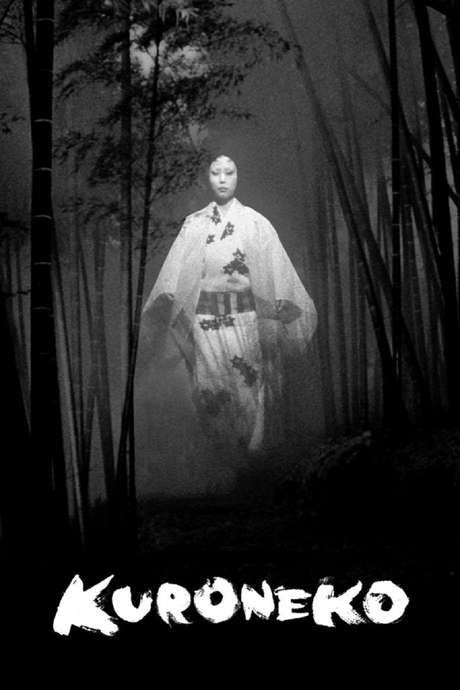
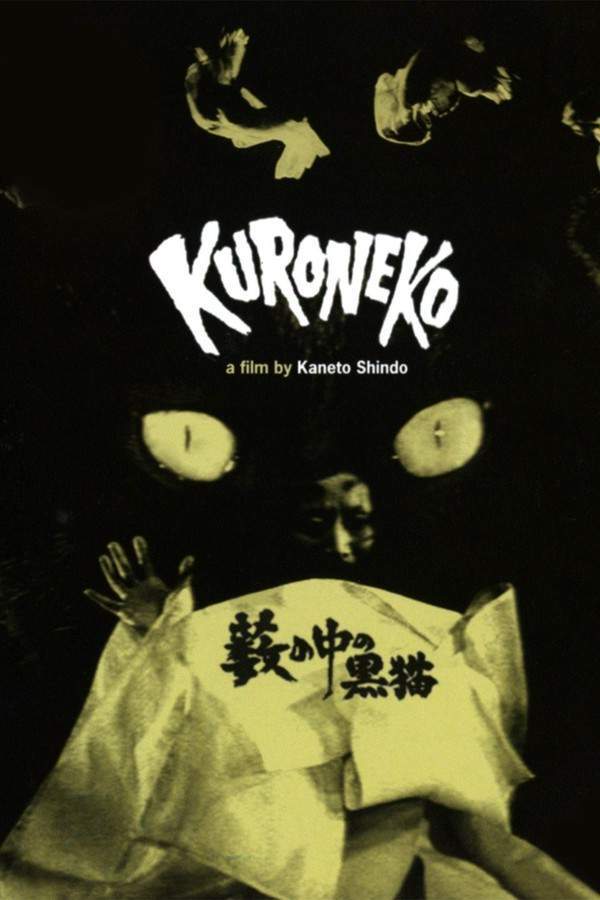
Kuroneko (1968) (2010) movie poster

Plot Summary

Kuroneko (1968) (2010) Plot Summary Explained

Release, runtime and language
2010 · 99 min · Japanese
Directed by
Kaneto Shindô

Set in feudal Japan, a warrior is sent to investigate a cursed gate where samurai are mysteriously killed. He discovers two mysterious women who bear a striking resemblance to those he has lost. The film explores the devastating consequences of war and the complexities of societal betrayal through striking visuals, a memorable musical score, and elements of traditional Japanese theater. It's a haunting story of loss, vengeance, and the blurring lines between reality and the supernatural.

On this page (6)
  1. 1 Where to watch
  2. 2 What happens: full plot
  3. 3 Plot questions answered
  4. 4 Movie threads
  5. 5 Movies like Kuroneko (1968)
  6. 6 Every angle

Where to watch

Where to Watch Kuroneko (1968) (2010)

Where can you watch Kuroneko (1968)? Stream, rent or buy it in the US, including on Amazon Video, Apple TV Store and Fandango At Home: current JustWatch availability with up-to-date prices.

Streaming availability powered by JustWatch

Full plot summary · contains spoilers

What Happens in Kuroneko (1968): Full Plot Summary

The whole story of Kuroneko (1968) (2010) explained, from the opening scene to the final frame: every key event, every twist and what it all adds up to. Read it as a quick recap before the sequel, to check a scene you missed, or to finally understand what really happened.

Yone and her daughter-in-law Shige live peacefully in a bamboo grove, but their lives take a tragic turn when a troop of samurai brutally assaults and murders them, leaving their home in ashes. As a haunting reminder, a black cat appears, licking at the lifeless bodies of the victims.

Resurfacing as ethereal specters with an elegant appearance, the women wait at Rajōmon, their spirits filled with vengeance. They track down the samurai responsible for their demise and lure them to an illusory mansion nestled within the very bamboo grove that once stood as their home. In a lethal twist, they seduce and then ruthlessly kill the samurai, tearing at their throats with ferocity reminiscent of cats on the prowl.

Meanwhile, in the northern regions of Japan, a fierce battle unfolds against the Emishi. Amidst the chaos, a fortunate young warrior named Hachi manages to slay the enemy general, Kumasunehiko, and presents the severed head to Governor Minamoto no Raikō. Claiming glory under the name Gintoki, he is bestowed the title of samurai for his bravery. However, his triumph is short-lived as he returns home only to discover it burned to the ground, with his mother and wife mysteriously gone.

Driven by duty, Raikō instructs Gintoki to eliminate the vengeful ghosts that are terrorizing the samurai. Upon his fateful encounter with the two spectral women, Gintoki realizes that they are none other than Yone, his mother, and Shige, his wife. Bound by their pact with the underworld, they are compelled to kill him as a consequence of his newfound status as a samurai. Yet, Shige unexpectedly defies this pact, choosing to spend seven nights of love with Gintoki, an act that ultimately leads her to be condemned to the underworld.

In a moment of sorrowful reflection, Gintoki reports back to Raikō, asserting that he has vanquished one of the ghosts. His struggles lead him to confront his spectral mother at Rajōmon, where she attempts to ensnare samurai once more. In a fit of desperation, upon recognizing her ghostly form in a pool of water, he strikes her with his sword, severing her arm, which takes on a feline appearance. Bringing this grotesque trophy to Raikō, Gintoki falsely claims it as evidence of his triumph against the second ghost.

Encouraged by Raikō’s commendations, Gintoki learns he must undergo seven days of purification rituals to complete his path to heroism. During this time, he is visited by Yone, who poses as a seer sent to banish evil spirits. Cleverly, she deceives Gintoki into relinquishing the severed arm, before soaring through the ceiling into the night sky. Lost in despair, Gintoki meanders through the forest to the cottage where he first met the ghosts, only to collapse amidst the ruins of his family home, now revealed in its charred remains. As snow gently falls upon him, the mournful sound of a cat's meow lingers in the distance, echoing the tragic legacy of vengeance and love intertwined in his heart.

Last updated: November 15, 2024 at 17:18

Was this helpful?

Plot questions answered

Kuroneko (1968) Plot Explained: Your Questions Answered

The questions people ask most about Kuroneko (1968) (2010): what happens in the confusing scenes, why the characters do what they do, the twists, hidden details and what the ending means. Each answer contains spoilers.

Q1

Why are Yone and Shige forced to kill samurai?

Yone and Shige made a pact with the underworld after their violent deaths. This pact binds their spirits to seek vengeance against samurai specifically, the class of warriors who murdered them. The pact compels them to lure samurai to their deaths as a condition of their existence as ghosts. When Gintoki becomes a samurai, he falls under this same magical obligation, which is why they are ultimately forced to try to kill their own family member.

Foreshadowing: The black cat appears at their deaths, licking their bodies, establishing the supernatural covenant that binds them.

  • yone
  • shige
  • pact
  • underworld
  • vengeance
  • samurai
  • kill
Q2

Why does Shige spend the seven nights with Gintoki?

Shige chooses to defy the underworld pact because her love for Gintoki outweighs her obligation to the supernatural bargain. Rather than killing him immediately as the pact demands, she decides to spend seven nights of passionate reunion with him. This act of defiance, choosing love over duty, results in her condemnation to the underworld, where she is dragged away and destroyed for breaking the pact.

Foreshadowing: Their reunion at the illusory mansion is bittersweet from the start, as Shige knows their time is limited.

  • shige
  • love
  • pact
  • defiance
  • seven nights
  • condemnation
Q3

Why does Gintoki lie to Raikō about killing one ghost?

Gintoki lies to Raikō because he cannot bring himself to admit the truth, that the ghosts are his own mother and wife. Reporting that he vanquished one ghost is a desperate attempt to maintain his honor as a samurai while hiding the devastating reality of his family's fate. This lie allows him to continue his duties without revealing the personal tragedy consuming him.

Foreshadowing: Gintoki's hesitation during the encounter and his emotional turmoil hint at his unwillingness to fully confront what he's facing.

  • gintoki
  • raiko
  • lie
  • honor
  • cover up
Q4

What is the black cat's significance in the story?

The black cat appears immediately after Yone and Shige's deaths, licking their bodies, symbolizing the supernatural pact that binds them to the underworld. The cat represents the gateway between the living and the dead, and its presence marks the moment the women's spirits become bound to their vengeful purpose. The cat imagery continues through Yone's severed arm, which takes on a feline appearance, literally showing the transformation of the women into instruments of supernatural vengeance.

Foreshadowing: The cat appears before any supernatural events, establishing it as the spiritual catalyst for the entire tragedy.

  • black cat
  • supernatural
  • pact
  • symbol
  • cat imagery
Q5

Why does Yone's severed arm look like a cat's paw?

Yone's arm physically transforms into a cat's paw because the supernatural pact has corrupted her spectral form. The black cat that appeared at her death has merged with her spirit, giving her feline characteristics. When Gintoki strikes her in the pool of water reflection, the injury reveals this corruption, her arm has become that of a predator, mirroring how she and Shige hunt and kill samurai with claw-like ferocity.

Foreshadowing: The women kill samurai 'with ferocity reminiscent of cats on the prowl,' establishing the cat motif throughout their vengeful acts.

  • yone
  • arm
  • cat
  • paw
  • transformation
  • corruption
Q6

Why can't Yone and Shige simply find peace?

The women cannot find peace because they are bound by a supernatural pact made at the moment of their deaths. This pact with the underworld demands vengeance as payment for their murders, they must kill samurai until their quota is fulfilled. Only by completing this obligation could they potentially rest, but their connection to Gintoki complicates everything. Shige's defiance leads to her destruction, while Yone remains trapped, unable to fully complete her mission or escape.

Foreshadowing: The film establishes early that the spirits 'wait at Rajōmon, their spirits filled with vengeance', they did not choose this path but are bound to it.

  • yone
  • shige
  • peace
  • underworld
  • pact
  • unfinished business
Q7

Why does Yone trick Gintoki during the purification ritual?

Yone disguises herself as a seer to trick Gintoki because she needs to reclaim her severed arm. Without it, she cannot fully restore her power as a vengeful spirit. Knowing Gintoki is vulnerable during his purification and seeking spiritual guidance, she exploits his desperation. By deceiving him into giving back the arm, she escapes back to the underworld to continue her unfinished vengeance.

Foreshadowing: The arm was Gintoki's only proof of victory, and Yone's spectral nature was already established as cunning in how she lures samurai.

  • yone
  • trick
  • seer
  • purification
  • arm
  • escape
Q8

What does Gintoki's collapse at the end mean?

Gintoki collapses because he has lost everything, his family, his honor, and any chance of redemption. After his mother's escape and the destruction of his wife, he wanders back to the ruins of his home, the physical manifestation of his shattered life. The collapse represents the complete psychological break of a man torn between duty and love, caught in a curse that destroyed his family twice. The snow falling on him and the distant cat's meow reinforce the bleak, hopeless conclusion.

Foreshadowing: The final scene returns to the bamboo grove where everything began, mirroring the opening tragedy and completing the circular tragedy.

  • gintoki
  • collapse
  • ending
  • despair
  • ruins
  • home
Q9

How did Gintoki survive the battle but lose his family?

Gintoki was fighting in northern Japan against the Emishi while his home was attacked by a separate group of samurai. The brutal assault on Yone and Shige happened in a different location during the same general period of war. After slaying General Kumasunehiko and earning his samurai title from Raikō, Gintoki returned to find his home burned and his family missing, killed by samurai who happened upon his isolated house during the chaos of wartime.

Foreshadowing: The timeline shows these events happening in parallel, Gintoki's glory in battle while tragedy unfolds at home.

  • gintoki
  • battle
  • survival
  • war
  • home burned
Q10

Why are the ghosts forced to kill their own family member?

The pact with the underworld does not distinguish between strangers and family. When Gintoki becomes a samurai, he automatically falls under the same category as the men who killed Yone and Shige, he is a samurai, and the pact demands vengeance against all samurai regardless of personal bonds. The supernatural contract is absolute and impersonal. This is what makes the tragedy so devastating: the women must destroy their own son and husband because the magical lawoverride personal love.

Foreshadowing: The pact was made at the moment of their deaths, before they knew Gintoki would become a samurai.

  • family
  • pact
  • kill
  • samurai
  • obligation
  • underworld law

Movie threads

More Movies Like Kuroneko (1968), by Mood & Story

Curated lists built around what makes Kuroneko (1968) tick: the same mood, the same kind of story or the same emotional payoff. Each list explains why these movies belong together.

Atmospheric ghost stories with tragic roots like Kuroneko (1968)

Supernatural tales where vengeful spirits are born from profound human tragedy. If you liked the sorrowful vengeance and haunting atmosphere of Kuroneko, explore movies like it. This selection focuses on supernatural horror and drama films where ghosts are tragic figures, born from betrayal, war, or loss, creating a mood that is somber, eerie, and emotionally resonant.

  • haunting
  • sorrowful
  • eerie
  • vengeful
  • tragic
  • atmospheric
  • Tone: dark, melancholic, sorrowful
  • Pacing: slow, deliberate
Why these movies?

The story pattern: Narratives in this thread often involve a tragic inciting event—such as murder, betrayal, or war—that creates a restless spirit. The plot then explores the interaction between the living and the dead, frequently involving a character confronting a ghostly presence tied to their own past or a societal wrong. The journey is one of uncovering hidden truths and grappling with the ethics of vengeance versus peace.

Why they belong together: Movies are grouped here because they share a core premise: ghosts as manifestations of tragic history. They prioritize a melancholic, atmospheric mood over jump scares, and use the supernatural to explore heavy themes like grief, loss, and the cyclical nature of violence. The emotional weight is consistently high.

Slow burn folk horror with bleak endings like Kuroneko (1968)

Meditative stories where ancient curses and societal betrayal lead to bleak despair. Fans of Kuroneko's measured pace and folkloric horror will find similar movies here. These films feature curses, vengeful spirits rooted in tradition, and a slow unfolding of terror against a historical or rural backdrop, often leading to hopeless and tragic conclusions for the protagonists.

  • folk horror
  • slow burn
  • atmospheric
  • bleak
  • eerie
  • cursed
  • Tone: dark, bleak, eerie
  • Pacing: slow burn, atmospheric
Why these movies?

The story pattern: The narrative pattern involves an individual or outsider encountering a community or location bound by a dark tradition or curse. The horror unfolds gradually, through atmosphere and implication rather than sudden events. The protagonist is often powerless against the ancient, systemic nature of the supernatural force, leading to an ending that affirms the curse's power rather than breaking it.

Why they belong together: These films are united by their use of folkloric elements as the source of horror, a deliberate and atmospheric slow-burn pacing, and a generally bleak outlook. They explore how tradition and superstition can mask profound darkness, and the experience is more about existential dread than survival.

If you liked this

Movies Like Kuroneko (1968)

Similar movies to Kuroneko (1968): the same genre, themes or kind of story. Each one comes with its own plot summary, timeline and ending explained.

Browse all movie summaries

Every angle

Kuroneko (1968) (2010) Explained: Plot, Timeline & Characters

Everything about Kuroneko (1968) in one place: what happens in the plot summary, the timeline in chronological order, the characters and meaning and a spoiler-free summary. What's After the Movie adds the cast, box office and post-credit scenes.

Coming soon on iOS and Android

The Plot Explained Movie Summary App

Plot summaries, endings explained and timelines on your phone. Catch up on any movie in minutes, save your favorites and never miss a twist again.

Be the first to know when we launch. Your email stays private, always.

Learn more about the app