Plot Explained Spoilers guaranteed!
Plot Explained

Browse by genre

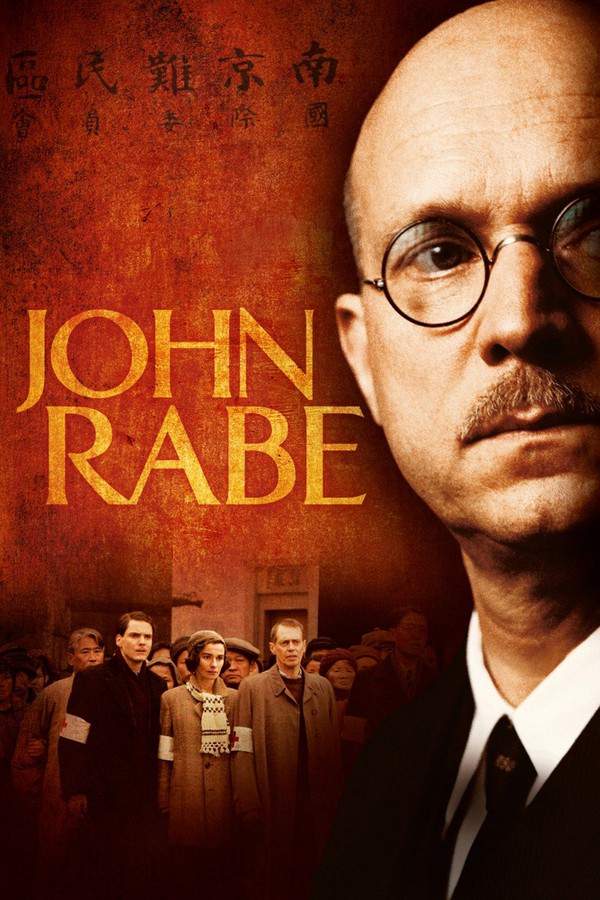
John Rabe (2009) movie poster

Characters & Themes

John Rabe (2009) Characters, Setting & Themes Explained

Release, runtime and language
2009 · 134 mins · German
Loading streaming availability…
Directed by
Florian Gallenberger
Starring
Steve Buscemi, Daniel Brühl, Akira Emoto, Teruyuki Kagawa, Anne Consigny, Shaun Lawton

History Needs Extraordinary Heroes A true-story account of a German businessman who saved more than 200,000 Chinese during the Nanjing massacre in 1937-38.

On this page (8)
  1. 1 Where to watch
  2. 2 Characters explained (2)
  3. 3 Where & when it takes place
  4. 4 Themes & meaning (2)
  5. 5 Character & meaning questions
  6. 6 Movie threads
  7. 7 Movies like John Rabe
  8. 8 Every angle
Loading streaming availability…

2 main characters · contains spoilers

John Rabe Characters Explained: Who Is Who

The main characters of John Rabe (2009), heroes and villains: what drives them, how they change over the course of the story and what each of them reveals about the film's bigger ideas.

  • John Rabe

    played by Ulrich Tukur

    John Rabe is portrayed as a devoted and resourceful German businessman who becomes an unlikely hero in a time of crisis. His initial reluctance transforms into determination as he leads efforts to safeguard the lives of thousands. Rabe's character embodies courage, leadership, and deep humanity, particularly as he navigates his complex relationship with the Japanese authorities and the foreign community.

    • 🦸 Hero
    • 🇩🇪 German
    • 🏦 Businessman
  • Dr. Robert Wilson

    played by Steve Buscemi

    Dr. Robert Wilson is the American head doctor of a local hospital, initially skeptical of Rabe due to ideological differences. As the story unfolds, he develops a friendship with Rabe, revealing his compassionate nature and commitment to saving lives. Wilson's character adds depth to the narrative, illustrating the interconnectedness of individuals in a crisis.

    • 👨‍⚕️ Doctor
    • 🇺🇸 American
    • 🤝 Ally

Last updated: September 29, 2026 at 10:39

Was this helpful?

Setting

Where and When Does John Rabe Take Place?

The setting of John Rabe (2009): the year and time period, the places and locations, and how they shape the characters, the mood and the tension of the story.

Time period

Late 1937

The late 1930s was a tumultuous period characterized by heightened tensions in East Asia, culminating in the Second Sino-Japanese War. This era saw atrocities committed during the invasion of China by Japan, particularly in Nanjing, which became a flashpoint for humanitarian efforts. The international community's response, as depicted in the film, highlights themes of bravery, sacrifice, and the struggle for survival.

Location

Nanjing

Nanjing, once the capital of China, is a city rich in history and culture. In late 1937, it was the epicenter of a significant historical event marked by the Nanjing Massacre during the Second Sino-Japanese War. This city, known for its vibrant past, becomes a place of refuge and conflict, as John Rabe and the international committee attempt to protect civilians amid brutal military actions.

  • 🏙️ City
  • 🇨🇳 China
  • 🏛️ Historical

Last updated: September 29, 2026 at 10:39

Was this helpful?

2 major themes

John Rabe Meaning: Themes & Message Explained

What is John Rabe (2009) really about? The emotional, social and philosophical themes the film keeps returning to, its symbolism and the message beneath the surface.

  • Humanitarianism

    The film prominently explores the theme of humanitarianism as John Rabe and his associates strive to create a safety zone for civilians amidst war. Their efforts to protect innocent lives reflect the morality and ethical dilemmas faced during times of conflict. The character dynamics highlight the importance of solidarity and compassion in dire situations.

  • War

    War serves as a backdrop to the narrative of 'John Rabe,' showcasing the chaos and tragedy that ensue during military conflict. The brutal realities faced by civilians contrast with the bureaucratic attempts at establishing safety. This theme underscores the impact of war on human lives and the delicate balance between survival and morality.

Last updated: September 29, 2026 at 10:39

Was this helpful?

Character & theme questions

John Rabe Characters & Meaning: Your Questions Answered

The questions people ask about John Rabe (2009): who the characters really are, their relationships, what the symbols mean, where it takes place and what the movie is really about. Each answer contains spoilers.

Q1

Where is the movie set and what historical event does it portray?

The film is set in Nanjing, China, in late 1937 during the Nanjing Massacre, a major atrocity of the Second Sino-Japanese War. Once the capital of China and a city rich in history and culture, Nanjing becomes the epicenter of brutal military actions carried out by invading Japanese forces. The story follows the international community's efforts to protect civilians inside the city as the violence unfolds around them.

  • nanjing
  • china
  • setting
  • second sino-japanese war
  • nanjing massacre
Q2

When did the Nanjing massacre take place?

The Nanjing massacre took place from December 1937 into early 1938, following the Japanese capture of the city. It occurred during the broader Second Sino-Japanese War, which had been escalating across East Asia throughout the late 1930s. The film focuses specifically on the six-week period of occupation when atrocities against Chinese civilians were carried out on a massive scale.

  • 1937
  • 1938
  • second sino-japanese war
  • nanjing massacre timeline
Q3

Is John Rabe based on a real person?

John Rabe was a real German businessman and Nazi Party member who lived in China to oversee Siemens operations. During the fall of Nanjing, he used his German nationality and business connections to lead the Nanjing International Safety Zone Committee, sheltering an estimated 200,000 or more Chinese civilians from Japanese troops. His diary, discovered after the war, became a key historical document about the massacre.

  • john rabe real person
  • true story
  • siemens
  • nazi party
Q4

What was the Nanjing Safety Zone?

The Nanjing Safety Zone was a roughly four-square-kilometer area in the city where Chinese civilians could take refuge during the Japanese occupation. It was organized by a small group of foreign residents, led by John Rabe, who used diplomatic channels and international visibility to discourage Japanese troops from entering. The zone became the central setting of the film and represents one of the most remarkable civilian-led humanitarian operations of the 20th century.

  • nanjing safety zone
  • humanitarian
  • international committee
Q5

What was John Rabe's role during the siege of Nanjing?

John Rabe served as chairman of the Nanjing International Safety Zone Committee, the body of foreign businesspeople and missionaries who coordinated civilian protection. He spent weeks patrolling the zone's perimeter, personally intervening to stop looting, assault, and execution by Japanese soldiers. His leadership is credited with saving the lives of hundreds of thousands of refugees who otherwise would have been killed.

  • john rabe
  • chairman
  • safety zone committee
  • civilian protection
Q6

Who is Dr. Robert Wilson in the film?

Dr. Robert Wilson is the American head doctor at the University Hospital in Nanjing, played by Steve Buscemi. A real historical figure, Wilson was initially skeptical of Rabe because of his Nazi Party membership, but the two men formed a close friendship as they worked side by side treating wounded refugees. His character represents the broader network of foreign doctors and missionaries who risked their lives to help Chinese civilians.

  • dr robert wilson
  • american doctor
  • steve buscemi
  • nanjing hospital
Q7

What is the main theme of John Rabe?

The central theme of the film is humanitarianism in the face of extreme violence. It shows how a small group of ordinary foreigners, led by a German businessman, risked their own safety to protect more than 200,000 Chinese civilians. The story emphasizes that moral courage and solidarity can emerge even from unlikely figures, including a member of the Nazi Party acting against his government's Japanese allies.

  • humanitarianism
  • moral courage
  • solidarity
  • nanjing
Q8

What does the film say about war and civilian suffering?

John Rabe portrays war as a force that strips away social order and exposes civilians to mass violence, sexual assault, and displacement. By contrasting the organized safety efforts of the international committee with the chaos outside the zone, the film highlights the thin line between survival and death in occupied territory. The brutal realities depicted are presented not as spectacle, but as a reminder of the human cost when international law and humanitarian norms collapse.

  • war
  • civilian suffering
  • nanjing massacre
  • international law
Q9

Why is John Rabe sometimes compared to Oskar Schindler?

John Rabe is often called the 'Oskar Schindler of China' because both men used their business standing and foreign nationality to shield large numbers of people from mass murder during World War II. Rabe, like Schindler, was also a member of the Nazi Party, which makes his humanitarian actions morally complicated but historically remarkable. The comparison underscores how individual conscience sometimes operated independently of state ideology during the atrocities of the era.

  • john rabe
  • oskar schindler
  • comparison
  • nazi
  • hero
Q10

How many Chinese civilians did John Rabe help save?

The Nanjing Safety Zone Committee led by John Rabe is credited with sheltering more than 200,000 Chinese refugees over roughly six weeks. Inside the zone, Rabe and his fellow committee members distributed food, set up hospitals, and personally confronted Japanese soldiers to prevent killings and rapes. While exact figures remain debated by historians, the scale of the rescue is widely regarded as one of the largest civilian protection efforts of the Second Sino-Japanese War.

  • 200000 civilians
  • refugees
  • safety zone
  • rescue
Q11

Was John Rabe actually a member of the Nazi Party?

Yes, John Rabe was a member of the Nazi Party (NSDAP) and held the rank of local group leader in Nanjing, which is why he is sometimes referred to as the 'Nazi who saved China.' His party membership initially gave him a degree of protection from Japanese authorities, since Germany and Japan were allied. The film explores this contradiction by showing how Rabe set aside ideology to focus on saving human lives.

  • nazi party
  • nsdap
  • ideology
  • german businessman
Q12

How does the film portray John Rabe's relationship with his wife?

John Rabe's wife and son had been evacuated from Nanjing before the worst of the violence, and their absence weighs on him throughout the siege. The film uses her departure to highlight the personal sacrifices Rabe made by staying behind to lead the safety zone. Their reunion near the end serves as one of the few moments of genuine relief in an otherwise heavy story, reinforcing the bittersweet tone of the entire narrative.

  • john rabe wife
  • family
  • reunion
  • bittersweet ending

Movie threads

More Movies Like John Rabe, by Mood & Story

Curated lists built around what makes John Rabe tick: the same mood, the same kind of story or the same emotional payoff. Each list explains why these movies belong together.

Wartime humanitarian heroes like John Rabe

Ordinary outsiders risk everything to shield the innocent when civilization collapses. If you were moved by John Rabe, you'll find more powerful true-story dramas here about ordinary people who risked everything to save civilians during wartime atrocities. These movies like John Rabe spotlight unlikely heroes, fragile safety zones, and the courage to act when the world looks away. Similar historical war films about moral resistance and humanitarian crisis.

  • solemn
  • heroic
  • humanitarian
  • tense
  • somber
  • morally weighty
  • Tone: solemn, bittersweet, reverent
  • Pacing: steady, pressure-driven
Why these movies?

The story pattern: These narratives typically begin with an outsider or unlikely protagonist caught inside escalating violence, then shift into a protective mission that grows harder with every hour. Committees form, choices narrow, and small acts of defiance carry enormous weight. Endings tend to be bittersweet: lives are saved, but the scars of what was witnessed and what could not be prevented linger long after the credits roll.

Why they belong together: They share a sober, reverent tone, heavy emotional weight, and a focus on civilian protection rather than combat. Pacing tends to be steady and procedural, building tension through negotiation, logistics, and the constant threat of sudden violence. Themes of moral courage, international cooperation, and human solidarity under siege connect them, creating films that feel like memorials as much as dramas.

Heavy historical war dramas like John Rabe

Difficult, deeply felt films that bear witness to history's darkest chapters. Movies like John Rabe for viewers who want sobering, emotionally weighty historical dramas about real massacres and wartime atrocities. Similar war films, WWII history movies, and bittersweet historical epics that honor victims through unflinching storytelling. If the reflective gravity of John Rabe moved you, these heavy historical reckonings belong on your watchlist.

  • solemn
  • historical weight
  • grief-stricken
  • gritty
  • reverent
  • watching-from-history
  • Tone: bittersweet, somber, mournful
  • Pacing: steady, reflective
Why these movies?

The story pattern: These stories unfold with patient, steady pacing, building an atmosphere where every quiet moment carries dread and every small kindness matters more because of the darkness around it. They resist spectacle, favoring observational intimacy, ensemble civilian perspectives, and the slow accumulation of loss. Endings rarely offer catharsis; instead they leave behind a heavy, bittersweet residue of memory, grief, and the stubborn survival of human decency.

Why they belong together: They cluster around true wartime events, mass civilian trauma, and the moral weight of historical memory. Tone stays consistently sober and restrained, emotional weight is heavy, and pacing rewards viewers who want immersion over escapism. Recurring themes include separated families, the fragility of safety, and the cost of witnessing, making these films feel like acts of remembrance.

If you liked this

Movies Like John Rabe

Similar movies to John Rabe: the same genre, themes or kind of story. Each one comes with its own plot summary, timeline and ending explained.

Browse all movie summaries

Every angle

John Rabe (2009) Explained: Plot, Timeline & Characters

Everything about John Rabe in one place: what happens in the plot summary, the timeline in chronological order, the characters and meaning and a spoiler-free summary. What's After the Movie adds the cast, box office and post-credit scenes.

Coming soon on iOS and Android

The Plot Explained Movie Summary App

Plot summaries, endings explained and timelines on your phone. Catch up on any movie in minutes, save your favorites and never miss a twist again.

Be the first to know when we launch. Your email stays private, always.

Learn more about the app