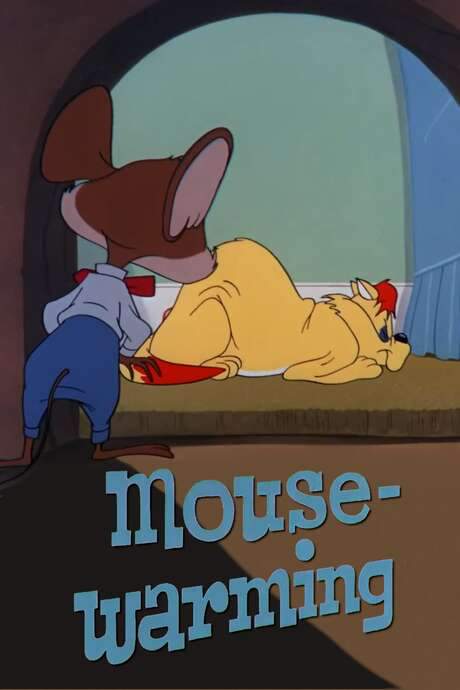
In 19th-century Vienna, Tom Cat and Johann Mouse share a lively life inside the home of the famed composer Johann Strauss. A light-hearted narrator Hans Conried guides the tale with a gentle wink as Johann Mouse slips from his hole whenever Strauss sits at the piano, dancing in nimble circles while Tom paces, ever hopeful, ever thwarted in his attempts to catch him.
Whenever Strauss plays, Johann Mouse pops out to dance to the music, and Tom’s repeated chases become a familiar, comic ritual. The two unlikely roommates spark a playful rhythm that fills the house, turning music into mischief and mischief into music. The melodies weave through the rooms, and the chase, though endless, never quite lands—Johann slips away each time, leaving Tom both exasperated and oddly charmed by the dancing mouse.
When Strauss sets off on a journey, Tom suddenly sees a clear path to success. He decides to teach himself how to play the piano, studying Strauss’s own tutorial, How to Play the Waltz in Six Easy Lessons. The moment Tom’s fingers touch the keys, a new energy sweeps through the house, and Johann Mouse is lured out by the rising notes. The two bring the piano and the dance to life in ways neither had anticipated, and Tom’s growing skill earns him unexpected praise from the house servants who witness the performances.
The praise fuels Tom’s resolve, and he lets Johann go with a pleased flourish, choosing to keep playing rather than ending the game. Word of Tom’s piano prowess and Johann’s graceful dancing travels through Vienna, carried on the buzz of salons and streets until it reaches the highest ears in the land—the Emperor Franz Joseph I. The Emperor commands that the duo perform at the palace, where their spirited collaboration shines in front of a royal audience.
At the palace, Tom and Johann perform with evident gusto and mutual delight, their movements synced to the music in a blend of comic pursuit and genuine artistry. Tom’s instinct to chase after Johann resurfaces, a familiar impulse that momentarily disrupts the rhythm of the performance. Yet even as the chase falters and Johann dodges again, the crowd responds with warm applause, celebrating the infectious joy of their music.
Across Vienna, the tale plays out as a celebration of harmony between competition and companionship, a small, lyrical echo of how melody can fuse two very different creatures into a single, jubilant act. The narrator’s gentle cadence keeps the mood buoyant, presenting a story where music unlocks friendship, even as the chase remains a charming, never-ending refrain. In the end, the city’s laughter and clapping reaffirm that the music itself is the true star, uniting audience, mouse, and cat in a shared moment of lighthearted delight.