













Plot Explained Spoilers guaranteed!
Plot Explained

Browse by genre

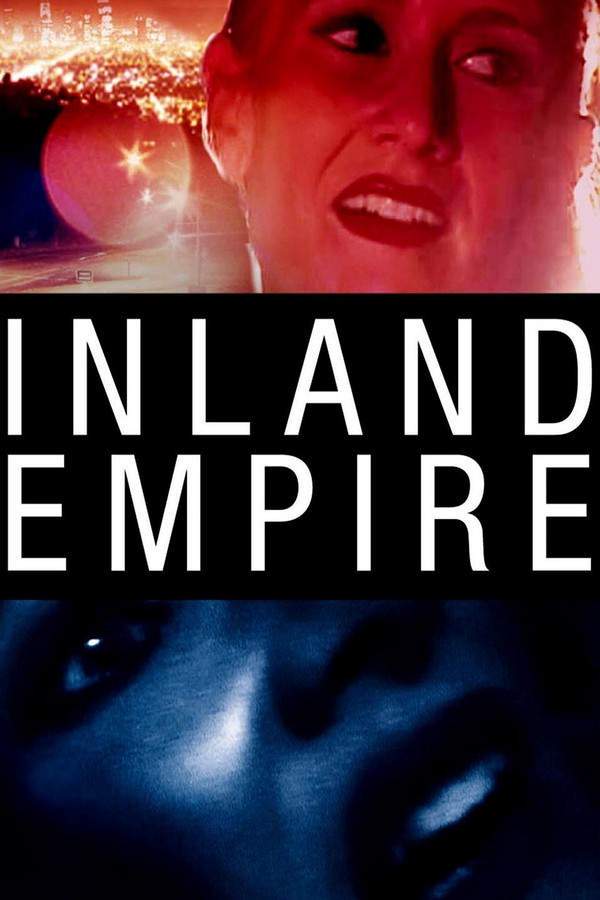
Inland Empire (2006) movie poster

Characters & Themes

Inland Empire (2006) Characters, Setting & Themes Explained

Release, runtime and language
2006 · 180 min · English
JustWatch #2,193 6
Directed by
David Lynch
Starring
Laura Dern, Karolina Gruszka, Grace Zabriskie, Amanda Foreman, Bellina Logan, Ian Abercrombie

A Hollywood actress finds her reality fracturing as she becomes increasingly immersed in a film production, blurring the lines between her own life and the movie's narrative. Haunted by a dark history and a potential curse, she navigates a surreal and violent world where deception reigns. The film explores themes of identity, alternate realities, and the dangerous consequences of obsession, all within a mind-bending cinematic experience.

On this page (9)
  1. 1 Where to watch
  2. 2 Characters explained (3)
  3. 3 Where & when it takes place
  4. 4 Themes & meaning (3)
  5. 5 Character & meaning questions
  6. 6 Movie threads
  7. 7 Movies like Inland Empire
  8. 8 Categories
  9. 9 Every angle

Where to watch

Where to Watch Inland Empire (2006)

Where can you watch Inland Empire? Stream, rent or buy it in the US, including on HBO Max, Plex and Shout! Factory TV: current JustWatch availability with up-to-date prices.

Streaming availability powered by JustWatch

3 main characters · contains spoilers

Inland Empire Characters Explained: Who Is Who

The main characters of Inland Empire (2006), heroes and villains: what drives them, how they change over the course of the story and what each of them reveals about the film's bigger ideas.

  • Nikki Grace (Laura Dern)

    Nikki Grace is a celebrated actress grappling with her identity while navigating the twisted realities of her role. As the protagonist, she embodies vulnerability and strength, caught in both her own narrative and the narratives of those around her. Her journey chronicles the struggle to break free from oppressive forces and reclaim her essence.

    • 🌟 Protagonist
    • 🎬 Actress
    • 🕵️‍♀️ Seeker
  • Lost Girl (Karolina Gruszka)

    The Lost Girl represents lost innocence and the quest for identity within a fractured reality. Her melancholic fixation on a surreal television program symbolizes the longing for escape. As Nikki's parallel, her eventual liberation reflects hope and transformation amid despair.

    • 🌌 Lost Identity
    • 🎭 Duality
    • 😢 Melancholy
  • Elderly Woman (Grace Zabriskie)

    The elderly woman serves as a haunting presence in the narrative, her erratic behavior blurring the lines between reality and delusion. She embodies the memories and stories of past generations, weaving a sense of nostalgia as well as foreboding within Nikki's life.

    • 👵 Elderly
    • 🌀 Nostalgic
    • 🔮 Mysterious

Last updated: October 22, 2024 at 19:28

Was this helpful?

Setting

Where and When Does Inland Empire Take Place?

The setting of Inland Empire (2006): the year and time period, the places and locations, and how they shape the characters, the mood and the tension of the story.

Time period

The story weaves between modern times and echoes of the past, notably drawing on themes of trauma reminiscent of earlier decades. The chaotic events unfold in a contemporary setting, while flashbacks hint at historical struggles faced by individuals, particularly women, reflecting deeply on societal norms and expectations.

Location

Poland, San Fernando Valley, Hollywood

The film predominantly takes place in Poland, where haunting reflections of early 20th-century life reveal a world entwined with hidden threats and the lives of prostitutes. The San Fernando Valley serves as a contrasting suburban haven where Nikki attempts to reclaim her identity. Hollywood encapsulates the glitz and chaos of the film industry, representing both aspiration and despair.

  • 🏙️ City
  • 🏡 Suburban
  • 🌌 Surreal

Last updated: October 22, 2024 at 19:28

Was this helpful?

3 major themes

Inland Empire Meaning: Themes & Message Explained

What is Inland Empire (2006) really about? The emotional, social and philosophical themes the film keeps returning to, its symbolism and the message beneath the surface.

  • Identity

    The film intricately explores themes of identity through Nikki's dual existence as both an actress and her character, Susan Blue. As she navigates her journey, her experiences morph with that of the Lost Girl, creating a tapestry of fragmented identities. The narrative questions the nature of self, performance, and the masks people wear in the pursuit of acceptance.

  • Trauma

    Trauma resonates throughout Nikki's experiences, from her childhood scars to the haunting memories of her interactions with other characters. Moments of violence and confusion propel her into a vortex of fear and loss, illustrating how past traumas can shape present realities. This theme emphasizes the struggle of confronting one's painful past.

  • Reality vs. Performance

    In this film, the line between reality and performance is blurred as characters navigate a surreal narrative. The casting of Nikki in a cursed film serves as a reflection on filmmaking itself, raising questions about the authenticity of experiences portrayed onscreen. This theme challenges viewers to consider what is constructed and what is genuine in both film and life.

Last updated: October 22, 2024 at 19:28

Was this helpful?

Character & theme questions

Inland Empire Characters & Meaning: Your Questions Answered

The questions people ask about Inland Empire (2006): who the characters really are, their relationships, what the symbols mean, where it takes place and what the movie is really about. Each answer contains spoilers.

Q1

Where is Inland Empire set?

The film takes place primarily in Poland and Hollywood, with additional scenes set in the San Fernando Valley. Poland represents a haunting, early 20th-century world of hidden threats and prostitutes, while Hollywood embodies the glitz and chaos of the film industry. The Valley serves as a suburban contrast where the protagonist attempts to reclaim her identity.

  • poland
  • hollywood
  • san fernando valley
  • locations
  • setting
Q2

When does Inland Empire take place?

The story unfolds primarily in modern times but weaves in flashbacks and echoes of the past, particularly referencing trauma reminiscent of earlier decades. The narrative moves between contemporary Hollywood and historical moments that reflect societal struggles faced by individuals, especially women, in the 20th century.

  • time period
  • era
  • modern
  • historical
  • 1990s
  • 2000s
Q3

What role does identity play in Inland Empire?

Identity is central to the film, with protagonist Nikki Grace embodying a dual existence as both actress and character Susan Blue. Her experiences merge with those of the Lost Girl, creating fragmented identities that question the nature of self, performance, and the masks people wear to pursue acceptance.

  • identity
  • nikki grace
  • susan blue
  • character
  • doppelganger
Q4

How does Inland Empire explore trauma?

Trauma resonates throughout Nikki's journey, from her childhood scars to haunting memories of interactions with other characters. Moments of violence and confusion propel her into fear and loss, demonstrating how past traumas shape present realities and emphasizing the struggle of confronting painful history.

  • trauma
  • past
  • childhood
  • memory
  • psychological
Q5

How does Inland Empire blur reality and performance?

The film deliberately blurs the line between reality and performance as characters navigate a surreal narrative. Nikki's casting in a cursed film serves as a meta-reflection on filmmaking itself, challenging viewers to distinguish what is constructed from what is genuine in both cinema and life.

  • reality
  • performance
  • film within film
  • curese
  • surreal
Q6

Who is Nikki Grace in Inland Empire?

Nikki Grace, played by Laura Dern, is the protagonist, a celebrated actress grappling with her identity while navigating twisted realities. She embodies both vulnerability and strength, caught in her own narrative and the narratives of those around her as she struggles to break free from oppressive forces and reclaim her essence.

  • nikki grace
  • laura derm
  • protagonist
  • actress
Q7

Who is the Lost Girl in Inland Empire?

The Lost Girl, played by Karolina Gruszka, represents lost innocence and the quest for identity within a fractured reality. Her melancholic fixation on a surreal television program symbolizes longing for escape. As Nikki's parallel, her eventual liberation reflects hope and transformation amid despair.

  • lost girl
  • karolina gruszka
  • innocence
  • parallel character
Q8

What is the Elderly Woman's role in Inland Empire?

The Elderly Woman, played by Grace Zabriskie, serves as a haunting presence that blurs lines between reality and delusion. She embodies memories and stories of past generations, weaving nostalgia and foreboding into Nikki's life while connecting the present to historical narratives.

  • elderly woman
  • grace zabriskie
  • ghost
  • ancestor
  • memories
Q9

Why does Inland Empire switch between Poland and Hollywood?

The contrast between Poland and Hollywood serves a thematic purpose. Poland represents a haunting, historical world of oppression and hidden threats tied to women's histories, while Hollywood represents both aspiration and despair in the film industry. This duality reinforces the film's exploration of identity, performance, and the shadows behind glamorous facades.

  • poland vs hollywood
  • contrast
  • setting change
  • theme
Q10

What is the cursed film within Inland Empire?

Nikki Grace is cast in a film that carries a curse, which serves as a central mechanism driving the narrative's surreal quality. This cursed production acts as a meta-commentary on filmmaking, where the act of performing triggers dangerous consequences and blurs the boundary between actor and character.

  • cursed film
  • production
  • casting
  • curse
  • meta fiction

Movie threads

More Movies Like Inland Empire, by Mood & Story

Curated lists built around what makes Inland Empire tick: the same mood, the same kind of story or the same emotional payoff. Each list explains why these movies belong together.

Mind-bending thrillers about fractured reality like Inland Empire

Stories where a character's grip on reality violently shatters. If you enjoyed the disorienting psychological horror of Inland Empire, this collection features movies where sanity unravels and reality fractures. These complex narratives explore identity loss, alternate dimensions, and the terrifying blur between performance and self, perfect for fans of surreal and intense cinema.

  • surreal
  • unsettling
  • paranoid
  • dreamlike
  • psychological
  • disorienting
  • Tone: dark, paranoid, unsettling
  • Pacing: variable, disorienting
Why these movies?

The story pattern: These narratives typically follow a protagonist—often an artist, investigator, or someone in a vulnerable state—whose immersion in a role, investigation, or traumatic event causes their reality to splinter. The plot structure is often non-linear, weaving together clues and hallucinations, forcing the viewer to question what is real and what is a projection of the character's fractured psyche.

Why they belong together: Movies are grouped here for their shared core experience: the visceral dissolution of a stable reality. They create a powerful sense of disorientation and existential dread through surreal imagery, unreliable narration, and themes of identity loss, offering a cohesive vibe of profound psychological unease.


Surreal horror movies with existential dread like Inland Empire

Cinematic journeys into oppressive, dreamlike landscapes of fear. For viewers seeking the uniquely oppressive and surreal vibe of Inland Empire, this list features films that prioritize atmosphere and existential fear over conventional scares. These movies create a dreamlike sense of impending doom, exploring deep psychological trauma and cosmic horror through abstract and visually striking narratives.

  • oppressive
  • surreal
  • dreamlike
  • anxious
  • existential
  • atmospheric
  • Tone: dark, oppressive, bleak
  • Pacing: variable, atmospheric
Why these movies?

The story pattern: The narrative journey in these films is less about a clear A-to-B plot and more about a gradual or abrupt descent into a nightmarish world. Characters often confront abstract forces—curses, cosmic entities, or the unraveling of time—that defy understanding. The conflict is atmospheric and philosophical, pitting the protagonist against the fundamental nature of their existence.

Why they belong together: These films are connected by their primary focus on creating a specific mood: an overwhelming, surreal, and existential dread. They share a dark tone, often variable pacing that mirrors mental collapse, and a commitment to visual and narrative abstraction to evoke a deep-seated, oppressive anxiety.

If you liked this

Movies Like Inland Empire

Similar movies to Inland Empire: the same genre, themes or kind of story. Each one comes with its own plot summary, timeline and ending explained.

Browse all movie summaries

Categories

Movie Lists Featuring Inland Empire

Inland Empire appears in these hand-built movie categories. Each one groups movies by a specific mood, theme or story type, with their plot summaries and endings explained.

View all movie categories

Every angle

Inland Empire (2006) Explained: Plot, Timeline & Characters

Everything about Inland Empire in one place: what happens in the plot summary, the timeline in chronological order, the characters and meaning and a spoiler-free summary. What's After the Movie adds the cast, box office and post-credit scenes.

Coming soon on iOS and Android

The Plot Explained Movie Summary App

Plot summaries, endings explained and timelines on your phone. Catch up on any movie in minutes, save your favorites and never miss a twist again.

Be the first to know when we launch. Your email stays private, always.

Learn more about the app