





Plot Explained Spoilers guaranteed!
Plot Explained

Browse by genre

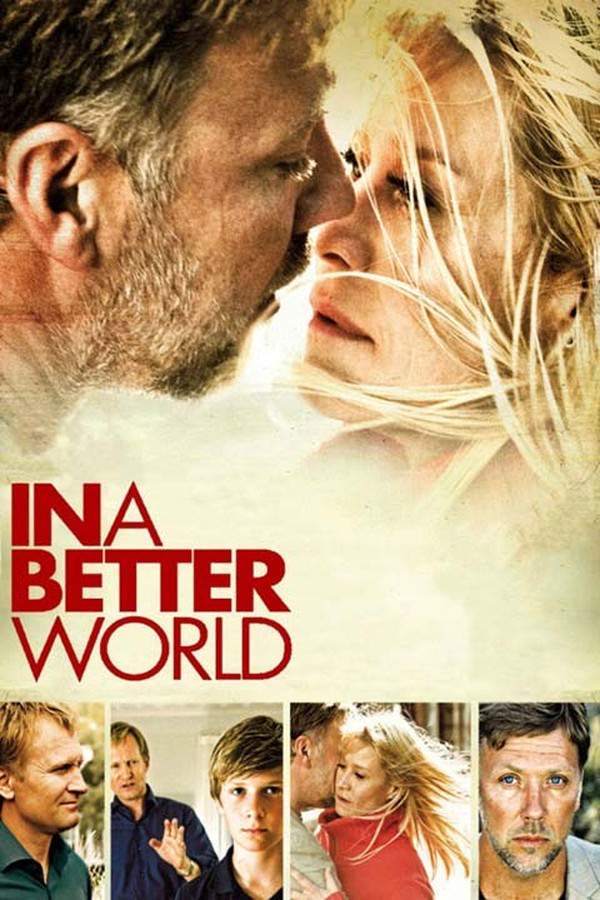
In a Better World (2011) movie poster

Timeline

In a Better World (2011) Timeline Explained – Every Event in Order

Release, runtime and language
2011 · 119 min · Danish
Directed by
Susanne Bier
Budget
$5.5M

A doctor working in both Denmark and Africa finds his life intertwined with the complexities of revenge and forgiveness. Meanwhile, two young boys form an unexpected friendship, facing bullying and loss together. Their bond is challenged when they grapple with the repercussions of seeking justice, forcing their parents to confront difficult moral questions and guide them through a landscape of conflicting emotions.

On this page (6)
  1. 1 Where to watch
  2. 2 Events in order (15)
  3. 3 Timeline questions answered
  4. 4 Movie threads
  5. 5 Movies like In a Better World
  6. 6 Every angle

Where to watch

Where to Watch In a Better World (2011)

Where can you watch In a Better World? Stream, rent or buy it in the US, including on Amazon Video, Apple TV Store and Fandango At Home: current JustWatch availability with up-to-date prices.

Streaming availability powered by JustWatch

15 events in order · contains spoilers

In a Better World Timeline: Events in Chronological Order

Every key event of In a Better World (2011) in order, scene by scene, with when and where it takes place. Use it to untangle flashbacks, time jumps and parallel storylines, to refresh your memory before the sequel or to find the exact scene you are thinking of.

  1. Anton Balances His Life

    Anton, a devoted Swedish doctor, finds himself dividing his time between Denmark and a challenging role in a Sudanese refugee camp. His dedication is tested as he copes with the emotional toll of treating trauma victims, especially women suffering due to the chaos unleashed by a warlord.

    When
    Present Day
    Where
    Sweden/Danish Home
  2. Marriage Strain

    Back in Denmark, Anton struggles with the estrangement from his wife Marianne. Their marriage has been heavily strained due to Anton's affair, leading to ongoing tension as they try to co-parent their two young sons amidst their personal challenges.

    When
    Present Day
    Where
    Denmark
  3. Christian's Grief

    Christian moves to Denmark with his father Claus after losing his mother to cancer. He struggles with profound grief and anger towards Claus, believing that his father had ulterior motives regarding her care during her illness.

    When
    Present Day
    Where
    Denmark
  4. School Bullying

    Elias, Anton's 12-year-old son, faces bullying at school, feeling isolated and powerless. This escalates until his new friend Christian intervenes violently, confronting the bully with a knife that he later gifts to Elias, deepening their bond and complicating their innocence.

    When
    Present Day
    Where
    School
  5. Playground Conflict

    During a routine outing, Anton intervenes when his younger son gets into a scuffle at a playground. This leads to a confrontation where the other child's father attacks Anton, highlighting issues of xenophobia and raising the stakes of familial tensions.

    When
    Present Day
    Where
    Playground
  6. Mechanic's Workplace Showdown

    Attempting to resolve the conflict, Anton visits the mechanic's workplace with his children and Christian. In a humiliating encounter, the mechanic assaults Anton, further emphasizing Anton's struggle to stand up for himself and his family in a hostile environment.

    When
    Present Day
    Where
    Mechanic's Workshop
  7. Warlord's Treatment

    In Sudan, Anton's ethical dilemmas peak when a sadistic warlord seeks medical attention at his clinic. Despite his disgust, Anton feels compelled to treat him under strict conditions, underscoring the immense moral conflicts he faces as a physician in a war-torn setting.

    When
    Present Day
    Where
    Sudanese Refugee Camp
  8. Anton Takes a Stand

    As the warlord shows cruel indifference towards his victims, Anton finally reaches his breaking point. He forcibly expels the warlord from the clinic, leading to his brutal death at the hands of the locals, dramatically altering Anton's understanding of justice.

    When
    Present Day
    Where
    Sudanese Refugee Camp
  9. Plan of Revenge

    Back in Denmark, Christian and Elias devise a plan to retaliate against the mechanic by building a bomb to destroy his car. They carefully choose a Sunday morning in hopes of minimizing injuries, revealing their impulsiveness and the deep emotional scars they carry.

    When
    Sunday Morning
    Where
    Denmark
  10. Tragic Accident

    Elias sacrifices his safety when he leaves his hiding spot to warn two joggers of the impending explosion. Unfortunately, he is knocked unconscious in the process, inadvertently saving lives but landing himself in serious danger.

    When
    Sunday Morning
    Where
    Denmark
  11. Police Interrogation

    Following the incident with Elias, Christian is subjected to intense police questioning. The situation escalates as Elias's condition is revealed, and the emotional fallout deepens with Marianne's vehemence directed at Christian, who feels despair at the unfolding tragedy.

    When
    Present Day
    Where
    Police Station
  12. Despair and Redemption

    Overcome with guilt, Christian contemplates taking his own life atop a silo. However, Anton intervenes just in time, rescuing him from his darkest moment and initiating a healing journey for both their families.

    When
    Present Day
    Where
    Silo
  13. Elias's Recovery

    Elias survives his injuries from the explosion and is hospitalized. His recovery serves as a pivotal point of reconciliation, allowing Christian to visit him and reestablish their friendship, which had been strained by their earlier actions.

    When
    Present Day
    Where
    Hospital
  14. Mending Relationships

    With Elias recovering, both Christian and Anton experience personal growth. Christian begins to mend his relationship with his father Claus, while Anton and Marianne explore the possibility of rekindling their marriage, experiencing renewed intimacy.

    When
    Present Day
    Where
    Denmark
  15. Hope and Healing

    As the film concludes, the characters find themselves on paths toward healing. Christian's budding friendship with Elias, coupled with Anton and Marianne's efforts to reconnect, signals hope amidst the earlier turmoil and complexities of their lives.

    When
    Present Day
    Where
    Denmark

Last updated: November 08, 2024 at 02:35

Was this helpful?

Timeline questions answered

In a Better World Timeline Explained: Your Questions Answered

When does it happen, and why in that order? The questions people ask about the chronology of In a Better World (2011): time jumps, flashbacks, cause and effect between scenes and the correct order of events, each answered with spoilers.

Q1

Why did Anton treat the warlord then let him die?

Anton, as a doctor, felt ethically bound to treat any patient who came to his clinic, even a warlord responsible for atrocities. However, while caring for him, Anton witnessed the warlord's complete indifference to the suffering he caused. This moral contradiction became unbearable, saving a man who had inflicted such brutal harm on innocent women and children. Anton finally dragged the warlord out of the clinic, allowing vengeful locals to kill him. This act represents Anton's abandonment of his medical ethics in favor of serving what he perceived as justice, though it comes at a tremendous personal moral cost.

Foreshadowing: Earlier scenes show Anton treating trauma victims, particularly women brutalized by the warlord, establishing his knowledge of the man's crimes.

  • anton warlord sudan ethics murder clinic
Q2

Why was Christian so angry with his father Claus?

Christian believed his father lied to him about his mother's cancer prognosis. He felt Claus deliberately misled him about her chances of recovery, and worse, suspected his father wanted his mother to die during her illness. This belief that Claus was somehow relieved by or complicit in her death fueled Christian's deep resentment. The loss of his mother combined with this perceived betrayal created explosive anger that he directed entirely at his father.

Foreshadowing: Christian's move from London to Denmark coincides with his mother's death, and his initial behavior shows clear signs of unresolved grief.

  • christian claus father grief mother cancer lie
Q3

Why did Christian and Elias decide to build a bomb?

The boys were responding to the humiliation Anton suffered at the mechanic's hands, being slapped and repeatedly assaulted without retaliation. Christian and Elias felt compelled to protect Anton and seek revenge on his behalf. Their choice of Sunday morning was meant to minimize casualties, showing they wanted justice, not murder. However, their plan reflected their emotional wounds: Christian's grief and rage, Elias's sense of powerlessness against his own bully, and both boys' desire to act when adults failed to protect them.

Foreshadowing: The mechanic's repeated attacks on Anton, and the boys witnessing this humiliation, directly precede their decision.

  • christian elias bomb revenge mechanic sunday morning
Q4

Why didn't Anton fight back against the mechanic?

Anton consistently chose non-retaliation, even when publicly humiliated and assaulted. This reflects his attempt to model peaceful conflict resolution, particularly in front of his children. However, his failure to stand up for himself also represents a character flaw, his reluctance to engage in violence creates an ethical tension that directly contributes to his sons' desperate decision to take matters into their own hands. Anton's pacifism, while principled, left a vacuum that the boys filled with their own violent solution.

Foreshadowing: Anton's earlier intervention at the playground shows his instinct to use force stops at physical retaliation.

  • anton mechanic violence non-retaliation pacifism children
Q5

Why did Elias risk his safety to warn the joggers?

Despite planning the bomb, Elias couldn't go through with potentially hurting innocent people, especially a mother and young daughter. When he saw them approaching, he abandoned his hiding place to warn them, acting on conscience despite knowing it would expose him and possibly ruin the revenge plan. His sacrifice shows that beneath the boys' violent scheme existed moralcompass thatoverride their desire for retaliation, though the act left him seriously injured.

Foreshadowing: Elias's earlier victimization as a bullying target establishes his understanding of innocence and vulnerability.

  • elias joggers bomb sacrifice warning mother daughter
Q6

Why did Marianne blame Christian after Elias was injured?

Marianne, overwhelmed with fear for her son's life, lashed out at Christian as the source of the tragedy. She saw Christian as the corrupting influence who led her son into dangerous violence. While her reaction was harsh, it stemmed from parental panic and the desperate need to assign blame when facing her child's critical condition. This moment reflects the emotional breakdown that occurs when families confront the consequences of children's violent choices.

Foreshadowing: Christian's violent intervention against Elias's bully earlier established his willingness to use weapons.

  • marianne christian blame hospital elias injury parents
Q7

Why did Christian try to end his life at the silo?

Christian was consumed by guilt after Elias was critically injured carrying out their bomb plan. When Marianne told him he had caused her son's death, Christian believed his actions had destroyed his closest friend. Combined with his pre-existing grief over his mother and fractured relationship with his father, the guilt became unbearable. The silo represented his belief that he deserved to die for what he had done. Anton's intervention saved him from this fatal mistake.

Foreshadowing: Christian's accumulated losses, his mother, his trust in his father, and now his best friend, create emotional collapse.

  • christian suicide silo guilt elias hospital confession
Q8

How do the Sudan and Denmark storylines connect?

Both storylines explore the same moral question through different contexts: when is violence justified? Anton faces this in Sudan with the warlord, while the boys face it with the mechanic. The parallel structure shows how the temptation toward revenge exists across cultures and ages. Anton's own act of allowing the warlord's death mirrors the boys' bomb plot, both involve taking justice into one's own hands. This connection allows the film to examine whether revenge provides true resolution or simply creates more suffering.

Foreshadowing: The mechanic's violence against Anton echoes the warlord's violence against Sudanese civilians, establishing thematic parallel.

  • sudan denmark parallel plot anton warlord revenge moral
Q9

Why did Anton and Marianne reconcile at the end?

The crisis forced Anton and Marianne to confront their issues directly. Anton nearly lost Christian to suicide, and Marianne saw her son nearly die, both experiencing the worst possible fear as parents. These shared traumas broke through their marital deadlock. The film suggests that facing mortality together reminded them of their love and rekindled their connection. Their reconciliation is not a resolution of their original problems (the affair, the distance) but rather a recognition that they needed each other despite their flaws.

Foreshadowing: Earlier scenes show their underlying affection persisting beneath the anger about the affair.

  • anton marianne reconciliation marriage affair intimacy healing
Q10

Why did Christian forgive his father Claus?

Christian's path to reconciliation with Claus began when Anton intervened during his suicide attempt. Anton, who had also made a morally compromised choice in Sudan, understood Christian's despair. This connection may have helped Christian see his father's flaws more compassionately. Additionally, surviving the crisis gave Christian perspective, he realized his anger at Claus was partly misplaced grief. The film shows their relationship mending as Christian allows himself to trust his father again, moving beyond the resentment that stemmed from his mother's death.

Foreshadowing: Christian's initial belief that Claus wanted his mother dead is challenged by observing Claus's genuine pain.

  • christian claus father forgiveness reconciliation grief trust

Movie threads

More Movies Like In a Better World, by Mood & Story

Curated lists built around what makes In a Better World tick: the same mood, the same kind of story or the same emotional payoff. Each list explains why these movies belong together.

Bittersweet Morality Plays like In a Better World

Stories where difficult ethical choices lead to a complex, bittersweet resolution. Find movies like In a Better World that explore complex ethical questions. These dramas feature difficult moral choices, often in high-stakes scenarios, leading to emotionally heavy and bittersweet conclusions. If you enjoy stories about the cost of justice and redemption.

  • morally conflicted
  • somber
  • cathartic
  • tense
  • melancholic
  • thought-provoking
  • Tone: bittersweet, morally conflicted
  • Pacing: steady, methodical
Why these movies?

The story pattern: The narrative follows characters as they confront significant moral dilemmas, where the 'right' choice is often unclear. The plot steadily builds towards a climax that forces a decision, resulting in consequences that offer a measure of peace or resolution, but are permanently tinged with loss or sacrifice.

Why they belong together: These movies are grouped by their shared focus on ethical complexity and their emotionally resonant, bittersweet tone. They all feature a steady pacing that allows for deep moral exploration, culminating in conclusions that feel earned yet sobering, leaving a heavy emotional impact.


Movies with Parallel Crisis Narratives like In a Better World

Films that connect separate, high-stakes storylines to explore a central theme. Discover films similar to In a Better World that use interwoven storylines. These dramas connect separate plots, such as personal and global crises, to deepen their thematic impact. If you liked how In a Better World linked stories from Denmark and Africa.

  • unsettling
  • tense
  • grief-stricken
  • complex
  • somber
  • cathartic
  • Tone: tense, somber, cathartic
  • Pacing: steady, building
Why these movies?

The story pattern: The narrative structure juggles multiple plotlines that run concurrently. While the stories may feature different characters and settings, they are thematically linked, with events in one narrative influencing or commenting on the other. The pacing is steady as it builds tension across all threads towards a unified, impactful resolution.

Why they belong together: These films are united by their distinctive narrative structure, which uses parallel plots to create a more profound and layered experience. They share a steady, deliberate pacing that allows each storyline to develop fully, resulting in a high-intensity, emotionally resonant whole.

If you liked this

Movies Like In a Better World

Similar movies to In a Better World: the same genre, themes or kind of story. Each one comes with its own plot summary, timeline and ending explained.

Browse all movie summaries

Every angle

In a Better World (2011) Explained: Plot, Timeline & Characters

Everything about In a Better World in one place: what happens in the plot summary, the timeline in chronological order, the characters and meaning and a spoiler-free summary. What's After the Movie adds the cast, box office and post-credit scenes.

Coming soon on iOS and Android

The Plot Explained Movie Summary App

Plot summaries, endings explained and timelines on your phone. Catch up on any movie in minutes, save your favorites and never miss a twist again.

Be the first to know when we launch. Your email stays private, always.

Learn more about the app