Plot Explained Spoilers guaranteed!
Plot Explained

Browse by genre

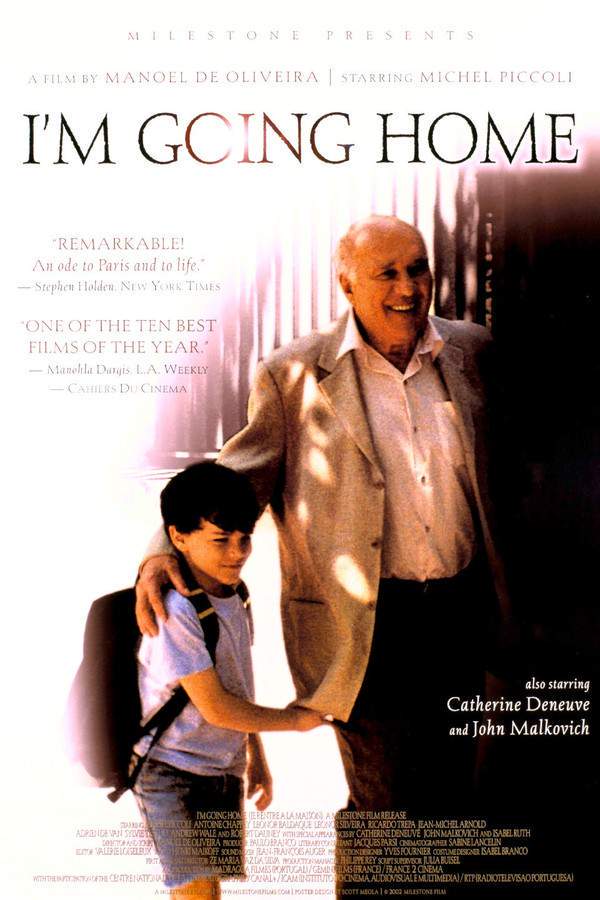
I'm Going Home (2002) movie poster

Timeline

I'm Going Home (2002) Timeline Explained – Every Event in Order

Release, runtime and language
2002 · 90 min · French
Loading streaming availability…
Directed by
Manoel de Oliveira

Following a personal tragedy, a renowned actor becomes the unexpected guardian of his young grandson. Gilbert Valence struggles to navigate his grief and a profound identity crisis while embracing a surprising opportunity to return to acting. Through this cinematic journey, he confronts the challenges of aging, the preciousness of family, and the transient nature of recognition.

On this page (6)
  1. 1 Where to watch
  2. 2 Events in order (11)
  3. 3 Timeline questions answered
  4. 4 Movie threads
  5. 5 Categories
  6. 6 Every angle
Loading streaming availability…

11 events in order · contains spoilers

I'm Going Home Timeline: Events in Chronological Order

Every key event of I'm Going Home (2002) in order, scene by scene, with when and where it takes place. Use it to untangle flashbacks, time jumps and parallel storylines, to refresh your memory before the sequel or to find the exact scene you are thinking of.

  1. Theater Performance of Exit the King

    The film starts with a vibrant theater setting where Eugène Ionesco's play 'Exit the King' is being actively performed. Gilbert Valence, a celebrated actor, takes center stage as the King, showcasing his immense talent and pulling the audience into the world of theater.

    Where
    Theater
  2. Devastating News

    During the emotional high of his performance, Gilbert receives the heartrending news of a tragic car accident. This incident claims the lives of his wife, daughter, and son-in-law, instantly shifting the joyous atmosphere into one of deep sorrow and chaos for Gilbert.

    Where
    Theater
  3. Taking Responsibility

    Confronted with the unexpected loss, Gilbert now faces the daunting task of raising his young grandson, Serge. This shift in his responsibilities challenges him to find a new purpose amidst his grief, as he strives to navigate fatherhood while mourning his family.

  4. Coping with Grief

    As time progresses, Gilbert attempts to cope with his overwhelming grief while managing the lively Parisian lifestyle. Engaging with the bustling city around him, he makes an effort to care for Serge with the help of his dedicated housekeeper.

    Where
    Paris
  5. Portraying Prospero

    In a bid to reignite his passion for acting, Gilbert takes on the challenging role of Prospero in a French adaptation of Shakespeare's 'The Tempest.' This decision reflects his commitment to high-quality art, despite the pressures and expectations from the entertainment industry.

  6. Declining TV Offers

    Despite being a respected veteran of the stage, Gilbert receives tempting offers for low-brow television gigs. However, he resolutely declines these opportunities, prioritizing his artistic integrity over commercial success and mainstream entertainment.

  7. Call from John Crawford

    An unexpected phone call from American filmmaker John Crawford changes everything for Gilbert. Crawford is seeking an actor to portray Buck Mulligan in a film adaptation of 'Ulysses,' intensifying Gilbert's dilemma as he weighs his options.

  8. Preparing for the Role

    Time is of the essence as Gilbert has only three days to prepare for the demanding film role in Paris. This urgent situation thrusts him into a whirlwind of new challenges and pressures, leaving him feeling increasingly unprepared for the task ahead.

    Where
    Paris
  9. Filming Begins

    As filming begins, Gilbert quickly realizes he's grappling with several obstacles such as the language barrier and his own lack of preparation. The weight of his years and experiences seems heavier as he navigates through the complexities of acting for the screen.

  10. Feeling Out of Place

    During the chaotic shoot, Gilbert's inner turmoil grows as he feels utterly out of sync with his role and the production environment. This sense of disconnection culminates in profound frustration as he struggles to relate to the text and the film's artistic demands.

  11. Walking Off the Set

    Overwhelmed by the mounting pressures and realizing his miscalculation, Gilbert makes the sudden decision to walk off the set. With a poignant declaration of 'Je rentre à la maison,' he expresses his desire to retreat from the demands of the film industry and return to a sense of safety.

Last updated: November 16, 2024 at 16:55

Was this helpful?

Timeline questions answered

I'm Going Home Timeline Explained: Your Questions Answered

When does it happen, and why in that order? The questions people ask about the chronology of I'm Going Home (2002): time jumps, flashbacks, cause and effect between scenes and the correct order of events, each answered with spoilers.

Q1

Why does Gilbert accept the Buck Mulligan role in Ulysses?

Gilbert accepts the role primarily because American filmmaker John Crawford approaches him directly and offers him the part with only three days to prepare. Despite his initial reluctance, the urgency of the opportunity and perhaps a desire to prove himself again in a different medium pressures him into accepting. Additionally, this represents a rare chance to work on an adaptation of a literary classic, which aligns with his commitment to artistic integrity over commercial television work.

  • buck mulligan
  • ulysses
  • john crawford
  • film role
  • acting opportunity
Q2

What does "Je rentre à la maison" mean and why is it significant?

"Je rentre à la maison" is French for "I'm going home." Gilbert declares this in English while walking off the Ulysses film set. The phrase represents his rejection of the film industry and his desire to return to what feels safe and familiar. It serves as both a literal statement, leaving the unfamiliar movie set, and a metaphorical return to his true identity as a stage actor, abandoning an ill-suited role that was causing him distress.

  • je rentre a la maison
  • walking off set
  • french phrase
  • leaving film
Q3

Why does Gilbert walk off the Ulysses film set?

Gilbert walks off the set because he feels completely out of place and unprepared. The combination of the language barrier, having only three days to prepare, and the weight of his years working in theater rather than film creates overwhelming pressure. He realizes the role of Buck Mulligan was a miscalculation, he cannot connect with the text or the production demands, and the frustration culminates in his decision to abandon the shoot entirely.

  • walking off set
  • film failure
  • language barrier
  • buck mulligan
  • filming struggles
Q4

Why does Gilbert decline TV work but accept the Ulysses film role?

Gilbert declines low-brow television offers because they conflict with his artistic integrity, he views them as beneath his status as a respected theater actor. The Ulysses role, however, represents a legitimate literary adaptation that aligns with his artistic values. Additionally, television work is purely commercial, while the Joyce adaptation carries artistic prestige, even though the actual filming proves disappointing.

  • television offers
  • artistic integrity
  • ulysses
  • buck mulligan
  • career choices
Q5

What is the significance of Gilbert performing Exit the King at the start?

The opening performance of Eugene Ionesco's Exit the King is thematically prescient. The play features an aging king facing death and the end of his reign, mirroring Gilbert's own crisis. Just as the King must confront mortality and irrelevance, Gilbert receives news of his family's death and faces his own diminished relevance in the acting world. The dramatic irony establishes his character arc before it fully unfolds.

  • exit the king
  • ionesco
  • opening scene
  • theater
  • king role
  • thematic parallel
Q6

Why does Gilbert take on the role of Prospero in The Tempest?

Gilbert chooses to play Prospero in a French adaptation of Shakespeare's The Tempest as a way to reignite his passion for acting and reaffirm his artistic identity. Prospero is a powerful, wise character who ultimately releases his magical powers and finds peace, mirroring Gilbert's own need to let go of his past glory and find new purpose. This role represents his commitment to meaningful theater rather than commercial work.

  • prospero
  • the tempest
  • shakespeare
  • french adaptation
  • stage role
  • artistic renewal
Q7

How does Gilbert cope with raising Serge after the tragedy?

Gilbert copes by establishing a routine with Serge in Paris, relying on his housekeeper for support. He throws himself into caring for his grandson while simultaneously pursuing acting opportunities. The daily responsibilities of fatherhood give him purpose amid grief, though the film shows this is a gradual, difficult process rather than an easy adjustment. His engagement with both Serge and his career helps him navigate the transition.

  • serg
  • grandson
  • grief
  • parenting
  • housekeeper
  • paris
  • coping
Q8

What triggers Gilbert's identity crisis throughout the film?

Gilbert's identity crisis is triggered by multiple factors: the devastating loss of his family, his sudden responsibility for Serge, and his struggle to remain relevant as an aging actor. The contrast between his past success in theater and the pressures of modern film work exposes his vulnerability. The failed Ulysses experience forces him to confront that his greatest years may be behind him, leading him to abandon a role that no longer fits.

  • identity crisis
  • aging
  • relevance
  • career
  • self-doubt
  • artistic legacy

Movie threads

More Movies Like I'm Going Home, by Mood & Story

Curated lists built around what makes I'm Going Home tick: the same mood, the same kind of story or the same emotional payoff. Each list explains why these movies belong together.

Gentle movies about grief and moving forward like I'm Going Home

Stories of loss met with quiet resilience and small, meaningful steps forward. For viewers who appreciate movies like I'm Going Home, this collection features character-driven dramas that handle grief with a quiet, observant touch. These films share a melancholic yet reflective tone, focusing on the personal journey of coping rather than high-stakes plot, perfect for those seeking similar introspective stories.

  • introspective
  • melancholic
  • quiet
  • contemplative
  • bittersweet
  • reflective
  • Tone: melancholic, reflective
  • Pacing: slow, contemplative
Why these movies?

The story pattern: The narrative pattern follows a protagonist navigating life after a profound personal loss. The conflict is primarily internal, centered on identity and purpose. The plot unfolds slowly, built from small, significant moments rather than major events, and often concludes with a realistic, bittersweet acceptance of a new reality.

Why they belong together: Movies are grouped here for their shared focus on the quiet, internal experience of grief, their melancholic but not bleak tone, and their gentle, observational pacing. They prioritize emotional authenticity and character depth over conventional plot, creating a reflective and deeply human viewing experience.

Movies about aging and identity crises similar to I'm Going Home

Characters confronting who they are after a lifetime of being someone else. If you liked the theme of an aging actor's identity crisis in I'm Going Home, you'll find similar explorations here. These films feature older protagonists grappling with their purpose and legacy, blending drama with thoughtful character study, all moving at a deliberate, reflective pace.

  • contemplative
  • reflective
  • bittersweet
  • poignant
  • character study
  • aging
  • Tone: contemplative, bittersweet
  • Pacing: steady, character driven
Why these movies?

The story pattern: The narrative centers on an older protagonist whose sense of self is shattered by a major life change. The journey involves reconciling their past accomplishments with their present vulnerabilities, often through a new responsibility or a return to a forgotten aspect of themselves. The resolution is typically about redefinition rather than simple victory.

Why they belong together: These films are united by their focus on the psychological and emotional journey of older characters re-evaluating their lives. They share a contemplative mood, a medium emotional weight, and a thematic concern with aging, legacy, and the search for personal meaning beyond societal roles.

Categories

Movie Lists Featuring I'm Going Home

I'm Going Home appears in these hand-built movie categories. Each one groups movies by a specific mood, theme or story type, with their plot summaries and endings explained.

View all movie categories

Every angle

I'm Going Home (2002) Explained: Plot, Timeline & Characters

Everything about I'm Going Home in one place: what happens in the plot summary, the timeline in chronological order, the characters and meaning and a spoiler-free summary. What's After the Movie adds the cast, box office and post-credit scenes.

Coming soon on iOS and Android

The Plot Explained Movie Summary App

Plot summaries, endings explained and timelines on your phone. Catch up on any movie in minutes, save your favorites and never miss a twist again.

Be the first to know when we launch. Your email stays private, always.

Learn more about the app