Plot Explained Spoilers guaranteed!
Plot Explained

Browse by genre

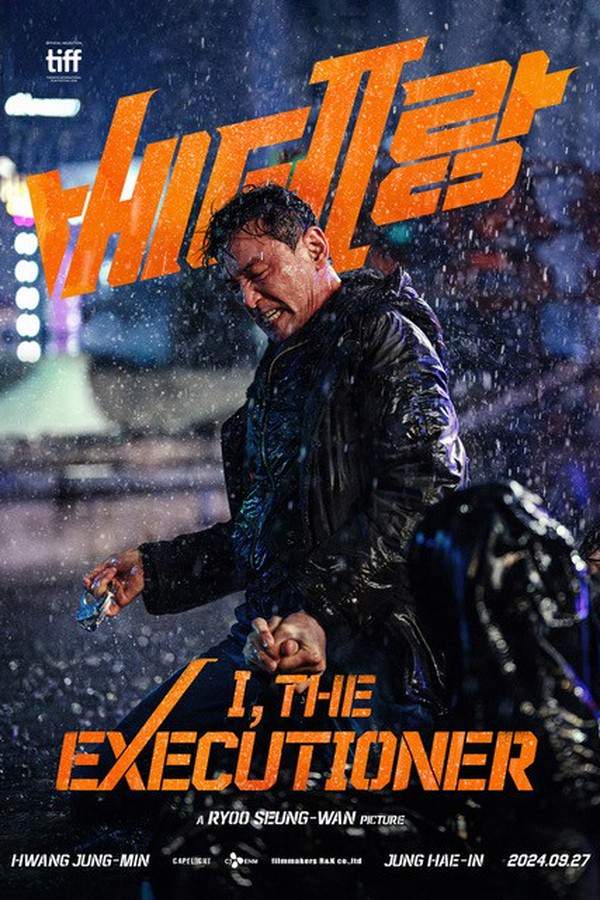
I, the Executioner (2024) movie poster

Timeline

I, the Executioner (2024) Timeline Explained – Every Event in Order

Release, runtime and language
2024 · 1 h 58 m · Korean
Echo score 84
Loading streaming availability…
Directed by
Seung-wan Ryu
Starring
Dal-su Oh, Dae-hwan Oh, Yoon-ju Jang, Hwang Jung-min, Ahn Bo-hyun, Jung Hae-in

A rookie detective and a seasoned veteran team up to track a serial killer who is creating fear throughout the city. As they investigate, they face intense action and suspense, pushing their abilities to the limit and forcing them to examine their own inner demons.

On this page (5)
  1. 1 Where to watch
  2. 2 Events in order (14)
  3. 3 Timeline questions answered
  4. 4 Movie threads
  5. 5 Every angle
Loading streaming availability…

14 events in order · contains spoilers

I, the Executioner Timeline: Events in Chronological Order

Every key event of I, the Executioner (2024) in order, scene by scene, with when and where it takes place. Use it to untangle flashbacks, time jumps and parallel storylines, to refresh your memory before the sequel or to find the exact scene you are thinking of.

  1. Raid on illegal gambling den

    The police raid an illegal gambling den led by Detective Seo Do-cheol, arresting several suspects and confiscating evidence. The raid sets off a broader investigation as authorities connect the den to a wider network of violent crimes. This action establishes the case's tone of relentless pursuit.

    Where
    illegal gambling den
  2. Viral video reveals Haechi

    An online video surfaces showing a masked killer executing a disgraced art professor, sending shockwaves through the city. The clip cements Haechi as a vigilante figure and intensifies the public debate over justice.

    Where
    Online platform
  3. Pattern ties victims to past crimes

    Investigators realize each victim was a past offender who had escaped justice, and they are killed in the same way they harmed others. The pattern suggests a serial killer who chooses victims to mirror their previous crimes.

    Where
    Police HQ
  4. Editor Justice terms Haechi a vigilante

    Editor Justice, a popular YouTuber, begins covering the murders and dubs the killer Haechi, portraying the case as exposing a flawed legal system. Public support grows for the vigilante, complicating the police's pursuit of the killer.

    Where
    Online media
  5. Protection for Jeon Seok-woo

    News reports warn that ex-convict Jeon Seok-woo, who killed a pregnant woman in a drunk-driving incident, may be the killer's next target. Police relocate him to a safe house for protection as the case tightens.

    Where
    Safe house
  6. Park Sun-woo shows resolve

    Rookie officer Park Sun-woo proves himself by securing the safe house and showing unusual restraint and politeness under pressure. His calm competence makes investigators take notice and sparks suspicion about his true role in the case.

    Where
    Safe house
  7. Jeon Seok-woo escapes and dies

    Jeon Seok-woo escapes from the safe house and is later found dead, heightening the stakes and suggesting internal sabotage or a more complex plot. The incident shocks the team and forces a reevaluation of security protocols.

    Where
    Safe house / city
  8. Staged Namsan confrontation backfires

    A staged confrontation on a live stream at Namsan goes disastrously wrong when Sun-woo assaults a man he wrongly believes to be Haechi. The target turns out to be an actor hired by Editor Justice for content, not the killer. The incident fuels internal suspicion toward Sun-woo.

    Where
    Namsan
  9. New suspect Min Kang-hoon emerges

    Min Kang-hoon, a traumatized former soldier, emerges as a new suspect after a violent pursuit involving a biker gang. A rooftop fight follows, ending with Kang-hoon nearly killed before police intervene.

    Where
    Rooftop
  10. Forensic clues implicate Sun-woo

    Forensic evidence points to the possibility that Jeon was killed by a leg-based choking technique, the same move Seo recalls seeing Sun-woo use. Seo begins to suspect Sun-woo might be Haechi embedded in his own team.

    Where
    Police lab
  11. Sun-woo abducts Editor Justice

    Sun-woo kidnaps Editor Justice and rigs a trap, forcing Seo to choose between saving his own son or another innocent woman. The tense confrontation underscores how personal the stakes have become.

    Where
    Editor Justice's location
  12. Rescue and final confrontation

    Seo's team rescues his son just in time and confronts Sun-woo in a brutal final showdown. Sun-woo nearly kills Seo, but Seo manages to survive and insists he must face justice for his actions.

    Where
    City – final showdown location
  13. A quiet moment with family

    In the quiet aftermath, Seo shares a moment with his son, acknowledging his past emotional absence and vowing to protect his family. The scene offers a human counterbalance to the violence that defined the case.

    Where
    Home
  14. Post-credits: Sun-woo escapes

    A post-credits scene reveals that Sun-woo has escaped while being transported to prison, leaving an opening for future consequences. The escape hints at deeper schemes still at play.

    When
    post-credits
    Where
    Prison transport

Last updated: October 09, 2025 at 16:12

Was this helpful?

Timeline questions answered

I, the Executioner Timeline Explained: Your Questions Answered

When does it happen, and why in that order? The questions people ask about the chronology of I, the Executioner (2024): time jumps, flashbacks, cause and effect between scenes and the correct order of events, each answered with spoilers.

Q1

Why does Haechi kill victims in the same way they harmed others?

Haechi targets criminals who escaped legal punishment and executes them using the same method their victims suffered. This creates a pattern where each killing mirrors the original crime, for example, the art professor who drove a student to suicide was executed in a way that reflected her suffering. This approach allows Haechi to present himself as a vigilante delivering poetic justice, which is why Editor Justice's videos portraying him as a hero gain massive public support.

Foreshadowing: The opening viral video establishes this eye-for-an-eye pattern immediately, showing the professor's execution mirrors the student's suicide.

  • haechi
  • killing pattern
  • vigilante
  • justice
  • serial killer
  • revenge
Q2

Who is Park Sun-woo really?

Park Sun-woo is the rookie officer assigned to Seo Do-cheol's team, but he is secretly Haechi, the serial killer the police have been hunting. He joined the force specifically to gain inside knowledge of police operations and identify protected targets like Jeon Seok-woo. His calm demeanor and meticulous work at the safe house initially impress the team, masking his true identity as the killer they pursuit.

Foreshadowing: Sun-woo's unusual politeness and competence at the safe house, combined with his insistence on securing the location himself, hints at ulterior motives.

  • park sun-woo
  • haechi
  • identity
  • undercover
  • police mole
Q3

What evidence proves Sun-woo is Haechi?

Forensic analysis reveals that Jeon Seok-woo was killed using a leg-based choking technique. Seo Do-cheol then remembers seeing Sun-woo use the exact same move during the confrontation with Min Kang-hoon on the rooftop. This physical evidence, combined with Sun-woo's martial arts skills and access to police protected locations, confirms that Haechi has been embedded within the investigation team the entire time.

Foreshadowing: During the rooftop fight, Sun-woo's extreme jiu-jitsu hold on Kang-hoon mirrors the forensic evidence found on Jeon's body.

  • forensic evidence
  • leg choke
  • sun-woo
  • proof
  • investigation
Q4

Why does Jeon Seok-woo escape from the safe house?

Jeon Seok-woo escapes from the safe house while under police protection. While the summary doesn't explicitly show Sun-woo facilitating the escape, the timing and Sun-woo's position as the guard responsible for securing the location strongly suggest he helped orchestrate it. As a target of Haechi, Jeon's escape ensured he could be killed outside the protected environment where Sun-woo had limited access.

Foreshadowing: Sun-woo's meticulous security measures at the safe house give him the opportunity to manipulate the protection protocols.

  • jeon seok-woo
  • escape
  • safe house
  • protection
  • killed
Q5

Why does Sun-woo kidnap Editor Justice?

Sun-woo kidnaps Editor Justice to set a trap for Detective Seo Do-cheol. Using the YouTuber's location, he creates a scenario where Seo must choose between saving his own son or rescuing another innocent woman. This confrontation represents Sun-woo's attempt to eliminate the detective who got closest to exposing his identity while also creating maximum psychological impact.

Foreshadowing: Editor Justice's extensive coverage of Haechi and his public persona make him a natural target for someone seeking to manipulate the narrative.

  • editor justice
  • kidnap
  • trap
  • seo do-cheol
  • sun-woo
Q6

What is Editor Justice's role in the story?

Editor Justice is a popular YouTuber who covers Haechi's killings and dubs the serial killer with that name. His videos present Haechi as a vigilante exposing flaws in the legal system, which generates public support for the killer. He also stages content, including hiring an actor to portray Haechi during a live stream event at Namsan. His coverage inadvertently helps shape public perception of the murders as justified revenge rather than criminal acts.

Foreshadowing: The Namsan staged event where Sun-woo assaults the actor reveals Editor Justice's willingness to manufacture dramatic content around the case.

  • editor justice
  • youtube
  • haechi
  • vigilante
  • media
  • public opinion
Q7

Why does Seo revive Sun-woo at the end instead of letting him die?

After defeating Sun-woo in their final confrontation, Seo Do-cheol revives him using CPR rather than letting him die. Seo insists that Sun-woo must face justice for his crimes, not escape through death. This decision reflects Seo's commitment to the legal system despite Haechi's perceived justification, he wants the killer to answer for his actions in court, not become another victim of extrajudicial killing.

Foreshadowing: Throughout the film, Seo's dedication to proper police work contrasts with the public's support for vigilante justice.

  • seo do-cheol
  • sun-woo
  • revive
  • justice
  • court
  • consequences
Q8

Why does Sun-woo escape in the post-credits scene?

The post-credits scene reveals that Sun-woo has escaped while being transported to prison, indicating he orchestrated another plan from within custody. This ending leaves the story unresolved and suggests Sun-woo may continue his vigilante activities or seek revenge against those who stopped him. The escape undermines any sense of closure from the main narrative's conclusion.

Foreshadowing: Sun-woo's demonstrated intelligence and ability to manipulate situations throughout the film make his escape plausible despite being under heavy guard.

  • sun-woo
  • escape
  • prison
  • post-credits
  • sequel
  • resolution
Q9

Who is Min Kang-hoon and why is he suspected?

Min Kang-hoon emerges as a suspect during the investigation, a traumatized former soldier who kills a biker gang with his car. During the rooftop confrontation, he fights brutally against police before being nearly killed by Sun-woo using an extreme jiu-jitsu hold. His military background and violent capabilities initially make him a plausible candidate for Haechi, serving as a red herring that shifts suspicion away from Sun-woo.

Foreshadowing: Kang-hoon's introduction creates another viable suspect just as the investigation begins closing in on the real killer.

  • min kang-hoon
  • soldier
  • suspect
  • rooftop fight
  • red herring
Q10

What happens at the Namsan live stream event?

A staged confrontation on a live stream at Namsan goes disastrously wrong when Sun-woo assaults a man he believes to be Haechi. The target turns out to be an actor hired by Editor Justice for content, not the actual killer. This incident marks a turning point where internal suspicion toward Sun-woo intensifies, as his violent overreaction and mistaken identity suggest he has a personal connection to the case that goes beyond professional duty.

Foreshadowing: Sun-woo's aggressive action at the event reveals emotional instability that doesn't match a typical police officer's response.

  • namsan
  • live stream
  • sun-woo
  • editor justice
  • mistake
  • confrontation

Movie threads

More Movies Like I, the Executioner, by Mood & Story

Curated lists built around what makes I, the Executioner tick: the same mood, the same kind of story or the same emotional payoff. Each list explains why these movies belong together.

Vigilante thrillers with moral ambiguity like I, the Executioner

The line between hero and villain blurs in these intense crime stories. If you enjoyed the moral quandaries of I, the Executioner, explore more movies like it. These films feature complex vigilante characters, blurring the lines between justice and vengeance, and often leaving the audience with unsettling questions about right and wrong.

  • suspenseful
  • brutal
  • paranoid
  • gritty
  • frustrating
  • methodical
  • Tone: tense, dark
  • Pacing: fast
Why these movies?

The story pattern: Stories in this thread typically follow a cat-and-mouse game between law enforcement and a vigilante whose motives may be understandable, even if their methods are brutal. The protagonist's investigation often leads them to confront corruption within the system they serve, creating a deep internal conflict.

Why they belong together: These movies are grouped by their shared focus on morally gray vigilantes, the intense cat-and-mouse dynamics, and the heavy thematic exploration of justice versus revenge. They create a similar feeling of paranoia and force viewers to examine their own ethical boundaries.

Gritty cat-and-mouse police procedurals like I, the Executioner

Rookie and veteran detectives race against time to stop a cunning killer. Fans of the high-stakes detective work in I, the Executioner will enjoy similar movies. These films feature tense serial killer investigations, partnerships tested under pressure, and a gritty, realistic portrayal of police work that pushes characters to their limits.

  • suspenseful
  • anxious
  • gritty
  • methodical
  • frustrating
  • brutal
  • Tone: tense, anxious
  • Pacing: fast, methodical
Why these movies?

The story pattern: The narrative follows a standard but effective procedural structure: a series of crimes, an investigation filled with red herrings, and a growing sense of urgency. The central relationship between contrasting detectives—often a seasoned pro and a green recruit—provides the emotional core as they unravel the case.

Why they belong together: They share a specific vibe: a fast pace driven by a procedural investigation, a tense and gritty tone, high intensity from life-or-death stakes, and a focus on the psychological burden carried by the detectives. This creates a coherent experience of anxious, methodical pursuit.

Every angle

I, the Executioner (2024) Explained: Plot, Timeline & Characters

Everything about I, the Executioner in one place: what happens in the plot summary, the timeline in chronological order, the characters and meaning and a spoiler-free summary. What's After the Movie adds the cast, box office and post-credit scenes.

Coming soon on iOS and Android

The Plot Explained Movie Summary App

Plot summaries, endings explained and timelines on your phone. Catch up on any movie in minutes, save your favorites and never miss a twist again.

Be the first to know when we launch. Your email stays private, always.

Learn more about the app