Plot Explained Spoilers guaranteed!
Plot Explained

Browse by genre

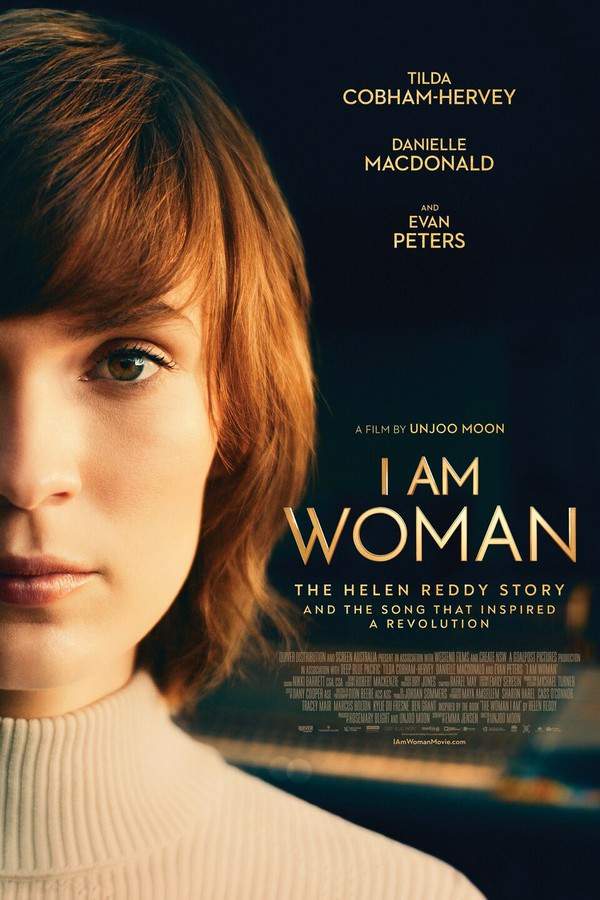
I Am Woman (2020) movie poster

Plot Summary

I Am Woman (2020) Plot Summary Explained

Release, runtime and language
2020 · 116 min · English
Echo score 78
Loading streaming availability…
Directed by
Unjoo Moon
Starring
Matthew Cardarople, Danielle Macdonald, Chris Parnell, Evan Peters, Tilda Cobham-Hervey, Dusty Sorg

In 1966, a determined singer leaves Australia for New York City, hoping to break into the male-dominated music industry. With the support of a rock journalist and a talent manager who becomes her husband, Helen Reddy rises to stardom, achieving iconic success with songs like "I Am Woman." As her fame grows, she faces increasing pressures on her personal life and career, ultimately learning to find strength and independence.

On this page (6)
  1. 1 Where to watch
  2. 2 What happens: full plot
  3. 3 Plot questions answered
  4. 4 Movie threads
  5. 5 Movies like I Am Woman
  6. 6 Every angle
Loading streaming availability…

Full plot summary · contains spoilers

What Happens in I Am Woman: Full Plot Summary

The whole story of I Am Woman (2020) explained, from the opening scene to the final frame: every key event, every twist and what it all adds up to. Read it as a quick recap before the sequel, to check a scene you missed, or to finally understand what really happened.

In 1966, the talented Helen Reddy arrives in New York City in pursuit of a music career, having won a contest back in her native Australia. However, upon her arrival, she faces an unfortunate turn of events when the record label backs out of their agreement, leaving her in a vulnerable position with her three-year-old daughter, Traci. Isolated and in desperate need of financial stability, Reddy begins performing at various small nightclubs. During this challenging time, she reconnects with an old friend, the esteemed rock journalist Lilian Roxon.

At one of Roxon’s parties, she meets Jeff Wald, a talent agent who becomes her romantic partner. The pair marries and decides to move to Los Angeles, where Wald believes there will be better opportunities for them both. However, the initial phase of their journey proves tough, as Wald struggles to promote Reddy amidst an industry that favors male artists. Despite this, persistent phone calls to Capitol Records eventually lead to Reddy getting a chance to record a single. With the support of family and friends, she secures airplay on the radio, and her cover of "I Don't Know How to Love Him" becomes her first significant success.

As Reddy’s popularity rises, she and Wald buy a larger home and embrace the glamorous Hollywood lifestyle, although this begins to take a toll on their relationship when Wald develops a cocaine addiction. Around this time, Reddy becomes captivated by the growing feminist movement. This inspiration drives her to pen the empowering anthem "I Am Woman." Despite industry executives labeling it as “angry” and “man-hating,” Wald encourages her to feature the song in her performances. Ultimately, it transforms into her most celebrated hit and a quintessential feminist anthem of the era.

Through her career, Reddy achieves great success with eight number one adult contemporary singles in the US, a television show, and a residency in Las Vegas. Nevertheless, as the pressures of her profession weigh on her marriage, Reddy seeks comfort from Roxon again, only to discover her friend suffers from poor health. Sadly, when Roxon passes away due to asthma, Reddy feels compelled to cancel her forthcoming concerts, but Wald pressures her to fulfill her obligations.

Following a successful performance, Reddy finds Wald backstage in a state of distress, under the influence of cocaine and in a confrontation with music executives. The shocking scene and Reddy's exhaustion lead to a collapse that lands her in an emergency room, where she learns that the Equal Rights Amendment, a pivotal aspect of the feminist movement, has been defeated. Returning home, she confronts the reality of her financial situation with Wald, discovering that they are heavily in debt, a burden Wald unjustly places on their accountant.

Ultimately, the couple divorces, sells their home, and Reddy decides to step away from the spotlight, retiring from the music industry in the early 1980s. Fast forward to 1989, her daughter Traci encourages her to perform at a feminist rally in Washington, D.C. Though hesitant at first, Reddy ultimately takes the stage and delivers a powerful rendition of "I Am Woman," uniting thousands of fellow advocates in a sing-along that marks a poignant moment of solidarity and empowerment.
Last updated: September 18, 2026 at 08:59

Was this helpful?

Plot questions answered

I Am Woman Plot Explained: Your Questions Answered

The questions people ask most about I Am Woman (2020): what happens in the confusing scenes, why the characters do what they do, the twists, hidden details and what the ending means. Each answer contains spoilers.

Q1

Why did Helen Reddy write "I Am Woman"?

Helen Reddy wrote "I Am Woman" after becoming deeply moved by the feminist movement that was gaining momentum in the late 1960s and early 1970s. The song became her way of channeling the energy of women's liberation into music, capturing the defiance of a generation fighting for equality. Although record executives in I Am Woman dismissed the track as "angry" and "man-hating," Wald pushed her to include it in her live performances. The song ultimately transformed into her most celebrated hit and a defining feminist anthem of the era.

  • i am woman
  • feminist movement
  • helen reddy
  • anthem
  • women's liberation
  • songwriting
Q2

What caused Helen Reddy to collapse and end up in the hospital?

Helen Reddy collapsed in I Am Woman after a breaking point backstage, where she discovered Jeff Wald under the influence of cocaine and in a confrontation with music executives. The shock of that scene, combined with her accumulated exhaustion and grief over Lilian Roxon's recent death, pushed her past her physical and emotional limits. She woke up in the emergency room to learn the Equal Rights Amendment had been defeated, compounding her despair. The collapse marked a symbolic unraveling of both her marriage and her career momentum.

Foreshadowing: Helen's earlier embrace of the glamorous Hollywood lifestyle and Wald's developing cocaine addiction set the stage for the backstage crisis that triggers her collapse.

  • collapse
  • hospital
  • jeff wald
  • cocaine
  • exhaustion
  • emergency room
Q3

What brought Helen Reddy back to performing at the 1989 rally?

Helen Reddy's daughter Traci encouraged her to perform at a feminist rally in Washington, D.C. in 1989 after years of retirement from the spotlight. In I Am Woman, Reddy is initially hesitant to return to the stage, having retreated from public life following her divorce and the collapse of her career. The 1989 gathering on the National Mall becomes a moment of reclamation as she leads thousands in a sing-along of "I Am Woman." The scene underscores the lasting cultural weight of her music and her role as a feminist icon.

  • 1989
  • washington dc
  • feminist rally
  • traci
  • national mall
  • return
Q4

Why were industry executives initially against "I Am Woman"?

Industry executives in I Am Woman rejected the song because they viewed its feminist message as too aggressive and commercially risky for a mainstream audience. They specifically labeled the lyrics as "angry" and "man-hating," fearing it would alienate male listeners and radio programmers at the time. Jeff Wald, however, believed in the song's power and insisted Helen Reddy perform it despite the criticism. That gamble paid off, and the track eventually became one of the most iconic feminist anthems of the 1970s.

  • i am woman
  • executives
  • man-hating
  • angry
  • rejection
  • radio
Q5

Why did Helen Reddy and Jeff Wald divorce?

Helen Reddy and Jeff Wald divorced because their marriage had been severely damaged by Wald's cocaine addiction, his financial mismanagement, and the cumulative emotional toll of their careers. In I Am Woman, Wald's behavior backstage under the influence of drugs marked the moment Reddy could no longer ignore how unstable their relationship had become. The revelation that they were deeply in debt, which Wald tried to deflect onto their accountant, was the final trigger. Together, these pressures led Reddy to leave both Wald and the spotlight behind.

  • divorce
  • jeff wald
  • debt
  • marriage
  • cocaine
  • accountant
Q6

Why did Helen Reddy retire from music in the early 1980s?

Helen Reddy retired from music in the early 1980s after the combined weight of her divorce from Jeff Wald, their mounting debts, and years of professional burnout finally overwhelmed her. In I Am Woman, the financial strain revealed during their final confrontation left her emotionally exhausted, and the symbolic defeat of the Equal Rights Amendment deepened her sense of disillusionment. Selling their home and stepping out of the spotlight allowed her to retreat from an industry that had worn her down. Her retirement marked the end of an era defined by relentless touring, recordings, and personal sacrifice.

  • retirement
  • early 1980s
  • divorce
  • debt
  • burnout
  • career
Q7

Why was the Equal Rights Amendment defeat significant in the film?

The Equal Rights Amendment defeat is significant in I Am Woman because it arrives at the exact moment Helen Reddy is at her most vulnerable, lying in a hospital bed after collapsing from exhaustion. The news symbolizes the broader backlash against the feminist movement that defined her music and her public identity. Hearing about the ERA's failure while she is physically and emotionally broken creates a powerful double setback. It marks the turning point at which Reddy's career momentum and her faith in progress both begin to crumble.

  • equal rights amendment
  • era
  • feminism
  • defeat
  • hospital
Q8

How did Jeff Wald's cocaine addiction affect his marriage to Helen?

Jeff Wald's cocaine addiction increasingly destabilized his marriage to Helen Reddy as his behavior grew erratic and his responsibilities to her career slipped. In I Am Woman, his drug use escalates alongside their Hollywood lifestyle, eventually culminating in a backstage confrontation with recording executives that shocks Reddy into a physical collapse. The addiction not only damaged his reliability as her agent and manager but also eroded the trust and intimacy in their personal life. It ultimately became one of the central reasons their marriage fell apart.

  • cocaine addiction
  • jeff wald
  • marriage
  • addiction
  • hollywood lifestyle
Q9

How did Lilian Roxon's death affect Helen Reddy?

Lilian Roxon's death devastated Helen Reddy because Roxon was one of her closest confidants and a steady source of emotional support throughout her career. In I Am Woman, Roxon had been the friend who introduced her to Jeff Wald and helped her navigate the music industry during her most vulnerable early years in New York. Learning that Roxon had passed away from asthma pushed Reddy to cancel her upcoming concerts in mourning. Wald, however, pressured her to honor her commitments, deepening her grief and exhaustion at a critical moment.

  • lilian roxon
  • death
  • asthma
  • friend
  • grief
Q10

How did Helen Reddy finally get signed to Capitol Records?

Helen Reddy finally got her break at Capitol Records in I Am Woman through Jeff Wald's relentless phone calls to the label, which eventually convinced executives to give her a chance to record a single. Once given the opportunity, Wald mobilized family and friends to promote her demo and push for radio airplay. Her cover of "I Don't Know How to Love Him" became a B-side hit and marked her first significant success. That breakthrough laid the foundation for everything that followed in her career.

  • capitol records
  • breakthrough
  • jeff wald
  • record deal
  • single
Q11

Why did Helen Reddy and Jeff Wald move from New York to Los Angeles?

Helen Reddy and Jeff Wald moved from New York to Los Angeles because Wald believed Hollywood offered far better opportunities for Reddy's music career than New York. In I Am Woman, the move represents a strategic gamble to break into the heart of the American entertainment industry. Although the transition was rough at first, with Wald struggling to get Reddy noticed in a male-dominated field, the relocation ultimately led to her breakthrough at Capitol Records. The move proved essential to her eventual rise as one of the era's biggest stars.

  • los angeles
  • new york
  • jeff wald
  • move
  • career
  • hollywood
Q12

Why was Helen Reddy stranded in New York after arriving from Australia?

Helen Reddy was left stranded because the record label that had originally promised her a recording contract in I Am Woman abruptly backed out of the agreement, leaving her without financial support. She had arrived in the United States after winning a contest in Australia, expecting the deal would launch her career. With a three-year-old daughter to care for and no income, she had no choice but to sing at small nightclubs just to survive. The setback forced her into the gritty New York club scene, where she eventually reconnected with Lilian Roxon.

  • new york
  • australia
  • record deal
  • stranded
  • contest
  • traci

Movie threads

More Movies Like I Am Woman, by Mood & Story

Curated lists built around what makes I Am Woman tick: the same mood, the same kind of story or the same emotional payoff. Each list explains why these movies belong together.

Empowering stories like I Am Woman about women breaking barriers

Stories of women who refuse to be silenced and reshape their industries. Discover movies like I Am Woman that follow determined women rising through male-dominated industries to claim their voice. These inspiring biographical and character-driven dramas combine heavy emotional stakes with ultimately hopeful, triumphant payoffs. Perfect if you loved Helen Reddy's feminist fight and want more barrier-breaking heroines.

  • empowering
  • triumphant
  • inspiring
  • determined
  • feminist
  • hopeful
  • Tone: hopeful, empowering
  • Pacing: steady, character driven
Why these movies?

The story pattern: The protagonist typically begins as an outsider or underdog, underestimated by gatekeepers who hold cultural or institutional power. Through perseverance, talent, and the support of allies, she gradually earns recognition, faces a major personal or professional crisis at the midpoint, and ultimately delivers a defining moment of triumph that reframes her legacy and inspires broader change.

Why they belong together: They share a powerful hopeful tone layered over heavy emotional weight, focusing on female empowerment, self-discovery, and the cost of fighting for visibility. The pacing is steady and chronological, allowing character growth to feel earned, and the endings lean toward cathartic uplift rather than tragedy.

Music industry and fame stories like I Am Woman

Musicians and creators who pay dearly for their spotlight moments. If you were moved by I Am Woman, explore similar biographical dramas about musicians and artists battling addiction, loss, and personal turmoil on their climb to stardom. These films blend heavy emotional weight with steady pacing and ultimately hopeful resolutions, perfect for fans of music biopics and the human cost of creative success.

  • nostalgic
  • bittersweet
  • music industry
  • addiction
  • rise to fame
  • loss
  • Tone: bittersweet, nostalgic
  • Pacing: steady biographical
Why these movies?

The story pattern: A talented but vulnerable artist pursues their dream against long odds, gradually finding mentors and romantic partners who both help and harm them. Personal crises such as substance abuse, the death of close friends, domestic tensions, and industry exploitation accumulate into a breaking point, before a late-act performance or breakthrough restores their voice and independence.

Why they belong together: These films center on the music industry or creative professions as a pressure cooker where talent meets exploitation, addiction, and complicated love. They share a nostalgic tone, moderate complexity, heavy emotional weight, and a thematic focus on self-discovery and survival, often drawing from real cultural and political moments.

If you liked this

Movies Like I Am Woman

Similar movies to I Am Woman: the same genre, themes or kind of story. Each one comes with its own plot summary, timeline and ending explained.

Browse all movie summaries

Every angle

I Am Woman (2020) Explained: Plot, Timeline & Characters

Everything about I Am Woman in one place: what happens in the plot summary, the timeline in chronological order, the characters and meaning and a spoiler-free summary. What's After the Movie adds the cast, box office and post-credit scenes.

Coming soon on iOS and Android

The Plot Explained Movie Summary App

Plot summaries, endings explained and timelines on your phone. Catch up on any movie in minutes, save your favorites and never miss a twist again.

Be the first to know when we launch. Your email stays private, always.

Learn more about the app