Plot Explained Spoilers guaranteed!
Plot Explained

Browse by genre

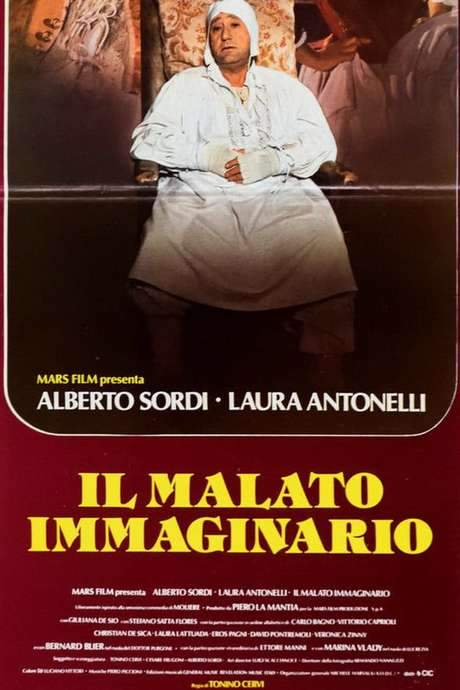
Hypochondriac (1979) movie poster

Plot Summary

Hypochondriac (1979) Plot Summary Explained

Release, runtime and language
1979 · 101 mins · Italian
Loading streaming availability…
Directed by
Tonino Cervi
Starring
Marina Vlady, Eros Pagni, Bernard Blier, Alberto Sordi, Laura Antonelli, Christian De Sica

Set in 1673, a Rome plagued by poverty and unrest provides a bleak backdrop for the story of affluent Mr. Argante. He is attended by two devoted servants, while his cunning wife watches his every move, waiting for the moment his death will secure her inheritance.

On this page (6)
  1. 1 Where to watch
  2. 2 What happens: full plot
  3. 3 Plot questions answered
  4. 4 Movie threads
  5. 5 Movies like Hypochondriac
  6. 6 Every angle
Loading streaming availability…

Full plot summary · contains spoilers

What Happens in Hypochondriac: Full Plot Summary

The whole story of Hypochondriac (1979) explained, from the opening scene to the final frame: every key event, every twist and what it all adds up to. Read it as a quick recap before the sequel, to check a scene you missed, or to finally understand what really happened.

In Rome, a city where power and money blur the lines between affection and leverage, the rich and stingy landowner Argante, Alberto Sordi, guards his fortune as if it were a shield against every possible harm. He clings to the belief that his health is delicate and easily threatened, using this fear to tighten his control over everything around him. At the center of his grand scheme is a marriage contract involving his daughter Lucrezia, Marina Vlady, and a young doctor who steps into Argante’s world with the promise of medical expertise and social advancement. Argante treats Lucrezia as a prize to be managed rather than a daughter to be engaged with, muttering that she knows little about medicine while fixating on the financial and social gain the match could secure. Yet the plan proceeds almost indifferently to Lucrezia’s own voice, driven by Argante’s hunger for status and security.

Behind the scenes, the wife remains largely unseen, and the household hums with the quiet, unspoken tension that money can breed even as it buys appearances. The doctor, a glinting figure in Argante’s calculation, begins to move through the family’s orbit, visiting with a blend of charm and professional certainty that makes it hard to separate genuine concern from calculated interest. What starts as a practical arrangement soon takes on the other, heavier tone of a bargaining chip—one more way for Argante to weigh every action by its return on investment. The doctor’s interventions and insinuations chip away at Argante’s certainty, and a new realization takes root: the marriage is less about Lucrezia’s happiness and more about securing a favorable future for Argante’s house, even if that future costs the family its ease.

As the tension escalates, Argante finds himself at odds with those he believed were loyal to him, discovering that his status within the house is eclipsed by a growing sense of isolation. The master grows suspicious that his own kin are drifting away, and even the servants begin to seem more attuned to their own interests than to his wellbeing. To test the sincerity of those around him, the servants coax Argante to pretend to be dead, staging a dramatic ruse designed to reveal who truly values him and who merely tolerates his wealth. What unfolds is a stark portrait of a household that is quick to turn away when the façade of prosperity crumbles. The ruse lays bare the cold distances within the family, but it also uncovers a cruel twist: a theft of the deposit—money that Argante believed would guarantee his legacy, now gone as if in a single stroke.

The tale leaves Argante in a quiet, unsettling void—surrounded by walls that once echoed with his commands and now echo with silence. It is a story told with a measured, almost clinical humor, where the stakes are not heroic acts but the ordinary, often painful unraveling of a life built on control and accumulation. In this world, wealth can shield a man from many things, yet it cannot buy the simple, human protections that come from being genuinely seen, loved, and valued by those closest to him. The characters move through a landscape of wit and irony, where every gesture and every claim to care is weighed against what it costs in money, pride, and affection, leaving a lingering reminder that the true measure of a family is not the size of its fortune, but the depth of its loyalties.
Last updated: February 18, 2026 at 23:45

Was this helpful?

Plot questions answered

Hypochondriac Plot Explained: Your Questions Answered

The questions people ask most about Hypochondriac (1979): what happens in the confusing scenes, why the characters do what they do, the twists, hidden details and what the ending means. Each answer contains spoilers.

Q1

Why does Argante pretend to be dead?

Argante's servants convince him to stage his own death to test whether his family truly loves him or only pretends to care for his money. After experiencing growing suspicion that his wife, daughter, and relatives are motivated by his wealth rather than genuine affection, Argante agrees to the ruse hoping to expose who is loyal and who is just tolerating him for financial gain.

Foreshadowing: Earlier, Argante notices that his family seems more interested in his wealth than in his wellbeing, setting the stage for his decision to test their loyalty.

  • argante fake death test family loyalty servants
Q2

What happens to Argante's deposit money?

After the fake death ruse, someone steals Argante's deposit money, the funds he believed would secure his legacy. The theft occurs during the chaos following the revelation that his family showed indifference to his supposed death, compounding his losses and reinforcing his sense of betrayal.

  • deposit money theft argante inheritance stolen
Q3

Why is Argante so obsessed with his health?

Argante uses his fear of illness as a way to maintain control over his household and fortune. The summary indicates he was born under odd signs, suggesting a lifelong vulnerability that he magnifies into a central preoccupation. This hypochondria allows him to justify his tight grip on money and his suspicion of everyone around him.

Foreshadowing: The opening establishes that Argante guards his fortune as if it were a shield against every possible harm, establishing his defensive mindset.

  • argante hypochondria health obsession wealth control
Q4

Does Argante's wife betray him?

Yes, during the aftermath of the fake death ruse, Argante discovers that his wife has been unfaithful and is involved with another man. This revelation confirms his deepest suspicions about the fragility of their marriage and that she was only waiting for him to die to claim her inheritance.

  • argante wife infidelity betrayal adultery
Q5

Why does Argante arrange Lucrezia's marriage to a doctor?

Argante arranges his daughter Lucrezia's marriage to a young doctor primarily for financial and social advancement rather than her happiness. He treats the wedding as a business contract, focusing on securing status and security for his house. The summary shows he views Lucrezia as naive and suspects she lacks genuine depth in medicine or character, seeing the match as another way to consolidate his wealth and influence.

  • lucrezia marriage doctor argante arranged betrothal
Q6

Who remains loyal to Argante throughout the story?

The servants are the only people who show genuine loyalty to Argante. While his family (wife, daughter, and relatives) demonstrate indifference or hostility during the fake death ruse, the servants remain quietly loyal and stay close during the charade. This stark contrast leads Argante to realize that true attachment comes from those he employs, not from his blood relatives.

  • servants loyalty argante family betrayal faithful
Q7

What does the fake death reveal about Argante's family?

The fake death ruse exposes that Argante's family does not truly love him, they show indifference and even hostility when they believe he has died. His wife, daughter, and other relatives are quick to abandon him or show relief at his passing, confirming Argante's worst suspicions that they only tolerate him for his wealth.

Foreshadowing: Earlier, Argante grows suspicious that his kin are drifting away and that even servants seem more attuned to their own interests than his wellbeing.

  • fake death reveal family indifference betrayal test
Q8

Why does Argante suspect everyone of wanting his money?

Argante suspects everyone around him of being motivated by money because his wealth is the central organizing principle of his life. Throughout the story, he discovers that his suspicions are largely justified, his wife awaits his death for inheritance, his daughter Lucrezia's marriage is a financial transaction, and his relatives show no genuine care for him. His paranoia stems from a lifetime of valuing wealth above all else, which has created relationships built on financial rather than emotional foundations.

  • argante suspicion money motivation greed family
Q9

What is the message of the story's ending?

The ending conveys that wealth cannot buy genuine love or loyalty. After the fake death test reveals his family's true colors and exposes his wife's infidelity plus the theft of his deposit, Argante is left in isolation, surrounded by walls that once echoed with his commands but now echo with silence. The story closes with a caution that money's power is fragile and that the true measure of relationships is not fortune but the depth of loyalty between people.

  • ending message theme wealth loyalty love meaning
Q10

Why is the story set in 1673 Rome?

The setting of 1673 Rome provides a backdrop of poverty and unrest against which Argante's wealth stands in sharp contrast. The period allows for a classic comedic premise of a rich landowner surrounded by people who might want his money, fitting the satirical tone of the film. Rome's historical context of power and money blurring lines between affection and leverage mirrors the central dynamics of Argante's household.

  • 1673 Rome setting poverty unrest historical context

Movie threads

More Movies Like Hypochondriac, by Mood & Story

Curated lists built around what makes Hypochondriac tick: the same mood, the same kind of story or the same emotional payoff. Each list explains why these movies belong together.

Satirical class comedies like Hypochondriac

Wealthy fools and cunning servants unravel in tales of greed and hypocrisy. If you enjoyed the biting satire and historical setting of Hypochondriac, this thread features other movies about wealthy eccentrics, cunning servants, and tales of inheritance and deception set against a backdrop of class divide.

  • satirical
  • deceitful
  • greedy
  • suspicious
  • revelatory
  • class divide
  • Tone: sardonic, light, revelatory
  • Pacing: steady, character-driven
Why these movies?

The story pattern: These stories typically follow a wealthy protagonist whose hypochondria, vanity, or foolishness makes them a target for those around them. The plot revolves around a central deception—often involving inheritance or marriage—that is slowly unraveled, leading to a revealing and often bittersweet conclusion where true motives are exposed.

Why they belong together: Movies in this thread are grouped by their light, sardonic tone, steady pacing, and focus on exposing human greed and hypocrisy within a rigid class structure. They share a mix of comedy and mild tension, where the emotional stakes are personal rather than world-ending.

Domestic deception stories like Hypochondriac

Quiet household tensions explode when lies and loyalty are put to the test. For viewers who liked the themes of marital betrayal and servant loyalty in Hypochondriac, this thread collects movies about domestic intrigue, where the true test of character happens behind closed doors.

  • suspicious
  • deceitful
  • revelatory
  • marital betrayal
  • servant loyalty
  • domestic
  • Tone: suspicious, bittersweet, revelatory
  • Pacing: steady, suspenseful
Why these movies?

The story pattern: The narrative follows a central figure, often isolated by their own condition or status, who becomes the focal point of a domestic power struggle. Trust is a commodity, and the plot builds towards a climax where loyalties are tested and the deceptive facade of the household is shattered.

Why they belong together: These films share a moderate complexity with multiple characters possessing hidden agendas, a steady pacing that allows the tension of deception to build, and a bittersweet or revelatory ending. The intensity is medium, derived from psychological suspense rather than action.

If you liked this

Movies Like Hypochondriac

Similar movies to Hypochondriac: the same genre, themes or kind of story. Each one comes with its own plot summary, timeline and ending explained.

Browse all movie summaries

Every angle

Hypochondriac (1979) Explained: Plot, Timeline & Characters

Everything about Hypochondriac in one place: what happens in the plot summary, the timeline in chronological order, the characters and meaning and a spoiler-free summary. What's After the Movie adds the cast, box office and post-credit scenes.

Coming soon on iOS and Android

The Plot Explained Movie Summary App

Plot summaries, endings explained and timelines on your phone. Catch up on any movie in minutes, save your favorites and never miss a twist again.

Be the first to know when we launch. Your email stays private, always.

Learn more about the app