Plot Explained Spoilers guaranteed!
Plot Explained

Browse by genre

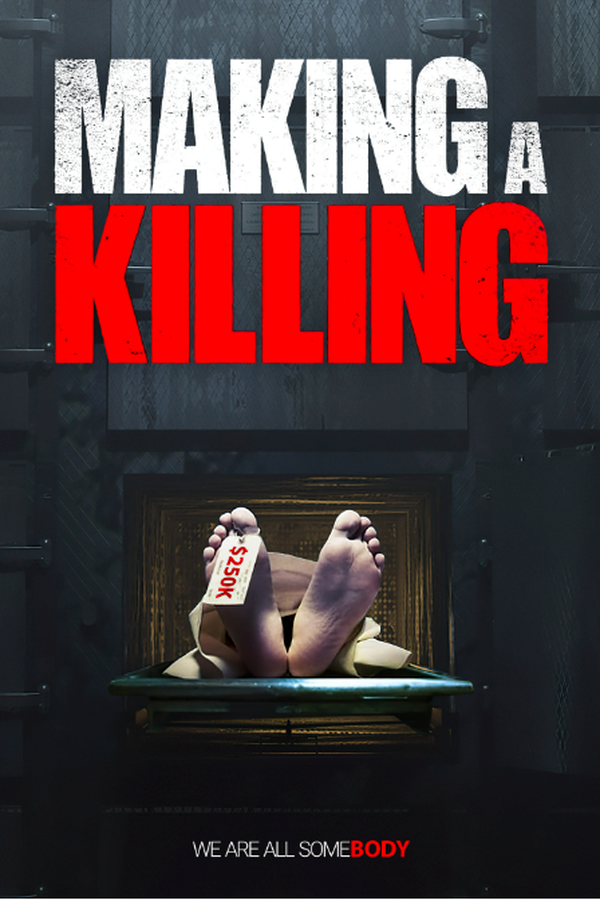
How to Make a Killing (2024) movie poster

Plot Summary

How to Make a Killing (2024) Plot Summary Explained

Release, runtime and language
2024 · 109 mins · French
Loading streaming availability…
Starring
Benoît Poelvoorde, Laure Calamy, Timéo Mahaut, Louka Meliava, Emmanuelle Devos, François Girard

Michel and Cathy, a long-married couple living a quiet, monotonous life in the mountains, find their world turned upside down when a bear unexpectedly causes a car accident, killing two drug dealers and revealing a hidden stash of €2 million. Deciding to cover up the incident and keep the money, they unwittingly embark on a dangerous path, stumbling upon a mysterious series of deaths. Their clumsy attempts at deception attract the attention of an interfering inspector, leading them deeper into a perilous situation.

On this page (6)
  1. 1 Where to watch
  2. 2 What happens: full plot
  3. 3 Plot questions answered
  4. 4 Movie threads
  5. 5 Movies like How to Make a Killing
  6. 6 Every angle
Loading streaming availability…

Full plot summary · contains spoilers

What Happens in How to Make a Killing: Full Plot Summary

The whole story of How to Make a Killing (2024) explained, from the opening scene to the final frame: every key event, every twist and what it all adds up to. Read it as a quick recap before the sequel, to check a scene you missed, or to finally understand what really happened.

In a stark prison cell, Becket Redfellow sits four hours from his scheduled execution, and a visiting priest, Father Morris, sits nearby to hear the whole story that has led him to this precipice. The tale unfolds as a careful, sometimes chilling downward spiral, framed by Becket’s own insistence that every choice he made was driven by a stubborn determination to seize a life he believed he deserved, even as others warned him of the cost.

Becket’s origins lie with the wealthy Redfellow clan of Huntington, Long Island, where his mother Mary faced pressure from her own family when she became pregnant. After Becket’s father died during his birth, Mary raised him in New Jersey, carrying a quiet burden of how differently life had turned out. A piece of her hair rests in a locket Becket cherishes, a tangible symbol of a promise she pressed upon him: do not give up until you seize the life that belongs to you. When Becket later seeks help from the Redfellows, the family responds with a cold refusal, sending only a typed note that signals their disengagement and a stubborn wall between Becket and any possibility of belonging to the fortune they control.

As an adult, Becket works in a modest clothing store. A chance reunion with Julia Steinway, a figure from his past, reopens a doorway to complex emotions and shifting loyalties. Julia is now married to a former classmate, Lyle, who looks down on Becket and has a sense of entitlement about the family name. Becket’s prospects at the store begin to feel hollow as the manager’s college-educated son looms larger, signaling an end to the ordinary life he leads. Frustrated by his stagnant position, Becket resolves to pursue the inheritance that feels almost within reach, convinced that such wealth could rewrite his entire trajectory.

Becket’s plan to claim the Redfellow fortune begins with his seven relatives who stand between him and the crown jewel of the family wealth. He targets the first cousin, Taylor, a carefree, hard-partying figure who moves through clubs and nightlife with a swagger that makes him an easy target for Becket’s plotting. The two cross paths at a lakeside party, and Becket follows Taylor to his boat. With Taylor intoxicated and unaware, Becket seizes the moment, snaring him with the boat’s anchor tied to his ankle. The plan seems to unfold with unsettling ease, and Taylor’s sudden death in the water becomes a chilling confirmation to Becket that the path to the fortune might be darker than he anticipated.

Taylor’s funeral brings Becket into contact with Warren, Taylor’s father and an uncle who harbors guilt for not being there for Becket’s family when they needed help. Warren’s offer of a legitimate path back into a more respectable life—an invitation to join his business—brings Becket a lure of stability that momentarily reframes his ambitions. This new, promising stretch of life feels like a lifeline, and Becket embraces it as a bridge toward something better, even as the shadow of old grievances and the lure of unfair advantage linger in the background.

The circle around Becket tightens as he encounters Noah, an aspiring artist, and Noah’s girlfriend Ruth, whose growing mutual attraction to Becket complicates everything. Ruth invites Becket to a dinner with Noah and friends, but Becket’s true interest lies in the darker chemistry of the room—the power to manipulate and destroy that he begins to sense within himself. He slips away to Noah’s darkroom, where a dangerous accident is engineered: Becket tampers with the chemicals used in developing photographs, introducing toxins that would explode when mixed if sparked. A cigarette is placed to ignite the reaction, and a broken lightbulb seals Noah’s doom. Becket leaves, unsettled by how close he comes to tearing apart another life, yet still convinced that his path toward wealth remains intact, as if the moral lines he crosses are merely stepping stones to a larger pay-off.

The deaths attract the attention of the FBI—Megan Pinfield and Brad Matthews—whose suspicions are immediately drawn to the pattern around Becket as they investigate the odd, interconnected demises of his relatives. Becket denies any stake in the Redfellow inheritance during interviews, a denial that buys him some breathing room for the moment. Julia reemerges in his life, suggesting that she has information and that she’s ready to leverage it, threatening to expose Becket if he does not keep pace with her demands.

Becket’s next target is Steven, a megachurch pastor whose public controversies and lawsuits have left him exposed. Disguised as a reporter, Becket gains access to Steven, planning a confrontation that ends with Steven consuming a tainted shake rather than a fatal blow from a weapon. The pastor’s quick response—sword in hand and danger in his eyes—creates a tense standoff, but once Becket reveals his true identity, Steven’s fear subsides into a dangerous calm, and the threat dissipates as Becket withdraws, leaving Steven alive but profoundly unsettled by the encounter.

Culminating in a cascade of calculated poisonings and sabotages, Becket’s campaign advances with the murder of Cassandra, an aunt, poisoned in a sauna, followed by the sabotage of McArthur, an uncle who meets his end just before taking a plane in a fatal incident. Becket’s professional life begins to improve as Ruth stays by his side, and the couple appears poised for a brighter future. But Julia persists, probing Becket’s loyalty and manipulating him into keeping up appearances while she seeks a way to claim a larger share of the fortune.

Warren’s heart attack marks a turning point in the web of Becket’s family violence. The FBI agents return with new information, and Becket learns that the investigation is closing in on him, particularly as Julia proposes a dangerous bargain to protect herself: a $300,000 payment to Lyle in exchange for a name-and-note that might exonerate Becket in the eyes of the police. The emotional stakes intensify as Becket’s relationship with Ruth strains under the weight of these revelations, and the couple’s engagement sits on a precarious edge.

Becket’s audacious meeting with Whitelaw—Becket’s grandfather and the final gatekeeper to the fortune—becomes an ultimate test of his nerve. The dinner is staged as a private confrontation, meant to force Becket into a deadly choice. Whitelaw, who clearly holds a long-standing resentment toward Becket’s mother, pushes Becket to shoot him in the chest, a plan Becket cannot bring himself to fulfill. Whitelaw then turns the tables, drawing a bow and arrow in an intense, dangerous standoff. In a brutal culmination, Becket fires two arrows that strike Whitelaw, ending the patriarch’s life and leaving Becket as the last surviving Redfellow, the sole heir to the vast, inherited estate.

Back in the world of social circles and high society, Becket and Ruth are invited into a prestigious New York club, a moment that should signal a triumphant ascent. Instead, Pinfield and Matthews arrive to arrest Becket for Lyle’s murder, a crime Becket cannot fully defend himself against without exposing a wider network of misdeeds. Becket is found guilty and faces execution, his future appearing painfully bleak. At the last possible moment, Julia offers Becket a chilling out: a suicide note she has found from Lyle would allow Becket to transfer the entire Redfellow fortune to her, providing a legal shield against his conviction. Desperate, Becket consents, signing away the fortunes and ties that bound him to the family legacy.

As the story nears its final pages, Becket’s fate seems sealed, but a guard arrives, revealing that Julia has turned the note over to the police. Becket is unexpectedly freed, the weight of the lie lifting as Ruth appears outside with a quiet, almost sacramental gesture: she returns his mother’s locket, the symbol of a promise that had driven him for so long. Ruth drives away, and Becket’s path diverges once more from hers. In the wake of this reversal, Becket chooses to rejoin Julia, who leads him back toward the Redfellow mansion, toward the life that lies beyond the law and beyond the truth he once believed would redeem him.

In the end, Becket’s story has been told to a priest, but the portrait that emerges is not one of clear redemption. It is a ledger of calculated risk, moral compromise, and the relentless hunger for a life that feels deserved. The locket with his mother’s hair remains a quiet, poignant reminder of the line Becket crossed, the promises he kept and broke, and the questions that linger about whether any man can truly rewrite a legacy built on power, privilege, and the lives of those around him.

Last updated: April 07, 2026 at 21:05

Was this helpful?

Plot questions answered

How to Make a Killing Plot Explained: Your Questions Answered

The questions people ask most about How to Make a Killing (2024): what happens in the confusing scenes, why the characters do what they do, the twists, hidden details and what the ending means. Each answer contains spoilers.

Q1

Why does Becket kill his relatives to claim the inheritance?

Becket believes the Redfellow fortune rightfully belongs to him since his mother was cut off from the family when she became pregnant with him. After being rejected by the family with a typed note, he becomes convinced that the only way to get the life he deserves is to eliminate the seven relatives standing between him and the inheritance. His mother's locket, containing a strand of her hair, represents her dying promise that he must never give up until he seizes the life he deserves.

Foreshadowing: The film opens with Becket insisting to the priest that every choice was driven by his determination to seize the life he believed he deserved.

  • becket redfellow inheritance motivation murder family
Q2

How does Becket kill Taylor at the lakeside party?

Becket follows his cousin Taylor, a carefree partier, to a boat at a lakeside party. He drugs Taylor with intoxicating substances and then ties the boat's anchor to Taylor's ankle. When Taylor is intoxicated and unaware, Becket releases the anchor, dragging him into the water and causing his death. Becket notes that the murder unfolds with 'unsettling ease,' confirming that the path to the fortune is darker than he anticipated.

Foreshadowing: Earlier, Becket learns that seven relatives stand between him and the crown jewel of the family wealth, making clear his intent to remove each obstacle.

  • taylor drowning boat anchor murder method
Q3

What happens to Noah in the darkroom and why does he die?

Becket manipulates his way into Noah's confidence, using Noah's girlfriend Ruth's attraction to him. He sneaks into Noah's darkroom and tampers with the photographic chemicals, introducing toxic substances that would explode when mixed together if sparked. He places a cigarette to ignite the reaction and breaks a lightbulb to ensure the deadly combination ignites. The resulting explosion kills Noah, and Becket leaves unsettled but still convinced his path toward wealth remains intact.

Foreshadowing: Ruth invites Becket to dinner, but his true interest lies in 'the darker chemistry of the room, the power to manipulate and destroy.'

  • noah darkroom explosion chemicals murder method
Q4

How does Becket kill Aunt Cassandra and Uncle McArthur?

Becket poisons his aunt Cassandra in a sauna, using some toxic substance that kills her during her visit. He then sabotages Uncle McArthur's airplane, causing a fatal incident just before McArthur is set to take a flight. These calculated poisonings and sabotages advance Becket's campaign to eliminate his relatives and strengthen his position in the family inheritance line.

Foreshadowing: After eliminating Taylor and Noah, Becket's pattern of family deaths draws FBI attention, confirming the investigation closes in on him.

  • cassandra mcarthur poisoning sabotage murder method
Q5

Why does Julia blackmail Becket and what does she want?

Julia is Becket's former romantic interest who now married Lyle, a former classmate who looks down on Becket. After Becket's relatives begin dying, Julia suspects Becket's involvement and uses this knowledge to blackmail him. She demands money and threatens to expose him to the FBI if he doesn't comply. Later, she proposes a dangerous bargain: $300,000 payment to Lyle in exchange for a name-and-note that might exonerate Becket. Julia is essentially extracting payment for her silence throughout his murder campaign.

Foreshadowing: Julia hints she suspects Becket early on, warning him to stay cautious while probing his loyalty.

  • julia blackmail demands money silence exposure
Q6

What is the significance of the locket Becket carries?

The locket contains a strand of Becket's mother Mary's hair and is his most treasured possession. Before dying from illness, Mary pressed a promise upon young Becket: do not give up until you seize the life that belongs to you. The locket serves as a tangible symbol of this promise, driving Becket's relentless pursuit of the Redfellow fortune throughout the film. At the end, Ruth returns the locket to Becket, symbolically closing a circle with his past.

Foreshadowing: Mary faced pressure from her own family (including Whitelaw) to give up the baby or be cut off from the fortune, establishing the family rejection that fuels Becket's obsession.

  • mother mary locket hair promise inheritance
Q7

Why does Becket kill his grandfather Whitelaw with arrows?

Becket arranges a private dinner confrontation with Whitelaw, the final gatekeeper to the fortune and the patriarch who held long-standing resentment toward Becket's mother. Whitelaw pushes Becket to shoot him in the chest, attempting to force Becket into a deadly choice. When Becket cannot bring himself to fire, Whitelaw draws a bow and arrow for a dangerous standoff. In the culmination, Becket fires two arrows that strike Whitelaw, killing him and making Becket the last surviving Redfellow and sole heir to the vast estate.

Foreshadowing: Whitelaw is established as the one who pressured Mary to give up her baby, showing deep-seated family hostility.

  • whitelaw grandfather arrow killing inheritance final heir
Q8

Why is Becket arrested for Lyle's murder instead of the other deaths?

Although Becket killed multiple relatives (Taylor, Noah, Cassandra, McArthur, and Whitelaw), he is arrested specifically for Lyle's murder. Lyle is Julia's husband who looked down on Becket. The FBI has enough evidence to charge him with this particular murder, and Becket cannot defend himself without exposing his wider network of crimes. He is found guilty and faces execution because confessing to the other murders would incriminate him further.

Foreshadowing: FBI agents Pinfield and Matthews investigate the 'odd, interconnected demises' of Becket's relatives and close in on him throughout the film.

  • arrest trial execution lyle murder fbi conviction
Q9

What is Julia's suicide note scheme at the end?

Facing execution, Julia offers Becket a chilling escape plan: sign over the entire Redfellow fortune to her in exchange for a supposed suicide note she claims to have found from Lyle. This would provide a legal shield against his conviction. Desperate, Becket signs away everything. However, the plan collapses when Julia secretly turns the note over to the police instead of using it to save Becket. The guard then reveals Julia has betrayed him, but unexpectedly frees Becket anyway, the weight of the lie has lifted, though his fate remains unclear.

Foreshadowing: Julia's pattern of manipulating and threatening Becket throughout the film suggests she would ultimately act in her own self-interest.

  • suicide note julia betrayal fortune transfer scheme
Q10

What happens at the end and why does Becket rejoin Julia?

After being unexpectedly freed, Becket is met outside prison by Ruth, who returns his mother's locket, a symbolic closure to his past. However, Ruth drives away, their relationship severed by everything that happened. Becket then chooses to rejoin Julia, who leads him back toward the Redfellow mansion, toward a life 'beyond the law and beyond the truth.' The ending suggests Becket has chosen power and deceit over redemption, as his mother's promise to seize the life he deserves has twisted into accepting a corrupt existence rather than living an honest life without the fortune.

Foreshadowing: The priest listens to Becket's entire story, and the film presents 'a ledger of calculated risk, moral compromise, and the relentless hunger for a life that feels deserved.'

  • ending final scene julia becket freedom mansion choice

Movie threads

More Movies Like How to Make a Killing, by Mood & Story

Curated lists built around what makes How to Make a Killing tick: the same mood, the same kind of story or the same emotional payoff. Each list explains why these movies belong together.

Ordinary crime spiral stories like How to Make a Killing

When average people stumble into crime, their desperate cover-ups spin out of control. Explore movies like How to Make a Killing where average people get caught in criminal schemes that spiral out of control. These films feature desperate cover-ups, moral compromises, and the dangerous consequences of greed, perfect for fans of tense, character-driven thrillers.

  • suspenseful
  • anxious
  • paranoid
  • calculating
  • greedy
  • desperate
  • Tone: dark, tense, cynical
  • Pacing: fast, escalating
Why these movies?

The story pattern: The narrative follows ordinary individuals who unexpectedly encounter criminal opportunity, often through accident or discovery. Their initial decision to engage with this criminal element sets off a chain reaction of deception, cover-ups, and escalating violence. The plot typically involves their clumsy attempts to maintain control while external forces (like investigators or rival criminals) close in, creating a tense cat-and-mouse game.

Why they belong together: These films share a specific narrative structure where normalcy gives way to criminal chaos. They explore the theme of moral corruption through greed and desperation, maintaining high tension as protagonists navigate worlds they're unprepared for. The tone is consistently dark and suspenseful, focusing on the psychological toll of living a double life.

Dark comedy crime films like How to Make a Killing

Bungling amateurs attempt serious crimes with disastrous, often hilarious results. Discover movies similar to How to Make a Killing that mix crime thrills with dark humor. These stories feature clumsy criminals, absurd situations, and bungled plans that create both tension and comedy, perfect for viewers who enjoy morally ambiguous characters in over their heads.

  • dark humor
  • suspenseful
  • cynical
  • absurd
  • anxious
  • unsettling
  • Tone: dark, cynical, suspenseful with humor
  • Pacing: fast, chaotic
Why these movies?

The story pattern: The narrative follows characters who attempt crimes despite their obvious incompetence or lack of criminal experience. Their plans inevitably go wrong due to poor execution, unexpected complications, or their own personality flaws. The story balances genuine danger and consequences with comedic elements derived from their failures, creating a tone that is both suspenseful and darkly humorous.

Why they belong together: These films share a unique tonal balance of genuine thriller tension and dark comedy derived from character incompetence. They explore the gap between criminal ambition and capability, creating narratives where the humor comes from disastrous execution rather than lighthearted antics. The mood maintains a cynical, suspenseful atmosphere while acknowledging the absurdity of the situations.

If you liked this

Movies Like How to Make a Killing

Similar movies to How to Make a Killing: the same genre, themes or kind of story. Each one comes with its own plot summary, timeline and ending explained.

Browse all movie summaries

Every angle

How to Make a Killing (2024) Explained: Plot, Timeline & Characters

Everything about How to Make a Killing in one place: what happens in the plot summary, the timeline in chronological order, the characters and meaning and a spoiler-free summary. What's After the Movie adds the cast, box office and post-credit scenes.

Coming soon on iOS and Android

The Plot Explained Movie Summary App

Plot summaries, endings explained and timelines on your phone. Catch up on any movie in minutes, save your favorites and never miss a twist again.

Be the first to know when we launch. Your email stays private, always.

Learn more about the app