Plot Explained Spoilers guaranteed!
Plot Explained

Browse by genre

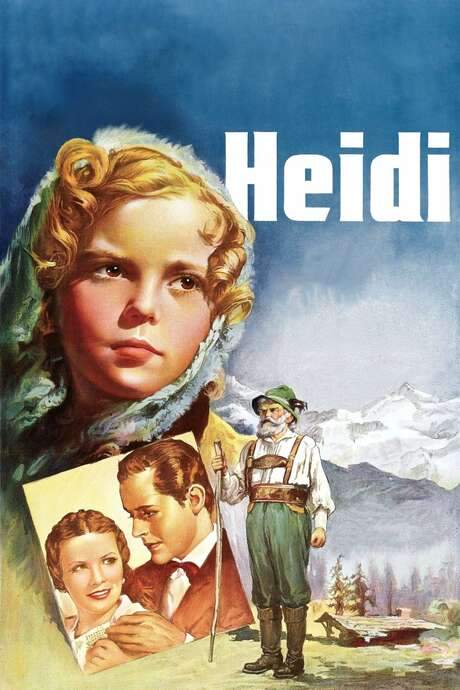
Heidi (1937) movie poster

Characters & Themes

Heidi (1937) Characters, Setting & Themes Explained

Release, runtime and language
1937 · 88 mins · English
Loading streaming availability…
Directed by
Allan Dwan
Starring
Sig Ruman, Helen Westley, Shirley Temple, Christian Rub, Sidney Blackmer, Mary Nash

Orphaned Heidi is sent by her aunt Dete to the Alpine hills, where she lives with her stern, reclusive grandfather Adolph Kramer. Her bright spirit gradually draws him back into village life. Later Dete takes Heidi to be a companion for a wheelchair‑bound daughter of a rich man, prompting her grandfather to race after her and bring her home.

On this page (9)
  1. 1 Where to watch
  2. 2 Characters explained (7)
  3. 3 Where & when it takes place
  4. 4 Themes & meaning (3)
  5. 5 Character & meaning questions
  6. 6 The book behind the movie
  7. 7 Movie threads
  8. 8 Movies like Heidi
  9. 9 Every angle
Loading streaming availability…

7 main characters · contains spoilers

Heidi Characters Explained: Who Is Who

The main characters of Heidi (1937), heroes and villains: what drives them, how they change over the course of the story and what each of them reveals about the film's bigger ideas.

  • Heidi Kramer (Shirley Temple)

    An eight-year-old Swiss orphan who is given to her grandfather. Her cheery, optimistic nature begins to melt his gruff exterior, and she longs for a true sense of home and family. She navigates two worlds with kindness and resilience, bringing life to the mountain and, indirectly, to the city.

    • 🧒 Child
    • 😊 Cheerful
    • 🏔️ Mountain life
  • Adolph Kramer (Jean Hersholt)

    A mountain-dwelling hermit who is initially cool toward Heidi but gradually warms to her. His protective instincts grow as he witnesses Heidi’s warmth and courage, ultimately drawing him toward the town and its people. He remains a strong, loyal figure who reconnects with his granddaughter on the mountain.

    • 🧔 Elder
    • 🛡️ Protective
    • 🪵 Gruff
  • Klara Sesemann (Marcia Mae Jones)

    A sheltered, disabled girl in a wheelchair who is constantly watched by Fräulein Rottenmeier. Her world expands when Heidi’s presence hints at new possibilities, and she later demonstrates a will to walk again, influencing the family’s decisions.

    • ♿ Disabled
    • 💖 Gentle
    • 🧠 Intelligent
  • Herr Sesemann (Sidney Blackmer)

    Klara’s doting father, a wealthy man who visits at Christmas. He shows a compassionate side by offering Heidi a home after Klara’s improvement, and he confronts Rottenmeier’s cruelty, choosing kindness and balance over strict control.

    • 👨 Father
    • 💼 Wealth
    • 🕊️ Affectionate
  • Fräulein Rottenmeier (Mary Nash)

    The strict guardian who keeps Klara in a tightly controlled environment and tries to remove Heidi from the household. She schemes to sell Heidi to the gypsies and lies to the police, only to be thwarted by Heidi’s honesty and the Sesemann family’s intervention.

    • 👩 Authority
    • ❌ Cruelty
    • 🧭 Rigid
  • Dete (Mady Christians)

    Heidi’s aunt who initially takes her to Frankfurt and later returns to the mountain scene. Her actions set the stage for Heidi’s journey between two worlds, and she is involved in the tension surrounding Heidi’s fate.

    • 👩 Aunt
    • 🧭 Ambitious
    • 🧊 Deceptive
  • Pastor Schultz (Thomas Beck)

    The local pastor who encounters Heidi and her aunt on the way to Frankfurt. He informs Heidi’s grandfather about the move and later assists in conveying the truth to the authorities, acting as a moral guide within the community.

    • ⛪ Pastor
    • 💬 Moral guide
    • 🕊️ Compassionate

Last updated: February 19, 2026 at 23:58

Was this helpful?

Setting

Where and When Does Heidi Take Place?

The setting of Heidi (1937): the year and time period, the places and locations, and how they shape the characters, the mood and the tension of the story.

Time period

Location

Swiss Alps, Frankfurt am Main (Sesemann household)

The story unfolds in Heidi’s mountain home among the Swiss Alps, where Adolph Kramer lives as a hermit. It then shifts to the Sesemann household in Frankfurt am Main, a grand urban residence where Klara is sheltered and closely watched. These settings establish a contrast between rugged, open mountain life and rigid, social city life.

  • 🏔️ Alpine
  • 🏛️ Urban Life

Last updated: February 19, 2026 at 23:58

Was this helpful?

3 major themes

Heidi Meaning: Themes & Message Explained

What is Heidi (1937) really about? The emotional, social and philosophical themes the film keeps returning to, its symbolism and the message beneath the surface.

  • Family & Belonging

    Heidi’s cheerful presence softens her initially distant grandfather, showing that family can form through care and loyalty rather than blood ties. The pair’s bond grows as Heidi brings warmth to the mountain and to the town, illustrating how love can bridge two very different worlds. The search for home is a central drive, with Heidi yearning for a place where she truly belongs.

  • Social Class

    The Alpine home contrasts with the Sesemann household in Frankfurt, highlighting differences in wealth, manners, and social expectations. Heidi’s simplicity and joy challenge the rigidity of the city’s elite upbringing, while the aunt’s manipulations reveal how power can be misused to control others. The narrative uses these settings to comment on privilege and empathy across social divides.

  • Authority & Justice

    Fräulein Rottenmeier embodies strict oversight and control, attempting to shape Klara’s life at the expense of Heidi’s place. The plot includes an attempted removal of Heidi and a false accusation against the grandfather, prompting a police pursuit. The pastor’s involvement and Heidi’s truthful explanation help restore a sense of justice and reunite the family on the mountain.

Last updated: February 19, 2026 at 23:58

Was this helpful?

Character & theme questions

Heidi Characters & Meaning: Your Questions Answered

The questions people ask about Heidi (1937): who the characters really are, their relationships, what the symbols mean, where it takes place and what the movie is really about. Each answer contains spoilers.

Q1

Where is the movie Heidi set?

Heidi takes place in two main locations: the Swiss Alps where Heidi lives with her grandfather in a remote mountain home, and Frankfurt am Main at the grand Sesemann household. The contrast between these settings is central to the story.

  • swiss alps
  • frankfurt
  • setting
  • locations
Q2

What does the Alpine setting represent in Heidi?

The Alpine setting represents freedom, simplicity, and natural beauty. It is where Heidi's grandfather lives as a hermit, and the rugged mountain environment contrasts sharply with the rigid, confined urban life of Frankfurt.

  • alps
  • mountain
  • freedom
  • nature
Q3

How does Frankfurt compare to the Alpine setting in the story?

Frankfurt represents the wealthy, structured city life with strict social expectations, while the Alps represent rural simplicity and emotional freedom. The story uses this contrast to highlight how Heidi's joyful spirit bridges these two very different worlds.

  • frankfurt
  • city
  • contrast
  • social class
Q4

What are the main themes in the 1937 film Heidi?

The film explores three key themes: Family & Belonging, which shows how love can form bonds beyond blood ties; Social Class, which contrasts wealth and privilege with simplicity and empathy; and Authority & Justice, which deals with themes of control, false accusations, and eventual justice.

  • themes
  • family
  • belonging
  • social class
  • justice
Q5

What does the Family & Belonging theme mean in Heidi?

The theme shows that family is created through care and loyalty rather than blood relations. Heidi's cheerful presence softens her stern grandfather, illustrating how love can bridge different worlds and fulfill the human need to belong somewhere.

  • family
  • belonging
  • love
  • home
Q6

How does the Social Class theme work in Heidi?

The movie contrasts Heidi's simple mountain life with the wealthy Sesemann household in Frankfurt. Heidi's joy and honesty challenge the rigidity of elite upbringing, while the aunt's manipulations reveal how power can be misused to control others.

  • social class
  • wealth
  • privilege
  • empathy
Q7

Who is Adolph Kramer in Heidi?

Adolph Kramer is Heidi's grandfather, a reclusive hermit who lives in the Swiss Alps. Initially distant and gruff, he gradually warms to Heidi's kindness, demonstrating how her love helps him reconnect with the village and find redemption.

  • adolph kramer
  • grandfather
  • hermit
Q8

Who is Klara Sesemann and what role does she play?

Klara Sesemann is a disabled girl in a wheelchair who lives in the Frankfurt Sesemann household under strict supervision. Her world expands when Heidi arrives as her companion, and she later finds the will to walk again, influencing key family decisions.

  • klara sesemann
  • wheelchair
  • friendship
Q9

Who is Fräulein Rottenmeier and what is her role?

Fräulein Rottenmeier is the strict guardian who controls Klara's life in Frankfurt. She attempts to remove Heidi from the household, schemes to sell her to gypsies, and makes false accusations against the grandfather, serving as the story's main antagonist.

  • fraulein rottenmeier
  • guardian
  • antagonist
Q10

What does the Authority & Justice theme involve in Heidi?

Fräulein Rottenmeier represents strict control over others, even attempting to have Heidi removed through false accusations. The pastor helps convey the truth to authorities, and Heidi's honesty ultimately restores justice, reuniting the family on the mountain.

  • authority
  • justice
  • truth
  • pastor
Q11

What is the tone of the 1937 Heidi film?

The film has a hopeful, gentle tone with a low intensity. Despite obstacles like separation, Heidi's cheerful nature consistently overcomes adversity, leading to positive outcomes like her grandfather's redemption and Klara's recovery.

  • tone
  • hopeful
  • uplifting
  • gentle
Q12

Who is Dete in relation to Heidi?

Dete is Heidi's aunt who initially takes her to Frankfurt to live with the Sesemann family. She is the character who sets Heidi's journey in motion, moving her between the two contrasting worlds of the Alpine mountains and the wealthy city household.

  • dete
  • aunt
  • family relations

Movie threads

More Movies Like Heidi, by Mood & Story

Curated lists built around what makes Heidi tick: the same mood, the same kind of story or the same emotional payoff. Each list explains why these movies belong together.

Movies where innocence heals like in Heidi

A child's pure spirit mends fractured lives and rekindles hope for the weary. Discover movies like Heidi where a child's unwavering optimism transforms the lives of those around them. This collection features gentle, heartwarming stories about found family, redemption, and the simple power of love to mend a broken spirit.

  • heartwarming
  • uplifting
  • hopeful
  • redemptive
  • comforting
  • innocent
  • Tone: hopeful, uplifting
  • Pacing: steady, character-driven
Why these movies?

The story pattern: The narrative pattern centers on a pure-hearted protagonist entering a world of emotional isolation or sadness. Through their innate kindness and unwavering optimism, they slowly break down the defenses of troubled adults, leading to reconciliation, personal redemption, and the formation of a new, loving family unit.

Why they belong together: These movies are grouped together because they share a core belief in the transformative power of innocence. They feature low intensity, hopeful tones, and a steady pace, creating a comforting viewing experience focused on emotional recovery rather than high-stakes conflict.

Movies about simple living escapes like Heidi

Stories that find profound joy in returning to a simpler, more natural way of life. If you liked Heidi's Alpine setting and theme of finding joy in simplicity, you'll love these movies. They explore the appeal of idyllic rural life, the contrast with urban complexity, and the heartwarming journey of coming home to what truly matters.

  • idyllic
  • comforting
  • pastoral
  • hopeful
  • escape
  • simple life
  • Tone: hopeful, idyllic
  • Pacing: steady, contemplative
Why these movies?

The story pattern: The journey typically involves a character leaving a place of constraint (like a city or a rigid household) for an idyllic, natural setting. The plot focuses on their adaptation to a simpler life, the bonds they form with the local community, and the ultimate choice to embrace this new, fulfilling existence, often after a temporary return to their old life.

Why they belong together: These films share a common vibe of pastoral beauty and a thematic focus on the contrast between hectic modern life and the peace found in nature and community. They offer a comforting escape for the viewer, featuring beautiful landscapes, light emotional weight, and a hopeful resolution.

If you liked this

Movies Like Heidi

Similar movies to Heidi: the same genre, themes or kind of story. Each one comes with its own plot summary, timeline and ending explained.

Browse all movie summaries

Every angle

Heidi (1937) Explained: Plot, Timeline & Characters

Everything about Heidi in one place: what happens in the plot summary, the timeline in chronological order, the characters and meaning and a spoiler-free summary. What's After the Movie adds the cast, box office and post-credit scenes.

Coming soon on iOS and Android

The Plot Explained Movie Summary App

Plot summaries, endings explained and timelines on your phone. Catch up on any movie in minutes, save your favorites and never miss a twist again.

Be the first to know when we launch. Your email stays private, always.

Learn more about the app