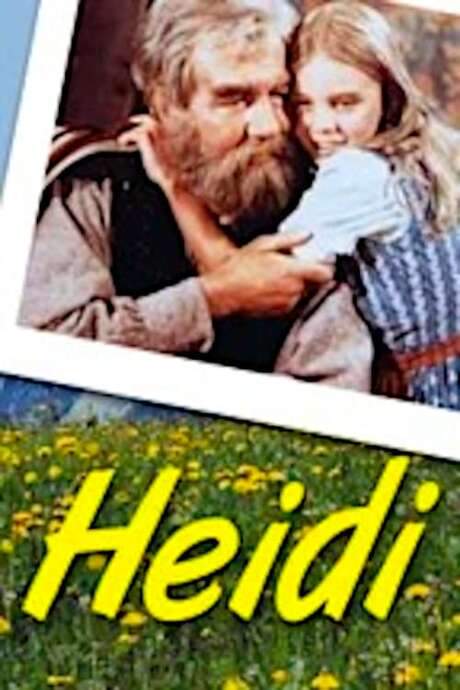
Heidi Shirley Temple is an eight-year-old Swiss orphan who is entrusted to her mountain-dwelling grandfather, Adolph Kramer, Jean Hersholt. At first his cool demeanor keeps her at a distance, but her bright, hopeful spirit gradually thaws him and draws him toward the life of the nearby town, where a quiet curiosity about the world beyond the mountains begins to bloom.
Her aunt Dete, Mady Christians, soon takes Heidi away to Frankfurt, where she is set to be the companion of Klara, Pauline Moore, a sheltered, wheelchair-bound girl who is constantly watched by the strict Fräulein Rottenmeier, Mary Nash. The change is sudden and jarring for Heidi, and the grand old forest-and-pasture routines she loves feel miles away in the bustling city. And yet there is a sense that the house in Frankfurt holds its own kind of warmth, if she can find a way to belong there.
Before they depart, the local pastor, Pastor Schultz Thomas Beck, runs into Heidi and Dete and learns that Heidi is being moved to Frankfurt. He passes this information along to her grandfather, who starts a search with a mix of worry and determination, fueled by a stubborn hope that his granddaughter will come back to the mountains where they belong.
Heidi remains unhappy in the new setting but clings to memories of the alpine world she loves, carrying herself with a resilient optimism and a patient yearning to be reunited with the grandfather who has shown her kindness in return for her own bright spirit. Her dream of returning home keeps her going as she navigates the unfamiliar routines of a big-city household.
At Christmas, Klara’s father, Herr Sesemann, Sidney Blackmer, visits and witnesses the bond that forms between Heidi and Klara. When Klara demonstrates that she can walk again, Herr Sesemann offers Heidi a home, but Heidi makes a heartfelt plea to stay with the grandfather she adores. He is moved by her loyalty but ultimately faces the difficult choice between two very different lives for Heidi: one in the mountains with Adolph Kramer and one in the city with Klara and her family.
Rottenmeier’s cruelty toward Heidi does not go unchallenged. Herr Sesemann fires her once he sees how she treats the girl, but Rottenmeier fights back by trying to remove Heidi from the picture—she schemes to sell the child to the gypsies, hoping to sever the ties Heidi has formed in Frankfurt. In a tense confrontation, she lies to the police that Heidi’s grandfather has stolen her child, attempting to erase the pair’s bond and rewrite the story.
Heidi, however, speaks up in her grandfather’s defense, explaining that the man is indeed her grandfather and that Rottenmeier’s schemes aimed to separate them. The truth becomes clear, and the community begins to see the deep, steady love that binds Heidi to Adolph Kramer.
In the end, the film circles back to the mountain, where Heidi is joyfully reunited with her grandfather. Herr Sesemann and Klara visit the pair on the hillside, witnessing the enduring connection between Heidi and the Frommwald home she cherishes. The story closes on a note of reconciliation and hopeful balance between the two worlds Heidi straddles: the simple, sunlit life of the mountains and the more complex, affectionate circle she has found in Frankfurt.