Plot Explained Spoilers guaranteed!
Plot Explained

Browse by genre

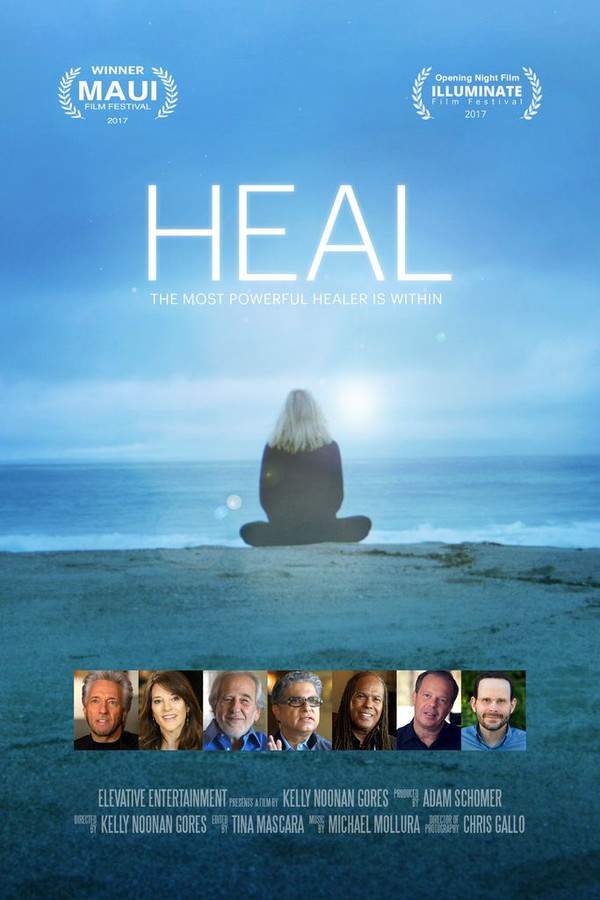
Heal (2017) movie poster

Timeline

Heal (2017) Timeline Explained – Every Event in Order

Release, runtime and language
2017 · 106 min · English
Echo score 48
Loading streaming availability…
Directed by
Kelly Noonan
Starring
David Hamilton, Deepak Chopra, Michael Beckwith, Anita Moorjani, Anthony William, Bernie Siegel

This documentary explores the powerful relationship between the mind and body, revealing how thoughts, beliefs, and emotions can significantly impact health and healing. Through interviews with experts and groundbreaking research, it examines alternative therapies and their potential to address various ailments. The film challenges conventional medical approaches and offers a message of hope, encouraging viewers to take control of their well-being and explore the body's innate ability to heal itself.

On this page (6)
  1. 1 Where to watch
  2. 2 Events in order (15)
  3. 3 Timeline questions answered
  4. 4 Movie threads
  5. 5 Movies like Heal
  6. 6 Every angle
Loading streaming availability…

15 events in order · contains spoilers

Heal Timeline: Events in Chronological Order

Every key event of Heal (2017) in order, scene by scene, with when and where it takes place. Use it to untangle flashbacks, time jumps and parallel storylines, to refresh your memory before the sequel or to find the exact scene you are thinking of.

  1. Opening Monologue on Environmental Toxicity

    The film opens with a monologue from director Noonan-Gores, in which she states her concerns about the growing cases of disease caused by the toxicity of the environment and the food people consume. This introduction sets the stage for the documentary's exploration of the body's capacity to heal itself.

  2. Gathering Testimonials on Mind-Body Medicine

    Following the opening statement, Noonan-Gores transitions to gathering testimonials from people who have experienced mind-body medicine. These personal accounts form the foundation of the documentary and introduce the film's central themes.

  3. Joe Dispenza's Triathlon Accident and Recovery

    Chiropractor Joe Dispenza describes his experience of being hit by a car during a triathlon. He declined surgery and says he recovered by reconstructing his spine in his mind. His recovery led him to conduct research on mind-body medicine.

    Where
    Triathlon
  4. Elizabeth Craig's Stage Four Cancer Diagnosis

    Elizabeth Craig details her healthy yet stressful life, explaining that she worked with Dianne Porchia, a spiritual therapist and holistic stress reduction facilitator. She noticed something was physiologically wrong when she began developing frequent headaches and nausea, and doctors eventually diagnosed her with stage four colorectal cancer. Scientists and mind-body practitioners then discuss the role of stress in the modern age and its physiological effects. Craig reflects, "It's the mind that gets in the way of healing."

  5. Eva Lee's Autoimmune Disease

    Eva Lee describes the appearances of skin rashes and boils throughout her body. Doctors diagnosed her with an unspecified autoimmune disease, and she sought an alternative to medications. Following her story, Bruce Lipton and David Hamilton discuss quantum physics and chemistry applied to mind-body healing.

  6. Anita Moorjani's Lymphoma Story

    Anita Moorjani describes her experience with lymphoma. She believes that fear was the cause of her cancer, and she says her tumors dissolved within five weeks. Her account becomes one of the film's most striking examples of radical healing.

  7. Research on Radical Remissions

    Kelly Turner, who holds a Ph.D in social welfare, discusses her research on radical remissions. Kelly Brogan also briefly discusses her experience in seeking alternative medicine as a way to circumvent taking medications for the rest of her life.

  8. Concerns About Pharmaceuticals and Diet

    Michael Beckwith weighs in with his views on pharmaceuticals, while Bruce Lipton and Deepak Chopra express their concerns with prescription drug use for chronic illnesses. Anthony William then describes his role in assessing patients and the importance of diet in treating chronic illnesses.

  9. The Placebo Effect and Prognosis

    David Hamilton describes his role as an organic chemist and explains the effects of a placebo. Bruce Lipton, Joe Dispenza, Deepak Chopra, Michael Beckwith, and Kelly Turner comment about the nature of prognosis and how expectations shape outcomes.

  10. Craig Seeks Treatment Beyond Chemotherapy

    Elizabeth Craig is seen explaining her reasons for seeking treatment in addition to chemotherapy. She eventually starts seeing Dianne Porchia, a spiritual psychologist, to help her get rid of her fear of death. This marks a turning point in her healing journey.

  11. Stem Cells, Genetics, and the Environment

    Bruce Lipton, Joan Borysenko, Gregg Braden, and Darren Weissman discuss stem cells, genetics, and the role of the environment on one's health. The segment expands on how external factors can influence the body's biology and healing capacity.

  12. Eva Lee's Reiki and EFT Therapy Session

    The film refocuses on Eva Lee, who is shown in a therapy session with Patti Penn, a Reiki master and Emotional Freedom Technique practitioner. Several individuals discuss the supposed roles of past trauma and stress on physical ailments, followed by commentary on the pharmaceutical industry.

  13. Sound Wave Therapy for the Nervous System

    Jeffrey Thompson is shown discussing the nature of the nervous system and how he uses sound waves to activate Eva Lee's parasympathetic nervous system. This segment highlights one of the alternative therapies featured in the film.

  14. Meditation, Prayer, and the Parasympathetic System

    Noonan-Gores, Joan Borysenko, Marianne Williamson, Deepak Chopra, and Kelly Turner discuss the role of meditation in relieving stress and activating the parasympathetic nervous system. Gregg Braden then asserts that prayer and thoughts of love work in combating illness by incorporating quantum entanglement and the Big Bang.

  15. Elizabeth Craig Becomes Cancer-Free

    The film concludes with Elizabeth Craig becoming cancer-free, delivering one of the documentary's most powerful outcomes. The closing segment provides commentary about societal conventions regarding western medicine, inviting viewers to reconsider how healing is approached.

Last updated: October 20, 2026 at 01:17

Was this helpful?

Timeline questions answered

Heal Timeline Explained: Your Questions Answered

When does it happen, and why in that order? The questions people ask about the chronology of Heal (2017): time jumps, flashbacks, cause and effect between scenes and the correct order of events, each answered with spoilers.

Q1

Why did Joe Dispenza decline surgery after being hit by a car during a triathlon?

Joe Dispenza, a chiropractor, chose to forgo surgery and instead recovered by mentally reconstructing his spine. His successful recovery without conventional medical intervention led him to dedicate his career to researching mind-body medicine, which became a foundational story in the documentary.

Foreshadowing: Dispenza's personal experience with mind-body recovery foreshadows the film's later arguments about the body's capacity to heal itself when the mind is properly engaged.

  • joe dispenza
  • triathlon accident
  • surgery
  • mind-body recovery
  • chiropractor
Q2

How did Elizabeth Craig become cancer-free after a stage four colorectal cancer diagnosis?

Craig combined conventional chemotherapy with mind-body work facilitated by spiritual therapist Dianne Porchia. Porchia helped Craig release her fear of death, which Craig identified as a significant mental barrier. The documentary credits this emotional and psychological shift, alongside medical treatment, as central to her becoming cancer-free by the end of the film.

Foreshadowing: Craig's early statement that 'it's the mind that gets in the way of healing' foreshadows her eventual breakthrough when she addresses her fear of death.

  • elizabeth craig
  • cancer-free
  • stage four colorectal cancer
  • dianne porchia
  • fear of death
Q3

What role did fear play in Anita Moorjani's lymphoma according to the documentary?

Anita Moorjani attributes her lymphoma directly to fear, stating that fear was the root cause of her cancer. After addressing this fear, she reports that her tumors dissolved within five weeks. Her account becomes one of the documentary's most striking examples of what the film calls radical remission.

  • anita moorjani
  • lymphoma
  • fear
  • radical remission
  • tumors dissolved
Q4

Why did Eva Lee seek alternative medicine for her autoimmune disease?

Eva Lee developed skin rashes and boils and was diagnosed with an unspecified autoimmune disease, but she chose not to rely on medications. Instead, she pursued alternative therapies including Reiki, Emotional Freedom Technique with Patti Penn, and sound wave therapy with Jeffrey Thompson to address her condition holistically.

  • eva lee
  • autoimmune disease
  • alternative medicine
  • reiki
  • sound wave therapy
Q5

How does the placebo effect relate to healing in the documentary?

Organic chemist David Hamilton explains the placebo effect to demonstrate how belief and expectation can produce real physiological changes. Multiple experts including Bruce Lipton, Joe Dispenza, and Deepak Chopra extend this idea to argue that prognosis itself shapes outcomes, suggesting the mind's expectations can directly influence physical recovery.

  • placebo effect
  • david hamilton
  • prognosis
  • belief
  • mind-body healing
Q6

What did Dianne Porchia help Elizabeth Craig overcome during treatment?

Dianne Porchia, a spiritual psychologist and holistic stress reduction facilitator, guided Elizabeth Craig through confronting and releasing her fear of death. Craig sought Porchia's help specifically because she believed this fear was blocking her body's ability to heal, and working through it marked a turning point in her recovery journey.

Foreshadowing: Craig's early reflection that 'it's the mind that gets in the way of healing' foreshadows her decision to work with Porchia on eliminating psychological barriers.

  • dianne porchia
  • spiritual psychologist
  • elizabeth craig
  • fear of death
  • holistic healing
Q7

How does meditation activate the parasympathetic nervous system according to the film?

Several contributors including Joan Borysenko, Marianne Williamson, Deepak Chopra, and Kelly Turner describe meditation as a tool for relieving stress and engaging the parasympathetic nervous system. This system supports rest and recovery, and the film argues that activating it counteracts the stress physiology that contributes to disease.

  • meditation
  • parasympathetic nervous system
  • stress relief
  • deepak chopra
  • recovery
Q8

Why are stem cells, genetics, and the environment connected to healing in the documentary?

Bruce Lipton, Joan Borysenko, Gregg Braden, and Darren Weissman argue that genes are not fixed determinants of health and that environmental signals, including thoughts and emotions, influence how cells behave. They frame stem cells and gene expression as responsive to lifestyle and mindset, supporting the idea that healing can be actively shaped.

  • stem cells
  • genetics
  • bruce lipton
  • environment
  • gene expression
  • epigenetics
Q9

What is the connection between stress and physical illness shown in the documentary?

The film presents stress as a major physiological driver of disease, with scientists and practitioners linking chronic stress to conditions like Elizabeth Craig's cancer and Eva Lee's autoimmune disease. Contributors argue that unresolved trauma and ongoing tension create biochemical environments that suppress healing, making stress reduction central to recovery.

Foreshadowing: Director Noonan-Gores's opening monologue about environmental toxicity foreshadows the film's broader argument that both external and internal environments shape health outcomes.

  • stress
  • chronic illness
  • trauma
  • autoimmune disease
  • mind-body connection
Q10

How did sound wave therapy help Eva Lee's condition?

Jeffrey Thompson used sound waves to stimulate Eva Lee's parasympathetic nervous system, shifting her body from a stressed state into a restorative one. The documentary presents this as a non-invasive way to influence nervous system function and create internal conditions more favorable to healing.

  • sound wave therapy
  • jeffrey thompson
  • parasympathetic nervous system
  • eva lee
Q11

Why do the experts in the film express concern about prescription drug use for chronic illnesses?

Bruce Lipton, Deepak Chopra, and Michael Beckwith argue that prescription medications often manage symptoms without addressing root causes, and may create long-term dependency. They contrast this pharmaceutical model with mind-body and lifestyle-based approaches that aim to activate the body's own healing mechanisms.

  • prescription drugs
  • pharmaceuticals
  • deepak chopra
  • bruce lipton
  • chronic illness
Q12

What is a 'radical remission' according to Kelly Turner's research?

Kelly Turner, who holds a Ph.D. in social welfare, researches cases of radical remission, meaning unexpected recoveries from illness that defy standard medical prognosis. Her work provides a framework for understanding the patient stories featured in the documentary, including Moorjani's lymphoma and Craig's stage four cancer.

  • radical remission
  • kelly turner
  • unexpected recovery
  • medical prognosis
Q13

How does Gregg Braden connect prayer and love to quantum physics?

Gregg Braden argues that prayer and feelings of love can influence health through principles of quantum entanglement and the Big Bang, claiming that human consciousness and emotion interact with biological systems at a subatomic level. This segment extends the documentary's claims about mind-body healing into quantum-level explanations.

  • gregg braden
  • prayer
  • quantum entanglement
  • love
  • consciousness
Q14

Why does the documentary focus on the mind's role in blocking healing?

Elizabeth Craig states directly in the film that 'it's the mind that gets in the way of healing,' and this idea anchors the entire documentary. Contributors argue that fear, unresolved trauma, and stress create physiological states that suppress immune function and prevent the body from activating its natural repair mechanisms.

Foreshadowing: Director Noonan-Gores's opening monologue about disease caused by environmental toxicity foreshadows the film's argument that internal, mental environments are equally toxic when filled with fear and stress.

  • mind-body healing
  • fear
  • trauma
  • elizabeth craig
  • immune system
Q15

What is the significance of the film ending with Elizabeth Craig becoming cancer-free?

Craig's cancer-free outcome serves as the documentary's culminating evidence that mind-body medicine can produce real results alongside conventional treatment. The closing segment ties her recovery to broader commentary criticizing societal dependence on western medicine, reinforcing the film's message that personal agency and inner work can drive healing.

Foreshadowing: Craig's collaboration with Dianne Porchia to release her fear of death foreshadows her eventual recovery, which the film presents as a direct result of that inner transformation.

  • elizabeth craig
  • cancer-free
  • recovery
  • western medicine
  • personal agency

Movie threads

More Movies Like Heal, by Mood & Story

Curated lists built around what makes Heal tick: the same mood, the same kind of story or the same emotional payoff. Each list explains why these movies belong together.

Mind-body healing documentaries like Heal (2017)

Stories where belief, breath, and biology conspire to transform health. If you loved Heal and want similar movies, this section features documentaries and films about the powerful connection between mind and body. Explore titles covering meditation, alternative medicine, quantum healing, stress and trauma recovery, and personal empowerment in wellness. Perfect for viewers inspired by Heal's hopeful message about the body's innate ability to recover.

  • hopeful
  • contemplative
  • empowering
  • reflective
  • uplifting
  • holistic
  • Tone: hopeful, empowering
  • Pacing: steady, reflective
Why these movies?

The story pattern: These narratives follow a recognizable arc: a health challenge is introduced, conventional approaches feel incomplete, and the journey pivots toward inner work, mindset shifts, or alternative modalities. Along the way, experts explain the science while patients illustrate the stakes. The climax tends toward revelation or recovery, affirming that consciousness plays an active role in physical healing.

Why they belong together: They share an uplifting, reflective spirit and a belief that personal agency intersects with medical possibility. Pacing is steady and interview-driven, tone is hopeful rather than grim, and the central question is always how the inner life shapes the outer body.
Movies about overcoming serious illness like Heal

Grave diagnoses turn into stories of resilience, recovery, and quiet miracles. Searching for movies like Heal (2017) that follow hopeful recovery journeys? These documentaries and drama films share Heal's emotional arc: confronting cancer, chronic disease, or life threatening conditions and finding empowerment, remission, or healing. They are uplifting films with happy endings for fans of Heal's inspirational message about becoming cancer free and taking control of wellbeing.

  • inspiring
  • uplifting
  • hopeful
  • gentle
  • resilient
  • reflective
  • Tone: bittersweet, hopeful
  • Pacing: steady patient journey
Why these movies?

The story pattern: The narrative typically opens in fear and diagnosis, moves through doubt and exploration, and resolves in affirmation as the protagonist reclaims their health. Family, community, and inner work support the climb. Emotional weight comes from the seriousness of the stakes, but the resolution is consistently redemptive.

Why they belong together: They pair serious subject matter with an uplifting outlook, prioritize patient voice over clinical detachment, and reward viewers with a happy or affirming ending. The shared mood is gentle, hopeful, and quietly heroic, making them feel emotionally similar even when the specific medical details differ.

If you liked this

Movies Like Heal

Similar movies to Heal: the same genre, themes or kind of story. Each one comes with its own plot summary, timeline and ending explained.

Browse all movie summaries

Every angle

Heal (2017) Explained: Plot, Timeline & Characters

Everything about Heal in one place: what happens in the plot summary, the timeline in chronological order, the characters and meaning and a spoiler-free summary. What's After the Movie adds the cast, box office and post-credit scenes.

Coming soon on iOS and Android

The Plot Explained Movie Summary App

Plot summaries, endings explained and timelines on your phone. Catch up on any movie in minutes, save your favorites and never miss a twist again.

Be the first to know when we launch. Your email stays private, always.

Learn more about the app