Plot Explained Spoilers guaranteed!
Plot Explained

Browse by genre

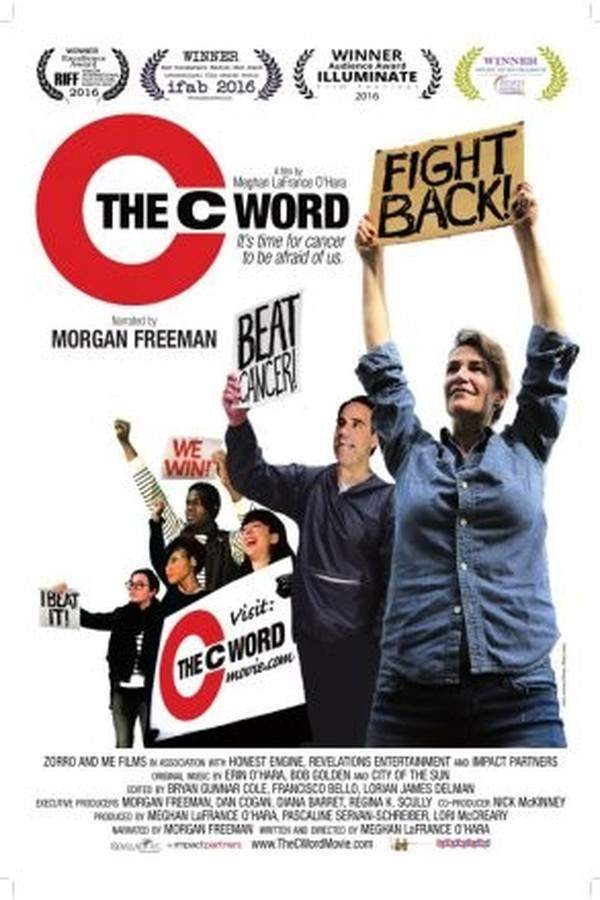
The C Word (2016) movie poster

Plot Summary

The C Word (2016) Plot Summary Explained

Release, runtime and language
2016 · 89 min · English
Directed by
Meghan O'Hara

This documentary combines humor, heart, and a rebellious spirit to explore outdated approaches to cancer treatment and challenge conventional wisdom. Narrated by Morgan Freeman, the film reveals shocking truths about preventable deaths and connects two compelling stories. It follows celebrated neuroscientist Dr. David Servan-Schreiber and director Meghan L. O'Hara, sharing their personal journeys from diagnosis to recovery and offering a hopeful perspective on facing serious illness.

On this page (6)
  1. 1 Where to watch
  2. 2 What happens: full plot
  3. 3 Plot questions answered
  4. 4 Movie threads
  5. 5 Movies like The C Word
  6. 6 Every angle

Where to watch

Where to Watch The C Word (2016)

Where can you watch The C Word? Stream, rent or buy it in the US, including on Amazon Video, Apple TV Store and Fandango At Home: current JustWatch availability with up-to-date prices.

Streaming availability powered by JustWatch

Full plot summary · contains spoilers

What Happens in The C Word: Full Plot Summary

The whole story of The C Word (2016) explained, from the opening scene to the final frame: every key event, every twist and what it all adds up to. Read it as a quick recap before the sequel, to check a scene you missed, or to finally understand what really happened.

The inaugural season of The L Word debuted on January 18, 2004, and wrapped up on April 11, 2004. This groundbreaking first season welcomes a diverse cast of characters as they navigate love, relationships, and identity in Los Angeles. Among them are the resilient Bette Porter and her partner Tina Kennard, who have been together for seven years and are eager to start a family. They are joined by Marina Ferrer, the charismatic owner of the bustling café The Planet; Jenny Schecter, a newcomer to the city searching for reinvention with her boyfriend Tim Haspell; the enigmatic Shane McCutcheon, whose androgynous styling and free-spirited nature intrigue those around her; Alice Pieszecki, a bisexual journalist maintaining The Chart, the city’s leading LGBTQ publication; Dana Fairbanks, a closeted professional tennis player wrestling with her dual identity; and Kit Porter, Bette's straight half-sister providing her own unique perspective on love and family.

The story progresses into the second season, which premiered on February 20, 2005, and concluded on May 15, 2005. This season introduces Carmen de la Pica Morales, a captivating DJ who becomes embroiled in a dramatic love triangle with Shane and Jenny, and Helena Peabody, a rich art patron whose arrival stirs competition with Bette while also drawing Tina's interest.

Throughout this season, significant narratives revolve around Tina's pregnancy, resulting from a second insemination attempt, ultimately leading to her heartfelt reconciliation with Bette by season’s end. Other arcs include Marina's surprising exit from Los Angeles, allowing Kit to take over The Planet; the somewhat invasive documentary project by filmmaker Mark Wayland, who installs covert cameras in Shane and Jenny's home; the budding romance between Alice and Dana; and a glimpse into Jenny's troubled history as an abuse survivor.

The third season, which aired from January 8, 2006, to March 26, 2006, introduces Max Sweeney, a hardworking trans man, and Angus Partridge, a male nanny who becomes romantically involved with Kit. Six months have elapsed since the birth of Tina and Bette's daughter, Angelica.

As relationships evolve, we witness the deterioration of Bette and Tina's bond, primarily due to Tina's burgeoning attraction to men; Max navigating his identity as a trans man; and Dana's tragic battle with breast cancer, which ultimately takes her life. Shane and Carmen's engagement collapses dramatically when Shane deserts Carmen at the altar. In contrast, Helena transitions from a rival to a friend, despite her facing a financial fallout due to a sexual harassment lawsuit affecting her new production company.

In an exciting twist during the anticipation for the third season, fans of The L Word were invited to actively participate in shaping the storyline through a fan fiction contest hosted by FanLib.com, integrating fan-created content into a crucial episode. The series continually captivated viewers, leading to the announcement of a fourth season renewal on February 2, 2006, with production commencing on May 29, 2006.

Season four aired from January 7 to March 25, 2007, introducing an array of intriguing new characters, including Jodi Lerner (Bette's new love interest), Phyllis Kroll (her closeted boss), Paige Sobel (Shane's romantic partner), Tasha Williams (Alice's girlfriend and former Army National Guard captain), and Papi (a woman known for her extensive romantic history). Major arcs explore the adaptation of Lez Girls into a feature film, Bette's new position as dean at California Art College, and Tasha's internal struggle with her sexuality alongside her military past.

As the season concluded, it was announced on March 9, 2007, that The L Word would receive a fifth season, which began production in summer 2007 and aired from January 6 to March 23, 2008. This season featured Nikki Stevens, a closeted actress starring in Lez Girls, and Adele Channing, Jenny’s personal assistant. Notably, Papi and Angus were excluded from the narrative. The season's core focus revolved around Bette and Tina's attempts at reconciling their fractured relationship, Jenny's controversial removal from Lez Girls, and Tasha's inability to retain her military position due to her identity.

The sixth and final season transpires from January 18 to March 8, 2009, revealing a new cast of characters, including Kelly Wentworth (Bette's college friend) and Jamie Chen (a social worker entwined in a love triangle with Alice and Tasha). The season takes a suspenseful turn with a murder mystery involving Jenny, employing flashbacks that build suspense leading to the reveal of her killer. Despite the thrilling narrative, the identity of Jenny's murderer remains elusive, leaving viewers to speculate about the implications of each character's actions.

Following the finale, Showtime expanded on the series with a compelling array of seven short videos examining the intricate lives of Bette, Alice, Tina, and Shane against the backdrop of Jenny's murder. This initiative included police interrogations, stirring conversations within the fan community as characters grappled with unresolved tensions and motives.

In a significant announcement made on July 11, 2017, Showtime laid the groundwork for a sequel series that honors the original spirit of The L Word. With Marja-Lewis Ryan on board as the showrunner, excitement surged as fans awaited news on the revival. Finally, on January 31, 2019, Showtime officially confirmed The L Word: Generation Q, giving life to the beloved characters one more time as Jennifer Beals, Katherine Moennig, and Leisha Hailey reprised their iconic roles for an eagerly anticipated continuation of this groundbreaking franchise.

Last updated: November 18, 2024 at 20:47

Was this helpful?

Plot questions answered

The C Word Plot Explained: Your Questions Answered

The questions people ask most about The C Word (2016): what happens in the confusing scenes, why the characters do what they do, the twists, hidden details and what the ending means. Each answer contains spoilers.

Q1

Why did Shane leave Carmen at the altar?

Shane abandoned Carmen at their wedding because she realized she wasn't ready for marriage or the commitment it represented. Despite caring for Carmen, Shane's free-spirited nature and fear of settling down ultimately overwhelmed her. This event devastated Carmen and sent shockwaves through their entire social circle, particularly affecting Jenny who had been caught in the romantic triangle between them.

Foreshadowing: Shane's pattern of avoiding commitment and running from serious relationships was established early in the series through her numerous casual encounters and reluctance to define relationships.

  • shane mccutcheon
  • carmen de la pica morales
  • wedding
  • character motivation
  • commitment issues
Q2

Why did Bette and Tina's relationship fall apart?

Bette and Tina's relationship deteriorated primarily because Tina developed an attraction to men after giving birth to their daughter Angelica. This shift in Tina's sexuality created an insurmountable divide between them, as Bette struggled to accept this change. Their separation forced both women to confront fundamental questions about their identities and what they needed from romantic partnerships.

Foreshadowing: Early season tensions around starting a family and the pressures of their long-term relationship hinted at underlying instability in their partnership.

  • bette porter
  • tina kennard
  • breakup
  • relationship
  • sexuality
  • angelica
Q3

What happened to Jenny Schecter in the final season?

In the sixth and final season, Jenny became the center of a murder mystery when she was killed. The season employed flashbacks and explored each character's potential motive, but the identity of her killer was deliberately left ambiguous, sparking widespread fan speculation. This murder mystery element provided a dramatic conclusion while allowing the series to examine the complex relationships and unresolved tensions among the main characters.

Foreshadowing: Jenny's troubled history as an abuse survivor and her often tumultuous relationships with multiple characters throughout the series established her as someone with many potential enemies.

  • jenny schcter
  • murder mystery
  • season 6
  • killer
  • the l word finale
Q4

Why did Dana Fairbanks die?

Dana Fairbanks, the closeted professional tennis player, died from breast cancer during the third season. Her diagnosis and subsequent battle with the disease were depicted with significant emotional weight, highlighting the struggles faced by LGBTQ individuals accessing healthcare and support systems. Her death marked one of the most poignant and memorable storylines in the series, affecting her friends and partners profoundly.

Foreshadowing: Dana's closeted lifestyle and the stress of maintaining her dual identity may have contributed to delayed diagnosis, a theme explored in the series.

  • dana fairbanks
  • breast cancer
  • death
  • tennis player
  • season 3
Q5

Why did Tina develop attraction to men after having Angelica?

Tina's shift toward attraction to men after giving birth to Angelica was portrayed as a genuine evolution in her sexuality, though the series left room for interpretation about whether this was a gradual realization or something triggered by the profound experience of childbirth and motherhood. This development created the central conflict that ultimately ended her relationship with Bette, as Tina needed to explore this new aspect of her identity.

Foreshadowing: The complexity of Tina and Bette's relationship struggles began early, with tensions around starting a family and the demands of their partnership.

  • tina kennard
  • sexuality
  • angelica
  • bisexuality
  • relationship breakdown
Q6

What was the Lez Girls project about?

Lez Girls began as a documentary project by filmmaker Mark Wayland who installed covert cameras in Shane and Jenny's home, capturing intimate moments of their relationship. The project later evolved into a feature film that Bette helped adapt for the California Art College, becoming a significant professional opportunity but also creating tension among the main characters due to its potentially exposing content and the ethical questions surrounding consent and privacy in documentary filmmaking.

Foreshadowing: Mark Wayland's invasive filming methods and the secrets captured on tape would later create complications for multiple characters.

  • lez girls
  • documentary
  • mark wayland
  • shane
  • jenny
  • film adaptation
Q7

Why did Marina Ferrer leave Los Angeles?

Marina Ferrer departed Los Angeles unexpectedly during the second season, creating significant shifts in the character dynamics at The Planet café, which she owned. Her departure allowed Kit Porter to take over the business and marked the end of Marina's romantic entanglements with several main characters. The reason for her sudden exit was not extensively detailed in the series, leaving some ambiguity about her motivations.

Foreshadowing: Marina's unpredictable nature and the complications in her relationships with both Bette and Jenny foreshadowed her abrupt departure.

  • marina ferrer
  • the planet
  • departure
  • exit
  • season 2
Q8

Why was Tasha Williams forced out of the military?

Tasha Williams, Alice's girlfriend and a former Army National Guard captain, lost her military position because of her identity as a lesbian. The Don't Ask, Don't Tell policy and the military's stance on LGBTQ service members at the time directly led to her discharge. Her storyline highlighted the real-world conflicts faced by LGBTQ individuals in the military and the personal toll of having to choose between their identity and their career.

Foreshadowing: Tasha's internal struggle with accepting her sexuality was shown in contrast to her military background, creating tension throughout her relationship with Alice.

  • tasha williams
  • military
  • dont ask dont tell
  • army
  • discharge
  • alice piezecki
Q9

What happened to Max Sweeney in season 3?

Max Sweeney, introduced in season 3 as a trans man, navigated his identity within the complex social environment of the group. His storyline explored the challenges faced by trans individuals, including dating dynamics and personal acceptance. Max's relationship with his partner and his journey of self-identification were depicted as ongoing processes, though his arc was not as fully developed as some other characters in the series.

Foreshadowing: Max's introduction during season 3 coincided with the series' broader exploration of identity beyond sexuality, reflecting evolving cultural conversations.

  • max sweeney
  • trans man
  • season 3
  • identity
  • transgender
Q10

What was Jenny Schecter's backstory with abuse?

Jenny's history as an abuse survivor was explored during season 2, revealing that she had experienced trauma in a previous relationship. This backstory helped explain some of her emotional struggles and complicated behavior throughout the series. The revelation added significant depth to her character, showing how her past influenced her relationships and sense of self as she attempted to reinvent herself in Los Angeles.

Foreshadowing: Jenny's search for reinvention and her complicated relationship dynamics were rooted in her traumatic past, which influenced many of her choices.

  • jenny schcter
  • abuse survivor
  • trauma
  • past
  • backstory
  • season 2
Q11

Why did Helena Peabody become Bette's friend?

Helena Peabody, initially introduced as a rival for Tina's affection and a business competitor to Bette, gradually transitioned into an unlikely friend. After facing financial fallout from a sexual harassment lawsuit that affected her production company, Helena's circumstances changed dramatically. This vulnerability allowed her to connect with Bette and Tina on a more genuine level, evolving from antagonist to supportive friend throughout seasons 2 and 3.

Foreshadowing: Helena's initial antagonistic role and her connection to Tina hinted at her potential for character growth beyond rivalry.

  • helena peabody
  • bette porter
  • friendship
  • rivalry
  • transformation
  • season 2
Q12

Why was Jenny removed from Lez Girls?

Jenny's removal from the Lez Girls film project during season 5 was a major plot point that created significant conflict. Her controversial decisions and behavior within the production led to her being ousted from the project she had helped inspire. This event intensified the drama between the main characters and demonstrated the complexities of creative collaborations and personal relationships in professional settings.

Foreshadowing: Jenny's tumultuous presence throughout the series and her complicated relationships with Bette and others set the stage for this professional conflict.

  • jenny schcter
  • lez girls
  • removal
  • fired
  • season 5
  • conflict

Movie threads

More Movies Like The C Word, by Mood & Story

Curated lists built around what makes The C Word tick: the same mood, the same kind of story or the same emotional payoff. Each list explains why these movies belong together.

Hopeful Health Documentaries Like The C Word

Inspiring documentaries that follow personal journeys to challenge and change medical systems. Discover more movies like The C Word that combine personal health journeys with a mission to inform. If you enjoyed the blend of a personal story with a hopeful, rebellious look at wellness and medical advocacy, you'll find similar inspiring documentary stories here.

  • hopeful
  • informative
  • personal
  • rebellious
  • empowering
  • health-focused
  • Tone: hopeful, rebellious, informative
  • Pacing: steady, deliberate
Why these movies?

The story pattern: The narrative typically follows a personal journey from diagnosis to becoming an agent of change. The protagonist's experience serves as a catalyst to explore broader systemic issues, transforming a private struggle into a public, empowering message of hope and alternative solutions.

Why they belong together: These films are grouped by their shared focus on personal health advocacy, a hopeful and rebellious tone, and a structure that balances intimate storytelling with informative, proactive solutions to serious medical challenges.

Uplifting Stories About Illness Like The C Word

Stories that find humor and heart while navigating life-altering diagnoses. Find movies similar to The C Word that explore serious illness with a focus on hope and recovery. If you liked the film's balance of heartfelt storytelling with an ultimately positive and proactive perspective on facing health challenges, this collection is for you.

  • hopeful
  • heartfelt
  • uplifting
  • personal journey
  • resilience
  • recovery
  • Tone: hopeful, heartfelt
  • Pacing: steady, reflective
Why these movies?

The story pattern: The central conflict is the diagnosis of a serious illness, but the narrative arc is one of personal growth and empowerment. The journey is less about the tragedy of the disease and more about the discovery of strength, community, and new perspectives on life, often leading to a happy or hopeful resolution.

Why they belong together: These films share a specific emotional mix: they handle heavy subject matter with a medium emotional weight, balancing the reality of illness with a consistently hopeful tone, a steady pace, and an emphasis on life-affirming outcomes.

If you liked this

Movies Like The C Word

Similar movies to The C Word: the same genre, themes or kind of story. Each one comes with its own plot summary, timeline and ending explained.

Browse all movie summaries

Every angle

The C Word (2016) Explained: Plot, Timeline & Characters

Everything about The C Word in one place: what happens in the plot summary, the timeline in chronological order, the characters and meaning and a spoiler-free summary. What's After the Movie adds the cast, box office and post-credit scenes.

Coming soon on iOS and Android

The Plot Explained Movie Summary App

Plot summaries, endings explained and timelines on your phone. Catch up on any movie in minutes, save your favorites and never miss a twist again.

Be the first to know when we launch. Your email stays private, always.

Learn more about the app