












Plot Explained Spoilers guaranteed!
Plot Explained

Browse by genre

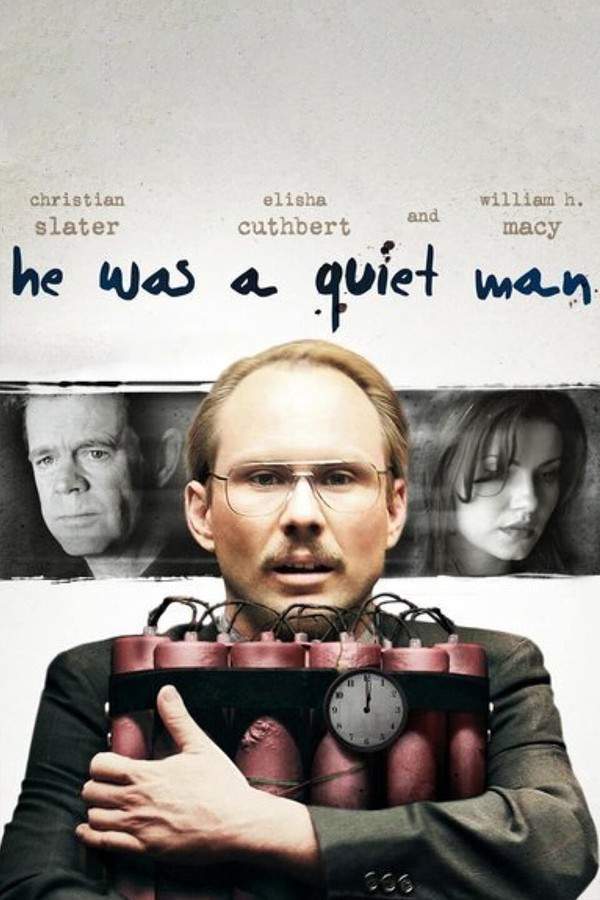
He Was a Quiet Man (2007) movie poster

Timeline

He Was a Quiet Man (2007) Timeline Explained – Every Event in Order

Release, runtime and language
2007 · 95 min · English
JustWatch #13,260 4
Directed by
Frank A. Cappello
Starring
William H. Macy, Christian Slater, Elisha Cuthbert

Bob Maconel lives a predictable and unremarkable life until he unexpectedly intervenes to save the mysterious Vanessa from danger. Their encounter sets in motion a series of events that lead to a startling request: he is asked to help her end her life, forcing him to confront his own values and face unforeseen consequences.

On this page (6)
  1. 1 Where to watch
  2. 2 Events in order (15)
  3. 3 Timeline questions answered
  4. 4 Movie threads
  5. 5 Movies like He Was a Quiet Man
  6. 6 Every angle

Where to watch

Where to Watch He Was a Quiet Man (2007)

Where can you watch He Was a Quiet Man? Stream, rent or buy it in the US, including on Amazon Prime Video, JustWatch TV and Amazon Prime Video Free: current JustWatch availability with up-to-date prices.

Streaming availability powered by JustWatch

15 events in order · contains spoilers

He Was a Quiet Man Timeline: Events in Chronological Order

Every key event of He Was a Quiet Man (2007) in order, scene by scene, with when and where it takes place. Use it to untangle flashbacks, time jumps and parallel storylines, to refresh your memory before the sequel or to find the exact scene you are thinking of.

  1. The Tragic Loss

    Five years prior to the film, Bob suffers a devastating loss when his wife and child die. This tragedy marks the beginning of his emotional decline, forcing him to cope with an unbearable void in his life.

  2. Downsizing

    In an effort to manage his grief, Bob downsizes to a smaller home. This move symbolizes his attempt to simplify his life but also highlights his sense of isolation and loss.

  3. Aquarium Companion

    Bob acquires fish to fill the emptiness he feels, seeking companionship in their presence. However, this choice becomes yet another indication of his declining mental state as he struggles to connect with reality.

  4. Encounter with Paula

    As Bob navigates through his new life, he becomes infatuated with Paula, who treats him poorly and shows little interest. This relationship further emphasizes Bob's deteriorating self-worth and mental health.

  5. Creation of Vanessa

    In his attempt to escape his painful reality, Bob creates an imaginary character named Vanessa, a vibrant Hula Girl. Vanessa temporarily fills the emotional void left by Paula, representing Bob's fragile mental state.

  6. Mental Decline

    As Bob's mental health spirals, his apartment falls into chaos and his fish tank is neglected. This neglect reflects his deeper internal turmoil and disconnection from the world around him.

  7. The Gun Incident

    Bob brings a gun to work, fantasizing about reclaiming control through violent means. This drastic measure symbolizes his desperation and the culmination of his mental breakdown.

    Where
    Workplace
  8. Accidental Heroism

    In a twist of fate, Bob accidentally shoots Coleman instead of himself, becoming an unexpected hero. This incident highlights the chaotic and unpredictable nature of Bob's mental struggles.

  9. Illusion of Acceptance

    Following the shooting, Bob's life takes a strange turn as people who once ignored him now embrace him. This newfound acceptance is bittersweet, as it stems from a tragic misunderstanding.

  10. The Question of Existence

    Bob begins to question his reality, scribbling notes about whether he should 'finish what Coleman started.' This introspection reveals his struggle with life and death, as he grapples with deeper existential questions.

  11. Confrontation with the Counselor

    Bob meets with a grief counselor who forces him to confront the truth of his situation. This pivotal moment serves as a wake-up call for Bob, pushing him to recognize that his problems stem from within.

  12. Downward Spiral

    After the counseling session, Bob's life takes a downturn as he loses the support he once had. His imagined accolades begin to fade, starkly revealing the isolation that surrounds him.

  13. The Final Confrontation

    In a climactic moment, Bob faces the reality of his delusions as Vanessa transforms into Paula. This confrontation exposes the painful truths he has been avoiding and the lies he has created to cope.

  14. The Sixth Bullet

    Bob grapples with an internal battle as the sixth bullet meant for himself flickers in and out of existence. This moment embodies his struggle with his identity and the path he wishes to take.

  15. The Haunting Conclusion

    In the end, Bob acknowledges the grief counselor's insight — he is indeed the source of his problems. As he succumbs to his inner demons, Vanessa fades away, leaving him with the painful reality of his loss.

Last updated: October 27, 2024 at 18:46

Was this helpful?

Timeline questions answered

He Was a Quiet Man Timeline Explained: Your Questions Answered

When does it happen, and why in that order? The questions people ask about the chronology of He Was a Quiet Man (2007): time jumps, flashbacks, cause and effect between scenes and the correct order of events, each answered with spoilers.

Q1

Why does Bob create an imaginary girlfriend?

Bob creates Vanessa as a psychological coping mechanism after losing his wife and child five years earlier. The imaginary Hula Girl fills the emotional void left by his devastating loss, representing his attempt to escape painful reality. Her appearances are triggered whenever Bob is reminded of his loss, and she becomes increasingly vivid as his mental state deteriorates.

Foreshadowing: The two hummingbirds outside his window, symbolizing his lost family, hint at his fragile grip on reality from the start.

  • bob maconel
  • vanessa
  • imaginary girlfriend
  • grief
  • mental breakdown
Q2

What does Coleman represent in Bob's mind?

Coleman is Bob's dark alter ego who embodies his worst impulses, specifically, the part of him that craves violence and self-destruction. When Bob fantasizes about shooting people at work before turning the gun on himself, Coleman represents the embodiment of those violent urges. In the pivotal moment, Bob accidentally shoots Coleman instead of himself, symbolically striking down his own destructive impulses.

Foreshadowing: Bob's violent fantasies at work build progressively, with Coleman appearing as the target of his rage.

  • coleman
  • alter ego
  • violence
  • self-destruction
  • impulses
Q3

Why does Bob bring a gun to work?

Bob brings a gun to work as the culmination of his mental breakdown. Overwhelmed by grief, isolation, and the collapse of his mental health, he fantasizes about reclaiming control through violent action against colleagues and himself. This represents his desperate attempt to escape the unbearable pain of his reality and the voices in his head demanding retribution.

Foreshadowing: His apartment falls into chaos and his fish tank is neglected, showing his complete detachment from normal life.

  • gun
  • workplace
  • violence
  • mental breakdown
  • control
Q4

How does Bob become an accidental hero?

When the pivotal moment arrives, Bob's intended rampage collapses into chaos. Instead of executing his plan, he accidentally shoots Coleman, his own violent alter ego, rather than himself or others. The world interprets this as heroic intervention against a threat, overlooking the loaded gun Bob had brought to work. This twisted turn makes him an unexpected hero in the eyes of others.

Foreshadowing: Bob's fantasy and reality constantly blur, with the shooting outcome diverging from his original intent.

  • accidental hero
  • shooting
  • coleman
  • misunderstanding
Q5

Why does Bob's life improve after the shooting?

After the shooting, people who previously ignored Bob suddenly embrace him as a hero. This creates a surreal improvement in his circumstances, receiving a promotion and a new car, because the world interprets his action as courageous rather than the chaotic breakdown it actually was. However, this improvement is hollow, built on a fundamental misunderstanding of what actually happened.

Foreshadowing: The irony of his improved status is undercut by his ongoing mental struggle with whether to 'finish what Coleman started.'

  • promotion
  • acceptance
  • misunderstanding
  • hero status
Q6

What does the grief counselor tell Bob?

The grief counselor confronts Bob directly, telling him that he is the root of his own problems. This forces Bob to recognize that his suffering isn't merely a result of external circumstances or loss, but stems from his own unresolved grief and the psychological barriers he's constructed. The counselor embodies the voice of reason Bob has been evading throughout the film.

Foreshadowing: This confrontation follows Bob's scribbled question about whether he should 'finish what Coleman started.'

  • grief counselor
  • confrontation
  • self-blame
  • truth
Q7

What does Vanessa transforming into Paula signify?

The transformation of Vanessa into Paula represents Bob's final confrontation with reality. Throughout the film, Vanessa served as his escape, a perfect imaginary companion to replace the imperfect reality of Paula, who rejected him. When Vanessa morphs into Paula, it exposes the truth: Bob has been projecting his desires onto a fantasy, and that fantasy is crumbling to reveal the painful reality he's been avoiding.

Foreshadowing: Bob's obsession with Paula who treats him poorly was always the foundation upon which Vanessa was built.

  • vanessa
  • paula
  • transformation
  • delusion
  • reality
Q8

What does the sixth bullet represent?

The sixth bullet, which flickers in and out of existence, symbolizes Bob's final struggle with the choice between life and death. Having already 'killed' his violent alter ego (Coleman), the sixth bullet, meant for himself, represents his dangling existential decision. Its instability reflects his wavering grip on his own identity and the unresolved battle between his desire to live and his drive toward self-destruction.

Foreshadowing: The flickering bullet appears after Bob acknowledges the counselor's insight that he is the problem.

  • sixth bullet
  • life and death
  • choice
  • identity
  • suicide
Q9

Why does Bob lose everything after becoming a hero?

After his moment of false heroism, Bob's life takes a downward spiral because the support he received was based on a lie. Once he meets with the grief counselor and begins confronting the truth about himself, the illusion crumbles. His imagined accolades fade and people withdraw their support, leaving him isolated, the reality he'd been running from all along.

Foreshadowing: The counselor's confrontation directly precedes this downward turn, as truth dismantles his false reality.

  • loss
  • decline
  • truth
  • isolation
  • support
Q10

What is the significance of the hummingbirds?

The hummingbirds appearing outside Bob's window symbolize his lost family, his wife and child. They serve as visual reminders of the tragedy that set his mental decline in motion, appearing at moments when grief overwhelms him. The shift from two hummingbirds to a solitary bird reflects his deepening isolation and guilt over his inability to protect them.

Foreshadowing: The hummingbirds appear immediately after the news report recollecting his family's deaths.

  • hummingbirds
  • family
  • loss
  • grief
  • symbolism

Movie threads

More Movies Like He Was a Quiet Man, by Mood & Story

Curated lists built around what makes He Was a Quiet Man tick: the same mood, the same kind of story or the same emotional payoff. Each list explains why these movies belong together.

Psychological Descent Dramas like He Was a Quiet Man

Stories where a fragile mind constructs an alternative world to escape pain. If you were captivated by the blurred reality and psychological collapse in He Was a Quiet Man, this collection features movies where characters retreat into fantasies, confronting themes of mental illness and identity crisis. These intense, complex dramas share a dark tone and a bleak, emotionally heavy payoff.

  • surreal
  • dreamlike
  • claustrophobic
  • psychological
  • tragic
  • oppressive
  • Tone: dark, surreal, tragic
  • Pacing: variable, atmospheric build
Why these movies?

The story pattern: This narrative pattern follows a character, often profoundly lonely or traumatized, who begins to perceive the world through a distorted lens. They may create an imaginary friend, reinterpret events, or fully retreat into a fantasy as a coping mechanism. The story's tension comes from the gradual, often painful, disintegration of this constructed reality, forcing a confrontation with the truth they've been avoiding.

Why they belong together: Movies are grouped here for their shared focus on a deteriorating psyche as the central conflict. They create a specific, unsettling mood by merging the protagonist's subjective experience with objective reality, resulting in a complex, intense, and often heartbreaking viewing experience defined by psychological unease.

Bleak Character Studies like He Was a Quiet Man

Intimate portraits of isolated individuals pushed to the brink. For viewers who appreciated the deep character study and themes of workplace alienation in He Was a Quiet Man, this thread gathers movies about deeply lonely individuals. These films share a dark, oppressive tone, heavy emotional weight, and explore the tragic consequences of being disconnected from society.

  • lonely
  • melancholic
  • oppressive
  • tragic
  • character study
  • alienation
  • Tone: dark, melancholic, oppressive
  • Pacing: slow burn, deliberate
Why these movies?

The story pattern: The narrative follows a single, deeply isolated character, charting their slow-burn journey from quiet desperation to a crisis. The conflict is often internal, battling grief, depression, or a profound sense of not belonging, but manifests in external, sometimes violent, ways. The story is a slow, painful unraveling, offering little hope and culminating in a bleak realization of their circumstances.

Why they belong together: These films are united by their unwavering focus on a single, alienated character and the heavy, melancholic atmosphere this creates. They share a similar emotional palette of sadness and tension, a deliberate pacing that makes the character's downfall feel inevitable, and a dark tone that offers no easy resolutions.

If you liked this

Movies Like He Was a Quiet Man

Similar movies to He Was a Quiet Man: the same genre, themes or kind of story. Each one comes with its own plot summary, timeline and ending explained.

Browse all movie summaries

Every angle

He Was a Quiet Man (2007) Explained: Plot, Timeline & Characters

Everything about He Was a Quiet Man in one place: what happens in the plot summary, the timeline in chronological order, the characters and meaning and a spoiler-free summary. What's After the Movie adds the cast, box office and post-credit scenes.

Coming soon on iOS and Android

The Plot Explained Movie Summary App

Plot summaries, endings explained and timelines on your phone. Catch up on any movie in minutes, save your favorites and never miss a twist again.

Be the first to know when we launch. Your email stays private, always.

Learn more about the app