Plot Explained Spoilers guaranteed!
Plot Explained

Browse by genre

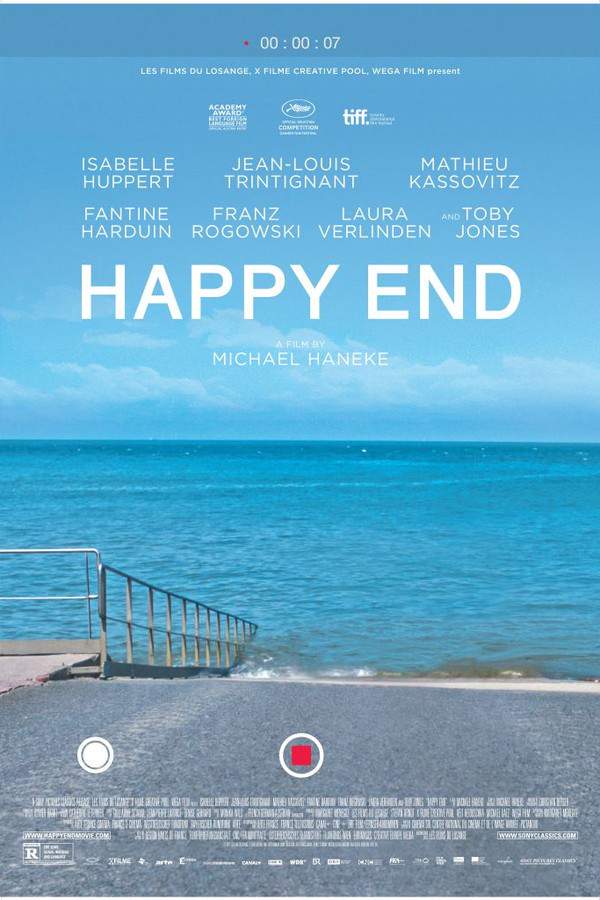
Happy End (2017) movie poster

Characters & Themes

Happy End (2017) Characters, Setting & Themes Explained

Release, runtime and language
2017 · 107 min · French
Echo score 65
Loading streaming availability…
Directed by
Michael Haneke
Starring
Toby Jones, Jean-Louis Trintignant, Isabelle Huppert, Aurélia Petit, Franz Rogowski, Laura Verlinden
Budget
$12M

A middle-class family living in Calais experiences a series of personal challenges, seemingly unaware of the difficult circumstances faced by those around them. Just beyond their home lies a crowded refugee camp, a stark reminder of the precariousness of hope and the shared vulnerability of humanity. The film explores themes of privilege, empathy, and the complexities of modern life.

On this page (8)
  1. 1 Where to watch
  2. 2 Characters explained (4)
  3. 3 Where & when it takes place
  4. 4 Themes & meaning (3)
  5. 5 Character & meaning questions
  6. 6 Movie threads
  7. 7 Movies like Happy End
  8. 8 Every angle
Loading streaming availability…

4 main characters · contains spoilers

Happy End Characters Explained: Who Is Who

The main characters of Happy End (2017), heroes and villains: what drives them, how they change over the course of the story and what each of them reveals about the film's bigger ideas.

  • Eve Laurent

    Eve is a troubled teenager with a dark disposition, struggling to navigate her tumultuous family life. She exhibits manipulative tendencies, as seen in her actions towards her mother and the sedatives she administers. Behind her rebellious facade lies a deeply pained individual seeking attention and understanding, reflecting the consequences of a fractured family.

    • 👧 Teen
    • 🖤 Troubled
    • 🔍 Curious
  • Anne Laurent

    played by Isabelle Huppert

    Anne is a complex matriarch running a construction company while dealing with the challenges of her family's dysfunction. She grapples with guilt, responsibility, and her relationship with her father and son. Anne's character embodies the struggles of balancing professional obligations with personal chaos, showcasing her determination even as she faces crisis.

    • 👩‍💼 Leader
    • 😓 Overwhelmed
    • 💔 Family
  • Georges Laurent

    played by Jean-Louis Trintignant

    Georges is the patriarch grappling with dementia, reflecting a deep sense of loss and regret. His character serves as a stark reminder of the lasting impacts of past decisions, including guilt over his wife’s death. Georges's attempted suicides underscore a profound despair, representing the darker aspects of aging and familial responsibility.

    • 👴 Elderly
    • 😞 Regretful
    • 💔 Depressed
  • Pierre Laurent

    played by Franz Rogowski

    Pierre is a troubled young adult wrestling with addiction and the pressures of family expectations. His rebellious nature and struggles with alcohol serve as a manifestation of the chaos in his life. He fights for validation while simultaneously sabotaging his relationships, illustrating the destructive cycles within the Laurent family.

    • 🥃 Addicted
    • 😤 Rebellious
    • 📉 Troubled

Last updated: October 18, 2026 at 16:57

Was this helpful?

Setting

Where and When Does Happy End Take Place?

The setting of Happy End (2017): the year and time period, the places and locations, and how they shape the characters, the mood and the tension of the story.

Time period

The film conveys a contemporary setting where issues such as mental health, familial dysfunction, and social inequalities are explored. It captures a moment in modern society that grapples with the complexities of human relationships and the consequences of personal choices.

Location

Calais

Calais is a prominent city in northern France, known for its port and proximity to England. The movie unfolds primarily in the lavish mansion of the Laurent family, showcasing both their privilege and the darker themes that lurk beneath the surface of their lives. The beach setting serves as a poignant backdrop for the characters' struggles with life, love, and loss.

  • 🏙️ City
  • 🏖️ Beach

Last updated: October 18, 2026 at 16:57

Was this helpful?

3 major themes

Happy End Meaning: Themes & Message Explained

What is Happy End (2017) really about? The emotional, social and philosophical themes the film keeps returning to, its symbolism and the message beneath the surface.

  • Family Dysfunction

    At the heart of 'Happy End' lies the theme of family dysfunction, as secrets and betrayals unfold among the Laurent family members. The film explores the impact of neglect, mental illness, and emotional abuse, revealing how these factors ripple through generations. Each character wrestles with their own demons, showcasing the fragility of familial bonds.

  • Violence and Consequences

    The narrative contains a stark commentary on violence and its repercussions, both physical and emotional. Characters face violent acts that lead to darker decisions and outcomes, including self-harm and threats to life. This theme illustrates the cycle of pain within the family and the choices that individuals make when pushed to their limits.

  • Isolation and Despair

    Isolation permeates the lives of the characters, each coping with personal despair in their own ways. Whether through the actions of Eve or the struggles of Georges, the film highlights how loneliness can lead individuals into dark places. Amidst their wealth, the Laurent family grapples with a profound sense of emptiness.

Last updated: October 18, 2026 at 16:57

Was this helpful?

Character & theme questions

Happy End Characters & Meaning: Your Questions Answered

The questions people ask about Happy End (2017): who the characters really are, their relationships, what the symbols mean, where it takes place and what the movie is really about. Each answer contains spoilers.

Q1

Where is the story set?

The story is set in Calais, a port city in northern France known for its proximity to England. Most of the action unfolds inside the Laurent family's lavish mansion, with the nearby beach and the crowded refugee camp serving as contrasting environments just beyond their doorstep.

  • calais
  • northern france
  • laurent mansion
  • setting
Q2

What role does the refugee camp play in the setting?

The refugee camp on the outskirts of Calais functions as a constant, visible reminder of human vulnerability that the Laurent family chooses to ignore. Its proximity to their wealthy home creates a sharp contrast between privilege and precarity, reinforcing the film's commentary on moral blindness and social indifference.

  • refugee camp
  • calais
  • privilege
  • social commentary
Q3

Why is the beach setting important?

The beach near the Laurent home serves as a recurring backdrop where the family's internal struggles meet the outside world. It functions as a space of confrontation with mortality, escape, and indifference, giving the story its bleak, open-ended atmosphere.

  • beach
  • sea
  • setting
  • symbolism
Q4

When does the story take place?

Happy End is set in contemporary France, during the height of the European refugee crisis. The film addresses present-day concerns such as mental health, familial dysfunction, and social inequality rather than a historical or futuristic setting.

  • contemporary
  • modern
  • refugee crisis
  • time period
Q5

What is the main theme of Happy End?

At its core, Happy End examines family dysfunction and the moral emptiness of bourgeois life. Through the Laurent family, the film dissects how neglect, emotional abuse, and unresolved trauma ripple across generations, exposing the fragility of familial bonds beneath a polished surface.

  • family dysfunction
  • themes
  • trauma
  • bourgeois
Q6

What does the film say about privilege and empathy?

Happy End portrays the Laurent family's wealth as a kind of moral insulation that allows them to remain detached from the suffering just outside their door. The film suggests that comfort and privilege can erode empathy, turning indifference into a quiet, inherited form of complicity.

  • privilege
  • empathy
  • moral blindness
  • indifference
Q7

How does the film portray isolation and despair?

Isolation in Happy End is shown as something that survives wealth and status. Each Laurent family member copes with personal despair privately, whether through manipulation, addiction, or withdrawal, revealing a shared emptiness that no amount of comfort can resolve.

  • isolation
  • despair
  • loneliness
  • wealth
Q8

Who is Eve Laurent?

Eve is the troubled teenage member of the Laurent family, marked by a dark, manipulative disposition that masks deeper pain. She constantly records her surroundings with a phone and camera, turning observation into a tool of control while searching for attention she cannot get from her family.

  • eve laurent
  • teenager
  • voyeurism
  • manipulation
Q9

Who is Anne Laurent?

Anne is the Laurent matriarch, running the family construction business while carrying the weight of guilt, responsibility, and fractured relationships with her father and son. She embodies the tension between professional control and personal chaos, holding the family together more out of duty than affection.

  • anne laurent
  • matriarch
  • isabelle huppert
  • family business
Q10

Who is Georges Laurent?

Georges is the aging patriarch of the Laurent family, suffering from dementia and haunted by the death of his wife. His decline represents the lasting weight of past decisions and familial responsibility, while his growing despair makes him a symbol of aging, loss, and the darker side of family legacy.

  • georges laurent
  • patriarch
  • dementia
  • aging
Q11

Who is Pierre Laurent?

Pierre is a troubled young adult in the Laurent family, battling addiction and the pressure of family expectations. His self-sabotaging behavior and strained relationships illustrate the destructive cycles that pass between generations in the household.

  • pierre laurent
  • addiction
  • family pressure
  • rebellion
Q12

What is the overall tone and style of the movie?

Happy End carries a bleak, deliberately slow tone shaped by long, observational scenes and an unflinching camera. There is no sentimentality or easy resolution; instead, the film uses its cold, clinical style to force viewers to sit with the family's moral emptiness and complicity.

  • tone
  • observational style
  • bleak
  • haneke

Movie threads

More Movies Like Happy End, by Mood & Story

Curated lists built around what makes Happy End tick: the same mood, the same kind of story or the same emotional payoff. Each list explains why these movies belong together.

Movies like Happy End about bourgeois moral blindness and quiet complicity

Wealthy families drift through dysfunction while suffering unfolds just beyond their doorstep. If you liked Happy End, these movies like Happy End explore similar stories of privileged families who remain willfully detached from the suffering around them. Expect intimate domestic drama, slow pacing, and unflinching portraits of class inequality, where empathy fails and moral blindness becomes the central tension of the film.

  • oppressive
  • morally unsettling
  • class inequality
  • voyeuristic
  • cold detached
  • nihilistic
  • Tone: bleak, cold, detached
  • Pacing: slow and observational
Why these movies?

The story pattern: These stories typically center on a comfortable household whose members pursue personal dramas, affairs, and small cruelties while a wider human catastrophe plays out just outside their awareness. Narrative tension builds from contrast rather than action, as small family conflicts mirror or ignore larger systemic ones. Characters rarely learn or change, and endings often refuse redemption, leaving viewers to sit with discomfort and complicity rather than resolution.

Why they belong together: They are grouped together because they share a cold detached tone, a focus on bourgeois or upper-class settings, and an unflinching examination of privilege, empathy, and moral failure. Pacing tends to be slow and observational, with heavy emotional weight, ambiguous or bleak endings, and content that addresses inequality, death, and the ethics of looking away. The result is films that feel draining, restrained, and morally unsettling in a similar register.

Movies like Happy End with cold detached observational style and unrelenting bleakness

Detached, clinical films that refuse to comfort the viewer. If you liked Happy End and its relentless, voyeuristic style, these similar bleak dramas use slow long takes and clinical detachment to dissect dysfunction and death. Expect high intensity, heavy themes, minimal humor, and ambiguous or unresolved endings that prioritize discomfort and moral unease over resolution.

  • cold detached
  • voyeuristic
  • unsettling
  • oppressive
  • restrained
  • morbid
  • Tone: bleak, oppressive, nihilistic
  • Pacing: slow burn, deliberate
Why these movies?

The story pattern: Films in this thread tend to unfold through intersecting domestic storylines where death, suicide, illness, or violence recur without dramatic punctuation. Long takes and static compositions force the viewer to watch rather than react, and the camera itself often feels complicit, recording what characters cannot face. Character arcs are usually stripped of redemptive beats, and the narrative ends not with closure but with a final image that lingers uncomfortably, refusing to console.

Why they belong together: They share Haneke-like sensibilities: a high intensity emotional weight, slow pacing, complex or layered narratives, and a bleak or ambiguous ending feel. Their mood tags lean cold, oppressive, voyeuristic, morbid, and restrained. They are films where the act of watching becomes part of the content, and where empathy is tested rather than rewarded.

If you liked this

Movies Like Happy End

Similar movies to Happy End: the same genre, themes or kind of story. Each one comes with its own plot summary, timeline and ending explained.

Browse all movie summaries

Every angle

Happy End (2017) Explained: Plot, Timeline & Characters

Everything about Happy End in one place: what happens in the plot summary, the timeline in chronological order, the characters and meaning and a spoiler-free summary. What's After the Movie adds the cast, box office and post-credit scenes.

Coming soon on iOS and Android

The Plot Explained Movie Summary App

Plot summaries, endings explained and timelines on your phone. Catch up on any movie in minutes, save your favorites and never miss a twist again.

Be the first to know when we launch. Your email stays private, always.

Learn more about the app