Plot Explained Spoilers guaranteed!
Plot Explained

Browse by genre

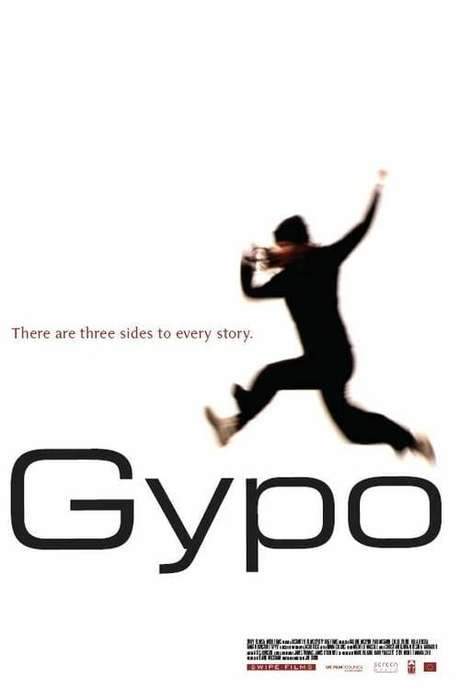
Gypo (2005) movie poster

Timeline

Gypo (2005) Timeline Explained – Every Event in Order

Release, runtime and language
2005 · 98 mins · English
Directed by
Jan Dunn
Starring
Pauline McLynn, Ashley McGuire, Chloe Sirene, Paul McGann, James Blanchard, Olegar Fedoro

Gypo follows a working‑class family in Margate, Kent, a seaside town where anti‑immigrant sentiment is growing. Over a few weeks their routine is disrupted when a young Czech visitor, Tash, arrives. Shot in the Dogme 95 style with no lighting, costumes, props or sets, the film’s raw handheld aesthetic underscores its gritty, charged narrative.

On this page (5)
  1. 1 Events in order (12)
  2. 2 Timeline questions answered
  3. 3 Movie threads
  4. 4 Movies like Gypo
  5. 5 Every angle

12 events in order · contains spoilers

Gypo Timeline: Events in Chronological Order

Every key event of Gypo (2005) in order, scene by scene, with when and where it takes place. Use it to untangle flashbacks, time jumps and parallel storylines, to refresh your memory before the sequel or to find the exact scene you are thinking of.

  1. Family life in a coastal town sets the scene

    Gypo opens with a working-class family in a small English coastal town, establishing a close-knit yet fragile domestic world. The atmosphere hints at strain beneath the surface, ready to be tested by an outsider's arrival. The stage is set for the teenage daughter's new friendship that will ripple through every relationship.

    Where
    Coastal town, England
  2. Daughter befriends Tasha

    The daughter forms a friendship with Tasha, a Romani refugee from the Czech Republic, challenging social boundaries. Their bond introduces both warmth and tension as outsiders enter the family orbit. The town watches with wary curiosity as the relationship unfolds.

    Where
    Outside the family home, in neighborhood streets
  3. Paul's perspective brings a biased memory

    From Paul's point of view, events are remembered with partial certainty, revealing how memory can mislead. The narrative hints at hidden motives and unspoken tensions behind ordinary conversations. This initial retelling plants seeds of doubt that will be tested by other perspectives.

    Where
    Living room
  4. Helen's view widens the fault lines

    Helen, the mother, senses the growing suspicion and private tensions inside the house. She notices neighbors' chilly reactions and the strain in her marriage. Her perspective emphasizes how institutional indifference compounds personal anxiety.

    Where
    Home
  5. Tasha's perspective as outsider and ally

    Tasha experiences both glimpses of solidarity and the sting of being watched with suspicion. Her motive debates with the family's fears influence how she navigates the friendship. The film begins to reveal how being seen differently changes every interaction.

    Where
    Town spaces and home
  6. Neighborhood suspicion intensifies

    Rumors spread through the neighborhood, painting the friendship with caution and hostility. The community's gaze and whispered judgments push the family toward defensive responses. The tension undercuts attempts at normalcy, forcing fraught conversations and decisions.

    Where
    Neighborhood streets
  7. Institutional indifference compounds the crisis

    Local authorities and institutions fail to intervene effectively, leaving the family to manage the fallout on their own. The lack of support intensifies fear, misinterpretation, and deeper fault lines at home. This neglect mirrors the film's broader critique of social systems.

    Where
    Local authorities offices
  8. Private confrontations erupt at home

    Inside the house, conversations turn into arguments as blame, secrets, and resentments spill out. The family members question each other's motives, revealing fractures long hidden from public view. The tension escalates toward a breaking point that will redefine their relationships.

    Where
    Home
  9. Contrasting revelations uncover motives

    Multiple perspectives revisit the same incidents, exposing contradictions in each version. Small betrayals and protective lies come to light, challenging what any one character believes to be true. The Rashomon-like structure pushes the audience to weigh truth against memory.

    Where
    Various locations
  10. Climax and consequences for Tasha and the family

    The social and personal consequences culminate in a confrontation that tests loyalties and boundaries. The family and Tasha confront the limits of trust, with outcomes that ripple beyond the immediate scene. The moment crystallizes the film's critique of prejudice and fear.

    Where
    Town streets or community spaces
  11. Aftermath and the breakdown deepens

    In the aftermath, the family’s unity fractures beyond repair, and Tasha faces heightened scrutiny. The town's indifference lingers as private failings become public knowledge. The narrative leaves scars that color the characters' futures.

    Where
    Home and public spaces
  12. Ambiguous ending invites that unresolved judgment

    The film closes on an open note, resisting tidy moral resolution. Viewers are left to consider how competing memories shaped events and what was sacrificed in the process. The Rashomon-like structure remains a central thread that invites ongoing interpretation.

    Where
    Various locations around the town

Last updated: February 20, 2026 at 18:43

Was this helpful?

Timeline questions answered

Gypo Timeline Explained: Your Questions Answered

When does it happen, and why in that order? The questions people ask about the chronology of Gypo (2005): time jumps, flashbacks, cause and effect between scenes and the correct order of events, each answered with spoilers.

Q1

Why does the daughter befriend Tasha in Gypo?

The teenage daughter forms a friendship with Tasha, a Romani refugee from the Czech Republic, driven by curiosity and a desire to connect with someone different from her isolated coastal town life. This friendship initially brings warmth but also draws unwanted attention from neighbors, setting in motion the tensions that will unravel the family.

Foreshadowing: The opening scenes establish the family's fragile domestic world, hinting that the daughter's need for connection will challenge the family's existing boundaries.

  • teenage daughter
  • tasha
  • friendship
  • roman i refugee
  • curiosity
Q2

How does neighborhood suspicion escalate in Gypo?

Neighborhood suspicion builds gradually through whispered comments, cold glances, and rumors spreading through the community about the daughter's friendship with the Romani refugee. As the town's residents observe the relationship, their fear of difference transforms ordinary interactions into charged confrontations, pushing the family toward defensive responses.

Foreshadowing: Early scenes show neighbors watching with wary curiosity, planting the seeds of mistrust that will later blossom into open hostility.

  • neighborhood
  • suspicion
  • rumors
  • community
  • fear of difference
Q3

What causes the family breakdown in Gypo?

The family breaks down due to mounting pressure from external neighborhood hostility combined with internal tensions that were already present. As suspicion from outside grows, family members begin questioning each other's motives, blaming one another for the situation, and revealing long-hidden resentments that ultimately fracture their unity beyond repair.

Foreshadowing: The initial scenes hint at strain beneath the surface of family life, suggesting脆弱性 that the external situation will expose.

  • family breakdown
  • tensions
  • blame
  • resentments
  • marriage strain
Q4

How do the multiple perspectives differ in Gypo?

The film presents the same events through three distinct perspectives - Paul, Helen, and Tasha - each remembering incidents differently based on their own biases, past hurts, and hidden agendas. What seems certain in one character's retelling becomes questionable in another, exposing contradictions in memory and motive that challenge the audience's ability to know the truth.

Foreshadowing: Paul's initial retelling plants seeds of doubt that are later tested by other perspectives revealing different versions of the same moments.

  • rashomon structure
  • multiple perspectives
  • memory
  • contradictions
  • bias
Q5

What happens to Tasha at the end of Gypo?

Tasha faces heightened scrutiny and the consequences of the family's breakdown, with the social and personal fallout from the confrontation affecting her directly. The film leaves her ultimate fate ambiguous, refusing to provide a clear resolution about whether she stays or leaves, instead letting viewers consider the price of the miscommunication and prejudice that shaped her experience.

Foreshadowing: The climax brings a confrontation that tests loyalties and forces consequences for both the family and Tasha.

  • tasha ending
  • roman i girl
  • consequences
  • confrontation
  • fate
Q6

What role does institutional indifference play in Gypo?

Local authorities and institutions fail to intervene effectively when the situation escalates, leaving the family to manage the fallout on their own. This neglect intensifies fear and misinterpretation, compounding the family's problems and mirroring the film's broader critique of social systems that abandon vulnerable people during crises.

Foreshadowing: The timeline explicitly notes institutional failure as a key element that deepens the family's crisis.

  • institutional indifference
  • authorities
  • social systems
  • neglect
  • support failure
Q7

What betrayals are revealed in Gypo?

Through the Rashomon-like structure, small betrayals and protective lies come to light as each perspective reveals what characters concealed from one another. These include hidden motives behind seemingly helpful actions, secrets kept within the family, and moments where characters prioritized self-protection over honesty, gradually exposing how personal failings contributed to the family's breakdown.

Foreshadowing: Early scenes hint at unspoken tensions and hidden motives that will later be fully exposed through contrasting revelations.

  • betrayals
  • secrets
  • lies
  • hidden motives
  • small betrayals
Q8

Why does Gypo have an ambiguous ending?

The ambiguous ending resists providing a clear moral resolution, leaving viewers to grapple with questions of prejudice, responsibility, and the consequences of miscommunication. By refusing to pronounce judgment on who was right or wrong, the film invites ongoing reflection on how trust fractures and how competing memories shape understanding of events.

Foreshadowing: The entire structure builds toward this refusal to settle truth, with each perspective challenging what viewers believe.

  • ambiguous ending
  • moral resolution
  • prejudice
  • responsibility
  • interpretation
Q9

How does the Dogme 95 style affect the story in Gypo?

The raw, handheld aesthetic using natural lighting and improvised dialogue creates documentary-adjacent immediacy that makes the characters' fears and vulnerabilities feel immediate and unvarnished. This naturalistic approach amplifies the emotional weight by letting scenes breathe and allowing unguarded moments that reveal anxieties, deepening the sense that viewers witness real, messy human drama rather than a neatly plotted tale.

Foreshadowing: The opening establishes this raw visual approach from the first frames, setting expectations for authenticity.

  • dogme 95
  • handheld camera
  • naturalistic
  • aesthetic
  • raw style

Movie threads

More Movies Like Gypo, by Mood & Story

Curated lists built around what makes Gypo tick: the same mood, the same kind of story or the same emotional payoff. Each list explains why these movies belong together.

Raw family dramas on the brink like Gypo

Domestic lives cracking under the weight of unspoken conflicts and social pressures. If you appreciated the intense domestic conflict and social pressure in Gypo, explore other movies like it. These films feature families grappling with internal and external threats, filmed with a raw aesthetic that heightens the emotional stakes.

  • gritty
  • claustrophobic
  • uneasy
  • somber
  • anxious
  • raw
  • Tone: tense, somber
  • Pacing: steady, deliberate
Why these movies?

The story pattern: These stories typically follow a family unit as an external force or internal secret exposes its fragile foundations. The narrative focus is on psychological tension and character reactions rather than intricate plotting, often leading to an ambiguous or bittersweet resolution that reflects the complexity of real-life relationships.

Why they belong together: They are grouped by their shared focus on the microcosm of the family under duress, a steady pacing that builds dread, and a heavy emotional weight derived from relatable, painful human interactions.

Subjective truth social realism like Gypo

Gritty stories where truth is fragmented and perspective shapes reality. For viewers who liked the Rashomon-like structure and social commentary of Gypo, this list finds similar movies. These films use raw aesthetics and multiple perspectives to explore divisive themes like prejudice and moral ambiguity.

  • gritty
  • raw
  • morally ambiguous
  • uneasy
  • thought-provoking
  • somber
  • Tone: tense, morally ambiguous
  • Pacing: steady, methodical
Why these movies?

The story pattern: The narrative pattern involves a central conflict or event revisited from different character perspectives. This structure emphasizes the subjectivity of truth and the role of bias, often leaving the audience with more questions than answers about morality and motive.

Why they belong together: They share a commitment to social realism, a complex narrative structure built on shifting perspectives, and a gritty aesthetic that grounds weighty themes like prejudice and moral ambiguity in a palpable, immediate reality.

If you liked this

Movies Like Gypo

Similar movies to Gypo: the same genre, themes or kind of story. Each one comes with its own plot summary, timeline and ending explained.

Browse all movie summaries

Every angle

Gypo (2005) Explained: Plot, Timeline & Characters

Everything about Gypo in one place: what happens in the plot summary, the timeline in chronological order, the characters and meaning and a spoiler-free summary. What's After the Movie adds the cast, box office and post-credit scenes.

Coming soon on iOS and Android

The Plot Explained Movie Summary App

Plot summaries, endings explained and timelines on your phone. Catch up on any movie in minutes, save your favorites and never miss a twist again.

Be the first to know when we launch. Your email stays private, always.

Learn more about the app