#8,45320 Year: 2022
Runtime: 117 min
Language: English
Directors: Guillermo del Toro, Mark Gustafson
Echo Score: 84Budget: $35M
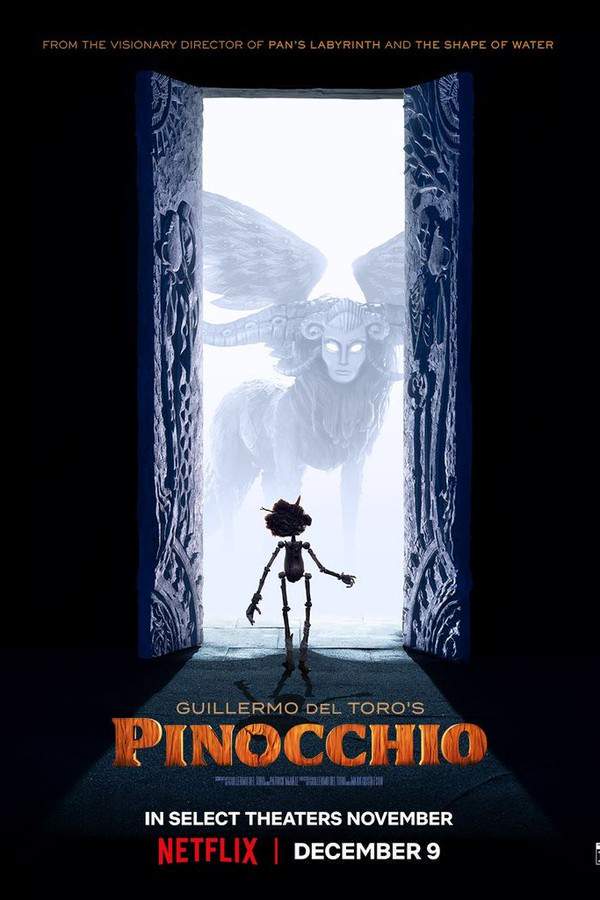
In this enchanting reimagining of Carlo Collodi's classic tale, a wooden puppet is magically brought to life, captivating the heart of a sorrowful woodcarver named Geppetto. Directed by Guillermo del Toro and Mark Gustafson, the story follows Pinocchio's mischievous adventures in a beautifully realized stop-motion world. He encounters a cast of memorable characters and embarks on a journey of self-discovery, learning valuable lessons about family, obedience, and what it truly means to be brave.
Find where to stream, rent, or buy Guillermo Del Toro’s Pinocchio (2022) in the US with current JustWatch availability, up-to-date pricing, and platform listings for subscription, rental, and digital purchase options.
Warning: spoilers below!
Haven’t seen Guillermo Del Toro’s Pinocchio yet? This summary contains major spoilers. Bookmark the page, watch the movie, and come back for the full breakdown. If you're ready, scroll on and relive the story!
Trace every key event in Guillermo Del Toro’s Pinocchio (2022) with our detailed, chronological timeline. Perfect for unpacking nonlinear stories, spotting hidden connections, and understanding how each scene builds toward the film’s climax. Whether you're revisiting or decoding for the first time, this timeline gives you the full picture.
Last updated: November 08, 2024 at 02:58
Find frequently asked questions about the Guillermo Del Toro’s Pinocchio (2022) timeline, including chronological order, nonlinear jumps, cause-and-effect links, and scene sequence clarifications. This timeline FAQ helps explain when key events happen, how moments connect, and why the story unfolds in that specific order.
Pinocchio becomes immortal after his first death in the film. When he is hit by a car and enters the afterlife, Death reveals that he is now immortal and will keep returning to the living world until an hourglass fully empties. Each time he dies, his time in the afterlife grows longer, suggesting his eventual permanent death will come after many cycles.
The Wood Sprite's magical act of breathing life into an unfinished puppet establishes early on that Pinocchio exists outside normal human rules.
Geppetto locks Pinocchio in the closet because he is terrified of losing another son. After discovering the puppet is alive, he panics and confines him to keep him safe while he attends church, believing the child would be safer contained than exposed to the dangerous outside world.
This protective action stems directly from Geppetto's traumatic loss of Carlo in the opening bombing scene.
Pinocchio is lured into joining the circus because Count Volpe promises him fame and excitement. When Pinocchio wanders away from Geppetto on his way to school, Volpe intercepts him and convinces him to sign a contract with promises of a better life than going to school.
Volpe's character as a cunning showman is established through his theatrical persona and manipulation tactics.
When Pinocchio dies, he goes to the afterlife and meets Death, the Wood Sprite's sister. She explains that because of the Wood Sprite's magic, Pinocchio is immortal and will keep returning to life until an hourglass runs out. Each subsequent death increases his time in the afterlife before revival.
The mystical nature of the Wood Sprite's creation foreshadows Pinocchio's unique status beyond normal mortality.
Pinocchio gets shot because he performs a comedic act parodying Prime Minister Benito Mussolini during his circus performance. Count Volpe, seeking revenge for the earlier tug-of-war incident, arranges for Pinocchio to be shot as punishment for the political mockery.
The film establishes early on that the political climate is dangerous through references to fascism and the Podestà's authority.
The Podestà dies during a bombing attack on the military training camp where boys are being prepared for war. This bombing is part of the film's World War I backdrop and serves as a turning point that frees the boys from the Podestà's ruthless control while also removing the fascist authority figure.
The escalating war setting and the Podestà's harsh treatment of the boys establish the danger that ultimately claims his life.
Pinocchio escapes the Dogfish by using his growing nose, a classic Pinocchio trait. When trapped inside the creature, he tells lies to make his nose grow longer, then uses the extended nose as a bridge to reach the Dogfish's blowhole, allowing everyone inside to escape through the opening.
The film establishes early that Pinocchio's nose grows when he lies, a detail that becomes crucial to this escape sequence.
Pinocchio chooses to die to save Geppetto from drowning because he finally understands what it means to truly love someone. When reunited with Death, he asks to be sent back specifically to rescue his father, knowingly accepting that this choice will lead to his permanent death.
This moment represents the culmination of Pinocchio's character arc from a mischievous, selfish child to someone who values family over his own existence.
Pinocchio outlives everyone because he is immortal while the humans around him are not. Death warned him from the beginning that immortality comes with a cost, eventually, everyone he loves will die while he continues living. This is the bittersweet conclusion that defines his eternal existence.
Death's warning about his immortality and growing time in the afterlife foreshadows this inevitable loneliness.
Sebastian uses his wish from the Wood Sprite to bring Pinocchio back to life after Pinocchio dies saving Geppetto. The cricket had been promised fame in exchange for guiding Pinocchio, but he spends his wish on the puppet's resurrection rather than achieving his own dreams.
The earlier pact between Sebastian and the Wood Sprite establishes this wish mechanism before it becomes crucial.
Spazzatura, the performing monkey, helps Pinocchio because she has developed genuine affection for him despite their rocky history. When Volpe attempts to harm Pinocchio for revenge, Spazzatura turns on her former master and pushes him over a cliff to his death.
Earlier moments show Spazzatura reluctantly following Volpe's orders, hinting at her eventual rebellion against his cruelty.
The Wood Sprite brings Pinocchio to life because she is moved by Geppetto's profound grief over losing his son Carlo. She chooses to give the unfinished puppet life rather than let Geppetto wake up to carve and lose another son, responding to his desperate emotional state.
The film establishes the Wood Sprite's compassionate nature through her interaction with Sebastian and her interest in Geppetto's sorrow.
Discover curated groups of movies connected by mood, themes, and story style. Browse collections built around emotion, atmosphere, and narrative focus to easily find films that match what you feel like watching right now.
Fantastical stories where profound loss gives rise to a magical journey of healing.Explore movies like Guillermo Del Toro’s Pinocchio that use fantasy and allegory to navigate themes of grief and loss. If you liked the emotional depth and magical realism of Pinocchio, you'll find similar bittersweet stories where characters transform through fantastical journeys.
These narratives often begin with a defining tragedy or absence that sets a melancholic foundation. A magical intervention or extraordinary character then enters, catalyzing a series of adventures. The journey is not just about external goals but an internal process of confronting grief, learning about love and mortality, and ultimately accepting a new reality, leading to a bittersweet but meaningful resolution.
Movies are grouped here for their shared ability to blend heavy emotional themes with fantastical storytelling. They share a bittersweet tone, a steady, contemplative pacing that allows for emotional processing, and a central focus on how magic and wonder can illuminate the path through profound sadness.
Stop-motion and animated tales where enchanting beauty meets mature, somber themes.Discover movies with dark whimsical worlds like Guillermo Del Toro’s Pinocchio. This collection features similar stop-motion and animated films that blend fantastical artistry with mature, often somber themes, perfect for viewers who appreciated the unique visual and narrative style of Del Toro's fable.
These films are characterized by their unique, handcrafted aesthetic which establishes a sense of wonder. The plot then introduces significant stakes and dark elements—such as existential threats, oppressive systems, or philosophical questions about life and death—directly into this whimsical setting. The narrative follows characters who must navigate this beautiful yet dangerous world, leading to a story that respects its audience's intelligence and emotional capacity.
These movies are united by their distinctive visual style—often stop-motion—and their tonal balance. They share a mix of whimsical and dark mood tags, a medium intensity that allows for both wonder and tension, and a commitment to exploring weighty ideas within a fantastical framework, making them appealing to both adult and mature family audiences.
Don't stop at just watching - explore Guillermo Del Toro’s Pinocchio in full detail. From the complete plot summary and scene-by-scene timeline to character breakdowns, thematic analysis, and a deep dive into the ending - every page helps you truly understand what Guillermo Del Toro’s Pinocchio is all about. Plus, discover what's next after the movie.
Read a complete plot summary of Guillermo Del Toro’s Pinocchio, including all key story points, character arcs, and turning points. This in-depth recap is ideal for understanding the narrative structure or reviewing what happened in the movie.
Discover the characters, locations, and core themes that shape Guillermo Del Toro’s Pinocchio. Get insights into symbolic elements, setting significance, and deeper narrative meaning - ideal for thematic analysis and movie breakdowns.
What really happened at the end of Guillermo Del Toro’s Pinocchio? This detailed ending explained page breaks down final scenes, hidden clues, and alternate interpretations with expert analysis and viewer theories.
Discover movies like Guillermo Del Toro’s Pinocchio that share similar genres, themes, and storytelling elements. Whether you’re drawn to the atmosphere, character arcs, or plot structure, these curated recommendations will help you explore more films you’ll love.
Guillermo Del Toro’s Pinocchio (2022) Plot Summary & Movie Recap
Guillermo Del Toro’s Pinocchio (2022) Scene-by-Scene Movie Timeline
Guillermo Del Toro’s Pinocchio (2022) Ending Explained & Theories
Guillermo Del Toro’s Pinocchio (2022) Spoiler-Free Summary & Key Flow
Movies Like Guillermo Del Toro’s Pinocchio – Similar Titles You’ll Enjoy
Pinocchio (1940) Film Overview & Timeline
Pinocchio (2020) Spoiler-Packed Plot Recap
Pinocchio (2022) Film Overview & Timeline
Geppetto (2000) Complete Plot Breakdown
Pinocchio (1984) Detailed Story Recap
Pinocchio and the Emperor of the Night (1987) Full Summary & Key Details
Pinocchio (1911) Story Summary & Characters
Pinocchio: A True Story (2021) Movie Recap & Themes
Pinocchio (1992) Story Summary & Characters
The Adventures of Pinocchio (1972) Film Overview & Timeline
The Adventures of Pinocchio (1947) Ending Explained & Film Insights
The Adventures of Pinocchio (1996) Complete Plot Breakdown
Pinocchio (1971) Ending Explained & Film Insights
Pinocchio (1976) Full Summary & Key Details
The New Adventures of Pinocchio (1999) Detailed Story Recap