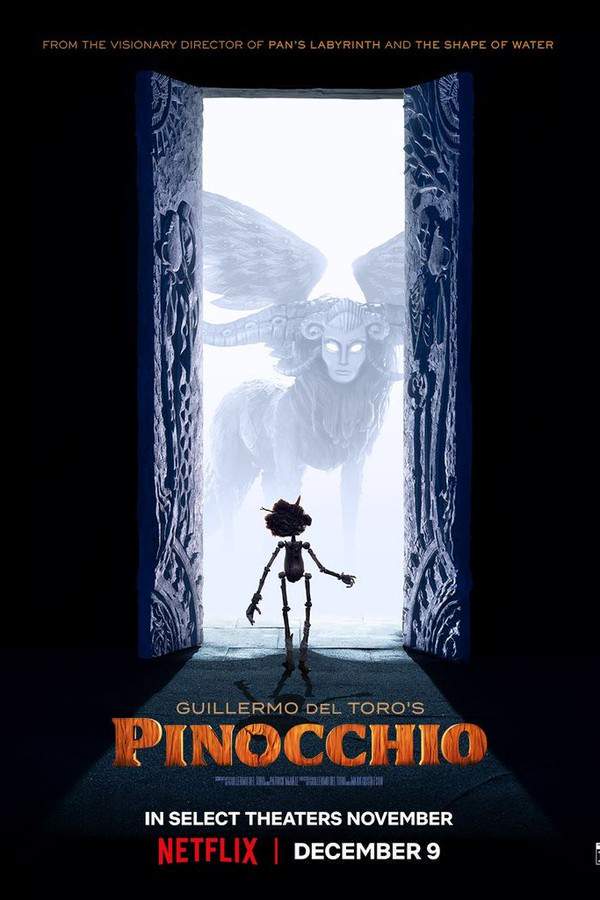
Guillermo Del Toro’s Pinocchio

Guillermo Del Toro’s Pinocchio

JustWatch#8,45320

Year: 2022

Runtime: 117 min

Language: English

Directors: Guillermo del Toro, Mark Gustafson

Echo Score: 84

Budget: $35M

DramaFantasyAnimationFamilyMusical

In this enchanting reimagining of Carlo Collodi's classic tale, a wooden puppet is magically brought to life, captivating the heart of a sorrowful woodcarver named Geppetto. Directed by Guillermo del Toro and Mark Gustafson, the story follows Pinocchio's mischievous adventures in a beautifully realized stop-motion world. He encounters a cast of memorable characters and embarks on a journey of self-discovery, learning valuable lessons about family, obedience, and what it truly means to be brave.

Where to Watch Guillermo Del Toro’s Pinocchio?

Find where to stream, rent, or buy Guillermo Del Toro’s Pinocchio (2022) in the US with current JustWatch availability, up-to-date pricing, and platform listings for subscription, rental, and digital purchase options.

Warning: spoilers below!

Haven’t seen Guillermo Del Toro’s Pinocchio yet? This summary contains major spoilers. Bookmark the page, watch the movie, and come back for the full breakdown. If you're ready, scroll on and relive the story!

Guillermo Del Toro’s Pinocchio (2022) – Ending Explained & Final Scene Breakdown

Still thinking about how Guillermo Del Toro’s Pinocchio (2022) ended? Here’s a full breakdown of the ending, key final moments, major twists, and the deeper meaning behind the film’s conclusion.

In Guillermo del Toro’s “Pinocchio,” the ending reveals a powerful metaphor about conformity, sacrifice, and the destructive nature of fascist regimes. Throughout the story, Pinocchio is portrayed as a symbol of innocence and truth, often questioning the absurd and cruel rules imposed by the authorities. When Pinocchio’s friend Candlewick proposes a way for everyone to win by working together, it directly challenges the regime’s ideology that only victory through conflict and division is valid. This idea shakes the foundation of fascism, which thrives on promoting loyalty to the state at the expense of individual thought and morality.

As the story progresses, the regime’s manipulation becomes clearer—children are molded into uniform, obedient citizens through propaganda and a curriculum designed to suppress dissent. Pinocchio’s growth shows his increasing awareness of the lies fed to him, especially when he witnesses the media sensationalizing his mistakes to entertain the crowds. This is symbolized in the scene where Geppetto is angry at the audience for enjoying Pinocchio’s nose growing—highlighting how media distorts truth for entertainment and profit. The propaganda creates a false sense of patriotism, encouraging people to accept violence and war as the only paths to honor and glory. The regime’s obsession with medals, flags, and military drills aims to glorify conflict and suppress independent thinking, as shown when Candlewick’s father asks him to betray his friend to maintain loyalty to the state.

In the final moments, Pinocchio and Candlewick’s attempt to promote unity and peace confronts the regime’s oppressive mindset. When they try to share a message of cooperation, the regime feels threatened, leading to Candlewick being instructed to kill Pinocchio—a heartbreaking reflection of how totalitarian governments silence dissent through violence and fear. But Pinocchio’s innocence and desire for truth ultimately prove stronger than the destructive narrative imposed by the regime. The story ends with Pinocchio’s moral victory—his unwavering belief in honesty and peace—serving as a subtle rebuke to authoritarian control and a reminder of the importance of questioning and standing up against tyranny. The film’s conclusion echoes the timeless message that genuine humanity survives only through truth, compassion, and independent thought, even in the face of oppressive forces.

Last updated: June 25, 2025 at 08:58

Was this helpful?

Guillermo Del Toro’s Pinocchio (2022) Ending Questions Answered – Ending FAQ

Read frequently asked questions about the ending of Guillermo Del Toro’s Pinocchio (2022), including final-scene interpretation, twist explanations, character outcomes, and the deeper meaning behind the conclusion. This ending explained FAQ is designed for viewers searching for clear spoiler-heavy answers and ending breakdown insights.

Q1

Why does Pinocchio choose mortality over eternal life at the end?

A.

Pinocchio chooses mortality because he realizes that true meaning in life comes from impermanence and genuine connections, not from living forever. By choosing to die, he saves his father Geppetto from the Underworld and embraces the human experience with all its sorrows and joys. This decision completes his journey from a wooden puppet seeking immortality to understanding that love and mortality are intertwined.

Earlier in the film, the Blue Fairy warns that wooden boys who fail the tests of courage and loyalty will lose their magical lives, establishing that Pinocchio must ultimately choose between being forever young or becoming truly human.

pinocchio mortality choicepinocchio endinggeppetto savedpinocchio becomes human
Q2

What happens to Candlewick at the end of the movie?

A.

Candlewick is ordered by the regime to kill Pinocchio but ultimately cannot go through with it. This marks his rejection of the fascist ideology that demanded he betray his friend. While the film does not explicitly show his fate, his refusal to murder Pinocchio represents his liberation from the regime's control and his return to his moral self.

Candlewick's earlier proposal to work together so everyone can win directly challenges the regime's divide-and-conquer philosophy, planting the seed for his eventual rebellion.

candlewick fatecandlewick endingfascist camppinocchio friend
Q3

How does Pinocchio defeat the fascist regime in the ending?

A.

Pinocchio defeats the regime not through violence but through moral conviction. His unwavering commitment to truth, honesty, and peace exposes the regime's corruption and hollow propaganda. When he refuses to conform and promotes unity over conflict, he demonstrates that individual conscience and compassion are stronger than authoritarian control. The regime feels compelled to order his death, revealing the violence that underlies fascist power.

Throughout the film, Pinocchio consistently questions absurd rules and refuses to blindly obey authority, building toward his ultimate act of defiance.

fascist regime defeatpinocchio victoryanti-fascist themeresistance ending
Q4

What does Pinocchio's moral victory represent in the ending?

A.

Pinocchio's moral victory represents the triumph of innocence, truth, and compassion over authoritarian oppression. Though he does not physically defeat the regime through combat, his steadfast refusal to abandon his values exposes the regime's cruelty. The ending suggests that genuine humanity survives through independent thought and moral courage, even when facing totalitarian forces that seem all-powerful.

The regime's obsession with medals, flags, and military drills contrasts sharply with Pinocchio's simple devotion to truth, setting up the thematic clash that defines the ending.

moral victorypinocchio innocencetruth triumphauthoritarianism defeat
Q5

Why does the regime order Candlewick to kill Pinocchio?

A.

The regime orders Candlewick to kill Pinocchio because his message of unity and cooperation directly threatens the fascist ideology that relies on conflict, division, and loyalty to the state above all else. When Pinocchio and Candlewick propose working together so everyone can win, it challenges the regime's core belief that victory only comes through war and obedience. The regime responds with violence to silence this dangerous idea of peaceful cooperation.

The regime's curriculum is designed to suppress dissent and promote blind obedience, making Pinocchio's independent thinking a direct threat to their control.

candlewick order killregime violencedissent silencingfascist ideology
Q6

What is the significance of Pinocchio outliving everyone he loves?

A.

Pinocchio outliving everyone he loves is central to the film's bittersweet theme. Having chosen mortality, he experiences the natural human cycle of loss and grief. This reinforces the film's message that meaning in life comes from the connections we make, not from endless existence. His long life represents both the blessing and burden of having truly lived as a human being.

Geppetto's original wish for a son after losing his child establishes mortality and loss as central themes from the beginning.

pinocchio outlivesmortality themeloss endingbittersweet conclusion
Q7

How does the ending reflect the film's anti-fascist theme?

A.

The ending crystallizes the anti-fascist theme by showing that Pinocchio's innocence and truth are more powerful than the regime's propaganda and violence. The regime's need to order his murder reveals that fascist systems ultimately depend on silencing dissent through fear. Pinocchio's survival of this ordeal and his choice of mortality over eternal life demonstrates that authentic human values, honesty, compassion, and peace, triumph over authoritarian control.

The regime's media sensationalizing Pinocchio's mistakes for entertainment shows how propaganda distorts truth, building toward the climactic confrontation between truth and authoritarian narrative.

anti-fascist messagepropaganda themetruth vs authoritarianismregime critique
Q8

What happens to Geppetto in the ending of the film?

A.

In the ending, Geppetto is saved from the Underworld when Pinocchio chooses mortality over eternal life. This act of sacrifice demonstrates how Pinocchio has matured, he now understands that love means willing to give up even immortality to save someone he cares about. Geppetto is restored to the living world, and their relationship is finally complete as father and son in the fullest sense.

Geppetto's earlier grief over his dead son Carlos establishes the emotional weight of father-son reunion as a central story motivation.

geppetto savedpinocchio sacrificefather son reunionunderworld rescue
Q9

Why does Pinocchio's refusal to conform matter in the ending?

A.

Pinocchio's refusal to conform matters because it is precisely what defeats the regime psychologically and morally. The fascist system depends on uniform obedience and the suppression of individual thought. By remaining true to himself, questioning rules, insisting on honesty, promoting peace, Pinocchio becomes a living symbol that challenges the regime's legitimacy. His conformity to his own moral code rather than the state's demands represents the ultimate form of resistance.

The regime's training camp is explicitly designed to mold children into uniform, obedient citizens, making Pinocchio's persistent individuality a consistent threat.

refusal to conformindividual vs statepinocchio resistanceobedience theme
Q10

What is the thematic meaning of the final scene?

A.

The final scene carries the thematic weight of the entire film: genuine humanity survives through truth, compassion, and independent thought. Pinocchio standing alone after outliving everyone represents both the sorrow of impermanence and the dignity of having truly lived. The message is that accepting mortality and maintaining moral integrity are what make us human, even in the face of oppressive forces that seek to strip away our individuality.

The opening establishes Pinocchio as a replacement for Geppetto's lost son, setting up the thematic arc of what it means to be a real son versus an artificial one.

final scene meaninghumanity themetruth compassionindependent thought ending
Q11

How does the ending connect to Pinocchio's journey of self-discovery?

A.

The ending completes Pinocchio's journey of self-discovery by showing he has learned what it truly means to be brave and human. Initially a mischievous puppet seeking adventure, he now understands that bravery means standing for truth even at great personal cost, and being human means accepting mortality while forming genuine connections. His final choice to die rather than live forever represents the culmination of everything he learned about love, sacrifice, and integrity.

Pinocchio's repeated deaths and resurrections throughout the film serve as tests that gradually teach him about consequence, sacrifice, and what matters most.

pinocchio journeyself discovery endingbecoming humanmaturity theme
Q12

What is the film's message about truth versus authoritarianism?

A.

The film's message is that truth and individual conscience are inherently more powerful than authoritarian control, even when the state wields propaganda and violence. The regime's need to order Pinocchio's murder demonstrates the fragility of fascist power, it cannot defeat honest ideas through debate, only through elimination. Pinocchio's survival and moral triumph show that truth, when held firmly, cannot be destroyed by tyrants.

The scene where Geppetto is angry at the audience for enjoying Pinocchio's nose growing demonstrates how media distorts truth for entertainment, a key mechanism of authoritarian control.

truth vs authoritarianismpropaganda defeatconscience powerfree thought theme
Mobile App Preview

Coming soon on iOS and Android

The Plot Explained Mobile App

From blockbusters to hidden gems - dive into movie stories anytime, anywhere. Save your favorites, discover plots faster, and never miss a twist again.

Sign up to be the first to know when we launch. Your email stays private, always.

Explore Movie Threads

Discover curated groups of movies connected by mood, themes, and story style. Browse collections built around emotion, atmosphere, and narrative focus to easily find films that match what you feel like watching right now.

Bitterswart Fables on Grief and Transformation like Guillermo Del Toro’s Pinocchio

Fantastical stories where profound loss gives rise to a magical journey of healing.Explore movies like Guillermo Del Toro’s Pinocchio that use fantasy and allegory to navigate themes of grief and loss. If you liked the emotional depth and magical realism of Pinocchio, you'll find similar bittersweet stories where characters transform through fantastical journeys.

melancholicwhimsicalmagicalgrievinghopefultenderfantastical

Narrative Summary

These narratives often begin with a defining tragedy or absence that sets a melancholic foundation. A magical intervention or extraordinary character then enters, catalyzing a series of adventures. The journey is not just about external goals but an internal process of confronting grief, learning about love and mortality, and ultimately accepting a new reality, leading to a bittersweet but meaningful resolution.

Why These Movies?

Movies are grouped here for their shared ability to blend heavy emotional themes with fantastical storytelling. They share a bittersweet tone, a steady, contemplative pacing that allows for emotional processing, and a central focus on how magic and wonder can illuminate the path through profound sadness.
Dark Whimsical Fantasy Worlds like Guillermo Del Toro’s Pinocchio

Stop-motion and animated tales where enchanting beauty meets mature, somber themes.Discover movies with dark whimsical worlds like Guillermo Del Toro’s Pinocchio. This collection features similar stop-motion and animated films that blend fantastical artistry with mature, often somber themes, perfect for viewers who appreciated the unique visual and narrative style of Del Toro's fable.

darkwhimsicalfantasticalmelancholicmagicaltense

Narrative Summary

These films are characterized by their unique, handcrafted aesthetic which establishes a sense of wonder. The plot then introduces significant stakes and dark elements—such as existential threats, oppressive systems, or philosophical questions about life and death—directly into this whimsical setting. The narrative follows characters who must navigate this beautiful yet dangerous world, leading to a story that respects its audience's intelligence and emotional capacity.

Why These Movies?

These movies are united by their distinctive visual style—often stop-motion—and their tonal balance. They share a mix of whimsical and dark mood tags, a medium intensity that allows for both wonder and tension, and a commitment to exploring weighty ideas within a fantastical framework, making them appealing to both adult and mature family audiences.

Unlock the Full Story of Guillermo Del Toro’s Pinocchio

Don't stop at just watching - explore Guillermo Del Toro’s Pinocchio in full detail. From the complete plot summary and scene-by-scene timeline to character breakdowns, thematic analysis, and a deep dive into the ending - every page helps you truly understand what Guillermo Del Toro’s Pinocchio is all about. Plus, discover what's next after the movie.

Guillermo Del Toro’s Pinocchio Summary

Read a complete plot summary of Guillermo Del Toro’s Pinocchio, including all key story points, character arcs, and turning points. This in-depth recap is ideal for understanding the narrative structure or reviewing what happened in the movie.

Guillermo Del Toro’s Pinocchio Summary

Guillermo Del Toro’s Pinocchio Timeline

Track the full timeline of Guillermo Del Toro’s Pinocchio with every major event arranged chronologically. Perfect for decoding non-linear storytelling, flashbacks, or parallel narratives with a clear scene-by-scene breakdown.

Guillermo Del Toro’s Pinocchio Timeline

Characters, Settings & Themes in Guillermo Del Toro’s Pinocchio

Discover the characters, locations, and core themes that shape Guillermo Del Toro’s Pinocchio. Get insights into symbolic elements, setting significance, and deeper narrative meaning - ideal for thematic analysis and movie breakdowns.

Characters, Settings & Themes in Guillermo Del Toro’s Pinocchio

Guillermo Del Toro’s Pinocchio Spoiler-Free Summary

Get a quick, spoiler-free overview of Guillermo Del Toro’s Pinocchio that covers the main plot points and key details without revealing any major twists or spoilers. Perfect for those who want to know what to expect before diving in.

Guillermo Del Toro’s Pinocchio Spoiler-Free Summary

More About Guillermo Del Toro’s Pinocchio

Visit What's After the Movie to explore more about Guillermo Del Toro’s Pinocchio: box office results, cast and crew info, production details, post-credit scenes, and external links - all in one place for movie fans and researchers.

More About Guillermo Del Toro’s Pinocchio

Similar Movies to Guillermo Del Toro’s Pinocchio

Discover movies like Guillermo Del Toro’s Pinocchio that share similar genres, themes, and storytelling elements. Whether you’re drawn to the atmosphere, character arcs, or plot structure, these curated recommendations will help you explore more films you’ll love.