Plot Explained Spoilers guaranteed!
Plot Explained

Browse by genre

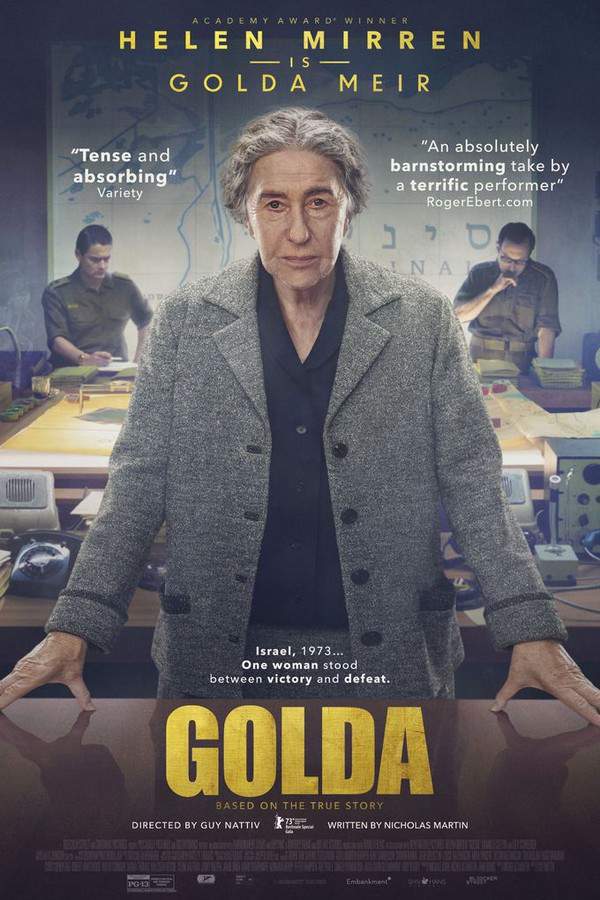
Golda (2023) movie poster

Timeline

Golda (2023) Timeline Explained – Every Event in Order

Release, runtime and language
2023 · 100 min · English
Echo score 66
Directed by
Guy Nattiv
Starring
Helen Mirren, Camille Cottin, Henry Goodman, Claudette Williams, Ellie Piercy, Emma Davies

During the tense days of the Yom Kippur War, Israeli Prime Minister Golda Meir confronts a critical moment for her nation. Faced with escalating conflict, she must make difficult choices that could determine Israel's survival. Golda navigates disagreements within her cabinet, works with US Secretary of State Henry Kissinger, and grapples with the profound impact of her decisions as the country faces a precarious situation and the lives of millions are at stake.

On this page (5)
  1. 1 Events in order (14)
  2. 2 Timeline questions answered
  3. 3 Movie threads
  4. 4 Movies like Golda
  5. 5 Every angle

14 events in order · contains spoilers

Golda Timeline: Events in Chronological Order

Every key event of Golda (2023) in order, scene by scene, with when and where it takes place. Use it to untangle flashbacks, time jumps and parallel storylines, to refresh your memory before the sequel or to find the exact scene you are thinking of.

  1. Mossad warns of imminent war; Golda and Dayan doubt the plan

    In October 1973, Mossad intelligence signals Egypt and Syria are preparing a major military campaign against Israel. Golda Meir dismisses the threat and says she cannot act without defense minister Moshe Dayan's backing. Dayan is equally skeptical, leaving her with a shaky sense of preparedness.

    When
    October 1973
    Where
    Israel
  2. October 6: War begins; Golda orders partial mobilization

    On Yom Kippur, Golda's inner circle informs her that Egypt has amassed a large force opposite the Suez Canal and that hostilities will begin by sundown. She refuses a full pre-emptive strike but orders a partial mobilization to face the threat. The attack nevertheless breaks out earlier than expected, catching Israel off guard, and Dayan views the situation with alarm.

    When
    6 October 1973
    Where
    Israel
  3. Dayan's shock at the Golan Heights, contemplates resignation

    Dayan travels to the Golan Heights and discovers Syria's forces have launched a thorough attack against ill-prepared Israeli troops. He is dazed and attempts to resign, but Golda talks him out of it. The episode leaves her with a growing loss of confidence in his leadership.

    When
    6 October 1973
    Where
    Golan Heights, Israel
  4. October 7–8: Sinai relief plan and its failures

    IDF Chief of Staff David Elazar pushes to relieve Sinai fortifications by deploying the 162nd Division under Avraham Adan. Zvi Zamir, head of Mossad, objects to the plan, but it proceeds anyway. The operation stalls and the Egyptians repel the Israeli force, highlighting the Sinai front's vulnerability.

    When
    7–8 October 1973
    Where
    Sinai Peninsula
  5. Damascus air strike plan; US jets promised

    With the Syrian offensive pressing, Dayan proposes an air strike on Damascus to pressure Egypt. The plan founders due to a shortage of combat aircraft, and the IAF cannot proceed. Golda appeals to U.S. Secretary of State Henry Kissinger for surplus jets, and he reluctantly agrees to help.

    When
    9 October 1973
    Where
    Damascus, Syria
  6. Sharon's crossing plan with the 143rd Division

    Maj. Gen. Ariel Sharon proposes an operation to cross the canal with the 143rd Division to challenge the Egyptian Second and Third Armies. Zvi Zamir warns that the Egyptians could cross the canal in two days, leaving Cairo undefended. The plan moves forward amid warnings and strategic calculations.

    When
    10 October 1973
    Where
    Suez Canal, Sinai Peninsula
  7. Egyptians cross the canal; Israeli tanks oppose

    The Egyptians cross the canal and meet resistance from Israeli tank forces led by Haim Bar-Lev, who push them back and inflict losses. The Israeli defense holds, halting the Egyptian advance for the moment. The frontline dynamics shift as both sides adapt to the new phase of fighting.

    When
    10 October 1973
    Where
    Suez Canal zone, Sinai
  8. Chinese Farm crossing; ambush; Elazar barricades Third Army

    On 15 October, Sharon's forces cross the canal at the undefended 'Chinese Farm' crossing and are ambushed by Egyptian units, yet they maintain their positions. In parallel, Elazar moves to barricade the Third Army by cutting Suez from Cairo, aiming to force Egyptian concessions. Kissinger privately visits Golda and urges a ceasefire.

    When
    15 October 1973
    Where
    Chinese Farm area, Sinai Peninsula
  9. Kissinger urges ceasefire; diplomatic pressure intensifies

    Kissinger's private intervention adds top-level diplomatic pressure as Golda pursues her strategic plan. She continues toward negotiations despite the international push for a ceasefire. The sequence highlights the convergence of military and diplomatic efforts to end the conflict.

    When
    16 October 1973
    Where
    Jerusalem, Israel
  10. Ceasefire talks and POW exchanges begin

    By the twentieth day, both sides move toward diplomatic talks and agree to exchange prisoners of war, signaling a de-escalation of hostilities. The negotiations consolidate as the military momentum shifts into a political settlement. The war, while not immediately resolved, trends toward a pause in major fighting.

    When
    20 October 1973
    Where
    Israel-Egypt border region / Sinai
  11. Zeira's lapse exposed; Golda bears the blame

    Zvi Zamir privately informs Golda that IDF intelligence chief Eli Zeira failed to monitor Egyptian signals effectively, allowing Israel to be attacked unawares. Golda chooses to shoulder the blame publicly to shield the IDF from controversy. The moment underscores the personal costs of wartime leadership.

    When
    Late October 1973
    Where
    Jerusalem, Israel
  12. Emotional toll and cancer; leadership burden

    Despite a strategic victory, the war exacts an emotional toll on Golda, who is later diagnosed with cancer. The strain of leadership during the conflict compounds her aging and personal burdens. The film portrays a leader bearing heavy scars beyond the battlefield.

    When
    Late 1973 – 1974
    Where
    Israel
  13. Agranat Commission: 1974 testimony and clearance

    In 1974, Golda testifies before the Agranat Commission about her conduct during the war. She states, off the record, that she genuinely felt war was certain, and the commission ultimately clears her of wrongdoing. The public narrative emphasizes accountability without liability for the broader war effort.

    When
    1974
    Where
    Israel
  14. Golda's death and Camp David; legacy affirmed

    On 8 December 1978, Golda Meir dies bedridden while watching footage of her meeting with Anwar Sadat from the previous year. The film notes she lived to see the Camp David Accords, the first formal peace steps between Israel and its Arab neighbors. Her legacy endures in the peace process that followed.

    When
    8 December 1978
    Where
    Jerusalem, Israel

Last updated: October 09, 2025 at 16:22

Was this helpful?

Timeline questions answered

Golda Timeline Explained: Your Questions Answered

When does it happen, and why in that order? The questions people ask about the chronology of Golda (2023): time jumps, flashbacks, cause and effect between scenes and the correct order of events, each answered with spoilers.

Q1

Why didn't Golda order a full pre-emptive strike when Israel received warning of the attack?

Golda refused a full pre-emptive strike because she needed the support of Defense Minister Moshe Dayan, who shared her skepticism about the intelligence. Without Dayan's backing, she feared the political and military consequences of a false alarm, so she only authorized a partial mobilization. By the time the attack launched earlier than expected, Israel was already caught off guard.

Foreshadowing: Earlier Mossad intelligence had raised the threat, but Golda's caution stemmed from not having Dayan's agreement.

  • pre-emptive strike
  • yom kippur war
  • moshe dayan
  • mobilization
  • golda meir
Q2

Why did Golda keep Moshe Dayan as defense minister even after losing confidence in him?

Golda urged Dayan to stay despite her doubts because his resignation would have created a political crisis at the height of the war. With Israel's survival at stake, she could not afford the instability that his departure would cause, even though she privately questioned his leadership after the Golan Heights disaster.

Foreshadowing: Dayan's shock at the Syrian offensive and his brief resignation attempt revealed his vulnerability.

  • moshe dayan
  • defense minister
  • golda meir
  • resignation
  • leadership
Q3

What was the significance of the Chinese Farm crossing during the Yom Kippur War?

The Chinese Farm crossing was a bold military maneuver where Ariel Sharon's 143rd Division crossed the Suez Canal at an undefended point on October 15. Despite being ambushed by Egyptian forces, they held their ground, allowing Israel to cut off Cairo from the Suez Canal and trap the Egyptian Third Army, ultimately forcing Egypt to negotiate.

Foreshadowing: Zvi Zamir had warned that Egyptian divisions could cross within two days, creating the opportunity Sharon exploited.

  • chinese farm
  • ariel sharon
  • suez canal
  • third army
  • israeli military
Q4

Why did Golda publicly take the blame for the Israeli intelligence failure?

Golda chose to shoulder the blame rather than expose IDF intelligence chief Eli Zeira's failure to monitor Egyptian signals, because publicly attacking the IDF during wartime would have damaged morale and national unity. She accepted responsibility to protect the military from controversy, even though she was privately informed of Zeira's lapse by Mossad chief Zvi Zamir.

Foreshadowing: Zamir privately revealed Zeira's failure late in the war, giving Golda a difficult political choice.

  • eli zeira
  • intelligence failure
  • zvi zamir
  • blame
  • idf
  • golda meir
Q5

What was the Agranat Commission and what did it find about Golda?

The Agranat Commission was an official inquiry established in 1974 to examine Israel's conduct during the Yom Kippur War. Golda testified about her decisions, and the commission ultimately cleared her of any wrongdoing, concluding that she bore no personal liability for the intelligence failures or military setbacks during the war.

Foreshadowing: Golda's testimony noted she had genuinely believed war was likely, contradicting her public caution.

  • agranat commission
  • inquiry
  • golda meir
  • clearance
  • yom kippur war
Q6

Why did Kissinger urge a ceasefire during the Yom Kippur War?

Kissinger pushed for a ceasefire because he wanted to prevent a complete Israeli victory that would make Egypt more dependent on Soviet support. By halting the fighting, he could position the US as the essential mediator and force Egypt into negotiations where America could gain influence over both sides.

Foreshadowing: Kissinger's private meeting with Golda revealed his diplomatic priorities alongside Israel's military objectives.

  • henry kissinger
  • ceasefire
  • negotiations
  • us diplomacy
  • egypt
Q7

Why did Israel need to request American jets during the Yom Kippur War?

Israel faced a critical shortage of combat aircraft after early fighting depleted its air capabilities. Golda directly appealed to Kissinger for surplus US jets to sustain air operations, particularly for Dayan's proposed strike on Damascus. Kissinger reluctantly agreed, recognizing that American support was essential to Israel's military survival.

Foreshadowing: The shortage of aircraft directly limited Israel's ability to launch the Damascus air strike.

  • us jets
  • aircraft
  • air force
  • kissinger
  • military aid
  • israel
Q8

What happened to Golda Meir after the Yom Kippur War?

After the war, Golda continued serving as prime minister but the conflict's emotional toll contributed to her developing cancer. She testified before the Agranat Commission in 1974, was cleared of wrongdoing, and lived long enough to witness the Camp David Accords in 1978, the first steps toward peace with Egypt. She died on December 8, 1978, while watching footage of her meeting with Anwar Sadat.

Foreshadowing: The war's heavy emotional burden on the aging leader was foreshadowed throughout the film.

  • golda meir
  • death
  • cancer
  • camp david
  • peace
  • egypt
  • sadat
Q9

Was the Yom Kippur War a strategic victory for Israel?

Militarily, Israel achieved a strategic victory by crossing the Suez Canal, cutting off the Egyptian Third Army, and pushing toward Cairo. However, the war came at an enormous emotional cost to Golda and revealed serious intelligence failures. Politically, it led to the Camp David Accords and eventual peace with Egypt, though Golda did not live to see full peace finalized.

Foreshadowing: The film portrays the victory as bittersweet, military success paired with personal and national trauma.

  • strategic victory
  • military
  • peace
  • camp david
  • israel
  • egypt
Q10

Did Golda Meir actually believe war was coming before the Yom Kippur attack?

Off the record during her Agranat Commission testimony, Golda admitted she genuinely believed war was likely, even though publicly she expressed doubt and waited for Dayan's support. This private belief conflicted with her cautious public stance, revealing the tension between her private judgment and her political need for consensus.

Foreshadowing: Her private admission contradicted the caution she displayed when receiving Mossad warnings.

  • golda meir
  • belief
  • testimony
  • agranat commission
  • confidence
  • doubt

Movie threads

More Movies Like Golda, by Mood & Story

Curated lists built around what makes Golda tick: the same mood, the same kind of story or the same emotional payoff. Each list explains why these movies belong together.

High-stakes leadership dramas like Golda

Films where leaders make nation-altering decisions under immense pressure and limited time. If you liked the tense, war-room atmosphere of Golda, discover other movies like it that focus on leaders in crisis. These historical and political dramas feature similar high-pressure decision-making, strategic dilemmas, and the heavy burden of command during pivotal moments.

  • tense
  • high-stakes
  • burdened
  • strategic
  • command center
  • grave decisions
  • Tone: tense, grave, determined
  • Pacing: steady, urgent
Why these movies?

The story pattern: These narratives typically unfold in confined settings like war rooms or situation centers, following a tight timeline. The central conflict is often a strategic or political dilemma, with the protagonist navigating conflicting advice and incomplete information to avert a catastrophe.

Why they belong together: Movies in this thread share a consistently tense tone, high emotional weight, and a steady, urgent pacing. They are united by their focus on the psychological burden of leadership and the high-stakes nature of the decisions being made.
Bittersweet historical dramas like Golda

Stories where historical triumphs come with a profound and melancholic personal or moral price. For viewers who appreciated the somber, bittersweet conclusion of Golda, this collection features similar movies. These films depict pivotal historical events where survival or vindication is achieved, but the ending carries a heavy tone of personal and collective cost.

  • somber
  • bittersweet
  • historical reflection
  • cost of victory
  • moral weight
  • solemn
  • Tone: somber, bittersweet, reflective
  • Pacing: steady, deliberate
Why these movies?

The story pattern: The narrative pattern involves a protagonist navigating a major historical event, achieving their primary goal (e.g., national survival, clearing their name), but the resolution is shadowed by the sacrifices made along the way. The ending feel mixes historical vindication with personal melancholy.

Why they belong together: These films are grouped by their shared bittersweet ending feel, heavy emotional weight, and somber mood. They resonate with viewers seeking historical depth that acknowledges the complexities and human costs behind significant events.

If you liked this

Movies Like Golda

Similar movies to Golda: the same genre, themes or kind of story. Each one comes with its own plot summary, timeline and ending explained.

Browse all movie summaries

Every angle

Golda (2023) Explained: Plot, Ending, Timeline & Characters

Everything about Golda in one place: what happens in the plot summary, the timeline in chronological order, the characters and meaning, the ending explained and a spoiler-free summary. What's After the Movie adds the cast, box office and post-credit scenes.

Coming soon on iOS and Android

The Plot Explained Movie Summary App

Plot summaries, endings explained and timelines on your phone. Catch up on any movie in minutes, save your favorites and never miss a twist again.

Be the first to know when we launch. Your email stays private, always.

Learn more about the app