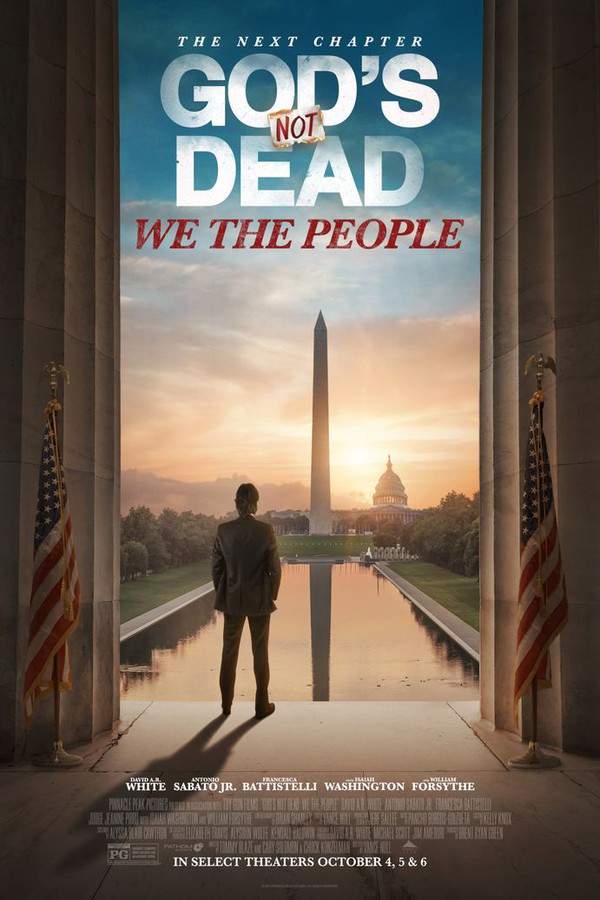
God’s Not Dead: We The People

God’s Not Dead: We The People

JustWatch#31,7721

Year: 2020

Runtime: 91 mins

Language: English

Director: Vance Null

Echo Score: 47

Budget: $5M

Drama

The Next Chapter Reverend Dave has to defend himself and a group of Christian homeschooling families after an inspection by local government officials.

Where to Watch God’s Not Dead: We The People?

Find where to stream, rent, or buy God’s Not Dead: We The People (2020) in the US with current JustWatch availability, up-to-date pricing, and platform listings for subscription, rental, and digital purchase options.

Warning: spoilers below!

Haven’t seen God’s Not Dead: We The People yet? This summary contains major spoilers. Bookmark the page, watch the movie, and come back for the full breakdown. If you're ready, scroll on and relive the story!

God’s Not Dead: We The People (2020) – Full Plot Summary & Ending Explained

Read the complete plot breakdown of God’s Not Dead: We The People (2020), including all key story events, major twists, and the ending explained in detail. Discover what really happened, and what it all means.

In a close-knit community of home-schooling families, a steady eye toward faith and parental guidance anchors their daily lives. Leading the effort is Reverend Dave Hill, a calm and passionate figure who helps his neighbors navigate a world that suddenly questions their methods. When an unannounced visit from a social-services representative arrives, the inspector declares that their religiously informed curriculum does not meet federal education standards, setting off a chain of legal and emotional challenges. The families are summoned to court, and the initial ruling goes in favor of the state, a decision that tests their resolve and their beliefs.

Refusing to surrender, the families, alongside Reverend Dave, decide to appeal the judgment and push their case beyond the courtroom walls. They travel to Washington, D.C., aiming to address a congressional subcommittee and argue for the right to educate their children in accordance with their religious convictions. In this high-stakes arena, they receive support from Daryl Smith, a fictional Congressman who becomes a key ally in their push for clearer boundaries between parental rights and government oversight. The dialogue through the hearing unfolds as a careful meditation on liberty, responsibility, and the role of the state in shaping the way children are taught.

Throughout the proceedings, the film mirrors the real-world tensions that families face when schooling choices collide with policy. The McKinnon family stands as a representative example of ordinary households caught in the crosscurrents of regulatory scrutiny and personal faith. Mike McKinnon and Rebecca McKinnon bring their voice to the discussion, joined by their son Brandon McKinnon, illustrating how these questions play out in everyday life and affect family dynamics, values, and aspirations.

On the floor of the hearing, the narrative deepens as Congress and the judiciary become venues for weighing fundamental rights. A capable voices—among them Congresswoman Denise Campbell—weave through the testimonies, underscoring concerns about parental authority, religious freedom, and the boundaries of government intervention in education. The case culminates in a turning point: a judge, Judge Elizabeth Neely, renders a decision that reinforces the families’ appeal and affirms their prerogative to educate in line with their beliefs.

With the courtroom and the hearing room echoing with arguments about liberty, responsibility, and the common good, the story emphasizes that education is as much about trust and principle as it is about standards. The final outcome affirms the families’ right to pursue their chosen path while inviting viewers to reflect on how communities balance safety, learning, and faith in a diverse society. The film closes on a note of cautious optimism, suggesting that individual liberties, when exercised with care and accountability, can coexist with broader educational goals.

Last updated: January 28, 2026 at 12:45

Was this helpful?

God’s Not Dead: We The People (2020) Plot Questions Answered – Summary FAQ

Explore frequently asked questions about God’s Not Dead: We The People (2020) with spoiler-rich answers covering the full plot summary, major story beats, character motivations, hidden details, and ending meaning. This movie summary FAQ helps explain confusing scenes, plot twists, and narrative decisions in clear, searchable detail.

Q1

Why did a social services representative visit the homeschooling families?

A.

A social services representative conducted an unannounced visit to the Hill home to inspect the homeschooling curriculum. After observing the religiously-informed teaching methods, the inspector determined that the curriculum did not meet federal education standards, which triggered the legal action against the families.

social services inspectionhomeschoolingcurriculum standardseducation oversight
Q2

Why was the religiously-based curriculum considered non-compliant?

A.

The inspector concluded that the curriculum failed to meet federal education standards because it was rooted in religious instruction rather than secular educational requirements. This finding set the legal process in motion, leading to a court summons and the subsequent legal battle over educational freedom.

religious curriculumnon-complianteducation standardsstate requirements
Q3

Why did the families decide to appeal the initial court ruling?

A.

After the local court ruled in favor of the state, declaring the curriculum non-compliant, Reverend Dave Hill and the families refused to surrender. They believed their constitutional right to educate their children according to their religious convictions was being violated and chose to pursue the appellate process to challenge the decision.

appealcourt rulingconstitutional rightsreligious freedom
Q4

How did Congressman Daryl Smith help the families' case?

A.

Congressman Daryl Smith served as a key ally for the families, providing political backing and legislative credibility. He helped organize the congressional hearing and facilitated their opportunity to present their arguments before a congressional subcommittee, transforming their local dispute into a national policy discussion.

Congressman Daryl Smithpolitical supportcongressional hearingadvocacy
Q5

What was the outcome of the congressional subcommittee hearing?

A.

The congressional subcommittee hearing provided a platform for Reverend Dave and the families to present their arguments about parental rights and religious freedom. The hearing framed the education policy as a clash between parental authority and government oversight, ultimately contributing to the judicial reversal that followed.

congressional hearingsubcommitteeparental rightsreligious freedom
Q6

Who ruled in favor of the families' appeal?

A.

Judge Elizabeth Neely rendered the final decision in favor of Dave Hill and the families' appeal. Her ruling reversed the prior court decision and affirmed the families' right to pursue their approach to education based on their religious beliefs.

Judge Elizabeth Neelyrulingappealjudicial decision
Q7

What main arguments did the families present about parental rights?

A.

The families argued that government oversight infringed upon their fundamental parental rights and religious freedom. They contended that parents should have the authority to educate their children in accordance with their beliefs, emphasizing the importance of liberty and responsibility in shaping their children's education.

parental rightsreligious freedomlibertyeducational choice
Q8

What role did the McKinnon family play in the dispute?

A.

The McKinnon family served as a representative example of ordinary households affected by the regulatory scrutiny. Mike and Rebecca McKinnon, along with their son Brandon, brought their personal perspective to the legal proceedings, illustrating how these educational disputes impact family dynamics, values, and daily life.

McKinnon familyhomeschooling familiesfamily impactpersonal story
Q9

What was the final decision in the legal case?

A.

The final outcome affirmed the families' right to educate their children according to their religious convictions. The judge's ruling reversed the earlier decision and validated their approach to homeschooling, marking a victory for the families and reinforcing parental authority in educational choices.

final decisionvictoryparental rightseducational freedom
Q10

What was Congresswoman Denise Campbell's role in the hearing?

A.

Congresswoman Denise Campbell was one of the voices weaving through the testimonies during the congressional hearing. She addressed concerns about parental authority, religious freedom, and the boundaries of government intervention in education, contributing to the broader policy debate.

Congresswoman Denise Campbelltestimonyhearinggovernment oversight
Q11

Why did the families take their appeal to Washington, D.C.?

A.

After losing in local court, the families decided to travel to Washington, D.C. to pursue their case on a national stage. They sought to address a congressional subcommittee and argue for clearer boundaries between parental rights and government oversight, elevating their dispute from a local legal matter to a national policy conversation.

Washington DCcongressional appealnational stagepolicy debate
Q12

What tensions did the film portray between religious education and state regulation?

A.

The film highlighted the tension between religiously-informed education and state-mandated educational standards. While opponents stressed the need to meet minimum educational requirements, the families argued that religious freedom should allow them to shape their children's education according to their faith, creating a fundamental ideological conflict.

religious educationstate regulationeducational standardsfreedom vs oversight
Mobile App Preview

Coming soon on iOS and Android

The Plot Explained Mobile App

From blockbusters to hidden gems - dive into movie stories anytime, anywhere. Save your favorites, discover plots faster, and never miss a twist again.

Sign up to be the first to know when we launch. Your email stays private, always.

Explore Movie Threads

Discover curated groups of movies connected by mood, themes, and story style. Browse collections built around emotion, atmosphere, and narrative focus to easily find films that match what you feel like watching right now.

Faith on Trial Triumphs like in God’s Not Dead: We The People

Stories where unwavering belief is tested by legal opposition and emerges stronger.Movies like God’s Not Dead: We The People featuring determined individuals defending their religious freedom in court. If you enjoyed this hopeful legal drama about principled stands against government overreach, you'll find similar inspiring stories here.

principleddefianthopefulcontemplativecerebralinspiringlegal drama

Narrative Summary

These narratives typically begin with a peaceful community or individual facing an external legal challenge to their way of life or beliefs. The plot unfolds through a courtroom drama or similar procedural conflict, focusing on debates of principle rather than physical action. The journey is one of steadfast perseverance, culminating in a vindicating conclusion that affirms the characters' faith and rights.

Why These Movies?

Movies in this thread are grouped by their shared focus on a cerebral, ideological struggle. They feature a medium-intensity conflict driven by dialogue and legal strategy, a consistently hopeful tone that believes in a positive outcome, and a straightforward plot structure that clearly defines heroes and the moral stakes.

Principled Underdog Victories like in God’s Not Dead: We The People

Heartening stories where ordinary people stand up to powerful systems for what's right.Discover more movies like God’s Not Dead: We The People, where determined underdogs fight for their rights against a powerful system. These stories share a hopeful tone, steady pacing, and a focus on civil liberties and family values leading to a triumphant ending.

hopefuldeterminedprincipleddefiantinspiringcommunityunderdogtriumphant

Narrative Summary

The narrative pattern involves a close-knit group, often families or a community, whose peaceful existence is disrupted by an overreaching authority. The story follows their journey from initial shock to organized, determined resistance. The conflict escalates in a measured way, relying on the power of unity and conviction rather than force, building towards a climax that delivers a clear and rewarding victory for the protagonists.

Why These Movies?

These films are united by their uplifting 'David vs. Goliath' structure. They share a medium emotional weight that makes the stakes feel real without being crushing, a straightforward narrative that doesn't cloud the moral message, and a consistently hopeful tone that assures viewers the fight is worth it. The pacing is steady, focusing on the process of standing up for beliefs.

Unlock the Full Story of God’s Not Dead: We The People

Don't stop at just watching - explore God’s Not Dead: We The People in full detail. From the complete plot summary and scene-by-scene timeline to character breakdowns, thematic analysis, and a deep dive into the ending - every page helps you truly understand what God’s Not Dead: We The People is all about. Plus, discover what's next after the movie.

God’s Not Dead: We The People Timeline

Track the full timeline of God’s Not Dead: We The People with every major event arranged chronologically. Perfect for decoding non-linear storytelling, flashbacks, or parallel narratives with a clear scene-by-scene breakdown.

God’s Not Dead: We The People Timeline

Characters, Settings & Themes in God’s Not Dead: We The People

Discover the characters, locations, and core themes that shape God’s Not Dead: We The People. Get insights into symbolic elements, setting significance, and deeper narrative meaning - ideal for thematic analysis and movie breakdowns.

Characters, Settings & Themes in God’s Not Dead: We The People

God’s Not Dead: We The People Spoiler-Free Summary

Get a quick, spoiler-free overview of God’s Not Dead: We The People that covers the main plot points and key details without revealing any major twists or spoilers. Perfect for those who want to know what to expect before diving in.

God’s Not Dead: We The People Spoiler-Free Summary

More About God’s Not Dead: We The People

Visit What's After the Movie to explore more about God’s Not Dead: We The People: box office results, cast and crew info, production details, post-credit scenes, and external links - all in one place for movie fans and researchers.

More About God’s Not Dead: We The People

Similar Movies to God’s Not Dead: We The People

Discover movies like God’s Not Dead: We The People that share similar genres, themes, and storytelling elements. Whether you’re drawn to the atmosphere, character arcs, or plot structure, these curated recommendations will help you explore more films you’ll love.