









Plot Explained Spoilers guaranteed!
Plot Explained

Browse by genre

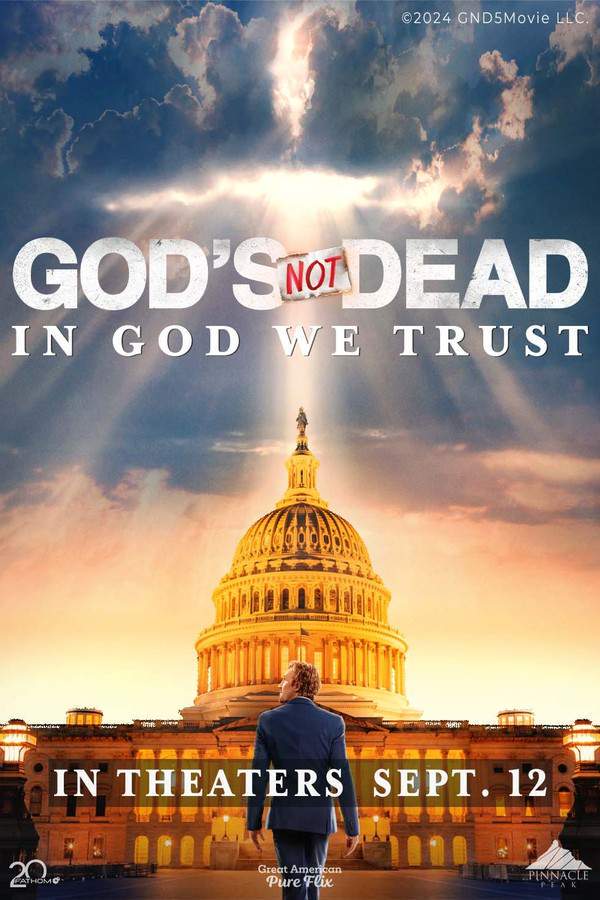
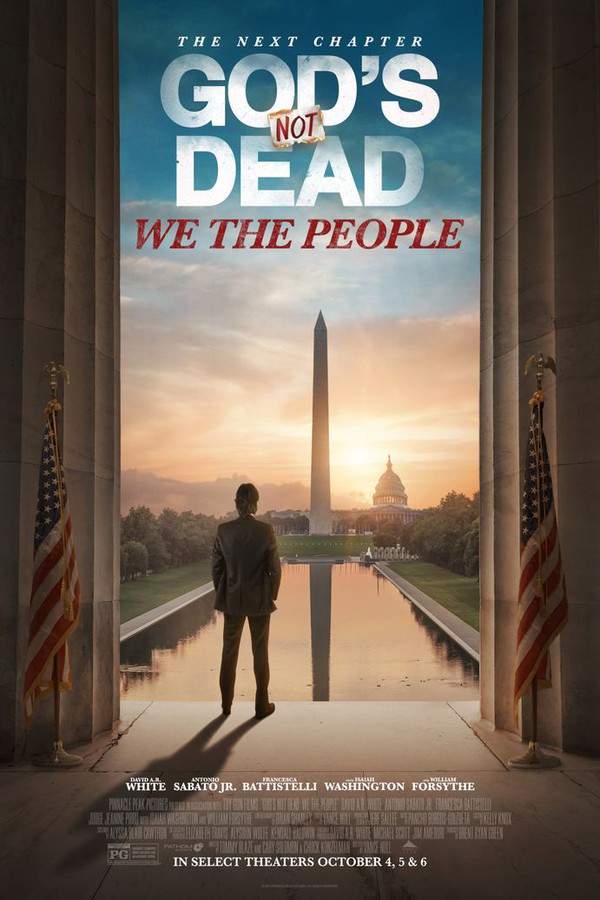
God’s Not Dead: We The People (2020) movie poster

Timeline

God’s Not Dead: We The People (2020) Timeline Explained – Every Event in Order

Release, runtime and language
2020 · 91 mins · English
Echo score 47
JustWatch #31,867 16
Directed by
Vance Null
Starring
Deborah Tucker, Isaiah Washington, William Forsythe, Marco Khan, Alexandra Harris, David A.R. White
Budget
$5M

The Next Chapter Reverend Dave has to defend himself and a group of Christian homeschooling families after an inspection by local government officials.

On this page (6)
  1. 1 Where to watch
  2. 2 Events in order (12)
  3. 3 Timeline questions answered
  4. 4 Movie threads
  5. 5 Movies like God’s Not Dead: We The People
  6. 6 Every angle

Where to watch

Where to Watch God’s Not Dead: We The People (2020)

Where can you watch God’s Not Dead: We The People? Stream, rent or buy it in the US, including on Pure Flix, Fawesome and Fandango at Home Free: current JustWatch availability with up-to-date prices.

Streaming availability powered by JustWatch

12 events in order · contains spoilers

God’s Not Dead: We The People Timeline: Events in Chronological Order

Every key event of God’s Not Dead: We The People (2020) in order, scene by scene, with when and where it takes place. Use it to untangle flashbacks, time jumps and parallel storylines, to refresh your memory before the sequel or to find the exact scene you are thinking of.

  1. Initial home-schooling under Pastor Dave Hill

    A group of parents, led by Pastor Dave Hill, educates their children at home using a religiously-informed curriculum. The approach reflects their religious beliefs and community values. The scene establishes the homeschooling environment and the close-knit nature of the families involved.

    Where
    Hill family home
  2. Unannounced social services visit

    A social services representative visits the Hill home without notice and observes the curriculum. The representative determines that the teaching does not meet federal education standards. The visit triggers concerns about oversight and compliance with state requirements.

    Where
    Hill family home
  3. Curriculum deemed non-compliant and court summons

    The assessment leads to a finding that the curriculum is non-compliant with state standards. The families are summoned to court to answer for the alleged deficiencies. The legal action centers on whether their approach meets required educational protocols.

    Where
    Local courthouse
  4. Court ruling favors the state

    In the courtroom, the judge rules in favor of the state, asserting that the curriculum does not meet the necessary standards. The decision represents a setback for the families and Reverend Dave. The ruling underscores the primacy of state oversight in education policy.

    Where
    Local courthouse
  5. Decision to appeal the ruling

    Facing the unfavorable decision, Dave Hill and the families decide to appeal the court ruling. Reverend Dave joins the effort to challenge the outcome through the appellate process. The move signals a shift from the courtroom to higher legal channels.

    Where
    Local courthouse
  6. Journey to Washington, D.C.

    The families travel to Washington, D.C. to pursue their case in front of a national audience. The trip marks a transition from local court to the national stage for education policy and parental rights. The travel underscores the seriousness of their appeal.

    Where
    Washington, D.C.
  7. Seeking to present the case before a congressional subcommittee

    They aim to present their case before a congressional subcommittee, arguing that government oversight infringes upon parental rights. The appeal reframes the dispute as a matter of fundamental liberties. The subcommittee setting emphasizes the policy dimension of the fight.

    Where
    Capitol Hill
  8. Support from Congressman Daryl Smith

    With assistance from fictional Congressman Daryl Smith, the families gain political backing to advance their position. Smith helps organize the hearing and lends legislative credibility to their cause. The collaboration highlights the role of advocacy in education rights debates.

    Where
    Capitol Hill
  9. Preparation for the congressional hearing

    The families and Reverend Dave prepare their testimony, focusing on parental rights and religious freedom. They organize their key points to present a compelling case about the limits of state control in education. The preparation builds the foundation for their arguments at the hearing.

    Where
    Capitol Hill
  10. The congressional subcommittee hearing

    A congressional subcommittee holds a hearing where Reverend Dave and the families present their views on individual liberties and the state’s role in education. The session frames education policy as a clash between parental authority and government oversight. Testimony from multiple family members illustrates personal impacts.

    Where
    Congressional hearing room
  11. Debate over parental rights and state standards

    During the hearing, arguments emphasize religious freedom and parental prerogatives, while opponents stress the need to meet minimum educational standards. The discussion highlights the tension between religious education and state regulation. The exchange sets the tone for potential policy implications.

    Where
    Congressional hearing room
  12. Final ruling in favor of the appeal

    Following the hearing, a judge rules in favor of Dave Hill and the families' appeal. The decision reverses the prior ruling and affirms the families' right to pursue their approach to education. The outcome marks a victory for the involved families and reopens the path for their educational beliefs to be honored.

    Where
    Courtroom

Last updated: January 28, 2026 at 12:45

Was this helpful?

Timeline questions answered

God’s Not Dead: We The People Timeline Explained: Your Questions Answered

When does it happen, and why in that order? The questions people ask about the chronology of God’s Not Dead: We The People (2020): time jumps, flashbacks, cause and effect between scenes and the correct order of events, each answered with spoilers.

Q1

Why did a social services representative visit the homeschooling families?

A social services representative conducted an unannounced visit to the Hill home to inspect the homeschooling curriculum. After observing the religiously-informed teaching methods, the inspector determined that the curriculum did not meet federal education standards, which triggered the legal action against the families.

  • social services inspection
  • homeschooling
  • curriculum standards
  • education oversight
Q2

Why was the religiously-based curriculum considered non-compliant?

The inspector concluded that the curriculum failed to meet federal education standards because it was rooted in religious instruction rather than secular educational requirements. This finding set the legal process in motion, leading to a court summons and the subsequent legal battle over educational freedom.

  • religious curriculum
  • non-compliant
  • education standards
  • state requirements
Q3

Why did the families decide to appeal the initial court ruling?

After the local court ruled in favor of the state, declaring the curriculum non-compliant, Reverend Dave Hill and the families refused to surrender. They believed their constitutional right to educate their children according to their religious convictions was being violated and chose to pursue the appellate process to challenge the decision.

  • appeal
  • court ruling
  • constitutional rights
  • religious freedom
Q4

How did Congressman Daryl Smith help the families' case?

Congressman Daryl Smith served as a key ally for the families, providing political backing and legislative credibility. He helped organize the congressional hearing and facilitated their opportunity to present their arguments before a congressional subcommittee, transforming their local dispute into a national policy discussion.

  • Congressman Daryl Smith
  • political support
  • congressional hearing
  • advocacy
Q5

What was the outcome of the congressional subcommittee hearing?

The congressional subcommittee hearing provided a platform for Reverend Dave and the families to present their arguments about parental rights and religious freedom. The hearing framed the education policy as a clash between parental authority and government oversight, ultimately contributing to the judicial reversal that followed.

  • congressional hearing
  • subcommittee
  • parental rights
  • religious freedom
Q6

Who ruled in favor of the families' appeal?

Judge Elizabeth Neely rendered the final decision in favor of Dave Hill and the families' appeal. Her ruling reversed the prior court decision and affirmed the families' right to pursue their approach to education based on their religious beliefs.

  • Judge Elizabeth Neely
  • ruling
  • appeal
  • judicial decision
Q7

What main arguments did the families present about parental rights?

The families argued that government oversight infringed upon their fundamental parental rights and religious freedom. They contended that parents should have the authority to educate their children in accordance with their beliefs, emphasizing the importance of liberty and responsibility in shaping their children's education.

  • parental rights
  • religious freedom
  • liberty
  • educational choice
Q8

What role did the McKinnon family play in the dispute?

The McKinnon family served as a representative example of ordinary households affected by the regulatory scrutiny. Mike and Rebecca McKinnon, along with their son Brandon, brought their personal perspective to the legal proceedings, illustrating how these educational disputes impact family dynamics, values, and daily life.

  • McKinnon family
  • homeschooling families
  • family impact
  • personal story
Q9

What was the final decision in the legal case?

The final outcome affirmed the families' right to educate their children according to their religious convictions. The judge's ruling reversed the earlier decision and validated their approach to homeschooling, marking a victory for the families and reinforcing parental authority in educational choices.

  • final decision
  • victory
  • parental rights
  • educational freedom
Q10

What was Congresswoman Denise Campbell's role in the hearing?

Congresswoman Denise Campbell was one of the voices weaving through the testimonies during the congressional hearing. She addressed concerns about parental authority, religious freedom, and the boundaries of government intervention in education, contributing to the broader policy debate.

  • Congresswoman Denise Campbell
  • testimony
  • hearing
  • government oversight
Q11

Why did the families take their appeal to Washington, D.C.?

After losing in local court, the families decided to travel to Washington, D.C. to pursue their case on a national stage. They sought to address a congressional subcommittee and argue for clearer boundaries between parental rights and government oversight, elevating their dispute from a local legal matter to a national policy conversation.

  • Washington DC
  • congressional appeal
  • national stage
  • policy debate
Q12

What tensions did the film portray between religious education and state regulation?

The film highlighted the tension between religiously-informed education and state-mandated educational standards. While opponents stressed the need to meet minimum educational requirements, the families argued that religious freedom should allow them to shape their children's education according to their faith, creating a fundamental ideological conflict.

  • religious education
  • state regulation
  • educational standards
  • freedom vs oversight

Movie threads

More Movies Like God’s Not Dead: We The People, by Mood & Story

Curated lists built around what makes God’s Not Dead: We The People tick: the same mood, the same kind of story or the same emotional payoff. Each list explains why these movies belong together.

Faith on Trial Triumphs like in God’s Not Dead: We The People

Stories where unwavering belief is tested by legal opposition and emerges stronger. Movies like God’s Not Dead: We The People featuring determined individuals defending their religious freedom in court. If you enjoyed this hopeful legal drama about principled stands against government overreach, you'll find similar inspiring stories here.

  • principled
  • defiant
  • hopeful
  • contemplative
  • cerebral
  • inspiring
  • Tone: hopeful, determined, principled
  • Pacing: steady, procedural
Why these movies?

The story pattern: These narratives typically begin with a peaceful community or individual facing an external legal challenge to their way of life or beliefs. The plot unfolds through a courtroom drama or similar procedural conflict, focusing on debates of principle rather than physical action. The journey is one of steadfast perseverance, culminating in a vindicating conclusion that affirms the characters' faith and rights.

Why they belong together: Movies in this thread are grouped by their shared focus on a cerebral, ideological struggle. They feature a medium-intensity conflict driven by dialogue and legal strategy, a consistently hopeful tone that believes in a positive outcome, and a straightforward plot structure that clearly defines heroes and the moral stakes.
Principled Underdog Victories like in God’s Not Dead: We The People

Heartening stories where ordinary people stand up to powerful systems for what's right. Discover more movies like God’s Not Dead: We The People, where determined underdogs fight for their rights against a powerful system. These stories share a hopeful tone, steady pacing, and a focus on civil liberties and family values leading to a triumphant ending.

  • hopeful
  • determined
  • principled
  • defiant
  • inspiring
  • community
  • Tone: hopeful, defiant, uplifting
  • Pacing: steady, deliberate
Why these movies?

The story pattern: The narrative pattern involves a close-knit group, often families or a community, whose peaceful existence is disrupted by an overreaching authority. The story follows their journey from initial shock to organized, determined resistance. The conflict escalates in a measured way, relying on the power of unity and conviction rather than force, building towards a climax that delivers a clear and rewarding victory for the protagonists.

Why they belong together: These films are united by their uplifting 'David vs. Goliath' structure. They share a medium emotional weight that makes the stakes feel real without being crushing, a straightforward narrative that doesn't cloud the moral message, and a consistently hopeful tone that assures viewers the fight is worth it. The pacing is steady, focusing on the process of standing up for beliefs.

If you liked this

Movies Like God’s Not Dead: We The People

Similar movies to God’s Not Dead: We The People: the same genre, themes or kind of story. Each one comes with its own plot summary, timeline and ending explained.

Browse all movie summaries

Every angle

God’s Not Dead: We The People (2020) Explained: Plot, Timeline & Characters

Everything about God’s Not Dead: We The People in one place: what happens in the plot summary, the timeline in chronological order, the characters and meaning and a spoiler-free summary. What's After the Movie adds the cast, box office and post-credit scenes.

Coming soon on iOS and Android

The Plot Explained Movie Summary App

Plot summaries, endings explained and timelines on your phone. Catch up on any movie in minutes, save your favorites and never miss a twist again.

Be the first to know when we launch. Your email stays private, always.

Learn more about the app