Plot Explained Spoilers guaranteed!
Plot Explained

Browse by genre

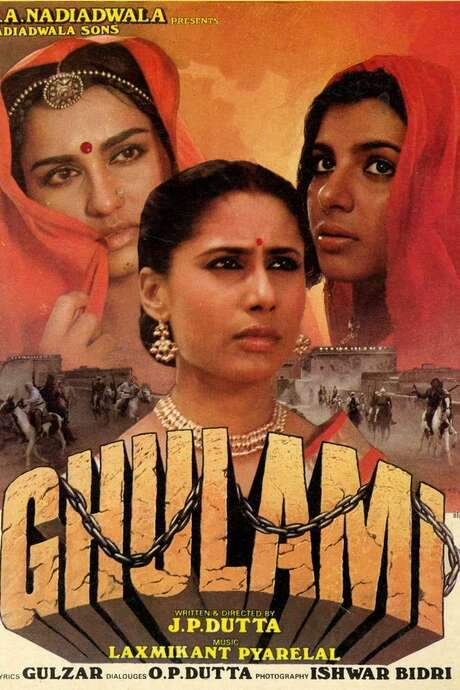
Ghulami (1985) movie poster

Characters & Themes

Ghulami (1985) Characters, Setting & Themes Explained

Release, runtime and language
1985 · 171 mins · Hindi
Directed by
J. P. Dutta
Starring
Naseeruddin Shah, Amitabh Bachchan, Raza Murad, Mithun Chakraborty, Kulbhushan Kharbanda, Dharmendra

Set in the border town of Fatehpur on the India‑Pakistan frontier, the story follows Ranjit Singh Choudhary, a young man branded a rebel by his schoolmaster and by his father’s employer, Bade Thakur. Unwilling to accept the exploitation of his father’s generation, who have become economic slaves to the upper‑caste Thakurs that lend them money, Ranjit confronts the systemic injustice and fights for his fellow farmers.

On this page (7)
  1. 1 Characters explained (8)
  2. 2 Where & when it takes place
  3. 3 Themes & meaning (3)
  4. 4 Character & meaning questions
  5. 5 Movie threads
  6. 6 Movies like Ghulami
  7. 7 Every angle

8 main characters · contains spoilers

Ghulami Characters Explained: Who Is Who

The main characters of Ghulami (1985), heroes and villains: what drives them, how they change over the course of the story and what each of them reveals about the film's bigger ideas.

  • Ranjit Singh Chaudhary

    played by Dharmendra

    A rebellious peasant son who returns to his village to confront chronic exploitation by the powerful zamindar clan. He believes the peasant must not be forced to repay loans that supported the landlord’s lavish lifestyle, and he channels this logic into a violent, decisive bid to dismantle the feudal order. He becomes a catalyst for class conflict, courting danger as he fights for land and dignity.

    • 🔥 Rebel
    • 🪧 Leader
    • 🥊 fighter
  • Moran

    played by Reena Roy

    A sympathetic peer who stands with Ranjit and is drawn into the growing rebellion. She embodies resilience amid hardship and becomes a symbol of loyalty and protection for the protagonist. Her presence anchors the personal stakes within the larger struggle.

    • 💖 Female lead
    • 🛡️ Protector
  • Sumitra Sultan Singh

    played by Smita Patil

    Daughter of the landlord who loves Ranjit from a distance. Her unrequited passion complicates alliances and foreshadows the friction between love and duty. She ultimately aligns with her father's faction, highlighting the personal costs of the village conflict.

    • 💔 Heartbreak
    • 🗡️ Rivalry
  • Thakur Jaswant Singh

    played by Mazhar Khan

    A patriarchal landowner who embodies the corrupt feudal system. He wields power through fear and severs peasants from any chance of justice. The character's actions illuminate the cruelty and entitlement of the landlord class.

    • 🕍 Landlord
    • 🗡️ Villain
  • Gopi Dada

    played by Kulbhushan Kharbanda

    Village havaldar whose son was killed by the landlord's henchmen, fueling his complicity in protecting the village and seeking justice. He stands between law and vengeance, reflecting the complexities of upholding order in a corrupt system.

    • 👮 Police
    • 🛡️ Ally
  • Jabhar

    played by Mithun Chakraborty

    A former soldier who returns to help Ranjit in his vendetta. His discipline and loyalty lend military momentum to the peasants' cause, turning personal revenge into organized resistance.

    • 🪖 Veteran
    • 🫂 Ally
  • Makhan

    played by Rajan Haksar

    A key landowner associate who shares the landlord's ruthlessness. He participates in the oppression and contributes to the brutal cycle of violence that culminates in the village's downfall.

    • 🗡️ Enforcer
    • 🏷️ Antagonist
  • Masterji

    played by Rammohan Sharma

    The village schoolmaster who sees the consequences of oppression reflected in the students he teaches. He represents education as a tool for awareness and a counterpoint to caste prejudice.

    • 📚 Educator
    • 🕊️ Moral compass

Last updated: October 04, 2025 at 13:17

Was this helpful?

Setting

Where and When Does Ghulami Take Place?

The setting of Ghulami (1985): the year and time period, the places and locations, and how they shape the characters, the mood and the tension of the story.

Time period

Location

Rajasthan, India

Rajasthan's rural villages form the backdrop of the story, where mud-walled houses cluster around courtyards and arid plains stretch to the horizon. The area is governed by a powerful zamindar family and entrenched caste hierarchies that shape every interaction. The landscape and social order set the stage for peasants' struggle, vengeance, and moments of urgency that drive the plot.

  • 🏜️ Rajasthan desert setting
  • 🏰 Feudal oppression

Last updated: October 04, 2025 at 13:17

Was this helpful?

3 major themes

Ghulami Meaning: Themes & Message Explained

What is Ghulami (1985) really about? The emotional, social and philosophical themes the film keeps returning to, its symbolism and the message beneath the surface.

  • Class Struggle

    The film centers on the exploitative feudal system and the debt bondage that binds peasants to landowners. Ranjit's awakening and the peasants' revolt expose the systemic injustice that rewards power over fairness. Through confrontations and mass tension, the story questions whether law and order can be reconciled with moral justice. The village's conflicts illustrate how caste and class dictate access to land, resources, and dignity.

  • Revolution

    Ranjit's actions ignite a wider clash between peasants and the landlord's faction, turning personal grievances into collective upheaval. The narrative emphasizes the brutal costs of rebellion, showing how violence becomes a tool for seeking equality and revenge. It also critiques the cycle of oppression by depicting the collapse of both sides as the price of systemic injustice. The ending underscores that reform is elusive while oppression persists.

  • Love and Loyalty

    Romance and loyalty braid with politics as Moran's and Sumitra's loves complicate loyalties. Moran becomes a pillar for Ranjit, while Sumitra's unrequited love adds personal tragedy to the struggle. The love triangle tests bonds and propels choices that have wide consequences for the village. Ultimately, relationships reflect larger themes of sacrifice and the human cost of societal conflict.

Last updated: October 04, 2025 at 13:17

Was this helpful?

Character & theme questions

Ghulami Characters & Meaning: Your Questions Answered

The questions people ask about Ghulami (1985): who the characters really are, their relationships, what the symbols mean, where it takes place and what the movie is really about. Each answer contains spoilers.

Q1

Where is Ghulami set?

Ghulami is set in the rural villages of Rajasthan, India, specifically in a border town called Fatehpur on the India-Pakistan frontier. The story unfolds against a backdrop of mud-walled houses clustered around courtyards, with arid plains stretching to the horizon, creating a stark environment where feudal power structures dominate everyday life.

  • rajasthan setting
  • fatehpur
  • village
  • rural india
Q2

What is the main theme of Ghulami?

The primary theme of Ghulami is class struggle between feudal landowners and oppressed peasants trapped in debt bondage. The film exposes how the exploitative zamindari system keeps rural poor dependent on upper-caste landlords, questioning whether legal justice can ever align with moral justice in such a deeply unequal society.

  • class struggle
  • feudalism
  • debt bondage
  • exploitation
  • social injustice
Q3

Who is Ranjit Singh Chaudhary in Ghulami?

Ranjit Singh Chaudhary is the protagonist, a rebellious peasant's son played by Dharmendra who returns to his village to challenge the systemic exploitation by the powerful zamindar family. He refuses to accept that peasants should repay loans that funded the landlord's luxurious lifestyle, becoming a catalyst for class conflict and leading his fellow farmers in a violent struggle for land and dignity.

  • ranjit singh
  • protagonist
  • rebel
  • peasant leader
Q4

Who is Thakur Jaswant Singh?

Thakur Jaswant Singh is the main antagonist, a patriarchal landowner who embodies the corrupt feudal system in Ghulami. He wields power through fear and intentionally keeps peasants trapped in debt, severing any chance they have at justice while illuminating the cruelty and entitlement of the landlord class.

  • thakur jaswant
  • antagonist
  • landlord
  • villain
  • feudal lord
Q5

What does the revolution theme represent in Ghulami?

The revolution theme in Ghulami depicts how Ranjit's personal grievances spark a wider uprising between peasants and the landlord faction, turning individual resistance into collective rebellion. The narrative emphasizes the brutal costs of such uprising, showing how violence becomes a tool for seeking equality while ultimately critiquing that reform remains elusive as oppression persists in different forms.

  • revolution
  • rebellion
  • peasant uprising
  • violence
  • class conflict
Q6

Who is Moran in Ghulami?

Moran is a sympathetic character portrayed by Reena Roy who stands with Ranjit and becomes drawn into the growing rebellion. She embodies resilience amid hardship and serves as a symbol of loyalty and protection for the protagonist, anchoring the personal emotional stakes within the larger class struggle narrative.

  • moran
  • supportive character
  • loyalty
  • resilience
Q7

Who is Sumitra and what is her role in the story?

Sumitra Sultan Singh, played by Smita Patil, is the daughter of the landlord Thakur Jaswant Singh who loves Ranjit from a distance. Her unrequited passion creates a love triangle that complicates alliances between the oppressor and oppressed classes. Ultimately she aligns with her father's faction, highlighting the personal costs of the village conflict and how love cannot overcome deep class divisions.

  • sumitra
  • landlord's daughter
  • love triangle
  • unrequited love
Q8

What is the love and loyalty theme about in Ghulami?

The love and loyalty theme in Ghulami weaves romance and personal relationships into the political struggle, with Moran's devotion to Ranjit and Sumitra's unrequited love testing bonds across class lines. These relationships complicate loyalties and propel choices with wide consequences for the village, reflecting the larger themes of sacrifice and the human cost of societal conflict.

  • love
  • loyalty
  • sacrifice
  • relationships
  • romance
Q9

Who are Gopi Dada and Jabhar in Ghulami?

Gopi Dada is the village havaldar whose son was killed by the landlord's henchmen, fueling his determination to seek justice and protect the village. Jabhar is a former soldier played by Mithun Chakraborty who returns to help Ranjit, bringing military discipline and turning personal revenge into organized resistance. Both characters represent different paths toward confronting feudal oppression.

  • gopi dada
  • jabhar
  • havaldar
  • soldier
  • resistance fighters
Q10

What does Ghulami say about caste hierarchy?

Ghulami illustrates how caste and class dictate access to land, resources, and dignity within the Rajasthan village setting. The film shows entrenched caste hierarchies shaping every interaction, with the powerful zamindar family using this social order to maintain control over lower-caste peasants who are trapped in cycles of debt and exploitation.

  • caste hierarchy
  • caste system
  • social order
  • discrimination
  • social structure
Q11

Who is Masterji in Ghulami?

Masterji is the village schoolmaster who witnesses the consequences of oppression reflected in the students he teaches. He represents education as a potential tool for awareness and social change, serving as a counterpoint to the caste prejudice that dominates the village. His role highlights the tension between knowledge and the brutal realities of feudal oppression.

  • masterji
  • schoolmaster
  • education
  • awareness
  • teacher
Q12

What kind of story is Ghulami?

Ghulami is a dark drama with intense themes of systemic oppression, casteism, and rebellion. The film has a steady pacing that progresses from personal frustration to open conflict, culminating in a violent cascade of events. It features a bleak ending where most characters die, emphasizing that changing the feudal system is brutally costly and rarely fully victorious.

  • drama
  • plot tone
  • dark theme
  • tragic ending
  • intense movie

Movie threads

More Movies Like Ghulami, by Mood & Story

Curated lists built around what makes Ghulami tick: the same mood, the same kind of story or the same emotional payoff. Each list explains why these movies belong together.

Tragic Rebellion Stories Like Ghulami

Stories of passionate but costly uprisings against entrenched social injustice. If you liked Ghulami's story of fighting systemic oppression, explore more movies like it. This section features similar heavy dramas about class conflict, rural rebellion, and the bleak costs of challenging feudal or authoritarian power structures.

  • rebellious
  • tragic
  • grim
  • tense
  • passionate
  • oppressive
  • Tone: dark, passionate, tragic
  • Pacing: steady, building to confrontation
Why these movies?

The story pattern: Stories in this thread typically follow a protagonist who becomes aware of a deeply unjust system—be it feudal, caste-based, or authoritarian—and moves from personal grievance to open rebellion. The narrative arc is often a steady build toward tragic confrontation, emphasizing the cyclical, entrenched nature of oppression and the immense sacrifice required for even a symbolic victory.

Why they belong together: These films are grouped together because they share a core focus on the dynamics of systemic injustice and the emotional journey of rebellion. They deliver a potent mix of righteous fury, grim realism, and a heavy, often bleak emotional weight, creating a powerful and sobering viewing experience.
Bleak Rural Dramas Similar to Ghulami

Intense character-driven stories set in harsh, isolated rural landscapes. Discover more movies like Ghulami that capture the grim tension of life in rural settings. These films share a heavy, oppressive atmosphere, exploring themes of debt, family honor, and violent conflict within isolated communities, perfect for viewers who appreciated the intense world of Fatehpur.

  • oppressive
  • grim
  • tense
  • melancholic
  • tragic
  • rural
  • Tone: dark, oppressive, tense
  • Pacing: steady, character-driven
Why these movies?

The story pattern: The narrative pattern involves characters trapped by the social and economic constraints of their rural environment. Conflicts over land, debt, honor, or love escalate in a steady, inevitable manner, driven by the oppressive rules of the community. The stories often unfold with a sense of fatalism, where personal desires clash with rigid traditions, leading to violent and tragic outcomes.

Why they belong together: These movies are united by their powerful sense of place and the way their rural settings amplify dramatic tension. They share a dark, heavy tone, a steady pacing that builds dread, and a focus on the raw, passionate emotions that erupt in close-knit, pressured communities.

If you liked this

Movies Like Ghulami

Similar movies to Ghulami: the same genre, themes or kind of story. Each one comes with its own plot summary, timeline and ending explained.

Browse all movie summaries

Every angle

Ghulami (1985) Explained: Plot, Timeline & Characters

Everything about Ghulami in one place: what happens in the plot summary, the timeline in chronological order, the characters and meaning and a spoiler-free summary. What's After the Movie adds the cast, box office and post-credit scenes.

Coming soon on iOS and Android

The Plot Explained Movie Summary App

Plot summaries, endings explained and timelines on your phone. Catch up on any movie in minutes, save your favorites and never miss a twist again.

Be the first to know when we launch. Your email stays private, always.

Learn more about the app