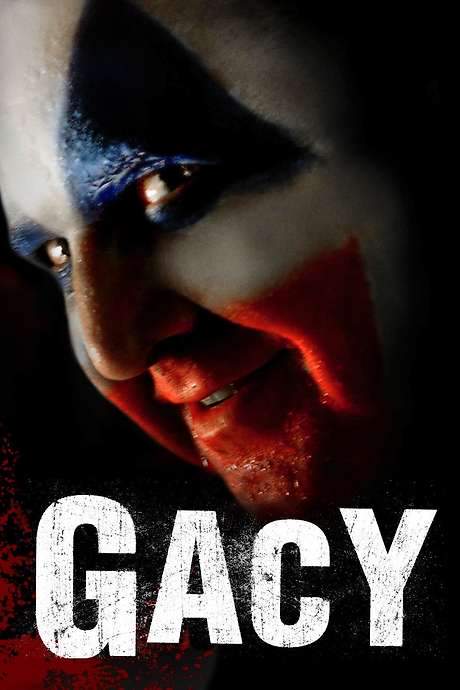
Gacy

Gacy

Year: 2003

Runtime: 88 mins

Language: English

Director: Clive Saunders

DramaCrimeHorrorHorror

A seemingly respectable suburban father and husband hides a terrifying secret: John Wayne Gacy, the real‑life serial killer who lured young men and boys to his home, murdering them and burying dozens in the crawl‑space beneath the house he shared with his family.

Warning: spoilers below!

Haven’t seen Gacy yet? This summary contains major spoilers. Bookmark the page, watch the movie, and come back for the full breakdown. If you're ready, scroll on and relive the story!

Timeline & Setting – Gacy (2003)

Explore the full timeline and setting of Gacy (2003). Follow every major event in chronological order and see how the environment shapes the story, characters, and dramatic tension.

Time period

1953, 1976

The narrative shifts between 1953, when a young Gacy argues with his father, and 1976, during his years of operation and murder. The 1950s frame hints at early abuse and shaping of his psyche, while the 1976 events depict a methodical killer thriving under a veneer of respectability. Together, these periods show a progression of control and brutality over time.

Location

Gacy's garage, crawl space, park, neighborhood

The action centers on Gacy's home and garage, where he hides a dangerous secret in the crawl space. The story also spans a nearby park and the surrounding neighborhood, underscoring how ordinary spaces host extraordinary violence. The locations feel intimate and domestic, amplifying the contrast between everyday life and brutal acts.

🏚️ Suburban 🕵️ Crime 💀 Horror

Last Updated: October 04, 2025 at 12:00

Main Characters – Gacy (2003)

Meet the key characters of Gacy (2003), with detailed profiles, motivations, and roles in the plot. Understand their emotional journeys and what they reveal about the film’s deeper themes.

John Wayne Gacy, Jr. (Mark Holton)

A charismatically brutal killer who blends charm with control. He exploits workers and family, masking his violent acts behind a polished public image. The portrayal emphasizes how his calculated manipulation sustains a cycle of violence and intimidation.

💀 Villain 🗝️ Manipulator

John Gacy, Sr. (Adam Baldwin)

A domineering father figure whose demand for bravery shapes his son’s early sense of self. His abusive dynamic contributes to the family tensions that frame the killer’s development. The film uses the father-son conflict to show the roots of Gacy’s violence.

👨‍👦 Father 🔒 Authoritarian

Kara Gacy (Joleen Lutz)

Gacy’s wife who ultimately leaves him, taking their two daughters with her. Her departure exposes the fragility of the household under Gacy’s control and hints at the cracks in his domestic life. She represents a line between tolerance and escape from consuming danger.

💑 Wife 🚪 Escape

Tom Kovacs (Charlie Weber)

A workforce member who learns about Gacy’s darker side as he works for him. His interactions reveal the power imbalance and the fear of speaking up against a ruthless employer. He becomes a witness to the coercive and abusive atmosphere around Gacy.

💼 Employee 🫂 Victim

Det. Kay (John Laughlin)

A police detective who investigates the disappearances and unravels the case as the exhumation unfolds. He represents the law’s pursuit of truth against a seemingly ordinary community figure. His role heightens the sense of inevitability around Gacy’s downfall.

🕵️ Detective ⚖️ Law

Mother Gacy (Edith Jefferson)

The family matriarch whose presence and reactions illuminate the household’s dynamics. Her perspective reflects the domestic environment that both shelters and conceals Gacy’s violence. She embodies the consequences of a turbulent family life.

👵 Mother 🕯️ Tradition

Young John Gacy (Scott Allen Henry)

A younger version of the killer whose early experiences help shape his later path. The portrayal hints at formative moments and the family tensions that plant the seeds of a dangerous persona. His history provides context for the transformation into the adult Gacy.

👶 Youth 🗝️ Origin

Ted Boyle (Glenn Morshower)

A neighbor figure whose interactions reflect the proximity of ordinary lives to a hidden danger. His presence grounds the narrative in a community setting and foreshadows the unraveling of trust. He embodies the everyday environment that surrounds the killer.

🧑 Neighbor 🕯️ Observant

Last Updated: October 04, 2025 at 12:00

Major Themes – Gacy (2003)

Explore the central themes of Gacy (2003), from psychological, social, and emotional dimensions to philosophical messages. Understand what the film is really saying beneath the surface.

🎭 Public Persona

The film places a sharp focus on a charming, community-minded façade that hides violent, predatory behavior. Gacy uses social standing and hosting ability to present himself as a trusted asset to the neighborhood. The 4th of July party and public praise illustrate how appearances can mask danger. This theme examines how reputation can enable cruelty.

🗝️ Power and Control

Gacy asserts control over workers, family, and victims through intimidation and manipulation. He leverages money, fear, and coercion to silence dissent and maintain a dangerous secret. The film portrays domination as a pervasive force in both home and workplace. It invites reflection on how power structures enable serial violence.

💔 Violence and Dehumanization

The narrative depicts dehumanization through abductions, torture, and murder, revealing a routine violent impulse behind a veneer of normalcy. Homophobic attitudes, hinted by slurs and magazines found, illuminate a hate-driven brutality. Violence is presented as a disturbing, methodical pattern integrated into daily life. The theme underscores how cruelty can become part of ordinary environments.

Last Updated: October 04, 2025 at 12:00

Mobile App Preview

Coming soon on iOS and Android

The Plot Explained Mobile App

From blockbusters to hidden gems — dive into movie stories anytime, anywhere. Save your favorites, discover plots faster, and never miss a twist again.

Sign up to be the first to know when we launch. Your email stays private — always.

Explore Movie Threads

Discover curated groups of movies connected by mood, themes, and story style. Browse collections built around emotion, atmosphere, and narrative focus to easily find films that match what you feel like watching right now.

Chilling true-crime stories of hidden killers like in Gacy

True-crime tales of seemingly ordinary people hiding monstrous double lives.If you were gripped by the terrifying duality in Gacy, this thread features movies like it that explore real-life serial killers hiding in plain sight. Discover similar crime dramas and psychological horror films where the monster is a neighbor, a friend, or a family man, creating a deeply unsettling viewing experience.

true crimechillingpsychologicalinvestigativeunsettlingbrutalsomber

Narrative Summary

Narratives in this thread typically follow a steady, investigative pace, often from the perspective of law enforcement or those close to the killer. They build tension by contrasting the killer's mundane daily life with their brutal crimes, culminating in the shocking revelation and exposure of their secret world.

Why These Movies?

These movies are grouped together because they share a core focus on the 'killer next door' trope, rooted in true crime. They create a specific kind of dread through their realism, oppressive tone, and the chilling exploration of how evil can mask itself with normalcy.

Movies with a slow build of oppressive dread like Gacy

Stories where a grim sense of doom builds steadily and inescapably.For viewers who appreciated the steady, suffocating tension in Gacy, this thread collects films with a similar slow burn pace and oppressive mood. Find other dark dramas and horror movies where dread is a central character, and the narrative relentlessly marches toward a bleak and heavy conclusion.

slow burnoppressivedreadgrimbleakheavytensesomber

Narrative Summary

The narrative pattern is one of linear, cause-and-effect progression where the sense of impending tragedy grows with each scene. There are few twists for shock value; instead, the horror comes from the audience's grim awareness of where the story is headed, making the journey psychologically grueling.

Why These Movies?

These films are united by their shared atmospheric qualities: a deliberate, steady pacing that allows dread to ferment, a consistently dark and bleak tone, and a high emotional intensity that weighs heavily on the viewer from start to finish.

Unlock the Full Story of Gacy

Don't stop at just watching — explore Gacy in full detail. From the complete plot summary and scene-by-scene timeline to character breakdowns, thematic analysis, and a deep dive into the ending — every page helps you truly understand what Gacy is all about. Plus, discover what's next after the movie.

Gacy Summary

Read a complete plot summary of Gacy, including all key story points, character arcs, and turning points. This in-depth recap is ideal for understanding the narrative structure or reviewing what happened in the movie.

Gacy Summary

Gacy Timeline

Track the full timeline of Gacy with every major event arranged chronologically. Perfect for decoding non-linear storytelling, flashbacks, or parallel narratives with a clear scene-by-scene breakdown.

Gacy Timeline

Gacy Spoiler-Free Summary

Get a quick, spoiler-free overview of Gacy that covers the main plot points and key details without revealing any major twists or spoilers. Perfect for those who want to know what to expect before diving in.

Gacy Spoiler-Free Summary

More About Gacy

Visit What's After the Movie to explore more about Gacy: box office results, cast and crew info, production details, post-credit scenes, and external links — all in one place for movie fans and researchers.

More About Gacy