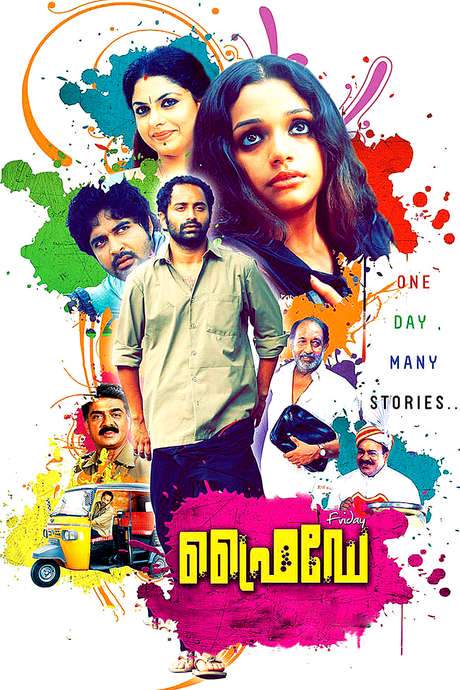
On Friday, 11 November 2011, a town becomes a stage for a tapestry of lives that collide in unpredictable ways. At the heart of the story is Balu, Fahadh Faasil, an auto-rickshaw driver who rents his vehicle by the day. He wakes to a grim omen: a jackfruit has fallen on the roof of his worn‑out home, a small sign of the money troubles that already weigh heavy on him. His daily grind and modest means set the tone for a day that will test loyalty, honesty, and courage.
In the city, Aswathy, Nimisha Suresh is busy with wedding preparations, surrounded by her grandfather, sister, and mother. She is constantly connected to her fiancé, Jayakrishnan, who is also in the same city, taking calls that mix hope with the stress of a big day ahead. The wedding plans thread through the narrative, grounding the other characters in themes of family, obligation, and tradition.
Muneer, the son of the auto-rickshaw owner who employs Balu, is a starry‑eyed college student who resists his mother’s wishes. He and his girlfriend Jincy, Ann Augustine, decide to head to the beach on what is declared a college holiday, seeking a carefree moment before the day spirals further.
A pregnant beggar woman wanders through the streets, carrying a quiet urgency, while another mother, whose daughter‑in‑law has just delivered a baby, returns home when hospital beds become scarce. The daily struggles of mothers and children anchor the film in compassion and real‑world hardship, reminding us how tiny miracles and large disappointments can live side by side.
Meanwhile, Arun and Parvathy, a childless couple, arrive in Alappuzha to adopt a child. They are pressed by time, since they must return to Bangalore by evening, but the orphanage officials demand a certificate to finalize the process, throwing their hopes into doubt and creating a tense web of新 decisions.
The threads converge on a boat ride. The journey begins with the usual bustle, but trouble looms: the boat develops a hole in its hull and is hauled to a repair shed. The man in charge of the repair shop is an arrogant drunk, and the work is performed carelessly, foreshadowing the calamity to come. Along the journey, a crucial moment occurs when Aswathy’s grandfather forgets a bag containing gold and money meant for her wedding. The bag is found by Balu in the auto, and for a time it seems the day’s luck might tilt in his favor. The discovery pits him against a complex mix of family concerns and societal expectations.
As tension builds, the elder Purushothaman, the grandfather figure in Aswathy’s world, seeks help from the Circle Inspector, a role embodied by Vijayaraghavan. The inspector’s scrutiny compounds the pressure on Balu and the others, while Purushothaman’s family and friends work to locate the missing assets. The day’s pressures spill into the police station when Muneer and Jincy find themselves detained on charges related to morality, waiting for resolution as the investigation unfolds.
A good deed ripples through the chaos when Dinesh Prabhakar intervenes to help a woman and her daughter by taking them to the Medical College Hospital. Tragically, the woman dies on the way, and Dinesh Prabhakar carries out the last rites at home, a moment that casts a quiet weight over the story and the choices people make under pressure.
The orphanage scheme is laid bare as Arun and Parvathy discover they have been deceived by officials and a fraudulent priest who peddles forged medical certificates as the final step in their adoption attempt. The revelation adds another layer of deception and moral dilemma to an already fraught day.
In a pivotal turn, Balu resolves to do the right thing and returns the gold and cash he had kept. He heads to the police station and hands over the valuables to Purushothaman and his family, who then choose to go home, their sense of relief shadowed by the day’s earlier chaos and the hospital’s bed shortage.
As evening approaches, the disparate strands of the day converge on the very boat that began the sequence—still afloat despite its earlier troubles. The craft sinks in the middle of the lake, and the fates of those aboard hang in the balance. In the end, the story widens its lens on the consequences of each choice. Muneer, who had been at the heart of several plotlines, emerges as a survivor who plays a crucial role in the boat’s final moments, underscoring themes of courage, sacrifice, and the fragile thread that connects every life on a single, fateful day.