





Plot Explained Spoilers guaranteed!
Plot Explained

Browse by genre

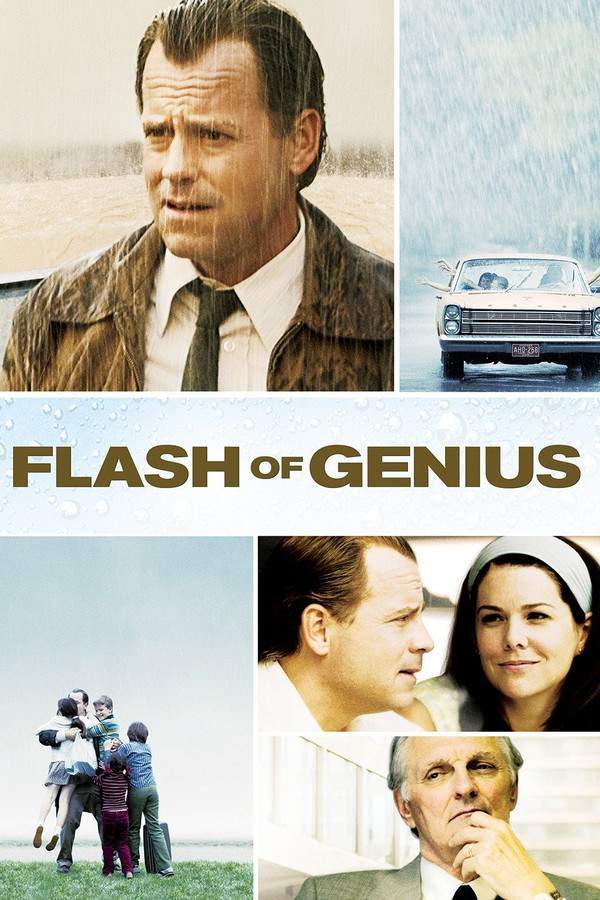
Flash of Genius (2008) movie poster

Timeline

Flash of Genius (2008) Timeline Explained – Every Event in Order

Release, runtime and language
2008 · 119 min · English
Directed by
Marc Abraham
Starring
Greg Kinnear, Lauren Graham

Robert Kearns, an unacknowledged inventor, fights for recognition when his windshield wiper design is secretly adopted by major American car manufacturers. This professor’s persistent quest to claim his due leads to a protracted legal battle against the powerful auto industry. Facing significant setbacks and personal consequences, Kearns refuses to back down, ultimately challenging corporate giants in a dramatic fight for justice and the validation of his ingenuity.

On this page (6)
  1. 1 Where to watch
  2. 2 Events in order (14)
  3. 3 Timeline questions answered
  4. 4 Movie threads
  5. 5 Movies like Flash of Genius
  6. 6 Every angle

Where to watch

Where to Watch Flash of Genius (2008)

Where can you watch Flash of Genius? Stream, rent or buy it in the US, including on Amazon Video, Apple TV Store and Fandango At Home: current JustWatch availability with up-to-date prices.

Streaming availability powered by JustWatch

14 events in order · contains spoilers

Flash of Genius Timeline: Events in Chronological Order

Every key event of Flash of Genius (2008) in order, scene by scene, with when and where it takes place. Use it to untangle flashbacks, time jumps and parallel storylines, to refresh your memory before the sequel or to find the exact scene you are thinking of.

  1. Wedding Night Incident

    In 1953, Robert Kearns experiences a tragic event on his wedding night when a champagne cork accidentally strikes his left eye, leaving him nearly blind. This incident marks the beginning of a significant transformation in his life, foreshadowing the inventive journey that lies ahead.

    When
    1953
    Where
    Detroit, Michigan
  2. Life in the 1960s

    A decade later, Robert has built a fulfilling life with his wife, Phyllis, and their six children. This period of joy serves as a backdrop against which Robert's innovative spirit begins to blossom.

    When
    1963
    Where
    Detroit, Michigan
  3. The Wiper Blade Realization

    While driving in light rain, Robert experiences frustration with his car’s windshield wipers. This annoyance leads him to a revolutionary idea for a new wiper mechanism, inspired by the human eye’s blinking, which he believes could improve driving safety.

    When
    1963
    Where
    Detroit, Michigan
  4. Initial Testing

    After attempting to create a mechanical solution, Robert realizes that he needs an electronic alternative for his wiper invention. Encouraged by his friend Gil, he begins transforming his basement into a laboratory to develop his prototype.

    When
    1963
    Where
    Robert's basement, Detroit
  5. Prototype Development

    Robert successfully develops a prototype of his intermittent wiper system, testing it in a fish tank. Recognizing the potential of his invention, he understands that millions of cars could benefit from his innovation.

    When
    1964
    Where
    Robert's basement, Detroit
  6. Approaching Ford

    With Gil's support, Robert approaches Ford to present his invention. Ford's interest grows when they realize that Robert's invention could resolve issues they have been facing with their own wiper designs.

    When
    1965
    Where
    Ford headquarters
  7. Negotiations with Ford

    Following initial meetings, Ford executives express a desire for a comprehensive business plan from Robert. However, he is cautious about revealing the details of his invention without ensuring a fair deal.

    When
    1965
    Where
    Ford headquarters
  8. Ford's Withdrawal

    Despite Robert's efforts to present his case, Ford unexpectedly withdraws their support for his wiper project. This move leaves Robert feeling betrayed, especially as he witnesses the unveiling of the Mustang featuring an uninterrupted wiper system similar to his own invention.

    When
    1966
    Where
    Ford dealer convention
  9. The Decision for Legal Action

    Feeling wronged, Robert considers taking legal action against Ford for their appropriation of his idea. However, Gil cautions him against provoking such a powerful company due to their previous profitable business relationship.

    When
    1967
    Where
    Robert's home
  10. Legal Battles Begin

    Robert's pursuit of justice leads to prolonged legal battles that strain his marriage and distance him from his children. His refusal to accept initial settlement offers—starting at $400,000—shows his determination to be recognized for his invention.

    When
    Late 1960s
    Where
    Detroit, Michigan
  11. Trial Commencement

    When the trial finally begins, Robert chooses to represent himself after his attorney withdraws. His decision demonstrates his deep commitment to fighting for recognition and inspires his ex-wife and children to support him throughout the process.

    When
    1970
    Where
    Courtroom
  12. Ford's Final Offer

    As the trial nears its conclusion, Ford offers a staggering settlement of $30 million, but still without acknowledging their wrongdoing. This situation emphasizes the corporate struggle between Robert’s rights and Ford's desire to protect their interests.

    When
    1970
    Where
    Courtroom
  13. The Jury's Verdict

    Ultimately, the jury rules in Robert's favor, awarding him $10.1 million for the infringement of his patents, although they determine that Ford did not infringe intentionally. This verdict marks a critical victory for Robert in his decade-long fight for justice.

    When
    1970
    Where
    Courtroom
  14. Victory Over Chrysler

    Following the triumph over Ford, Robert continues his quest for justice against Chrysler Corporation and secures an impressive judgment of $18.7 million. This successive legal victory further solidifies his legacy as an inventor and rightful owner of his patent.

    When
    1971
    Where
    Courtroom

Last updated: November 08, 2024 at 02:24

Was this helpful?

Timeline questions answered

Flash of Genius Timeline Explained: Your Questions Answered

When does it happen, and why in that order? The questions people ask about the chronology of Flash of Genius (2008): time jumps, flashbacks, cause and effect between scenes and the correct order of events, each answered with spoilers.

Q1

Why did Robert Kearns invent intermittent windshield wipers?

Robert Kearns invented intermittent windshield wipers after experiencing frustration while driving in light rain. Due to his impaired vision from the champagne cork accident, he noticed that constant wiper motion created drag on the glass, while turning them off left rain obscuring his sight. This problem inspired him to design a system that would pause between wipes, mimicking the human eye's blinking mechanism.

Foreshadowing: The incident that left him nearly blind in his left eye on his wedding night directly led to his heightened awareness of visual imperfections while driving.

  • intermittent wiper invention
  • windshield wiper design
  • vision impairment driving
Q2

How did Ford take Robert Kearns' invention?

After Robert demonstrated his working prototype to Ford engineers who had struggled with similar designs, the company showed strong interest and asked for a comprehensive business plan. Robert rented a warehouse and sourced parts from Motorola to fulfill their requests, but Ford suddenly withdrew support. Shortly after, Ford unveiled the Mustang with an uninterrupted wiper feature at a dealer convention, using Robert's concept without his recognition or compensation.

  • Ford stolen invention
  • patent infringement
  • Ford Mustang wiper feature
Q3

Why did Robert Kearns turn down Ford's settlement offers?

Robert refused Ford's initial $400,000 and subsequent $1 million offers because they came without any admission of wrongdoing. He wasn't primarily fighting for money, he wanted Ford to acknowledge that they had stolen his invention. Even when Ford later offered $30 million during the trial, Robert chose to let the jury decide because the company still refused to admit fault.

  • settlement rejection
  • admission of guilt
  • legal battle motivation
Q4

What caused Robert Kearns' mental health breakdown?

Robert experienced a breakdown after discovering Ford had used his invention without credit or compensation. The betrayal, combined with the stress of considering legal action against a powerful corporation and Gil's warning that provoking Ford would damage their business relationship, pushed him into despair. He was subsequently institutionalized in a mental health facility.

Foreshadowing: Robert's obsessive pursuit of justice and refusal to accept compromises foreshadows the personal toll the legal battle would take.

  • mental health facility
  • institutionalization
  • emotional breakdown
Q5

What happened to Robert Kearns' marriage during the legal battle?

Robert's prolonged legal battle against Ford caused significant strain on his marriage to Phyllis. The years-long struggle, combined with his obsession with the case and the financial pressure, ultimately led to a rift that resulted in divorce. However, by the time the trial commenced, his ex-wife and children had rallied behind his fight for justice.

  • divorce
  • family strain
  • marriage breakdown
Q6

Why did Robert Kearns represent himself in court?

Robert chose to represent himself after his attorney, Gregory Lawson, withdrew from the case. Lawson wanted Robert to accept Ford's settlement offer, but Robert refused to settle without an admission of guilt. Despite having no legal training, Robert felt strongly enough about his cause to argue his own case before the jury.

  • self-representation
  • attorney withdrawal
  • courtroom strategy
Q7

What was the jury's verdict in Robert Kearns' lawsuit against Ford?

The jury ruled in Robert's favor, concluding that Ford had infringed on his patents. However, they determined the infringement was not intentional, which affected the damages. Robert was awarded $10.1 million, a significant victory but one that fell short of his desire for full acknowledgment of corporate wrongdoing.

  • jury verdict
  • patent infringement
  • $10.1 million award
Q8

What was the outcome of Robert Kearns' lawsuit against Chrysler?

After winning his case against Ford, Robert continued his quest for justice by pursuing Chrysler Corporation for similar patent infringement. He secured an impressive judgment of $18.7 million against Chrysler, further validating his claim to the intermittent wiper invention and adding to his total legal victory.

  • Chrysler lawsuit
  • $18.7 million
  • patent victory
Q9

Why did Robert Kearns choose to go to trial instead of accepting Ford's $30 million offer?

Robert rejected Ford's $30 million offer, which came during trial, because the company still refused to acknowledge their wrongdoing. For Robert, the fight was about more than money; he wanted Ford to admit they had stolen his invention. He believed the jury's verdict would provide the moral recognition that a settlement could not.

  • $30 million offer
  • moral victory
  • corporate accountability
Q10

How did Robert Kearns lose his vision in one eye?

On his wedding night in 1953, a champagne cork accidentally struck Robert Kearns in his left eye during the celebration, leaving him nearly blind in that eye. This injury, which occurred in Detroit on his wedding night, set the stage for his later frustration with windshield wipers and his subsequent invention.

  • wedding night injury
  • champagne cork
  • vision loss

Movie threads

More Movies Like Flash of Genius, by Mood & Story

Curated lists built around what makes Flash of Genius tick: the same mood, the same kind of story or the same emotional payoff. Each list explains why these movies belong together.

Obsessive underdog stories like Flash of Genius

When one ordinary person becomes consumed by a fight for principle. Find more movies like Flash of Genius where a lone protagonist engages in a long, draining battle against a powerful system. These stories explore the psychological toll of obsession and the bittersweet nature of fighting for what's right, perfect for viewers who appreciate tense, character-driven legal and ethical dramas.

  • obsessive
  • determined
  • frustrating
  • lonely
  • legal drama
  • persistent
  • Tone: tense, determined, frustrating
  • Pacing: steady, methodical
Why these movies?

The story pattern: The narrative follows a linear, often years-long, progression where a protagonist's initial grievance or discovery spirals into an all-consuming battle. The central conflict is less about physical action and more about intellectual, legal, or ethical endurance. The story structure typically involves escalating setbacks, personal strain on relationships, and a final outcome that validates the fight but underscores its heavy price.

Why they belong together: Movies are grouped here by their shared focus on a character's obsessive, lonely journey. They share a tense, determined mood, a steady pace that mirrors the protracted nature of the struggle, and a thematic core centered on justice, recognition, and the cost of principle.

Bittersweet legal dramas like Flash of Genius

Stories where winning the case doesn't mean winning back your life. If you liked the ending of Flash of Genius, explore these movies about costly legal and ethical battles. These films feature tense courtroom drama or moral conflicts that culminate in a victory tempered by personal loss, offering similar themes of justice, obsession, and the price of principle.

  • bittersweet
  • frustrating
  • sobering
  • legal victory
  • personal cost
  • tense
  • Tone: tense, bittersweet, sobering
  • Pacing: steady, deliberate
Why these movies?

The story pattern: The narrative builds towards a climactic legal or moral reckoning. While the protagonist achieves a form of victory—a court win, an ethical vindication—the journey has irrevocably damaged their relationships, mental well-being, or former life. The story emphasizes that some battles are won at a price that outweighs the prize, leaving the audience with a complex, contemplative feeling.

Why they belong together: These films are united by their specific emotional arc: a hard-fought struggle leading to a Pyrrhic victory. They share a bittersweet ending feel, a medium to heavy emotional weight, and a thematic exploration of the true cost of justice and recognition.

If you liked this

Movies Like Flash of Genius

Similar movies to Flash of Genius: the same genre, themes or kind of story. Each one comes with its own plot summary, timeline and ending explained.

Browse all movie summaries

Every angle

Flash of Genius (2008) Explained: Plot, Timeline & Characters

Everything about Flash of Genius in one place: what happens in the plot summary, the timeline in chronological order, the characters and meaning and a spoiler-free summary. What's After the Movie adds the cast, box office and post-credit scenes.

Coming soon on iOS and Android

The Plot Explained Movie Summary App

Plot summaries, endings explained and timelines on your phone. Catch up on any movie in minutes, save your favorites and never miss a twist again.

Be the first to know when we launch. Your email stays private, always.

Learn more about the app