Plot Explained Spoilers guaranteed!
Plot Explained

Browse by genre

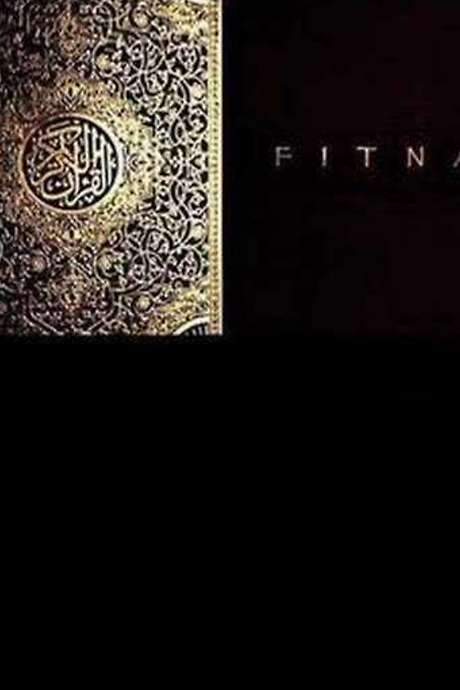
Fitna (2008) movie poster

Timeline

Fitna (2008) Timeline Explained – Every Event in Order

Release, runtime and language
2008 · 15 mins · Dutch
Loading streaming availability…
Directed by
Scarlet Pimpernel
Starring
Geert Wilders

A short film in which Quran verses are shown alongside images from terrorist attacks.

On this page (6)
  1. 1 Where to watch
  2. 2 Events in order (15)
  3. 3 Timeline questions answered
  4. 4 Movie threads
  5. 5 Movies like Fitna
  6. 6 Every angle
Loading streaming availability…

15 events in order · contains spoilers

Fitna Timeline: Events in Chronological Order

Every key event of Fitna (2008) in order, scene by scene, with when and where it takes place. Use it to untangle flashbacks, time jumps and parallel storylines, to refresh your memory before the sequel or to find the exact scene you are thinking of.

  1. Introduction to Suras

    The film begins with a selection of Suras from the Qur'an, laying the foundation for its critical examination of Islamic teachings. The selected verses are accompanied by media clips and newspaper clippings, establishing a stark contrast between religious text and contemporary events.

  2. Al-Anfal Verse 60

    The first Sura showcased is Al-Anfal verse 60, which speaks about preparing forces to instill fear in enemies. Footage from the September 11 attacks is presented, highlighting the devastating impact of terrorism and setting a somber tone for the film.

  3. Madrid Train Bombings

    Following the initial focus on 9/11, the film transitions to the Madrid train bombings, presenting it as another significant act of terrorism linked to Islamic extremism. This sequence underscores the recurring theme of violence associated with certain interpretations of Islam.

  4. Imam's Declaration

    The film features Imam Abu Hamza al-Masri, who declares that 'Allah is happy when non-Muslims get killed' amidst the chaos of a smoke-filled backdrop. This claim serves to emphasize the criticisms portrayed in the film regarding radical elements within Islam.

  5. Antisemitism Justification

    Sura An-Nisa verse 56 is presented as a justification for antisemitism within Islamic teaching. Sheikh Bakr Al-Samarai's fervent call for violence against Jews is displayed, highlighting the alarming fervor and approval expressed by a gathered audience.

  6. Child's Antisemitic Statement

    In a stark moment, a three-year-old Muslim girl appears on Iqraa TV expressing that Jews are 'apes and pigs.' This disturbing segment raises questions about the indoctrination of hateful ideologies at a young age and the wider implications for society.

  7. Theo Van Gogh's Murder

    The film addresses the murder of Dutch filmmaker Theo Van Gogh by Mohammed Bouyeri, referencing the barbaric justification Bouyeri provided. This section illustrates the extreme consequences of ideological extremism and calls for violence against dissenters.

  8. Threats Against Critics

    The narrative continues with newspaper headlines detailing threats of murder against vocal critics of Islam. Footage of Eugene Armstrong's grisly beheading by Al-Qaeda is shown, depicting the extreme perils faced by those who oppose radical Islam.

  9. Call to Jihad

    The film showcases various Islamic leaders inciting jihad and the belief that Islam will dominate the world. President Mahmoud Ahmadinejad's assertion about the global reach of the Iranian Revolution adds a chilling dimension to these calls for militant action.

  10. Issues in the Netherlands

    Transitioning to contemporary concerns, the film discusses Islam's influence in the Netherlands, addressing topics like opposition to democracy and treatment of women. This segment portrays a growing divide and the societal impacts of rising Islamic sentiments.

    Where
    Netherlands
  11. Demonstrations Against Islam

    Protests are shown where demonstrators display signs proclaiming 'Islam will dominate the world.' This portrayal highlights the contentious dynamic between Islamic ambitions and societal acceptance in Western nations.

    Where
    Danish Embassy, Britain
  12. Opposition to Liberal Values

    Various clips and audio recordings showcase Imams in Dutch mosques denouncing liberal values like democracy. Speaker’s comments raise alarming questions about the acceptance of these ideologies and their compatibility with Western principles.

    Where
    Netherlands
  13. Visions of a Dystopian Future

    The film warns of a potential dystopian future under Sharia law, illustrated through graphic depictions of punishment for adultery and homosexuality. This ominous portrayal serves to alarm viewers about the possible trajectories of Islamic influence in Western societies.

  14. Final Call to Action

    The film concludes with Geert Wilders gripping a page from the Qur'an, issuing a passionate call to reject 'Islamic ideology.' By likening it to ideologies such as Communism and Nazism, Wilders aims to inspire a movement against what he perceives as a threat to western civilization.

  15. Censorship and Controversies

    Noteworthy is the film's controversial editing, where certain elements, such as the depiction of the first edition's unauthorized use of cartoons, were removed in subsequent versions. This highlights ongoing debates surrounding freedom of speech and the sensitivities involved in discussing Islamic practices.

Last updated: September 30, 2026 at 11:09

Was this helpful?

Timeline questions answered

Fitna Timeline Explained: Your Questions Answered

When does it happen, and why in that order? The questions people ask about the chronology of Fitna (2008): time jumps, flashbacks, cause and effect between scenes and the correct order of events, each answered with spoilers.

Q1

Why does Fitna pair specific Quran verses with footage of terrorist attacks?

Fitna uses juxtaposition as its central rhetorical device, presenting selected Suras from the Qur'an alongside violent incidents such as the September 11 attacks and the Madrid train bombings. Geert Wilders structures the film to suggest a direct causal link between the cited verses and modern acts of terrorism carried out in the name of Islam. By alternating between religious text and graphic news footage, the film constructs an argument that interprets the verses as calls to violence rather than theological statements read in context.

Foreshadowing: The opening Al-Anfal verse 60 about striking terror into enemies is shown immediately before 9/11 footage, establishing the film's pattern of pairing scripture with violence.

  • quran verses
  • terrorism footage
  • fitna documentary
  • geert wilders
  • sura juxtaposition
  • islam critique
Q2

What is Geert Wilders' main argument in Fitna?

Wilders argues that Islamic ideology poses an existential threat to Western liberal democracies and must be confronted and resisted. He frames selected Quranic verses, statements by imams, and violent incidents as evidence of a unified ideological movement rather than separate events. The film concludes by urging viewers to reject Islam in the same way previous generations rejected Communism and Nazism, promoting what Wilders calls a "leidcultuur" rooted in Christian, Jewish, and humanist traditions.

Foreshadowing: Wilders states the film's intent near the beginning, foreshadowing the final call to action against what he terms Islamic ideology.

  • geert wilders
  • islam threat
  • western civilization
  • fitna argument
  • leidcultuur
Q3

Why does Fitna compare Islamic ideology to Nazism and Communism at the end?

The comparison serves as the film's culminating rhetorical move, framing Islam not as a religion but as a totalitarian ideology comparable to the 20th-century ideologies that Western societies successfully opposed. By placing Islam in this category, Wilders argues that the threat requires the same kind of organized ideological resistance. The comparison is meant to mobilize viewers by invoking historical enemies that were ultimately defeated, suggesting that Islamic extremism can be confronted the same way.

Foreshadowing: Earlier references to Communism as a defeated ideology in Dutch memory prepare viewers for the final framing of Islam as a comparable threat.

  • nazism communism
  • ideological threat
  • fitna ending
  • wilders comparison
  • western civilization
Q4

Why does Fitna shift its focus to the Netherlands in the second half?

The second half of the film moves from global terrorism to local concerns because Wilders, a Dutch parliamentarian, is primarily arguing about the future of the Netherlands specifically. He presents the Netherlands as a case study of what he claims is happening across the West, citing growing Muslim populations, Imams in Dutch mosques denouncing liberal values, and opposition to women's and democratic rights. The shift grounds the film's global argument in a concrete national context where Wilders believes policy action is possible.

Foreshadowing: The murder of Dutch filmmaker Theo Van Gogh earlier in the film foreshadows this domestic focus on the Netherlands.

  • netherlands islam
  • dutch society
  • fitna netherlands
  • islamic influence
  • wilders
Q5

What role does Theo Van Gogh's murder play in Fitna?

The 2004 murder of Dutch filmmaker Theo Van Gogh by Mohammed Bouyeri is presented as a defining example of how critics of Islam face real-world lethal consequences. Wilders includes Bouyeri's stated willingness to repeat the killing and footage of protesters celebrating the murder to argue that speaking against Islam carries extreme personal risk. The segment is meant to demonstrate that the threats described in earlier Quranic verses are not abstract but have already materialized in Dutch society.

Foreshadowing: Earlier references to threats against critics of Islam anticipate the detailed treatment of Van Gogh's murder as a concrete case.

  • theo van gogh
  • mohammed bouyeri
  • dutch filmmaker
  • fitna murder
  • islamic violence
Q6

Why does the film show a young child making antisemitic statements?

The inclusion of a three-year-old girl on Iqraa TV declaring that Jews are "apes and pigs" is used to argue that antisemitic hatred is being systematically taught to children within certain Islamic communities. Wilders presents the clip as evidence of ideological indoctrination rather than isolated prejudice, suggesting that hostility toward Jews is transmitted across generations. The segment is meant to shock viewers and reinforce the film's claim that Islamic ideology permeates everyday life and family upbringing.

  • child indoctrination
  • antisemitism
  • iqra tv
  • fitna child
  • jews apes pigs
Q7

What does Sura 8:39 mean in the context of Fitna's argument?

Sura 8:39, urging believers to "fight them until there is no dissension, and the religion is entirely Allah's," is positioned near the climax of Fitna as the scriptural foundation for the film's claim that Islam seeks global religious dominance. Wilders reads the verse as a mandate for universal conquest rather than a historically contextual command. Its placement before speeches by leaders like Mahmoud Ahmadinejad links the verse to modern geopolitical ambitions, tying ancient text to present-day policy.

Foreshadowing: The opening verse about striking terror foreshadows this later call to universal religious supremacy as the film's culminating scriptural argument.

  • sura 8:39
  • fitna
  • quran verse
  • religious dominance
  • islamic supremacy
Q8

Why are Mahmoud Ahmadinejad's statements included in Fitna?

Wilders uses Ahmadinejad's statements about the global reach of the Iranian Revolution to argue that Islamic ambitions of world domination are openly endorsed by state leaders, not just militant groups. The inclusion is meant to elevate the threat from fringe terrorism to mainstream political power, suggesting that the ideology critiqued in the film has institutional backing. Ahmadinejad's rhetoric is presented as evidence that the call in Sura 8:39 is actively being pursued by modern governments.

Foreshadowing: Earlier mentions of global jihad and Islamic expansion prepare the viewer for Ahmadinejad as a state-level example.

  • ahmadinejad
  • iranian revolution
  • fitna
  • islamic republic
  • global islam
Q9

What is the meaning behind the title "Fitna"?

Fitna is an Arabic word meaning civil strife, discord, or trial, often used in Islamic discourse to describe internal conflict or sedition. Wilders deliberately chooses this charged term to frame the entire documentary, suggesting that Islam itself constitutes the discord rather than being a response to it. The title positions the film as a warning about a struggle within and against Western societies, echoing his comparison to Communist and Nazi ideological threats.

  • fitna meaning
  • fitna title
  • arabic word
  • civil strife
  • geert wilders
Q10

Why does Fitna include recordings of Imams denouncing liberal values in Dutch mosques?

The audio snippets from Dutch mosques are presented to argue that institutions within the Netherlands are actively working against liberal democratic norms. Wilders uses these recordings to claim that values such as freedom of speech, gender equality, and LGBTQ rights are being undermined from within mosques in his own country. The segment shifts the argument from foreign terrorism to internal ideological subversion, making the threat feel immediate to the film's Dutch and European audience.

Foreshadowing: The earlier focus on global violence makes the sudden turn to local Dutch mosques a deliberate escalation from abroad to home.

  • dutch mosques
  • liberal values
  • imams netherlands
  • fitna
  • sharia law
Q11

Why does Fitna juxtapose Imam Abu Hamza al-Masri with footage of the 9/11 attacks?

Abu Hamza al-Masri's declaration that "Allah is happy when non-Muslims get killed" is placed against the backdrop of 9/11 to argue that religious authorities explicitly endorse and celebrate mass casualty attacks against civilians. Wilders uses the juxtaposition to link high-profile Islamic figures to the violence shown, suggesting that the perpetrators and their supporters share the same ideological framework. The pairing is designed to remove any distinction between fringe extremists and mainstream religious leadership in the viewer's mind.

  • abu hamza al-masri
  • 9/11 attacks
  • fitna
  • imam declaration
  • islamic radical
Q12

Why does the film include footage of protests at the Danish Embassy?

The protest footage displaying signs declaring "Islam will dominate the world" is included to argue that claims of global Islamic conquest are not confined to words but are actively demonstrated in the streets of Western nations. Wilders uses these demonstrations to connect the abstract claims of Sura 8:39 to concrete public behavior in European capitals. The footage is meant to show that ordinary demonstrators, not just clerics or heads of state, openly express ambitions of religious and political supremacy.

Foreshadowing: Earlier calls to jihad by religious leaders anticipate this shift to mass public demonstrations of the same message.

  • danish embassy
  • islam dominance
  • fitna protests
  • demonstrations
  • islam will dominate

Movie threads

More Movies Like Fitna, by Mood & Story

Curated lists built around what makes Fitna tick: the same mood, the same kind of story or the same emotional payoff. Each list explains why these movies belong together.

Alarmist polemics like Fitna

Provocative documentaries built to confront, alarm, and demand you take a side. If you were shaken by Fitna's confrontational style, these documentaries deliver the same sense of urgent alarm. Expect movies like Fitna that use rapid montage, explicit imagery, and persuasive editorial framing to drive home a controversial argument without offering comfort or balance.

  • confrontational
  • alarmist
  • provocative
  • polemical
  • disturbing
  • urgent
  • Tone: tense, bleak, confrontational
  • Pacing: fast and relentless
Why these movies?

The story pattern: These documentaries unfold as relentless visual arguments, stacking damning evidence in fast-paced sequences that build toward a single, unmistakable thesis. There is little character development or narrative detour; instead, the structure is escalation, with each segment more disturbing than the last. The journey ends not in resolution but in a demand that the viewer act, believe, or be horrified, often concluding on a stark warning.

Why they belong together: They share Fitna's commitment to provocation over nuance, its fast and assault-like pacing, and its bleak, dark emotional register. The films lean on graphic content, montage editing, and polemical narration to make their case, leaving viewers emotionally drained rather than informed in a detached sense.

Documentaries about extremism like Fitna

Documentaries that trace ideology, radicalization, and the human cost of hate. Fans of Fitna's unflinching look at Islamic extremism and terrorism will find more hard-hitting documentaries here. These movies like Fitna explore radicalization, hate speech, religious fundamentalism, and political violence, presenting disturbing imagery and a bleak worldview about the threats ideology poses.

  • extremism
  • terrorism
  • radicalization
  • disturbing
  • ideological
  • hate
  • Tone: dark, bleak, grave
  • Pacing: fast and relentless
Why these movies?

The story pattern: Stories in this thread usually follow the anatomy of an ideology, moving from the doctrine and rhetoric that fuels it, through the social and political conditions that enable it, to the acts of violence it produces. Characters range from recruiters and ideologues to victims and investigators, with structure built around mounting evidence and escalating horror rather than personal redemption arcs.

Why they belong together: They are grouped by their shared subject matter and willingness to show graphic, disturbing content in service of exposing extremism. Like Fitna, they blend archival footage, manifestos, and violent imagery to confront the viewer with the reality of terrorism and hate, sustaining high tension and emotional weight throughout.

If you liked this

Movies Like Fitna

Similar movies to Fitna: the same genre, themes or kind of story. Each one comes with its own plot summary, timeline and ending explained.

Browse all movie summaries

Every angle

Fitna (2008) Explained: Plot, Timeline & Characters

Everything about Fitna in one place: what happens in the plot summary, the timeline in chronological order, the characters and meaning and a spoiler-free summary. What's After the Movie adds the cast, box office and post-credit scenes.

Coming soon on iOS and Android

The Plot Explained Movie Summary App

Plot summaries, endings explained and timelines on your phone. Catch up on any movie in minutes, save your favorites and never miss a twist again.

Be the first to know when we launch. Your email stays private, always.

Learn more about the app