Plot Explained Spoilers guaranteed!
Plot Explained

Browse by genre

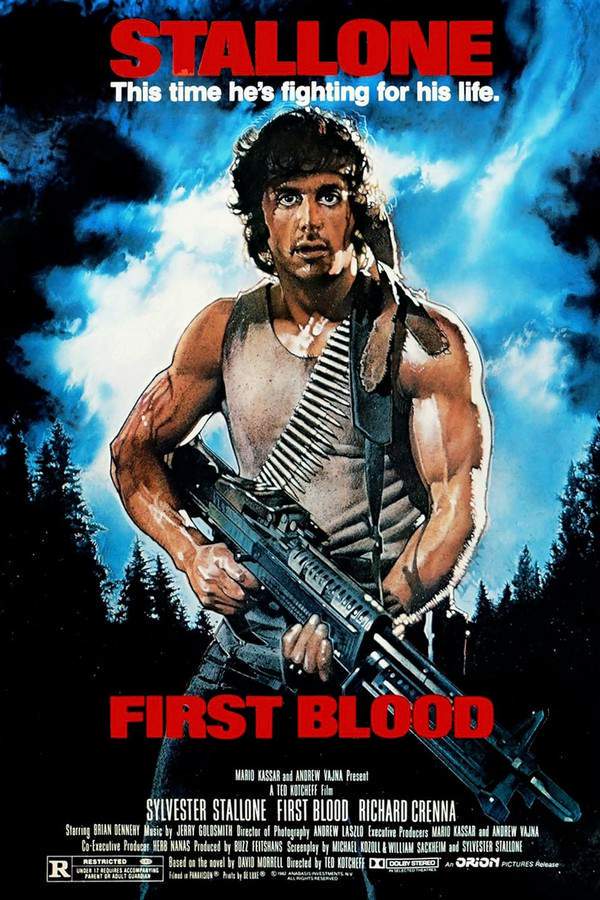
First Blood (1982) movie poster

Plot Summary

First Blood (1982) Plot Summary Explained

Release, runtime and language
1982 · 93 min · English
JustWatch #203 9
Directed by
Ted Kotcheff
Starring
Sylvester Stallone, Brian Dennehy, Richard Crenna
Budget
$15M

A troubled Vietnam veteran, John J. Rambo, wanders into a small mountain town seeking peace, but finds himself facing hostility from the local sheriff, Will Teasle. When pushed to his breaking point, Rambo’s past traumas and combat experiences trigger a fierce and desperate response. A tense manhunt follows, and as the situation escalates, it takes the involvement of Rambo's former commanding officer to de-escalate the conflict and explore the underlying issues of tolerance and understanding.

On this page (7)
  1. 1 Where to watch
  2. 2 What happens: full plot
  3. 3 Plot questions answered
  4. 4 The book behind the movie
  5. 5 Movie threads
  6. 6 Movies like First Blood
  7. 7 Every angle

Where to watch

Where to Watch First Blood (1982)

Where can you watch First Blood? Stream, rent or buy it in the US, including on AMC, AMC+ and YouTube TV: current JustWatch availability with up-to-date prices.

Streaming availability powered by JustWatch

Full plot summary · contains spoilers

What Happens in First Blood: Full Plot Summary

The whole story of First Blood (1982) explained, from the opening scene to the final frame: every key event, every twist and what it all adds up to. Read it as a quick recap before the sequel, to check a scene you missed, or to finally understand what really happened.

John Rambo, portrayed by Sylvester Stallone, is a former elite member of the United States Army Special Forces, who earned the Medal of Honor for his valor during the Vietnam War. Set in the American Northwest during December 1982, a decade after the conflict, the narrative unfolds as Rambo seeks to reconnect with his old comrade, Delmare Berry, traveling to his farm only to discover through Delmare's mother that he has succumbed to cancer months prior, a suffering caused by Agent Orange exposure. Unbeknownst to the audience, Rambo realizes he is the last surviving member of his unit.

The story takes a turn when Rambo enters the small town of Hope, Washington (actual filming took place in Hope, British Columbia), where his disheveled appearance, featuring long hair and a military coat, catches the eye of the town's overly vigilant sheriff, Will Teasle, played by Brian Dennehy. With little patience for "drifters," Teasle swiftly expels Rambo from the area, only for Rambo to return, leading to his arrest. Inside the station, tensions mount as Rambo is subjected to unreasonable brutality from Art Galt, the sheriff's harsh head deputy. Haunted by flashbacks of his imprisonment during the war, Rambo reaches a breaking point when Galt and two officers attempt to dry-shave him, triggering traumatic memories of torture in a North Vietnamese P.O.W. camp. In a moment of fervent self-defense, Rambo employs his military skills to escape, overpowering the officers and commandeering a motorcycle, initiating a frantic chase into the nearby mountains.

As the desperate situation escalates, the deputies are compelled to search for Rambo on foot. Rambo, strategically maneuvering through the terrain, descends a perilous cliff to evade capture. After being spotted by Galt from a helicopter, the situation takes a deadly turn when Galt disregards safety protocols in an attempt to shoot Rambo, leading to his untimely fall from the helicopter after being struck by a rock Rambo flung in defense. Teasle, unaware of the circumstances surrounding Galt's demise, vows revenge, setting the stage for a harrowing cat-and-mouse encounter in the woods.

Teasle rounds up his deputies, who are overwhelmed by the realization of Rambo's formidable combat prowess and reputation as a war hero. Utilizing guerrilla warfare tactics, Rambo swiftly incapacitates the disorganized group, wounding several but sparing their lives. In a tense confrontation, Rambo warns Teasle, "Don't push it or I'll give you a war you won't believe. Let it go." before vanishing into the forest.

As tensions rise and a base camp is established, United States Special Forces Colonel Sam Trautman, played by Richard Crenna, arrives on the scene, apprehensive about the situation. He expresses surprise at any deputies still being alive and advises Teasle to allow Rambo to escape and regroup later. However, Teasle, fueled by pride and arrogance, dismisses Trautman's counsel. When Trautman manages to communicate with Rambo over a stolen CB radio, he implores him to surrender, but Rambo, embittered by his mistreatment, retorts, "They drew first blood, Sir." He hastily switches off the radio, deepening the conflict.

Eventually, Rambo finds himself cornered by the National Guard at a mine, where a rookie guard unit inadvertently traps him inside with a missile strike. Assuming he's perished, they leave, unaware that Rambo is cunningly navigating the mine's tunnels, ultimately crafting an improvised torch to find his way out. Ingeniously using the flame to detect air currents, he escapes to the surface.

In a shocking turn of events, Rambo hijacks a military cargo truck, careening back into town and igniting chaos by crashing it into a gas station. Lighting the fuel spill on fire to obstruct pursuit, he unleashes mayhem, armed with a powerful M-60 machine gun. As townsfolk flee in terror, Rambo methodically dismantles the police station, instigating a confrontation with Teasle. Using the skylights to his advantage, Rambo strategically draws the sheriff's fire before returning it, injuring Teasle in the process.

Just as vengeance appears imminent, Trautman intervenes, urging Rambo to cease his violent path, emphasizing the futility of his situation. Expressing his profound frustration over the horrors of war and societal rejection, Rambo recounts a haunting story of loss that drives him to tears. Ultimately, Rambo opts for surrender, relinquishing himself to Trautman as the narrative concludes with their exit from the station, encapsulating the harrowing struggles faced by veterans reintegrating into civilian life.
Last updated: November 03, 2024 at 13:57

Was this helpful?

Plot questions answered

First Blood Plot Explained: Your Questions Answered

The questions people ask most about First Blood (1982): what happens in the confusing scenes, why the characters do what they do, the twists, hidden details and what the ending means. Each answer contains spoilers.

Q1

Why did Rambo break out of the police station?

Rambo escaped because Deputy Art Galt and two officers attempted to dry-shave him, which triggered harrowing flashbacks of his torture in a North Vietnamese P.O.W. camp. The combination of the humiliation and the traumatic memories caused him to reach his breaking point, and he used his military combat training to overpower the officers and escape.

Foreshadowing: Earlier in the film, Rambo is shown having flashbacks of his time as a prisoner of war, establishing his psychological vulnerability.

  • rambo escape
  • police station
  • torture flashback
  • pow camp
  • art galt
Q2

Why is Sheriff Teasle so hostile toward Rambo?

Sheriff Teasle views Rambo as a drifter and has little patience for anyone who doesn't fit his image of a respectable citizen. His hostility stems from a combination of small-town mentality and pride. Even after Trautman explains Rambo's status as a war hero and Medal of Honor recipient, Teasle's arrogance prevents him from backing down, leading him to pursue revenge despite warnings about the danger.

Foreshadowing: Teasle immediately expels Rambo from town upon seeing his disheveled appearance, establishing his intolerance from the start.

  • sheriff teasle
  • hostility
  • rambo
  • pride
  • small town
Q3

Why does Rambo go back to town after escaping into the mountains?

After escaping to the mountains, Rambo returns to Hope because his anger and desperation reached a breaking point. The cumulative mistreatment, combined with his trauma from the war, drove him to confront the source of his suffering directly. He hijacks a military cargo truck, crashes into a gas station, and attacks the police station to draw out Teasle.

Foreshadowing: Rambo warns Teasle earlier that he will 'give you a war you won't believe' if pushed further, foreshadowing his return.

  • rambo returns
  • town
  • revenge
  • anger
  • desperation
Q4

What does Rambo mean when he says 'They drew first blood'?

When Rambo tells Trautman that 'they drew first blood,' he is justifying his actions by pointing out that the police initiated the violence against him. He is asserting that his response was defensive, starting with the brutality at the police station and the deputies' pursuit, so in his view, the authorities are responsible for escalating the conflict.

Foreshadowing: This phrase references the earlier confrontation where Rambo was subjected to unreasonable brutality before his escape.

  • first blood
  • rambo
  • quote
  • justification
  • self-defense
Q5

How did Deputy Galt die?

Deputy Galt died when he fell from a helicopter during the search for Rambo. Galt was leaning out of the helicopter attempting to shoot Rambo despite safety protocols. Rambo threw a rock in self-defense to deter the helicopter, and the rock struck Galt, causing him to lose his balance and fall to his death.

Foreshadowing: Earlier, Galt is established as the most brutal officer, showing no regard for Rambo's humanity during the arrest and interrogation.

  • art galt death
  • helicopter
  • rock
  • rambo
  • deputy
Q6

Why doesn't Rambo kill the deputies during the manhunt?

Rambo deliberately spares the deputies throughout the confrontation despite having the opportunity to kill them. He uses his guerrilla tactics to incapacitate several officers but intentionally avoids killing anyone. This restraint shows that Rambo is not seeking gratuitous violence, he is fighting defensively and only wants to escape and evade capture, not commit murder.

Foreshadowing: Rambo's warning to Teasle that he will 'give you a war you won't believe' is paired with his continued refusal to kill, showing his reluctance to escalate to lethal force.

  • rambo spares deputies
  • no kill
  • restraint
  • war hero
Q7

How did Rambo escape the abandoned mine?

Rambo escaped the abandoned mine by crafting an improvised torch. He used the flame to detect air currents, which guided him toward the tunnel exits. This technique allowed him to navigate the complex mine shafts and emerge to the surface, evading the National Guard who believed he had died from their missile strike.

Foreshadowing: The film establishes Rambo's survival skills and resourcefulness early through his strategic maneuvering in the mountains.

  • mine escape
  • torch
  • air currents
  • rambo
  • national guard
Q8

Why does Rambo surrender at the end?

Rambo surrenders after a complete emotional breakdown. When Trautman intervenes and urges him to stop, Rambo confesses his deep pain over the horrors of war and society's rejection of veterans. He weeps while recounting a story of loss, and after expressing all his pent-up trauma, he chooses to surrender rather than continue the violent cycle. This moment represents his exhaustion and need for release.

Foreshadowing: Trautman earlier warns Teasle that Rambo is 'a man of formidable competence and killer instincts,' but also recognizes his humanity, setting up the emotional resolution.

  • rambo surrender
  • emotional breakdown
  • tears
  • trautman
  • ptsd
Q9

Why does Colonel Trautman come to Hope?

Colonel Sam Trautman arrives because he knows Rambo personally and understands the grave danger the situation poses. As Rambo's former commanding officer, he is familiar with Rambo's combat capabilities and recognizes that the local authorities are outmatched. He comes hoping to defuse the situation peacefully and prevent further casualties on both sides.

Foreshadowing: Trautman's arrival is foreshadowed when the deputies realize they are facing a highly trained Special Forces soldier with a distinguished combat record.

  • sam trautman
  • colonel
  • arrives
  • rambo
  • special forces
Q10

What is the significance of Delmare Berry's death?

Delmare Berry's death from cancer caused by Agent Orange exposure represents the tragic fate awaiting many Vietnam veterans. When Rambo discovers his old comrade has died, it reinforces his realization that he is the last surviving member of his unit. This discovery adds to his psychological burden and highlights the broader societal neglect of veterans affected by the war's aftermath.

Foreshadowing: Rambo's visit to Delmare's farm establishes the personal stakes and the theme of veteran mortality before the main conflict begins.

  • delmare berry
  • agent orange
  • cancer
  • veteran death
  • comrade
Q11

Why does Sheriff Teasle ignore Trautman's advice to let Rambo escape?

Teasle rejects Trautman's advice because his pride and arrogance prevent him from accepting help or admitting defeat. Even when Trautman, an experienced military commander, advises letting Rambo go, Teasle refuses to back down. His desire for revenge over Galt's death and his need to assert authority over his town drive him to continue the pursuit despite the warnings.

Foreshadowing: Teasle's character is established early as someone with little patience for others and a stubborn sense of local authority.

  • teasle ignores advice
  • pride
  • revenge
  • trautman
  • deputy galt
Q12

How does Rambo's military training help him survive?

Rambo's elite Special Forces training proves crucial throughout the film. He uses guerrilla warfare tactics to outmaneuver and incapacitate deputies, navigates terrain expertly to evade capture, and demonstrates resourcefulness by crafting tools from surroundings. His combat skills allow him to single-handedly hold off the manhunt, while his survival training helps him escape the mine and the wilderness.

Foreshadowing: The film establishes Rambo's background as a Medal of Honor recipient, signaling his exceptional military capabilities.

  • military training
  • survival
  • special forces
  • guerrilla tactics
  • rambo skills

Movie threads

More Movies Like First Blood, by Mood & Story

Curated lists built around what makes First Blood tick: the same mood, the same kind of story or the same emotional payoff. Each list explains why these movies belong together.

Movies about trauma-fueled survival like First Blood

One individual pushed to the brink by trauma faces off against an oppressive establishment. If you liked the intense conflict in First Blood, this list features similar movies where a traumatized individual is pushed into a desperate fight for survival against corrupt or hostile authority. These stories explore themes of PTSD, abuse of power, and the raw, guerrilla-style combat of a one-person war.

  • traumatic
  • desperate
  • tense
  • angry
  • oppressive
  • suspenseful
  • Tone: tense, desperate, angry
  • Pacing: fast, relentless
Why these movies?

The story pattern: These narratives typically begin with a quiet, troubled protagonist seeking peace, only to be provoked by an authority figure. A single triggering event ignites their suppressed trauma and combat skills, leading to an escalating, often one-sided manhunt. The story is a tense examination of how past pain fuels present conflict, culminating in a confrontation that forces a reckoning with the underlying trauma.

Why they belong together: Movies in this thread share a high-intensity, tense tone driven by a central character's psychological wounds. They feature fast pacing, straightforward yet heavy plots, and a focus on the physical and emotional desperation of survival. The collective experience is one of claustrophobic tension and a bittersweet or heavy conclusion.

Claustrophobic manhunt thrillers similar to First Blood

Intense chase narratives where the hunter becomes the hunted in a confined landscape. For viewers who enjoyed the tense cat-and-mouse chase in First Blood, this section collects movies with similar desperate manhunt narratives. These films often feature a skilled protagonist being hunted in a confined environment, creating a suspenseful and oppressive atmosphere of survival against overwhelming odds.

  • suspenseful
  • claustrophobic
  • tense
  • desperate
  • oppressive
  • relentless
  • Tone: tense, suspenseful, bleak
  • Pacing: fast, escalating
Why these movies?

The story pattern: The narrative pattern is a straightforward escalation: a conflict sparks a chase, turning the protagonist into a fugitive. The story unfolds as a series of tense set-pieces where the hunted uses guerrilla tactics and knowledge of the terrain to survive. The focus is on the tactical duel between the pursuer and the pursued, often revealing the brutality of the hunters as much as the desperation of the hunted.

Why they belong together: These films are grouped by their shared mood of relentless suspense and a claustrophobic, oppressive atmosphere. They deliver a fast-paced, high-intensity experience with a heavy emotional weight, driven by life-or-death stakes. The tone is consistently tense, with minimal humor, focusing on the visceral thrill and psychological strain of the hunt.

If you liked this

Movies Like First Blood

Similar movies to First Blood: the same genre, themes or kind of story. Each one comes with its own plot summary, timeline and ending explained.

Browse all movie summaries

Every angle

First Blood (1982) Explained: Plot, Timeline & Characters

Everything about First Blood in one place: what happens in the plot summary, the timeline in chronological order, the characters and meaning and a spoiler-free summary. What's After the Movie adds the cast, box office and post-credit scenes.

Coming soon on iOS and Android

The Plot Explained Movie Summary App

Plot summaries, endings explained and timelines on your phone. Catch up on any movie in minutes, save your favorites and never miss a twist again.

Be the first to know when we launch. Your email stays private, always.

Learn more about the app