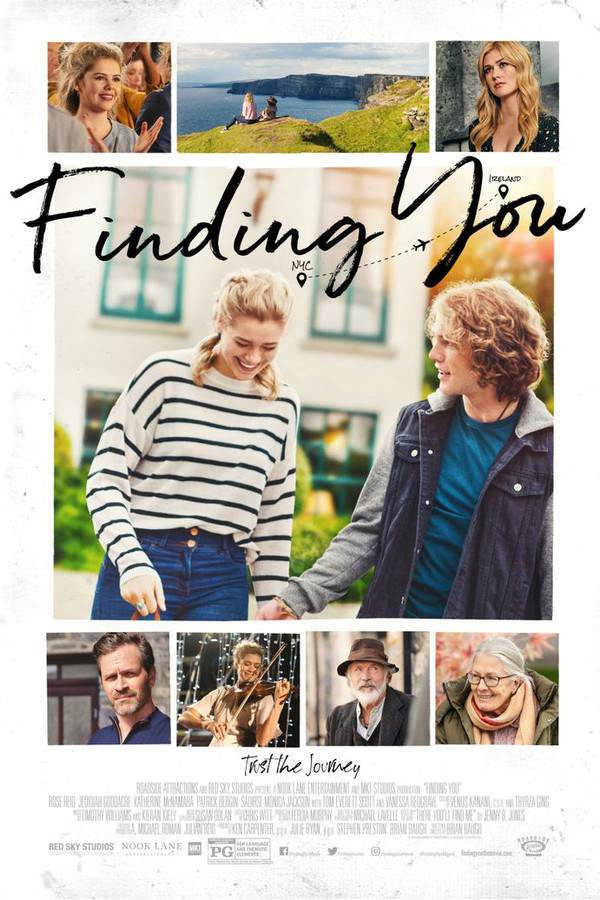
Finley Sinclair heads to Ireland for a student exchange, stepping into a story that widens far beyond a typical semester abroad. On the plane, a seat becomes suddenly coveted when a flight attendant clears a vacant business-class spot for her, and she soon wakes to find the movie star Beckett Rush slumped on her shoulder after catching a nap. Beckett is in Ireland to shoot a film, and what starts as an awkward first encounter quickly leaves Finley with a rebel-like impression: she calls him arrogant, and a chilly distance settles between them as they land.
They part ways when the plane touches down, but the next morning brings a warmer welcome from her host family, the Callaghans, who run a recently inherited B&B. Nora Callaghan, a warm and practical presence, and her husband Sean greet Finley, while Emma Callaghan, their teen daughter who idolizes Beckett, peers at her with a mix of awe and protectiveness. The day washes into a quiet rhythm of cups of tea, chores, and the sense that Ireland itself will weave into Finley’s year as both a backdrop and a character in its own right. The family dynamic is laid out clearly: a home that carries memories and a future, a bed-and-breakfast that will double as a crossroads for both Finley and the film crew.
The plot thickens when, in the dining room of the B&B the next morning, Finley unexpectedly encounters Beckett again. He is staying there too, a twist that blurs the line between cinema world and everyday life. The film world stays tantalizingly close—Beckett spends time on set while Finley attends a local school, and the two navigate a practical agreement: Beckett will help Finley work through her lines, and in return, she will help him locate a last, unfinished sketch tucked away in a notebook that Nora claims may be tied to the inheritance and the mystery of the family’s past. The notebook is not only a page-turner for Finley; it becomes a catalyst for her course project, and for the first time she sees how a seemingly simple hunt might shape her own artistic ambitions.
Meanwhile, Finley’s extension course places a responsibility on her shoulders: she must complete a 20-hour service contract with a local senior citizen, and then craft a reflective paper about the experience. This assignment nudges her into the town’s deeper rhythms, where she befriends the locals—Seamus, a rough-around-the-edges but good-natured fiddler who drinks a bit too much, and Molly, the pub owner whose warmth and skepticism balance the night-time glow of the village. In moments of quiet joy, Beckett invites the audience to see another facet of his star persona as he takes Finley to the Cliffs of Moher, sharing a rare vulnerability and confessing a wish to live incognito, stripped of the banners and headlines that chase him.
Their growing closeness is mirrored by small, telling scenes: Beckett pops into the home where Finley sits with Mrs. Sweeney, a sharp, carry-on of a woman who radiates a stubborn kindness, and he works his charm on her, which Finnishes painting the picture of how a relationship might begin in a life that is always under public scrutiny. The two sneak moments of intimacy in Molly’s pub—where a watchful camera crew and paparazzi protection measures create a tense dance of secrecy—lead to a quiet kiss, the kind that feels both bold and dangerous in a world where every glance might be photographed.
The tension escalates when a photo of Beckett and Finley kissing surfaces at a local festival and makes its way to Taylor, Beckett’s co-star and rumored love interest. The tabloid frenzy forces Montgomery Rush, Beckett’s manager-father, to intervene with emotional blackmail, a blunt reminder of the power dynamics at the intersection of fame and romance. Yet the emotional stakes for Finley run deeper than a tabloid flame; she learns more about Cathleen Sweeney’s past—a history where Cathleen offered herself to marry Mr. Sweeney to quell a gambling debt and shield her younger sister from abuse. This revelation reframes the entire relationship arc and pushes Finley toward a more compassionate, nuanced understanding of the people around her.
As the weeks unfold, the thread of family loyalty, personal ambition, and a longing for a life that might be lived without cameras driving every decision pulls Finley toward a pivotal choice. She extends her hand to Mrs. Sweeney, offering to help repair the rift with her sister Fiona Doyle, moved by the knowledge that Fiona’s sister has terminal cancer. The attempt is fraught with tension, and Fiona’s presence adds a painful urgency to the emotional landscape. The older woman, Mrs. Sweeney, and the siblings around this family become a mirror showing Finley not just how to navigate romance in a public sphere, but how to stand by people when their lives threaten to crumble under pressure.
The moment of reckoning comes when Cathleen’s illness deepens and Finley, briefly derailed from her own dreams, misses a flight and an audition—an opportunity that could have carried her toward a career in music or theatre. In a race against time, Fiona Doyle arrives just in time, helping to repair fragile bonds, and Beckett follows the thread to a gravestone’s location that he marks so Finley can find it later. The emotional weight of the moment culminates in Cathleen’s passing, a hinge moment that binds the cast together in a shared sense of responsibility and the quiet resilience required to keep moving forward.
Beckett’s world remains a delicate balance of art, ambition, and love, and his future is cast with uncertainty as he confesses he plans to shoot one more film before heading to college in New York City. Finley uses the chance of a late audition to claim an opportunity that aligns with her own dreams, and the pair’s bond persists through the upheaval. The final turn of the tale sees them both moving toward New York, where they pursue their respective paths—Beckett juggling the demands of a burgeoning film career with college life in a city that never stops asking for more, and Finley immersing herself in a rigorous music conservatory while nurturing a relationship that has grown from a casual encounter to something that could carry into the next chapter of their lives.
This story remains grounded in the texture of small-town Ireland, the shimmer of the movie world, and the quiet power of an aspiring artist who learns to blend personal longing with family duty. It’s a tender, hopeful portrait of a summer that feels longer than a season, and of two young people who discover that love, like art, often requires patience, sacrifice, and a willingness to see beyond the gloss of fame to the human heart that beats beneath.