Plot Explained Spoilers guaranteed!
Plot Explained

Browse by genre

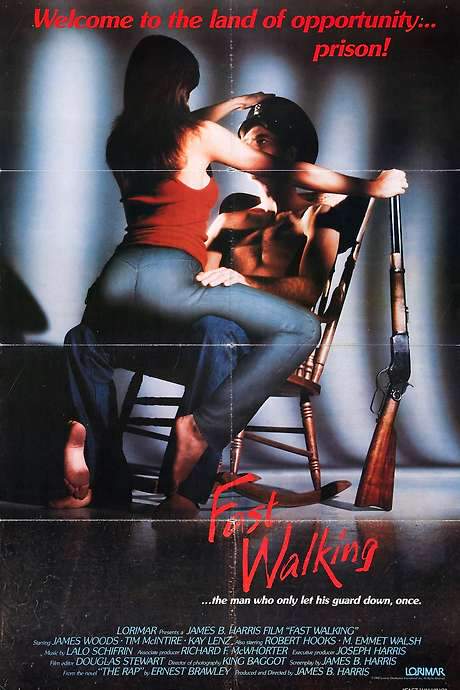
Fast-Walking (1982) movie poster

Timeline

Fast-Walking (1982) Timeline Explained – Every Event in Order

Release, runtime and language
1982 · 115 mins · English
Loading streaming availability…
Directed by
James B. Harris
Starring
Kay Lenz, Timothy Carey, James Woods, Robert Hooks, Sydney Lassick, Susan Tyrrell

For the right price, he’ll open a jailbird’s cage. A dirty corrections officer gets involved in a murder plot involving one of the inmates.

On this page (6)
  1. 1 Where to watch
  2. 2 Events in order (12)
  3. 3 Timeline questions answered
  4. 4 Movie threads
  5. 5 Movies like Fast-Walking
  6. 6 Every angle
Loading streaming availability…

12 events in order · contains spoilers

Fast-Walking Timeline: Events in Chronological Order

Every key event of Fast-Walking (1982) in order, scene by scene, with when and where it takes place. Use it to untangle flashbacks, time jumps and parallel storylines, to refresh your memory before the sequel or to find the exact scene you are thinking of.

  1. Introduction of Fast-Walking

    Frank Miniver, known as Fast-Walking, is introduced as a corrupt but oddly likable Oregon state prison guard. He supplements his meager salary by illegal means, including smoking marijuana and running prostitution for Mexican laborers from Evie's convenience store. This dual life sets up the web of vice that surrounds the prison.

    Where
    Oregon State Prison vicinity and Evie's Convenience Store
  2. Wasco's vice network and rival control

    At work, Frank is in close contact with his cousin Wasco, who is incarcerated but runs vice operations inside and outside the prison. Wasco bullies Bullet to hand over his in-prison operations, expanding Wasco's criminal empire. The setup marks a power struggle behind the prison walls.

    Where
    Prison
  3. Moke arrives and seduces Fast-Walking

    Outside the prison, Wasco's accomplice Moke collaborates with the operation and begins to influence Frank. She seduces Fast-Walking, drawing him deeper into Wasco's schemes. Her presence tightens the web of loyalties and complicates Frank's choices.

    Where
    Outside prison (likely Evie's store area)
  4. Galliot's arrival and Wasco's plan

    Galliot, a black political prisoner, arrives at the prison, igniting the racially tense atmosphere. Wasco plots to have him killed to consolidate power inside the facility. The plan unfolds amid the prison's volatile dynamics.

    Where
    Prison
  5. Galliot's deal: release for money and a belt buckle key

    Frank arranges to have Galliot sprung from prison, motivated by personal gain. Galliot offers Frank $50,000 and a secret key hidden in his belt buckle to a safe-deposit box. The arrangement links Frank's corrupt leverage to a potential external treasure.

    Where
    Prison
  6. Wasco's jealousy and new scheme

    Wasco learns of Frank and Moke's intense relationship and grows jealous. He hatches a plan to have Moke kill Galliot, leveraging the outside connection to eliminate a rival. The scheme deepens the conflict between the players.

    Where
    Prison/Outside
  7. Moke kills Galliot

    Moke executes Wasco's plan by killing Galliot with a high-powered rifle as the prisoner nearly escapes in disguise as a guard. The act removes a political threat and demonstrates Wasco's tightening grip. The assassination escalates the tension to a breaking point.

    Where
    Near the prison walls
  8. Retribution and moral reckoning

    Fast-Walking's cunning and dark alliance begin to collide with the consequences of their actions. He hints that what goes around comes around, signaling a moral reckoning for Wasco and the others. The balancing force asserts itself as loyalties are tested.

    Where
    Prison
  9. Bullet's surrender to Wasco

    Wasco uses intimidation to force Bullet to surrender his in-prison operations to Wasco. The power shift consolidates Wasco's control over the vice economy inside the prison. The momentum of illicit operations grows stronger under Wasco's leadership.

    Where
    Prison
  10. The belt buckle key and the safe-deposit box

    The belt buckle key promised by Galliot points to a safe-deposit box with valuable consequences. This key embodies the transactional nature of the characters' alliances and hints at what might come next outside prison walls. The key becomes a symbol of leverage and potential treasure.

    Where
    Prison / belt buckle
  11. Cracks in Wasco's scheme

    Wasco's schemes begin to crack under pressure from Frank and the unfolding events. The environment grows tenser as loyalties shift and the true costs of treachery surface. The careful manipulation risks unraveling.

    Where
    Prison
  12. Final moral: what goes around comes around

    The story closes with the reminder that what goes around comes around. The players face consequences for their corruption and vice as the prison ecosystem continues to hum with danger. The conclusion emphasizes the uneasy balance of power in the facility.

    Where
    Prison

Last updated: February 18, 2026 at 23:45

Was this helpful?

Timeline questions answered

Fast-Walking Timeline Explained: Your Questions Answered

When does it happen, and why in that order? The questions people ask about the chronology of Fast-Walking (1982): time jumps, flashbacks, cause and effect between scenes and the correct order of events, each answered with spoilers.

Q1

Why does Fast-Walking agree to help Galliot escape from prison?

Fast-Walking agrees to spring Galliot because Galliot offers him $50,000 in cash and a secret key hidden in his belt buckle that supposedly opens a safe-deposit box. The financial incentive appeals to Fast-Walking's greedy nature and his need to supplement his meager prison guard salary through illegal means.

  • galliot escape
  • fast-walking bribe
  • money
  • belt buckle key
  • safe-deposit box
Q2

Why does Wasco want Galliot killed?

Wasco wants Galliot dead to consolidate his power inside the prison. Galliot is a black political prisoner whose arrival creates a racially charged environment, and Wasco sees him as a threat to his control over the prison's underground vice network. Killing Galliot would eliminate a rival and strengthen Wasco's position.

  • wasco
  • galliot
  • power
  • political prisoner
  • murder plot
Q3

Why does Wasco order Moke to kill Galliot instead of letting the escape succeed?

Wasco learns about the intense relationship between Fast-Walking and Moke, which makes him jealous and fearful. Rather than letting Galliot escape and potentially revealing information about the prison's corruption, Wasco manipulates Moke into killing Galliot. This eliminates the political prisoner while also punishing Moke for betraying Wasco by sleeping with Fast-Walking.

Foreshadowing: Wasco's jealousy is triggered when he discovers Moke and Fast-Walking's relationship, creating a personal motive beyond just eliminating Galliot.

  • wasco
  • moke
  • galliot
  • jealousy
  • murder order
  • betrayal
Q4

How does Moke manage to kill Galliot during his escape attempt?

Wasco masterminds the assassination by having Moke use a high-powered rifle. Galliot attempts to escape dressed as a prison guard, thinking this disguise would help him slip away unnoticed. However, Moke is positioned outside the prison walls and shoots Galliot as he makes his escape, catching him vulnerable in the guard uniform.

  • moke
  • galliot
  • assassination
  • rifle
  • escape
  • guard uniform
Q5

What is the significance of the belt buckle key Galliot promises Fast-Walking?

The belt buckle key is promised as part of Galliot's payment for the escape. It supposedly opens a safe-deposit box containing valuables. The key represents the transactional nature of alliances in the film, it symbolizes leverage, potential treasure, and the corrupt deals that drive the characters' actions. However, the summary does not clarify whether Fast-Walking ever actually retrieves anything from the safe-deposit box.

  • belt buckle
  • key
  • safe-deposit box
  • galliot
  • fast-walking
  • treasure
Q6

Why does Fast-Walking engage in illegal activities while working as a prison guard?

Fast-Walking supplements his meager guard salary by running prostitutes for Mexican laborers out of his cousin Evie's convenience store. He also smokes and peddles marijuana. The film presents him as corrupt but oddly likable, he uses his position to generate extra income through criminal means because his legitimate earnings are insufficient.

  • fast-walking
  • corruption
  • money
  • prostitute
  • prison guard
  • evie
Q7

Why does Wasco force Bullet to surrender his in-prison operations?

Wasco bullies Bullet to hand over his in-prison operations as part of his effort to expand his criminal empire behind bars. By consolidating control over the vice network, including women and narcotics, Wasco increases his power and wealth. This power struggle establishes the competitive environment within the prison's underground economy.

  • wasco
  • bullet
  • power struggle
  • prison
  • vice operations
  • bullying
Q8

What does the ending mean when it says what goes around comes around?

The ending serves as a moral warning that the characters' corrupt decisions and violent actions will eventually have consequences. Despite Fast-Walking's cunning and his temporary alliance with Wasco, the film suggests that debts, whether paid in cash, violence, or deception, do not simply disappear. The theme reflects the cynical nature of the story where the prison system remains corrupt and dysfunctional despite individual acts of revenge.

  • theme
  • karma
  • consequences
  • moral
  • ending
  • corruption
Q9

Why does Moke seduce Fast-Walking?

Moke seduces Fast-Walking as part of Wasco's larger scheme to influence and control the prison guard. Since Fast-Walking works inside the prison and has access to inmates, Moke uses her romantic relationship with him to further Wasco's criminal operations. Her seduction draws Fast-Walking deeper into the web of vice and makes him more pliable to Wasco's manipulations.

  • moke
  • fast-walking
  • seduction
  • wasco
  • manipulation
  • scheme
Q10

Why does Galliot trust Fast-Walking with the escape plan?

Galliot trusts Fast-Walking because he is corruptible and needs money. Galliot offers a substantial payment, $50,000 plus the key to a safe-deposit box, which is enough to tempt Fast-Walking into risking his position. Galliot's desperation to escape and his willingness to pay for freedom makes him misjudge the dangerous political dynamics at play within the prison.

  • galliot
  • fast-walking
  • trust
  • escape
  • bribe
  • money

Movie threads

More Movies Like Fast-Walking, by Mood & Story

Curated lists built around what makes Fast-Walking tick: the same mood, the same kind of story or the same emotional payoff. Each list explains why these movies belong together.

Corrupt Systems and Cynical Operatives like in Fast-Walking

Navigating morally bankrupt institutions where everyone has a price. This section features movies like Fast-Walking that delve into morally compromised institutions. If you enjoyed the grimy realism and duplicitous characters of Fast-Walking, you'll find similar stories of corruption and survival here.

  • corrupt
  • cynical
  • tense
  • gritty
  • duplicitous
  • suspenseful
  • Tone: dark, cynical
  • Pacing: steady, methodical
Why these movies?

The story pattern: Stories typically follow an anti-hero or morally flexible protagonist whose primary motivation is self-preservation or personal gain within a corrupt system. The plot revolves around illicit schemes, betrayals, and the constant negotiation of loyalty, often leading to a conclusion where the system remains broken, and any personal victory is deeply ambiguous.

Why they belong together: These movies are grouped together because they share a dark, cynical tone and focus on the mechanics of corruption. They create a tense, grungy atmosphere where trust is a liability, and the line between the criminals and those meant to control them is blurred.

Tense Crime Thrillers with a Grungy Vibe like Fast-Walking

Gritty, character-driven crime stories steeped in tension and suspense. Find more movies like Fast-Walking that deliver a gritty, suspenseful crime experience. If you liked the tense atmosphere and duplicitous characters of Fast-Walking, explore this collection of grungy thrillers.

  • tense
  • grungy
  • suspenseful
  • gritty
  • crime
  • duplicitous
  • Tone: dark, tense, suspenseful
  • Pacing: steady, suspenseful build
Why these movies?

The story pattern: These films often unfold at a deliberate, steady pace, allowing the suspense to build from the complex interplay of characters and their schemes. The narrative is driven by a central plot—like a murder or a heist—but the real focus is on the tense, often paranoid interactions between characters who can't trust each other.

Why they belong together: They are united by a specific mood: a grungy, tense, and suspenseful atmosphere. The viewing experience is defined by a feeling of unease and moral murkiness, achieved through a steady pace, a dark tone, and a focus on the seedy underbelly of crime.

If you liked this

Movies Like Fast-Walking

Similar movies to Fast-Walking: the same genre, themes or kind of story. Each one comes with its own plot summary, timeline and ending explained.

Browse all movie summaries

Every angle

Fast-Walking (1982) Explained: Plot, Timeline & Characters

Everything about Fast-Walking in one place: what happens in the plot summary, the timeline in chronological order, the characters and meaning and a spoiler-free summary. What's After the Movie adds the cast, box office and post-credit scenes.

Coming soon on iOS and Android

The Plot Explained Movie Summary App

Plot summaries, endings explained and timelines on your phone. Catch up on any movie in minutes, save your favorites and never miss a twist again.

Be the first to know when we launch. Your email stays private, always.

Learn more about the app