Plot Explained Spoilers guaranteed!
Plot Explained

Browse by genre

Fantasia (1940) movie poster

Plot Summary

Fantasia (1940) Plot Summary Explained

Release, runtime and language
1940 · 125 min · Spanish
JustWatch #12,107 9
Directed by
Ben Sharpsteen, Hamilton Luske, Wilfred Jackson, Bill Roberts, Norman Ferguson, David Hand, James Algar, Paul Satterfield, Samuel Armstrong, T. Hee, Ford Beebe Jr., Jim Handley
Starring
James MacDonald, Tim Matheson, Walt Disney, Corey Burton, Deems Taylor, Hugh Douglas

A seasoned documentarian takes his family on a voyage aboard the Fantasia cruise ship, intending to capture memories and reflect on the past. As the ship sets sail, he finds himself confronting the passage of time and the preciousness of shared experiences, revisiting significant moments and facing the bittersweet nature of recollection.

On this page (6)
  1. 1 Where to watch
  2. 2 What happens: full plot
  3. 3 Plot questions answered
  4. 4 Movie threads
  5. 5 Movies like Fantasia
  6. 6 Every angle

Where to watch

Where to Watch Fantasia (1940)

Where can you watch Fantasia? Stream, rent or buy it in the US, including on Disney Plus, Apple TV Store and Amazon Video: current JustWatch availability with up-to-date prices.

Streaming availability powered by JustWatch

Full plot summary · contains spoilers

What Happens in Fantasia: Full Plot Summary

The whole story of Fantasia (1940) explained, from the opening scene to the final frame: every key event, every twist and what it all adds up to. Read it as a quick recap before the sequel, to check a scene you missed, or to finally understand what really happened.

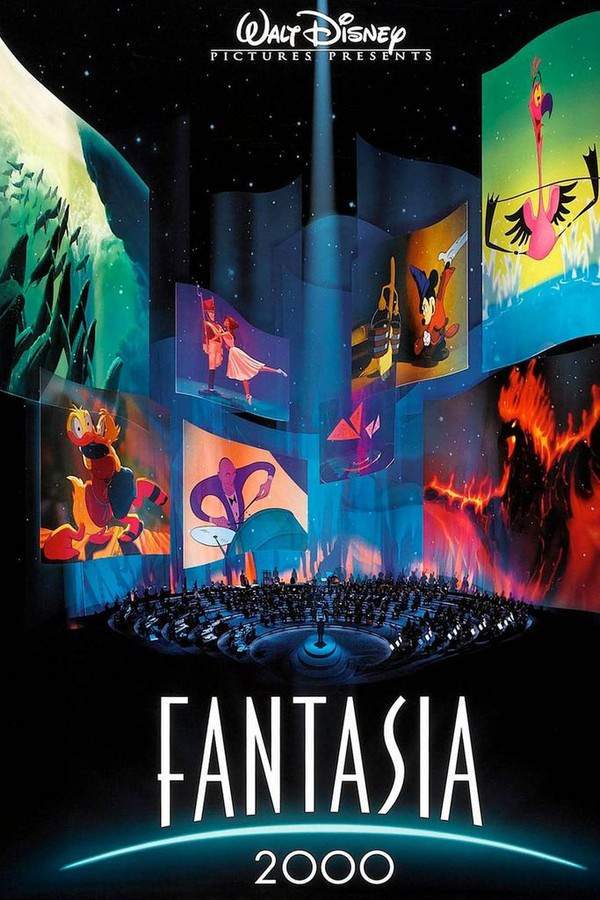
Fantasia begins with captivating live-action scenes showcasing members of an orchestra assembling against a stunning blue backdrop, as they tune their instruments amid a blend of light and shadow. The stage is graced by the master of ceremonies, Deems Taylor, who introduces the enchanting program. This unique musical experience unfolds through three distinct storytelling forms: one featuring clear narratives, another relying solely on vivid visuals, and a third offering an abstract musical journey that celebrates sound for its intrinsic beauty. The eight animation sequences are a feast for the eyes, bursting with color, and presenting a free-flowing, often surrealistic experience.

The first piece, Toccata and Fugue in D Minor by Johann Sebastian Bach, seamlessly transitions between live-action shots of the orchestra bathed in blue and gold, and stunning abstract visuals. Animated lines, shapes, and cloud formations dance in harmony with the music's rhythm and melodies.

Next, we delve into The Nutcracker Suite by Pyotr Ilyich Tchaikovsky, where selections from the beloved ballet depict the transformation of the seasons—from summer through autumn and into winter. This segment features a delightful array of dance performances showcasing fairies, fish, flowers, mushrooms adorned in Chinese costumes, and vibrant autumn leaves. Notable dances include the enchanting "Dance of the Sugar Plum Fairy," the lively "Chinese Dance," the exotic "Arabian Dance," the spirited "Russian Dance," the graceful "Dance of the Flutes," and the elegant "Waltz of the Flowers."

The story continues with The Sorcerer's Apprentice by Paul Dukas, inspired by Goethe's 1797 poem "Der Zauberlehrling." Here, we meet Mickey Mouse, the eager young apprentice of the wizard Yen Sid. Mickey attempts some magical tricks, but his lack of control leads to chaos. He brings a broom to life to fetch water, only to forget the spell that would halt the enchantment, resulting in a disastrous flood that engulfs the entire castle.

Next, Rite of Spring by Igor Stravinsky takes us on a visual journey through the planet's origins, showcasing the formation of Earth and its first inhabitants. This sequence elegantly transitions through time, illustrating the reign and eventual extinction of dinosaurs, showcasing how these "terrible lizards" roamed the Earth for millions of years, only to vanish due to drought.

After a brief intermission, during which the Fantasia title card is introduced, a lively jam session of jazz music unfolds, led by an enthusiastic clarinetist as the orchestra musicians return. A light-hearted animation follows, demonstrating how sound is rendered on film, featuring a "sound track character" that morphs into various shapes and colors in response to the music.

Continuing with The Pastoral Symphony by Ludwig van Beethoven, we are swept away to a dreamy Greco-Roman landscape inhabited by colorful centaurs and "centaurettes," cupids, fauns, and other mythological beings. A heartwarming Greek odyssey unfolds with baby Pegasus learning to fly, while the centaurs and centaurettes engage in playful flirtations. Zeus adds to the spectacle by hurling lightning bolts, while Apollo majestically rides his chariot, transitioning the day into night as the goddess Morpheus spreads her dark cloak across the sky.

The entertainment further escalates with Dance of the Hours by Amilcare Ponchielli, a whimsical ballet divided into four unique sections. It features Madame Upanova and her ostriches representing Morning, the charming Hyacinth Hippo and her entourage symbolizing Afternoon, the delightful Elephanchine with her bubble-blowing elephant troupe for Evening, and finally, Ben Ali Gator leading his alligators for Night. The vibrant ballet culminates in an energetic dance-off, even as crocodiles disrupt the performance, the other animals unite to reclaim the stage, resulting in a spectacular finale.

In the haunting conclusion, we experience Night on Bald Mountain by Modest Mussorgsky, where the sinister Chernabog awakens at midnight to summon twisted spirits and restless souls from their graves to dance atop Bald Mountain. As the spirits whirl through the night sky, they are ultimately driven away by the sound of an Angelus bell, signaling the arrival of dawn. This segment then transitions into the serene Ave Maria by Franz Schubert, depicting robed monks carrying torches through a forest towards the remnants of a cathedral, concluding this magnificent blend of music and animation with a sense of spiritual renewal.
Last updated: November 03, 2024 at 20:55

Was this helpful?

Plot questions answered

Fantasia Plot Explained: Your Questions Answered

The questions people ask most about Fantasia (1940): what happens in the confusing scenes, why the characters do what they do, the twists, hidden details and what the ending means. Each answer contains spoilers.

Q1

Why does Mickey lose control of the broom in The Sorcerer's Apprentice?

Mickey is an inexperienced apprentice who borrows Yen Sid's magical hat without permission. He successfully casts a spell to bring a broom to life to fetch water, but he never learned the counter-spell to stop it. Once the broom begins flooding the castle, Mickey has no way to end the enchantment, forcing Yen Sid to intervene and stop the chaos himself.

  • mickey mouse
  • yen sid
  • broom
  • sorcerer's apprentice
  • magic失控
Q2

What is Chernabog in Night on Bald Mountain?

Chernabog is a demonic deity, the supreme evil force in Fantasia, who awakens at midnight on Bald Mountain to summon twisted spirits and restless souls from their graves. He rules over darkness and chaos, personifying the darkest aspects of the music he accompanies.

  • chernabog
  • bald mountain
  • demon
  • evil spirits
  • mussorgsky
Q3

Why does the Rite of Spring segment show dinosaurs?

Stravinsky's Rite of Spring was composed to depict pagan rituals and the primitive forces of nature. The Fantasia animators interpreted this through a visual history of Earth, showing the planet's formation, the emergence of life, and the age of dinosaurs. Their eventual extinction due to drought illustrates the powerful, brutal nature the music conveys.

  • dinosaurs
  • rite of spring
  • earth creation
  • extinction
  • stravinsky
Q4

What are the three storytelling forms in Fantasia?

Deems Taylor explains that Fantasia presents music through three different approaches: segments with clear narrative stories like The Sorcerer's Apprentice, segments that tell stories through pure visuals without plot like The Nutcracker Suite, and abstract sequences that celebrate sound itself through shapes and colors rather than telling any story at all.

  • three forms
  • storytelling
  • abstract
  • narrative
  • music visualization
Q5

What happens at the end of Night on Bald Mountain?

As dawn breaks, the Angelus bell rings and the light of morning drives Chernabog and his evil spirits away. The dark forces are banished by the sound of the bell, and the screen transitions seamlessly into the Ave Maria segment, symbolizing the victory of light over darkness and spiritual renewal.
  • angelus bell
  • dawn
  • chernabog defeated
  • ave maria
  • sunrise
Q6

Why does Fantasia include live-action scenes of the orchestra?

The live-action sequences serve as a framing device, showing the orchestra and conductor Deems Taylor directly addressing the audience. This emphasizes that Fantasia is a live musical performance captured on film, bridging the real musical experience with the animated visualizations that follow.

  • orchestra
  • deems taylor
  • live action
  • opening sequence
  • framing device
Q7

What is the story in The Pastoral Symphony segment?

Beethoven's Sixth Symphony inspires a whimsical tale set in a mythological Greco-Roman world. The segment follows colorful centaurs, cupids, fauns, and baby Pegasus as they play, flirt, and witness divine spectacles including Zeus throwing lightning bolts and Apollo driving his sun chariot across the sky to create day and night.

  • centaurs
  • pegasus
  • zeus
  • apollo
  • pastoral symphony
  • beethoven
Q8

Why does Dance of the Hours feature hippos, ostriches, and alligators?

Dance of the Hours is a light-hearted ballet depicting different times of day through animal performers: ostriches represent morning, hippos represent afternoon, elephants represent evening, and alligators represent night. The whimsical choreography shows these animals dancing in formal ballet style before a chaotic dance-off ensues.

  • dance of the hours
  • animals
  • ballet
  • morning afternoon evening night
  • ponchielli
Q9

Why does Fantasia have an intermission in the middle?

Fantasia is structured like a concert with two halves, similar to a symphony performance. The intermission allows the orchestra musicians to return and reset, and introduces the Fantasia title card. This pause also separates the more narrative-driven first half from the more abstract and mystical second half.

  • intermission
  • concert structure
  • title card
  • break
  • symphony
Q10

What is the abstract animation in Fantasia supposed to represent?

The abstract sequences, particularly in Toccata and Fugue in D Minor, visualize music through shapes, lines, and colors that pulse and dance with the rhythm and melody. Rather than telling a story, these segments aim to capture the pure emotional and mathematical essence of the music through visual form.

  • abstract
  • shapes
  • toccata fugue
  • visualization
  • music art

Movie threads

More Movies Like Fantasia, by Mood & Story

Curated lists built around what makes Fantasia tick: the same mood, the same kind of story or the same emotional payoff. Each list explains why these movies belong together.

Abstract Musical Journeys like Fantasia

Free-flowing films that use music and visuals to evoke emotion without a strict plot. Discover movies like Fantasia that blend stunning visuals with powerful music to create an immersive, dreamlike experience. These films often use an anthology or free-flowing structure, prioritizing mood and artistic expression over linear storytelling for viewers who appreciate sensory cinema.

  • dreamlike
  • majestic
  • awe-inspiring
  • surreal
  • magical
  • fantastical
  • Tone: whimsical, awe-inspiring
  • Pacing: variable, impressionistic
Why these movies?

The story pattern: Narratives in this thread are often loose, interpretative, or episodic. They unfold as a series of impressions or vignettes, connected by a central theme, piece of music, or visual style rather than a linear plot. The journey is experiential, leading the audience through a spectrum of emotions and ideas.

Why they belong together: These movies are grouped by their shared focus on artistic expression through the synergy of image and sound. They create a specific, often transcendent, mood that feels more like a guided daydream or a symphony for the eyes than a conventional story.

Majestic Whimsical Tales like Fantasia

Stories that balance lighthearted fun with moments of epic scale and profound wonder. If you liked the mix of playful hippos and majestic mythological scenes in Fantasia, you'll enjoy these movies. They balance lighthearted, whimsical fun with epic, awe-inspiring moments, creating a uniquely uplifting and spectacular viewing experience for all ages.

  • playful
  • majestic
  • awe-inspiring
  • magical
  • whimsical
  • fantastical
  • Tone: whimsical, playful, majestic
  • Pacing: variable, engaging
Why these movies?

The story pattern: The narrative pattern often involves a journey through different tonal landscapes. Stories might begin with gentle, playful introductions before escalating into more intense or majestic conflicts, ultimately resolving on a note of hope and harmony. The emotional journey is varied but concludes with a positive, uplifting feeling.

Why they belong together: These films are united by their unique ability to shift tone without losing coherence, masterfully blending the cute and the colossal. They share a specific emotional mix of humor, awe, and light-hearted charm that results in a uniquely uplifting and spectacular experience.

If you liked this

Movies Like Fantasia

Similar movies to Fantasia: the same genre, themes or kind of story. Each one comes with its own plot summary, timeline and ending explained.

Browse all movie summaries

Every angle

Fantasia (1940) Explained: Plot, Timeline & Characters

Everything about Fantasia in one place: what happens in the plot summary, the timeline in chronological order, the characters and meaning and a spoiler-free summary. What's After the Movie adds the cast, box office and post-credit scenes.

Coming soon on iOS and Android

The Plot Explained Movie Summary App

Plot summaries, endings explained and timelines on your phone. Catch up on any movie in minutes, save your favorites and never miss a twist again.

Be the first to know when we launch. Your email stays private, always.

Learn more about the app