Plot Explained Spoilers guaranteed!
Plot Explained

Browse by genre

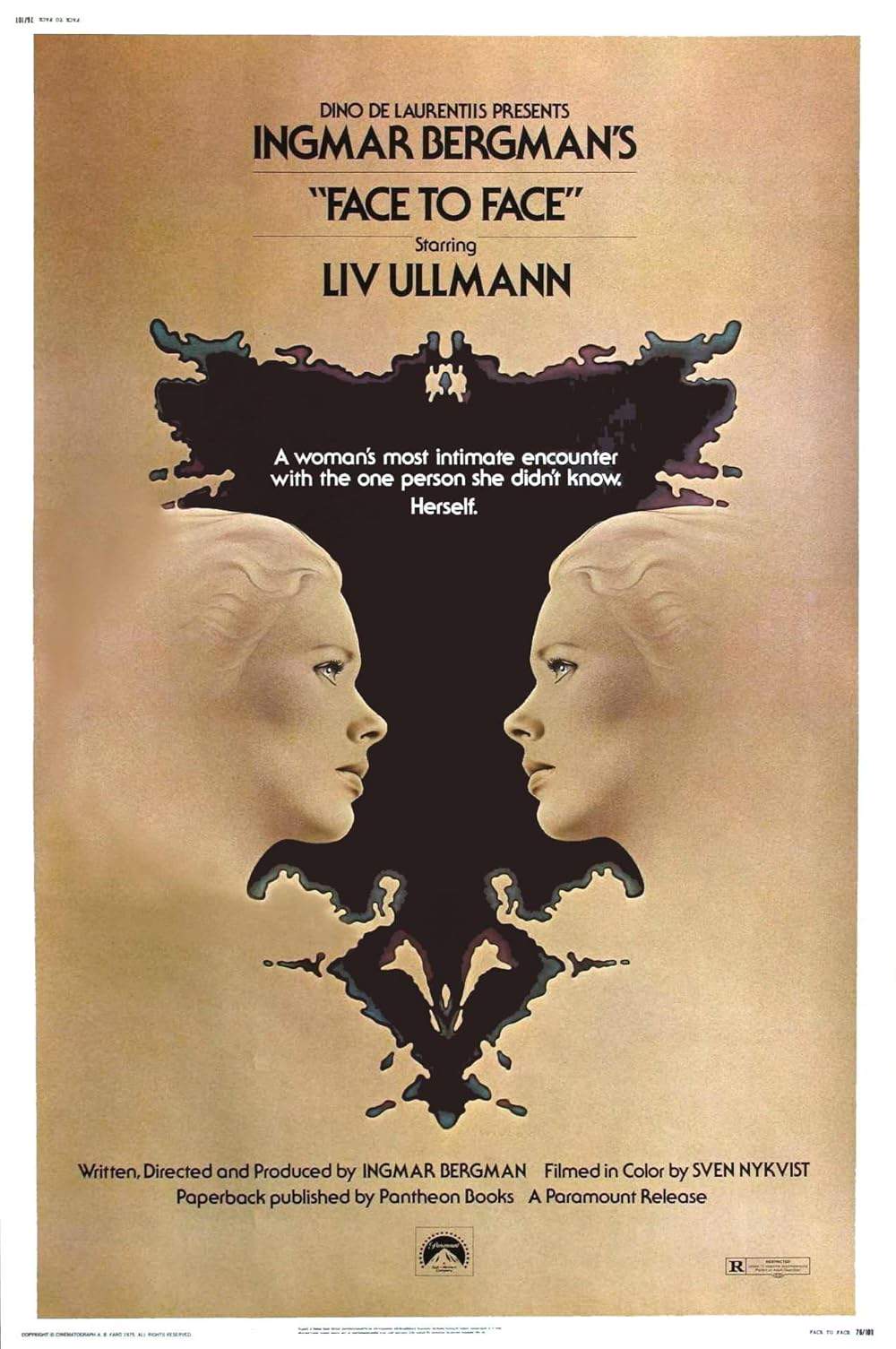
Face to Face (1976) movie poster

Timeline

Face to Face (1976) Timeline Explained – Every Event in Order

Release, runtime and language
1976 · 114 min · English
Directed by
Ingmar Bergman
Starring
Gösta Ekman, Gunnar Björnstrand, Liv Ullmann, Aino Taube, Erland Josephson, Helene Friberg

Dr. Jenny Isaksson, a successful psychiatrist and wife, experiences a gradual and devastating mental breakdown. Haunted by unsettling memories and emotions from her past, she struggles to maintain her roles as a doctor and a partner. As her condition worsens, Jenny finds herself unable to function in any aspect of her life, leading to a profound personal crisis.

On this page (4)
  1. 1 Events in order (15)
  2. 2 Timeline questions answered
  3. 3 Movie threads
  4. 4 Every angle

15 events in order · contains spoilers

Face to Face Timeline: Events in Chronological Order

Every key event of Face to Face (1976) in order, scene by scene, with when and where it takes place. Use it to untangle flashbacks, time jumps and parallel storylines, to refresh your memory before the sequel or to find the exact scene you are thinking of.

  1. Return to grandparents' home unsettles Jenny

    Moving back into her old bedroom at her grandparents' house unsettles Dr. Jenny Isaksson, triggering anxiety and the first waves of unsettling memories. The familiar space feels claustrophobic and stirs dreams she cannot ignore. This marks the beginning of her psychological unraveling.

    When
    early in the film
    Where
    Grandparents' house (Jenny's old bedroom)
  2. First dreams and waking visions

    Jenny begins to have dream sequences and waking visions of a one-eyed old woman. The boundary between sleep and waking fades as these visions intensify her sense of unease. The dreams foreshadow deeper memories she will confront later.

    When
    soon after move-in
    Where
    Dreams
  3. Party meeting with Tomas

    At a party hosted by the ex-wife of a colleague, Jenny meets Tomas, a medical doctor who flirts with her. She agrees to go home with him, but they decide to meet again later for a potential encounter. The interaction hints at Jenny seeking connection amid her turmoil.

    When
    Evening
    Where
    Party (ex-wife of colleague)
  4. Mari's escape and assault attempt

    Mari, a disturbed patient, escapes from the mental hospital with two men who intend to take her to Jenny's address. When Jenny tries to call the police, the men assault her and attempt to rape her, stopping only when they cannot penetrate. The incident marks a cruel intersection of Jenny's personal and professional worlds.

    When
    Day of the escape
    Where
    Jenny's old home
  5. Night with Tomas and confession

    Jenny accompanies Tomas to a concert and then returns with him, seeking a non-sexual embrace. She reveals that she longed for the rapist to have completed sex with her, but she cannot become aroused. The confession triggers a breakdown, and she asks to be sent home.

    When
    That night
    Where
    Concert hall and Jenny's home
  6. Suicide attempt after staying with grandparents

    Jenny spends several days at her grandparents' home, then withdraws further and ends up recording a suicide note. She takes fifty Nembutals in a desperate act born of unresolved trauma and emotional numbness. This moment marks a turning point toward a more explicit confrontation with her past.

    When
    A few days later
    Where
    Grandparents' home
  7. Awakening in hospital after dream

    In a dream sequence, Jenny apologizes to herself and confronts memories she fears. She encounters an imagined Tomas and a comforting old woman before she opens a door she dreads. She wakes in a hospital bed to find Tomas has come to find her.

    When
    Immediately after the dream
    Where
    Hospital room (awakening)
  8. Second dream with family figures

    A subsequent dream places Jenny in a crowded room of patients while her grandfather confesses fear of dying and Anna appears, only for Anna to run away. The dream layers familial anxieties onto her personal crisis and medical responsibilities.

    When
    subsequent dream
    Where
    Dream sequence
  9. Morning talks and impending departure

    Jenny wakes to find her husband beside her, but he must return to America. She asks him to tell her grandmother the truth and pledges to speak to Anna, signaling a plan to confront family truths and her own past.

    When
    morning after awakening
    Where
    Hospital room
  10. Quest to find her parents in a final dream

    In another dream, Jenny searches for her parents at their funeral when she was nine. They initially abandon her but then return to comfort her, only for her to push them away. The vision crystallizes guilt and unresolved longing.

    When
    in the next dream sequence
    Where
    Dream
  11. Verbal revelations with Tomas

    The next morning, Jenny shares her childhood memories with Tomas. He responds by revealing a hidden truth—that he was never divorced and had lived with a man for five years. The revelation destabilizes their interaction and triggers a hysterical reaction from Jenny.

    When
    following morning
    Where
    Hospital
  12. Final funeral dream

    In her last dream, Jenny attends her own funeral and wakes during the cremation. The dream intensifies the sense of mortality and the inescapable cycle of guilt that haunts her. The sequence culminates in a stark moment of self-confrontation.

    When
    final dream
    Where
    Dream sequence
  13. Anna's meeting wish and confrontation

    A nurse tells Jenny that Anna wants to meet her. Jenny tries to explain, but the encounter goes poorly as Anna reveals she always believed Jenny never liked her and walks away. The moment underscores the rift between mother and daughter.

    When
    after waking
    Where
    Hospital
  14. Tomas plans Jamaica trip

    Tomas tells Jenny he will travel to Jamaica for an amoral vacation and may not return. The confession marks a sober end to their tentative bond and forces Jenny to face the fragility of connection.

    When
    after confrontation
    Where
    Hospital room
  15. Returning to grandmother and resolve to work

    Jenny returns to her grandmother, who believes she is simply fatigued. She is distressed by her husband’s impending death but offers comfort anyway. She then phones the mental hospital to say she will be in to work in the morning, signaling a reluctant return to duty.

    When
    ending
    Where
    Grandmother's home / hospital contact

Last updated: October 09, 2025 at 15:46

Was this helpful?

Timeline questions answered

Face to Face Timeline Explained: Your Questions Answered

When does it happen, and why in that order? The questions people ask about the chronology of Face to Face (1976): time jumps, flashbacks, cause and effect between scenes and the correct order of events, each answered with spoilers.

Q1

Why does Jenny return to her grandparents' home?

Jenny returns to her grandparents' home because her husband is in America and their daughter Anna is away at camp. She takes a temporary position as medical supervisor at a mental hospital and decides to stay in her old childhood room. The familiar space was supposed to be convenient, but it instead triggers deep anxiety and stirs up traumatic memories from her past, beginning her psychological unraveling.

Foreshadowing: Earlier in the film, moving back into her old bedroom is shown to unsettle her, creating anxiety that manifests as dreams and visions.

  • Jenny
  • grandparents
  • childhood home
  • return
  • memories
Q2

What does the one-eyed old woman in Jenny's dreams represent?

The one-eyed old woman appears as a vision throughout Jenny's breakdown, representing her fear of aging, mortality, and the repressed trauma of her past. The woman serves as a manifestation of the painful memories Jenny has buried since childhood, particularly the loss of her parents at age nine. The one eye may symbolize partial or distorted perception of reality.

Foreshadowing: The visions begin shortly after she moves into her childhood bedroom, connecting directly to the traumatic memories stored in that space.

  • one-eyed woman
  • dreams
  • vision
  • fear of aging
  • trauma
Q3

Why does Jenny ask Tomas for a non-sexual arrangement in bed?

After attending a concert with Tomas, Jenny asks to share a bed without any sexual contact. This reflects her profound emotional disconnection from physical intimacy, she craves human closeness and comfort but cannot engage sexually due to her psychological state. She later admits she cannot become aroused, even though she longs for physical pleasure.

Foreshadowing: At their first meeting, Jenny agrees to go home with Tomas but clearly states she does not want sex at that moment, establishing her complicated relationship with intimacy.

  • Jenny
  • Tomas
  • non-sexual
  • physical intimacy
  • emotional disconnection
Q4

Why does Jenny confess she wanted the rapist to assault her?

During the night with Tomas, Jenny reveals she hoped the rapist would complete the assault because she desperately longs for physical pleasure but cannot become aroused on her own. This confession exposes the depth of her psychological trauma and the emotional turmoil stemming from her inability to experience normal desire or connection.

Foreshadowing: The assault attempt occurs earlier in the evening when Mari's escape leads dangerous men to Jenny's address.

  • Jenny
  • rapist
  • confession
  • sexual trauma
  • arousal
Q5

What triggers Jenny's suicide attempt?

After several days of withdrawing from work and life, Jenny's grandparents leave town for the weekend. Left alone in her childhood home with unresolved trauma from the assault and her deepening psychological crisis, she calls Tomas but hangs up, records a suicide note, and swallows fifty Nembutals. The combination of recent trauma, repressed childhood memories, and emotional isolation proves unbearable.

Foreshadowing: The buildup includes the assault, her breakdown after confessing to Tomas, and days of missing work while spiraling.

  • Jenny
  • suicide attempt
  • Nembutals
  • grandparents house
  • psychological breakdown
Q6

What does Jenny's dream about her parents' funeral mean?

In the dream, Jenny searches for her parents at their funeral, which she attended when she was nine years old after they died. They initially abandon her but return to comfort her, yet she pushes them away. This dream reveals deep-seated guilt and shame about her parents' death, along with unresolved grief that has haunted her throughout her adult life.

Foreshadowing: The dream connects to earlier scenes showing her childhood bedroom stirring painful memories.

  • Jenny
  • parents
  • funeral
  • dream
  • childhood trauma
  • guilt
Q7

Why does Tomas reveal he never got divorced and lived with a man?

Tomas reveals he was never truly divorced and had shared his life with a male partner for five years. This confession comes after Jenny shares her own childhood trauma, creating a moment of vulnerability between them. The revelation destabilizes their connection and triggers Jenny's hysterical reaction, suggesting it touches on her own internalized conflicts about sexuality, truth, and intimacy.

Foreshadowing: Earlier interactions hint at Tomas's complexity, his initial flirtation and mysterious personal life.

  • Tomas
  • divorce
  • male partner
  • confession
  • secret
Q8

Why does Anna tell Jenny she never liked her?

When Anna comes to meet Jenny in the hospital, she bluntly tells her mother that she always knew Jenny never truly liked her and then leaves. This devastating moment reveals the fractured relationship between mother and daughter, suggesting Jenny's emotional distance and psychological struggles have deeply affected her ability to connect with Anna.

Foreshadowing: Earlier in the timeline, Anna appears in Jenny's dream but runs away, foreshadowing their rift.

  • Anna
  • Jenny
  • daughter
  • confrontation
  • rejection
Q9

What does Jenny's dream about her own funeral signify?

In her final dream sequence, Jenny attends her own funeral and wakes during the cremation. This dream represents her confrontation with mortality, guilt, and her sense of being emotionally dead even while alive. It symbolizes her feeling of having lost herself completely and the inescapable cycle of shame and trauma that haunts her.

Foreshadowing: The dream follows multiple sequences where she confronts family figures and past traumas.

  • funeral
  • cremation
  • dream
  • mortality
  • self-confrontation
Q10

Why does Jenny decide to return to work at the end?

After everything, the suicide attempt, the revelation from Tomas about his Jamaica trip, and her painful encounter with Anna, Jenny returns to her grandmother's home. Though distressed by her husband's impending death and still emotionally devastated, she calls the mental hospital to say she'll come in to work in the morning. This represents a fragile attempt to reclaim stability and purpose, though her recovery remains deeply uncertain.

Foreshadowing: The film began with Jenny working at the mental hospital, establishing her professional identity as a psychiatrist.

  • Jenny
  • return to work
  • mental hospital
  • stability
  • resolution

Movie threads

More Movies Like Face to Face, by Mood & Story

Curated lists built around what makes Face to Face tick: the same mood, the same kind of story or the same emotional payoff. Each list explains why these movies belong together.

Movies about mental unraveling like Face to Face

Character studies where a composed life gradually fractures from within. If you were captivated by the harrowing psychological breakdown in Face to Face, this thread features similar movies about characters losing their sanity. These dramas and thrillers explore the slow, painful dissolution of a stable mind under pressure from past trauma and existential dread.

  • unsettling
  • claustrophobic
  • melancholic
  • anxious
  • dreamlike
  • oppressive
  • Tone: dark, unsettling, introspective
  • Pacing: slow, deliberate, immersive
Why these movies?

The story pattern: Narratives in this thread follow a character's gradual disintegration, often starting from a position of professional or personal competence. The story structure tends to be introspective and nonlinear, blending reality with dreamlike sequences or traumatic memories to immerse the viewer in the protagonist's deteriorating mental state.

Why they belong together: These movies are grouped by their intense focus on a single character's psychological collapse, their use of a slow, deliberate pace to build unease, and their shared dark, heavy tone. They prioritize internal conflict over external plot, creating a deeply immersive and often claustrophobic experience.

Dreamlike psychological movies similar to Face to Face

Stories where the boundaries between memory, dream, and reality dissolve. For viewers who appreciated the blurring of reality and nightmare in Face to Face, this collection highlights films with a similar dreamlike, surreal quality. These movies use ambiguous narratives and unsettling visuals to delve into themes of trauma, memory, and identity.

  • dreamlike
  • unsettling
  • introspective
  • surreal
  • melancholic
  • ambiguous
  • Tone: dreamlike, ambiguous, melancholic
  • Pacing: variable, contemplative, immersive
Why these movies?

The story pattern: The narrative pattern involves a subjective point-of-view that becomes increasingly unreliable. The plot often unfolds in a non-linear fashion, weaving together past traumas, present anxieties, and symbolic dreams until the distinction between them fades, leaving the audience to piece together the emotional truth.

Why they belong together: These films share a common aesthetic and structural approach: a complex, ambiguous narrative that prioritizes psychological truth over factual reality. They create a specific mood of unease and introspection through their dreamlike pacing and melding of fantasy and drama genres.

Every angle

Face to Face (1976) Explained: Plot, Timeline & Characters

Everything about Face to Face in one place: what happens in the plot summary, the timeline in chronological order, the characters and meaning and a spoiler-free summary. What's After the Movie adds the cast, box office and post-credit scenes.

Coming soon on iOS and Android

The Plot Explained Movie Summary App

Plot summaries, endings explained and timelines on your phone. Catch up on any movie in minutes, save your favorites and never miss a twist again.

Be the first to know when we launch. Your email stays private, always.

Learn more about the app