Plot Explained Spoilers guaranteed!
Plot Explained

Browse by genre

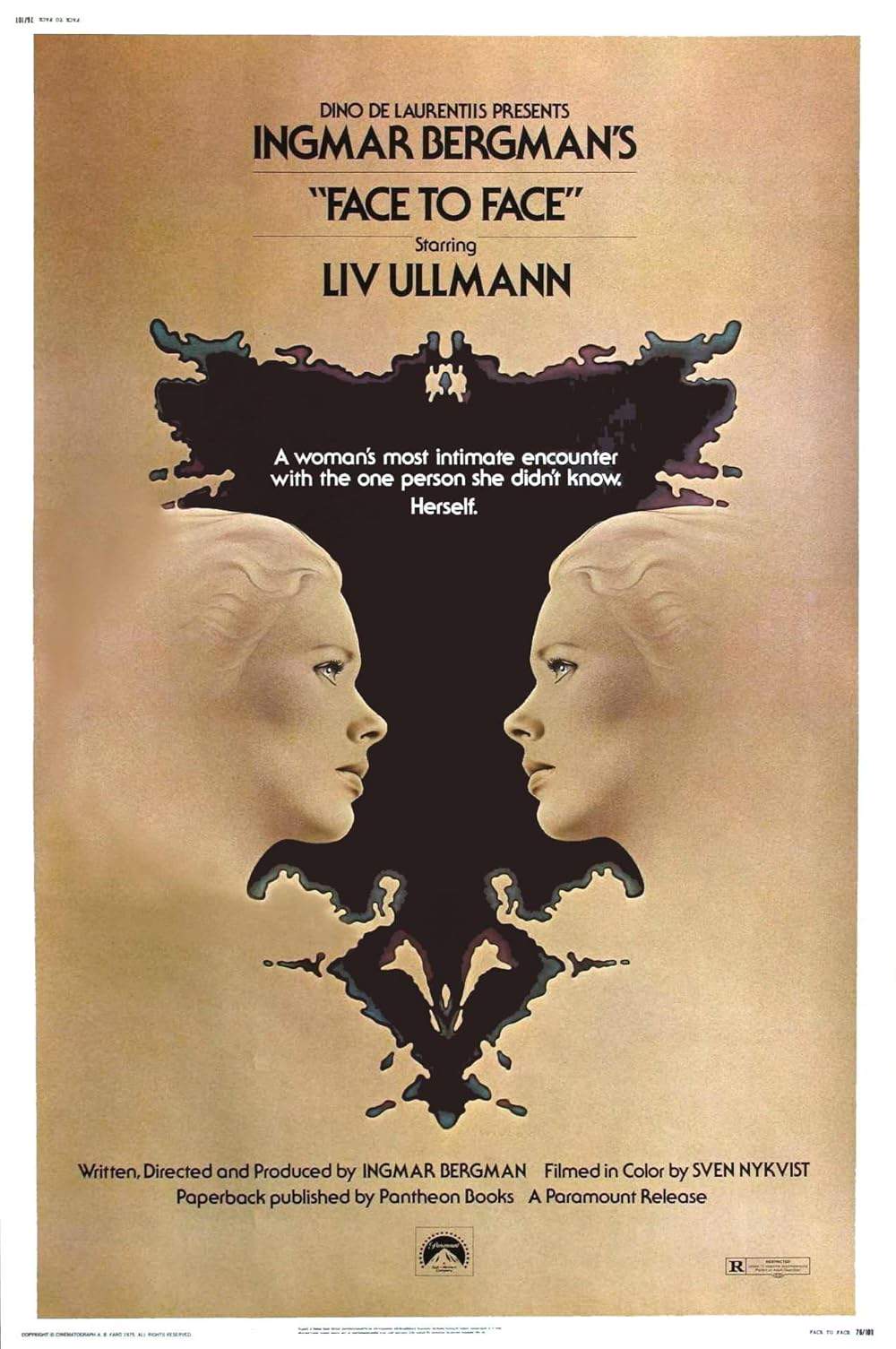
Face to Face (1976) movie poster

Characters & Themes

Face to Face (1976) Characters, Setting & Themes Explained

Release, runtime and language
1976 · 114 min · English
Directed by
Ingmar Bergman
Starring
Gösta Ekman, Gunnar Björnstrand, Liv Ullmann, Aino Taube, Erland Josephson, Helene Friberg

Dr. Jenny Isaksson, a successful psychiatrist and wife, experiences a gradual and devastating mental breakdown. Haunted by unsettling memories and emotions from her past, she struggles to maintain her roles as a doctor and a partner. As her condition worsens, Jenny finds herself unable to function in any aspect of her life, leading to a profound personal crisis.

On this page (6)
  1. 1 Characters explained (5)
  2. 2 Where & when it takes place
  3. 3 Themes & meaning (4)
  4. 4 Character & meaning questions
  5. 5 Movie threads
  6. 6 Every angle

5 main characters · contains spoilers

Face to Face Characters Explained: Who Is Who

The main characters of Face to Face (1976), heroes and villains: what drives them, how they change over the course of the story and what each of them reveals about the film's bigger ideas.

  • Jenny Isaksson (Liv Ullmann)

    A psychiatrist who returns to work while dealing with trauma from her past. Her crisis of desire, fear, and memory unfolds through dreams, visions, and strained relationships with family and colleagues.

    • 🧠 Psychiatrist
    • 💔 Traumatised
    • 🏥 Hospital
  • Tomas

    played by Erland Josephson

    A medical doctor who flirts with Jenny, later offering fragile support as she navigates memory and desire. He reveals personal vulnerability and a complicated past.

    • 🧑‍⚕️ Doctor
    • 💬 Flirtation
    • 💗 Emotional complexity
  • Grandfather

    played by Gunnar Björnstrand

    Jenny’s caring grandfather who helped raise her after her parents’ death. He embodies family memory, aging, and the fear of mortality.

    • 👴 Elderly
    • 🕰️ Family memory
    • 🏡 Home
  • Grandmother

    played by Aino Taube

    Jenny’s grandmother who provides warmth and stability, but also a reminder of aging and duty within the family unit.

    • 👵 Elderly
    • 🏡 Family
    • 💞 Caring
  • Mari

    A disturbed patient who triggers the central crisis, highlighting the fragility of care and the threat she poses when escaping the hospital.

    • 🧠 Patient
    • 😨 Trauma

Last updated: October 04, 2025 at 08:03

Was this helpful?

Setting

Where and When Does Face to Face Take Place?

The setting of Face to Face (1976): the year and time period, the places and locations, and how they shape the characters, the mood and the tension of the story.

Time period

1960s

The narrative takes place in the contemporary 1960s, a period of changing social norms and evolving attitudes toward mental health care. The story follows Jenny’s personal crisis against the pace of hospital procedures, family obligations, and urban life in this era.

Location

Sweden, mental hospital, Jenny’s grandparents’ home

The action moves between a Swedish mental hospital and the family home where Jenny grew up. The hospital serves as the backdrop of care, danger, and psychiatric strain, while the grandparents’ house and bedroom anchor Jenny to childhood memories and unresolved guilt.

  • 🏥 Hospital
  • 🏡 Family home
  • 🇸🇪 Sweden

Last updated: October 04, 2025 at 08:03

Was this helpful?

4 major themes

Face to Face Meaning: Themes & Message Explained

What is Face to Face (1976) really about? The emotional, social and philosophical themes the film keeps returning to, its symbolism and the message beneath the surface.

  • Memory

    Jenny’s dreams and visions uncover buried memories of childhood trauma and long-suppressed emotions. The old woman figure symbolizes repressed fears surface through sleep and waking visions. The film suggests that healing requires confronting the past rather than avoiding it.

  • Desire & Shame

    The story probes sexual longing, emotional numbness, and the struggle to experience physical pleasure. Jenny’s interactions with Tomas expose a tension between intimacy and fear, revealing her sense of guilt and inadequacy. Her neurosis is entwined with the need for authentic connection.

  • Mental Health

    Set largely within a psychiatric hospital, the film examines care, control, and the fragility of patients like Mari. The claustrophobic environment mirrors Jenny’s psychological state, highlighting the limits of treatment and the stigma surrounding mental illness.

  • Guilt & Forgiveness

    Across flashbacks and dreams, Jenny confronts her parents’ deaths and her own perceived failures. The longing for forgiveness from loved ones—and self-forgiveness—drives her toward a fragile relief by the end, even as she remains conflicted.

Last updated: October 04, 2025 at 08:03

Was this helpful?

Character & theme questions

Face to Face Characters & Meaning: Your Questions Answered

The questions people ask about Face to Face (1976): who the characters really are, their relationships, what the symbols mean, where it takes place and what the movie is really about. Each answer contains spoilers.

Q1

Where does the story take place?

The narrative unfolds across two primary locations in Sweden: a mental hospital where Jenny works and receives treatment, and her grandparents' childhood home. The hospital represents a space of clinical care and psychological danger, while the grandparents' house serves as a portal to Jenny's repressed memories and unresolved trauma from her past.

  • sweden
  • mental hospital
  • grandparents home
  • setting
  • locations
Q2

When is the story set?

The film takes place in the 1960s, a period marked by shifting social norms and evolving attitudes toward mental health care in Sweden. This era provides context for the medical procedures, family dynamics, and urban lifestyle that shape Jenny's crisis.

  • 1960s
  • time period
  • sweden
  • era
  • 1960s sweden
Q3

What are the main themes explored?

The film explores four interconnected themes: Memory (how buried childhood trauma resurfaces through dreams and visions), Desire & Shame (Jenny's struggle with emotional numbness and physical intimacy), Mental Health (the limits of psychiatric care and the stigma surrounding illness), and Guilt & Forgiveness (Jenny's journey toward self-acceptance and reconciliation with past losses).

  • themes
  • memory
  • trauma
  • guilt
  • forgiveness
  • mental health
  • desire
  • shame
Q4

Who is Jenny Isaksson?

Jenny Isaksson is a successful psychiatrist who returns to work while grappling with trauma from her past. As the protagonist, she experiences a devastating mental breakdown that unravels her professional life, marriage, and psychological stability. Her journey involves confronting buried memories, suppressed desire, and profound guilt.

  • jenny isaksson
  • protagonist
  • psychiatrist
  • lead character
  • liv ullmann
Q5

Who is Tomas and what is his role?

Tomas is a medical doctor who works at the mental hospital and becomes romantically involved with Jenny. He initially flirts with her but later offers fragile support as she navigates her memories and psychological crisis. Tomas reveals his own vulnerability and complicated past, creating a complex dynamic of intimacy and fear between them.

  • tomas
  • doctor
  • relationship
  • erland josephson
  • love interest
Q6

What does the grandparents' home represent?

The grandparents' house serves as a powerful symbol of Jenny's childhood and unresolved trauma. It is where she was raised after her parents' death, and it anchors her to memories of guilt, loss, and the caring figures of her grandfather and grandmother. The bedroom and home appear in flashbacks and visions, representing the past Jenny must confront to heal.

  • grandparents house
  • childhood home
  • memory
  • flashbacks
  • past
Q7

Who is Mari in the story?

Mari is a disturbed patient at the mental hospital who triggers Jenny's central crisis. Her fragility and the threat she poses when escaping the hospital highlight the limits of psychiatric care and the vulnerability of patients. Mari's presence intensifies the film's examination of mental illness and the fine line between care and danger.

  • mari
  • patient
  • hospital
  • escape
  • disturbed patient
Q8

Who are Jenny's grandparents and what do they represent?

Jenny's grandfather, portrayed by Gunnar Björnstrand, helped raise her after her parents' death and embodies family memory, aging, and mortality. Her grandmother, played by Aino Taube, represents warmth, stability, and the familial duty that binds Jenny to her past. Both figures appear in Jenny's memories and visions, serving as conduits to her childhood trauma.

  • grandfather
  • grandmother
  • family
  • aging
  • mortality
  • gunnar bjornstrand
Q9

How does the film depict mental illness and treatment?

The mental hospital functions as both a place of care and a claustrophobic environment that mirrors Jenny's deteriorating psychological state. The film examines the limitations of 1960s psychiatric treatment, the stigma surrounding mental illness, and the vulnerability of patients like Mari. Jenny's own breakdown within this setting forces her to question the effectiveness of the care she provides and receives.

  • mental illness
  • psychiatric treatment
  • hospital
  • therapy
  • stigma
  • care
Q10

What role does desire and shame play in the story?

Desire and shame permeate Jenny's crisis, manifesting in her strained interactions with her husband and her complicated relationship with Tomas. The film explores sexual longing, emotional numbness, and Jenny's guilt and inadequacy. Her neurosis is intertwined with a deep need for authentic connection, which she struggles to achieve due to her repressed emotions and traumatic past.

  • desire
  • shame
  • intimacy
  • guilt
  • sexual
  • emotional numbness
Q11

How is the story structured?

The film uses a complex nonlinear narrative that blends reality, memory, and dream sequences. This structure requires viewers to navigate layers of psychological reality as Jenny's conscious and unconscious mind interweave. The fragmented storytelling reflects her fractured mental state and mirrors how trauma resurfaces unexpectedly.

  • narrative structure
  • dreams
  • flashbacks
  • nonlinear
  • psychological realism

Movie threads

More Movies Like Face to Face, by Mood & Story

Curated lists built around what makes Face to Face tick: the same mood, the same kind of story or the same emotional payoff. Each list explains why these movies belong together.

Movies about mental unraveling like Face to Face

Character studies where a composed life gradually fractures from within. If you were captivated by the harrowing psychological breakdown in Face to Face, this thread features similar movies about characters losing their sanity. These dramas and thrillers explore the slow, painful dissolution of a stable mind under pressure from past trauma and existential dread.

  • unsettling
  • claustrophobic
  • melancholic
  • anxious
  • dreamlike
  • oppressive
  • Tone: dark, unsettling, introspective
  • Pacing: slow, deliberate, immersive
Why these movies?

The story pattern: Narratives in this thread follow a character's gradual disintegration, often starting from a position of professional or personal competence. The story structure tends to be introspective and nonlinear, blending reality with dreamlike sequences or traumatic memories to immerse the viewer in the protagonist's deteriorating mental state.

Why they belong together: These movies are grouped by their intense focus on a single character's psychological collapse, their use of a slow, deliberate pace to build unease, and their shared dark, heavy tone. They prioritize internal conflict over external plot, creating a deeply immersive and often claustrophobic experience.

Dreamlike psychological movies similar to Face to Face

Stories where the boundaries between memory, dream, and reality dissolve. For viewers who appreciated the blurring of reality and nightmare in Face to Face, this collection highlights films with a similar dreamlike, surreal quality. These movies use ambiguous narratives and unsettling visuals to delve into themes of trauma, memory, and identity.

  • dreamlike
  • unsettling
  • introspective
  • surreal
  • melancholic
  • ambiguous
  • Tone: dreamlike, ambiguous, melancholic
  • Pacing: variable, contemplative, immersive
Why these movies?

The story pattern: The narrative pattern involves a subjective point-of-view that becomes increasingly unreliable. The plot often unfolds in a non-linear fashion, weaving together past traumas, present anxieties, and symbolic dreams until the distinction between them fades, leaving the audience to piece together the emotional truth.

Why they belong together: These films share a common aesthetic and structural approach: a complex, ambiguous narrative that prioritizes psychological truth over factual reality. They create a specific mood of unease and introspection through their dreamlike pacing and melding of fantasy and drama genres.

Every angle

Face to Face (1976) Explained: Plot, Timeline & Characters

Everything about Face to Face in one place: what happens in the plot summary, the timeline in chronological order, the characters and meaning and a spoiler-free summary. What's After the Movie adds the cast, box office and post-credit scenes.

Coming soon on iOS and Android

The Plot Explained Movie Summary App

Plot summaries, endings explained and timelines on your phone. Catch up on any movie in minutes, save your favorites and never miss a twist again.

Be the first to know when we launch. Your email stays private, always.

Learn more about the app