


Plot Explained Spoilers guaranteed!
Plot Explained

Browse by genre

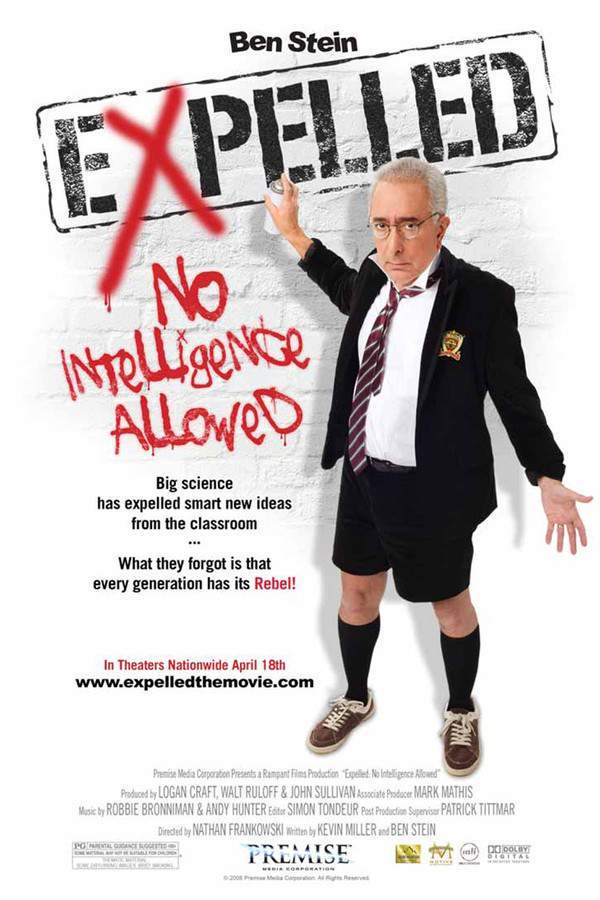
Expelled: No Intelligence Allowed (2008) movie poster

Plot Summary

Expelled: No Intelligence Allowed (2008) Plot Summary Explained

Release, runtime and language
2008 · 90 min · English
Directed by
Nathan Frankowski

This documentary follows Ben Stein as he investigates instances of scientists, educators, and philosophers being silenced or punished for questioning Darwinian evolution. Through interviews, Stein explores a world where those who consider alternative explanations for the natural world face ridicule and professional repercussions. He discovers a community of individuals who have been ostracized for daring to explore ideas about intelligent design and purpose, realizing he shares a similar experience.

On this page (6)
  1. 1 Where to watch
  2. 2 What happens: full plot
  3. 3 Plot questions answered
  4. 4 Movie threads
  5. 5 Movies like Expelled: No Intelligence Allowed
  6. 6 Every angle

Where to watch

Where to Watch Expelled: No Intelligence Allowed (2008)

Where can you watch Expelled: No Intelligence Allowed? Stream, rent or buy it in the US, including on Tubi TV and Amazon Video: current JustWatch availability with up-to-date prices.

Streaming availability powered by JustWatch

Full plot summary · contains spoilers

What Happens in Expelled: No Intelligence Allowed: Full Plot Summary

The whole story of Expelled: No Intelligence Allowed (2008) explained, from the opening scene to the final frame: every key event, every twist and what it all adds up to. Read it as a quick recap before the sequel, to check a scene you missed, or to finally understand what really happened.

In this insightful satirical documentary, Ben Stein takes center stage as he explores the criticisms and hostility faced by advocates of Intelligent Design in today's scientific community. Throughout the film, Stein primarily serves as a host, guiding viewers through a series of interviews that shed light on the lack of academic freedom and presenting a balanced perspective from scientists on both sides of this contentious issue.

The movie features approximately thirty interviewees, including a diverse group of scientists, journalists, and even a US congressman. Most of the scientists hail from various prestigious universities in the United States and Britain, while the documentary also includes perspectives from a scientist in Paris and another in Poland. Notably, among the more skeptical voices are Dr. Richard Dawkins, the renowned author of The God Delusion, and Dr. P.Z. Myers, known for his Pharyngula blog. They stand firmly against the incorporation of intelligent design into educational and professional scientific discussions.

Conversely, supporters of intelligent design, such as Dr. Guillermo Gonzalez, co-author of The Privileged Planet, and Dr. Alistair McGrath, writer of The Dawkins Delusion, argue for the inclusion of these concepts in scientific dialogues. Their insights form a crucial part of the narrative woven throughout the documentary.

To enhance the viewing experience, the film frequently incorporates black-and-white clips—some crafted in a vintage film style and others extracted from classic movies. These segments serve to humorously underscore Stein's commentary or visually augment the points made by the interviewees. Additionally, a vibrant two-minute computer animation depicting activities within a cell, set to music, enriches the content further.

The DVD also features a special clip showcasing the thoughts of two scientists who currently apply the principles of "intelligent design" in their research, rounding out this thought-provoking examination of one of the most discussed topics in modern science.

Last updated: October 25, 2024 at 11:42

Was this helpful?

Plot questions answered

Expelled: No Intelligence Allowed Plot Explained: Your Questions Answered

The questions people ask most about Expelled: No Intelligence Allowed (2008): what happens in the confusing scenes, why the characters do what they do, the twists, hidden details and what the ending means. Each answer contains spoilers.

Q1

Why does Ben Stein investigate scientists who question evolution

Ben Stein, a former economist and actor, created this documentary after discovering he shared something in common with proponents of Intelligent Design: facing ridicule for exploring unconventional ideas. Stein was expelled from a university presidency partially due to his religious views, and he became curious about similar experiences faced by scientists who questioned Darwinian evolution. The documentary functions as his personal investigation into whether there is actual hostility toward alternative viewpoints in academia.

Foreshadowing: Early in the film, Stein hints at his own experience of professional consequences for his beliefs.

  • ben stein
  • intelligent design
  • documentary motivation
  • academic freedom
Q2

What happens to scientists who support Intelligent Design

The documentary profiles several scientists who faced professional backlash after expressing support for Intelligent Design or questioning Darwinian evolution. These consequences include denial of tenure, loss of research positions, public ridicule, and exclusion from academic communities. Dr. Guillermo Gonzalez, who co-authored The Privileged Planet, is highlighted as an example of a scientist who lost his tenured position at Iowa State University, which the film suggests was due to his Intelligent Design advocacy.

Foreshadowing: The film opens by establishing that Intelligent Design supporters face hostility in scientific circles.

  • career consequences
  • academic backlash
  • guillermo gonzalez
  • professional repercussions
Q3

Why is Intelligent Design controversial in academia

Intelligent Design proposes that certain features of the natural world are best explained by an intelligent cause rather than undirected processes like natural selection. Academic scientists argue this is not testable science but rather creationism dressed in scientific language. The controversy stems from concerns that teaching Intelligent Design in schools would introduce religious arguments into science education, violating the separation of church and state. Scientists like Richard Dawkins argue it represents a threat to scientific methodology itself.

Foreshadowing: The film establishes early that the debate centers on what counts as legitimate science.

  • intelligent design controversy
  • evolution debate
  • scientific methodology
  • creationism
Q4

What is the academic freedom argument in the documentary

The documentary centers on the question of whether scientists who question evolution face professional discrimination. Stein argues that academic freedom should allow scientists to explore all hypotheses, including those involving intelligent design or purpose, without fear of career destruction. Critics like Dawkins counter that science has standards and that pseudoscientific ideas should not be given equal footing simply because they are controversial. The film presents this as a tension between open inquiry and maintaining scientific rigor.

Foreshadowing: The film's subtitle 'No Intelligence Allowed' directly references the alleged suppression of certain viewpoints.

  • academic freedom
  • scientific inquiry
  • free speech
  • intellectual diversity
Q5

Why does the documentary feature Richard Dawkins

Richard Dawkins appears in the documentary as one of the most prominent skeptics of Intelligent Design. The film includes his arguments that Intelligent Design is not science but religion, and that allowing it into academia would undermine scientific progress. By featuring Dawkins, who is famous for his ateist views, the documentary attempts to present a balanced perspective and show that critics were given ample opportunity to explain their opposition. This also attracts viewers interested in hearing from both sides of the debate.

Foreshadowing: Early in the film, Stein mentions he will interview scientists from all viewpoints.

  • richard dawkins
  • skeptical voices
  • evolution debate
  • prominent scientists
Q6

What is the purpose of the animated cell sequence in the film

The two-minute computer animation depicting activities within a cell serves as an educational tool to visualize biological complexity. Set to music, it shows cellular processes as intricate, organized systems. The animation supports the documentary's underlying question about whether such complexity could arise purely through random, undirected processes. It provides visual engagement during what is primarily an interview-based documentary and helps viewers understand the scale of what evolution claims to explain.

Foreshadowing: The animation appears during discussions about the complexity of life.

  • cell animation
  • biological complexity
  • educational visual
  • documentary production
Q7

Why does the documentary use vintage film clips

The black-and-white clips from classic movies and vintage sources serve multiple purposes. They provide visual variety across the interview-heavy format, add humor through comedic timing, and create a satirical tone that distinguishes the documentary from a standard academic production. The clips often underscore Stein's commentary with ironic or humorous parallels, reinforcing the film's critical perspective on the debate. This stylistic choice also pays homage to old Hollywood documentary techniques.

Foreshadowing: The film establishes its satirical tone from the opening sequences using these clips.

  • vintage clips
  • cinematic style
  • satirical elements
  • film techniques
  • ben stein commentary
Q8

Does the documentary take a side on Intelligent Design

While the documentary gives significant screen time to both supporters and skeptics of Intelligent Design, critics argue it is tilted toward the Intelligent Design perspective. Supporters like Gonzalez and McGrath are presented as victims of discrimination, while skeptics like Dawkins are shown defending their positions but also reacting to the alleged suppression of alternative views. The film ultimately asks whether academic freedom should extend to all viewpoints rather than definitively arguing for or against Intelligent Design as a scientific theory.

Foreshadowing: The film presents itself as an investigation rather than an advocacy piece.

  • documentary bias
  • balanced perspective
  • intelligent design debate
  • film perspective
Q9

Why was Expelled controversial upon release

The documentary generated controversy for several reasons: critics accused it of misrepresenting scientific consensus, presenting a false equivalence between evolution and Intelligent Design, and manipulating interviews. Some scientists who appeared claimed they were deceived about the film's purpose. Additionally, the film was criticized for framing the intelligent design debate as one of academic suppression when many scientists view it as a question of scientific validity. The controversy itself generated significant public attention and debate.

Foreshadowing: The film's final section acknowledges the ongoing societal debate without resolution.

  • controversy
  • criticism
  • reception
  • scientific debate
  • public response
Q10

What happens at the end of the documentary

The documentary concludes without a clear resolution, reflecting the ongoing societal debate about Intelligent Design. Stein sums up his investigation by suggesting there is genuine hostility toward alternative viewpoints in academia, but the film does not declare Intelligent Design scientifically valid or invalid. The ending emphasizes that the debate will continue and leaves viewers to form their own conclusions. The DVD bonus features additional interviews with scientists actively applying Intelligent Design principles in their research.

Foreshadowing: The film maintains an ambiguous, investigative tone throughout rather than advocating for a specific outcome.

  • documentary ending
  • conclusion
  • unresolved debate
  • bonus features

Movie threads

More Movies Like Expelled: No Intelligence Allowed, by Mood & Story

Curated lists built around what makes Expelled: No Intelligence Allowed tick: the same mood, the same kind of story or the same emotional payoff. Each list explains why these movies belong together.

Documentaries about ideological debate like Expelled: No Intelligence Allowed

Documentaries that investigate controversial ideas and their human costs. If you enjoyed the investigative style of Expelled: No Intelligence Allowed, explore more documentaries like it. These films examine controversial ideas, scientific debates, and the personal stories of those embroiled in ideological conflicts, providing a tense and thought-provoking viewing experience.

  • thought-provoking
  • argumentative
  • investigative
  • contentious
  • informative
  • serious
  • Tone: tense, argumentative
  • Pacing: steady, methodical
Why these movies?

The story pattern: These documentaries typically follow a central investigator or narrator who explores a controversial topic, often interviewing individuals from opposing sides. The narrative builds a case through personal testimonies and evidence, highlighting themes of suppression, freedom of speech, and the clash of worldviews, often without a clear-cut resolution.

Why they belong together: Movies are grouped here for their shared approach to contentious subject matter, a steady investigative pacing, and a tense tone stemming from high-stakes intellectual conflict. They prioritize argumentative structure and thought-provoking content over simple answers.

Satirical exposé films similar to Expelled: No Intelligence Allowed

Films that use wit and irony to expose institutional hypocrisy and suppression. Seeking movies with a vibe like Expelled: No Intelligence Allowed? This list features similar films that use a satirical and confrontational approach to expose institutional power, challenge mainstream ideas, and explore themes of censorship and ridicule in a thought-provoking way.

  • satirical
  • confrontational
  • thought-provoking
  • subversive
  • critical
  • unsettling
  • Tone: tense, satirical
  • Pacing: steady
Why these movies?

The story pattern: The narrative often follows an underdog or curious outsider questioning a dominant system. Using ironic juxtapositions, humorous clips, and direct confrontation, these stories build a case against institutional overreach, focusing on the disparity between public rhetoric and hidden actions. The journey is one of unveiling uncomfortable truths.

Why they belong together: These movies share a specific tonal mix: a tense, serious core subject matter presented with satirical and argumentative flourishes. They create a unique vibe of intellectual unease lightened by ironic commentary, united by a theme of challenging powerful narratives.

If you liked this

Movies Like Expelled: No Intelligence Allowed

Similar movies to Expelled: No Intelligence Allowed: the same genre, themes or kind of story. Each one comes with its own plot summary, timeline and ending explained.

Browse all movie summaries

Every angle

Expelled: No Intelligence Allowed (2008) Explained: Plot, Timeline & Characters

Everything about Expelled: No Intelligence Allowed in one place: what happens in the plot summary, the timeline in chronological order, the characters and meaning and a spoiler-free summary. What's After the Movie adds the cast, box office and post-credit scenes.

Coming soon on iOS and Android

The Plot Explained Movie Summary App

Plot summaries, endings explained and timelines on your phone. Catch up on any movie in minutes, save your favorites and never miss a twist again.

Be the first to know when we launch. Your email stays private, always.

Learn more about the app