Plot Explained Spoilers guaranteed!
Plot Explained

Browse by genre

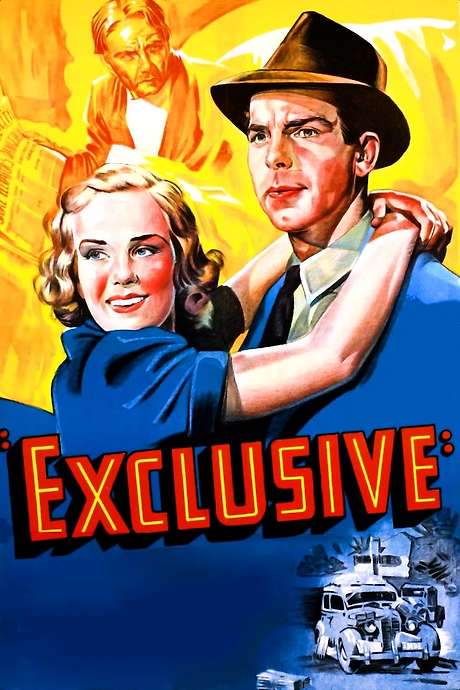
Exclusive (1937) movie poster

Plot Summary

Exclusive (1937) Plot Summary Explained

Release, runtime and language
1937 · 85 mins · English
Loading streaming availability…
Directed by
Alexander Hall
Starring
Irving Bacon, Charles Ruggles, Lloyd Nolan, James Quinn, Fred MacMurray, John Kelly

A confident young woman feels she has the world at her feet, until a man literally steps on her toes and challenges her confidence. Meanwhile, two competing newspaper editors battle for the top scoop, each using different approaches to journalistic integrity as they race to break the story, showing the clash of ambition and ethics in journalism.

On this page (6)
  1. 1 Where to watch
  2. 2 What happens: full plot
  3. 3 Plot questions answered
  4. 4 Movie threads
  5. 5 Movies like Exclusive
  6. 6 Every angle
Loading streaming availability…

Full plot summary · contains spoilers

What Happens in Exclusive: Full Plot Summary

The whole story of Exclusive (1937) explained, from the opening scene to the final frame: every key event, every twist and what it all adds up to. Read it as a quick recap before the sequel, to check a scene you missed, or to finally understand what really happened.

Cleared of a crime, Charles Gillette [Lloyd Nolan] seethes with a thirst for revenge against the Mountain City townspeople who helped lock him away, including Colonel Bogardus [Edward H. Robins], owner of the influential Mountain City World newspaper. He purchases the Sentinel, the World’s rival, and sets his sights on modernizing its voice, aiming to tilt the town’s loyalties in his favor.

He tries to lure the town’s brightest reporter into his scheme, offering a position to Ralph Houston [Fred MacMurray], but the would-be editor declines, leaving Gillette to wield influence in more underhanded ways. Undeterred, Gillette turns to Ralph’s girlfriend, Vina Swain [Frances Farmer], coaxing her to dig up dirt on his enemies and feed the Sentinel a stream of glossy, damaging stories. The scheme kicks into high gear when a smear campaign targeting mayoral candidate Horace Mitchell [Ralph Morgan] sullies his reputation and leads to tragedy, a suicide that casts a pall over the town.

Tod Swain [Charles Ruggles], an editor at the World, confronts Vina about her questionable sources and cautions her against reckless journalism. Yet Gillette presses forward, enlisting henchman Beak McArdle [Horace McMahon] to orchestrate a traumatic elevator incident intended to ruin a department store owner and to cause deaths and serious harm to Ralph Houston, escalating the violence of his vendetta. The danger intensifies as Vina’s life is placed in peril when Gillette orders McArdle to murder her so she can never reveal what she knows.

In a tense turn of events, Tod helps Vina escape and then exposes Gillette, trapping him with a confession about the elevator accident. With the truth laid bare, the town’s newspaper landscape shifts as the Sentinel is finally sold to the town, and a recovered Ralph Houston decides to take the helm of the paper himself, steering it toward a new direction. The tale closes on a note of vengeful ambition softened by accountability, as the community grapples with the consequences of Gillette’s schemes and the restored authority of its press.

Last updated: February 24, 2026 at 09:24

Was this helpful?

Plot questions answered

Exclusive Plot Explained: Your Questions Answered

The questions people ask most about Exclusive (1937): what happens in the confusing scenes, why the characters do what they do, the twists, hidden details and what the ending means. Each answer contains spoilers.

Q1

Why does Charles Gillette want revenge against Mountain City?

Charles Gillette was wrongfully convicted of a crime and served time in prison. After being acquitted, he became obsessed with retaliating against the Mountain City townspeople who helped put him away, particularly Colonel Bogardus, owner of the influential Mountain City World newspaper. His thirst for vengeance drives him to take over the rival Sentinel newspaper and weaponize it against his enemies.

Foreshadowing: The film opens with Gillette's acquittal, immediately establishing his vengeful mindset.

  • charles gillette
  • revenge
  • colonel bogardus
  • wrongful conviction
  • mountain city
Q2

How does Gillette use the Sentinel newspaper to fight his enemies?

After purchasing the Sentinel, the rival to Colonel Bogardus's World, Gillette modernizes its voice and turns it into a weapon for his vendetta. He lures reporter Ralph Houston with an editor position (which Ralph declines), then manipulates Ralph's girlfriend Vina Swain into digging up damaging stories about his enemies. The Sentinel runs a smear campaign against mayoral candidate Horace Mitchell, ruining his reputation and driving him to suicide.

Foreshadowing: Gillette's purchase of the Sentinel signals his intention to control the town's narrative and public opinion.

  • sentinel newspaper
  • smear campaign
  • press manipulation
  • journalism
  • horace mitchell
Q3

Why does Vina Swain agree to help Gillette?

Vina Swain is Ralph Houston's girlfriend. When Ralph refuses Gillette's offer to become editor of the Sentinel, Gillette approaches Vina directly and coaxes her into digging up dirt on his enemies. She becomes instrumental in feeding the Sentinel a stream of damaging stories that advance his revenge plot, though her involvement eventually puts her life in danger.

Foreshadowing: Gillette's move to use Vina shows his willingness to exploit personal relationships for his schemes.

  • vina swain
  • ralph houston
  • manipulation
  • gullette's schemes
Q4

What leads to Horace Mitchell's suicide?

Gillette orders Vina to dig up damaging information on mayoral candidate Horace Mitchell. The Sentinel publishes a smear campaign that sullies Mitchell's reputation, portraying him in a highly negative light. The scandal becomes overwhelming for Mitchell, who commits suicide, demonstrating the deadly consequences of reckless, unethical journalism in the film.

Foreshadowing: Tod Swain warns Vina that her reckless reporting can have deadly consequences, foreshadowing Mitchell's fate.

  • horace mitchell
  • suicide
  • smear campaign
  • mayoral candidate
  • unethical journalism
Q5

Why does Gillette orchestrate the elevator accident?

Gillette orders his henchman Beak McArdle to arrange a traumatic elevator incident at a department store. The plot is intended to ruin the department store owner, but it also causes deaths and serious injuries to Ralph Houston. This represents a significant escalation in Gillette's vendetta, moving from media manipulation to physical violence.

Foreshadowing: The elevator plot marks a turning point where Gillette's revenge becomes increasingly dangerous and lethal.

  • elevator accident
  • beak mcardle
  • ralph houston
  • violence
  • department store
Q6

Why does Gillette want Vina Swain murdered?

After Vina has been gathering damaging information for Gillette's smear campaigns, he orders Beak McArdle to murder her. His reason is that Vina now knows too much about his criminal schemes and could potentially reveal what she knows. This demonstrates how Gillette eliminates anyone who becomes a threat to his plans.

Foreshadowing: Vina's growing knowledge makes her a liability, setting up the murder attempt.

  • vina swain
  • murder plot
  • beak mcardle
  • cover-up
  • betrayal
Q7

How does Tod Swain expose Gillette's crimes?

Tod Swain, an editor at the World newspaper, helps Vina escape from the danger Gillette has placed her in. He then devises a clever plan that traps Gillette into making a confession about the elevator accident. This confession exposes Gillette's guilt to the entire town, undermining his control over Mountain City and revealing the truth behind his schemes.

Foreshadowing: Tod's confrontation with Vina earlier about her reckless journalism sets up his role as the truth-seeker.

  • tod swain
  • confession
  • exposure
  • elevator accident
  • truth
Q8

What happens to the Sentinel after Gillette is exposed?

With Gillette's power significantly diminished following his confession, the Sentinel is sold to the town of Mountain City, shifting control of the newspaper away from his vengeful influence. A recovered Ralph Houston then decides to take charge of the paper himself, choosing to run it with integrity and steer it toward honest journalism.

Foreshadowing: The Sentinel's transformation reflects the film's theme of journalistic ethics prevailing over corruption.

  • sentinel sold
  • ralph houston
  • newspaper ownership
  • new leadership
Q9

Why does Ralph Houston decide to run the Sentinel?

After recovering from the serious injuries sustained in the elevator accident orchestrated by Gillette, Ralph Houston chooses to take leadership of the Sentinel. Rather than let the newspaper continue under corrupt control or remain without direction, he decides to run it himself and steer it toward ethical journalism, representing a hopeful new direction for Mountain City's press.

Foreshadowing: Ralph's earlier refusal of Gillette's offer establishes his character as someone who values integrity.

  • ralph houston
  • leadership
  • integrity
  • journalism
  • redemption
Q10

How does the smear campaign manipulate public opinion in the movie?

The Sentinel under Gillette's control publishes glossy, damaging stories designed to destroy the reputations of his enemies, particularly mayoral candidate Horace Mitchell. By controlling what the public reads, Gillette shapes perception and opinion in Mountain City, demonstrating how media can be weaponized to manipulate elections and ruin lives when placed in unethical hands.

Foreshadowing: Gillette's purchase of the Sentinel was explicitly aimed at tilting the town's loyalties in his favor.

  • media manipulation
  • public opinion
  • elections
  • journalism ethics
  • reputation
Q11

Why is Colonel Bogardus a target of Gillette's revenge?

Colonel Bogardus owns the Mountain City World, the influential newspaper that Gillette sees as partly responsible for his wrongful conviction. When Gillette is acquitted, he vows vengeance against those who helped lock him away, with Bogardus being a primary target. Gillette purchases the Sentinel specifically to challenge Bogardus's dominance in the town's media landscape.

Foreshadowing: The conflict between the Sentinel and the World represents the broader battle between Gillette and Bogardus.

  • colonel bogardus
  • mountain city world
  • newspaper rivalry
  • revenge target

Movie threads

More Movies Like Exclusive, by Mood & Story

Curated lists built around what makes Exclusive tick: the same mood, the same kind of story or the same emotional payoff. Each list explains why these movies belong together.

Race-Against-the-Clock Journalism Movies like Exclusive

Where deadlines are life-or-death and scoops are won at any cost. If you enjoyed the tense newspaper rivalry and high-stakes scoop-chasing in Exclusive, you'll like these other fast-paced thrillers about journalists on a deadline. These movies share a similar vibe of urgent, crusading stories set in the gritty world of the press.

  • urgent
  • crusading
  • tense
  • suspenseful
  • competitive
  • gritty
  • Tone: tense, urgent, crusading
  • Pacing: fast, relentless
Why these movies?

The story pattern: These narratives typically follow journalists or rival papers competing for a career-defining story, often involving crime or corruption. The plot is driven by tight deadlines, unethical tactics, and a constant sense of urgency, building to a climax where the truth is finally published.

Why they belong together: Movies are grouped here based on their shared core setting (the newsroom), their fast-paced, tense tone, and the central conflict of a high-stakes journalistic pursuit. They create a cohesive experience of professional ambition clashing with moral choices.

Movies about Moral Conflicts like Exclusive

Stories where ambition and integrity collide amid crime and corruption. Viewers who liked the thematic clash of ambition and journalistic ethics in Exclusive will appreciate these other stories about moral dilemmas. These films explore similar themes of redemption, deception, and the high cost of ambition in a grim world.

  • moral conflict
  • deception
  • redemption
  • grim
  • tense
  • scandal
  • Tone: tense, grim, morally complex
  • Pacing: fast, steady
Why these movies?

The story pattern: The narrative pattern follows protagonists, often initially confident or morally ambiguous, who are tested by a corrupt system or a cynical rival. Their journey involves a crisis of conscience, leading to a pivotal choice between self-interest and doing the right thing, typically culminating in a redemptive or morally clear ending.

Why they belong together: These films are connected by their focus on ethical struggles as a primary driver of the plot. They share a tense, grim mood and a moderate narrative complexity, exploring how characters navigate worlds filled with deception and danger.

If you liked this

Movies Like Exclusive

Similar movies to Exclusive: the same genre, themes or kind of story. Each one comes with its own plot summary, timeline and ending explained.

Browse all movie summaries

Every angle

Exclusive (1937) Explained: Plot, Timeline & Characters

Everything about Exclusive in one place: what happens in the plot summary, the timeline in chronological order, the characters and meaning and a spoiler-free summary. What's After the Movie adds the cast, box office and post-credit scenes.

Coming soon on iOS and Android

The Plot Explained Movie Summary App

Plot summaries, endings explained and timelines on your phone. Catch up on any movie in minutes, save your favorites and never miss a twist again.

Be the first to know when we launch. Your email stays private, always.

Learn more about the app