Plot Explained Spoilers guaranteed!
Plot Explained

Browse by genre

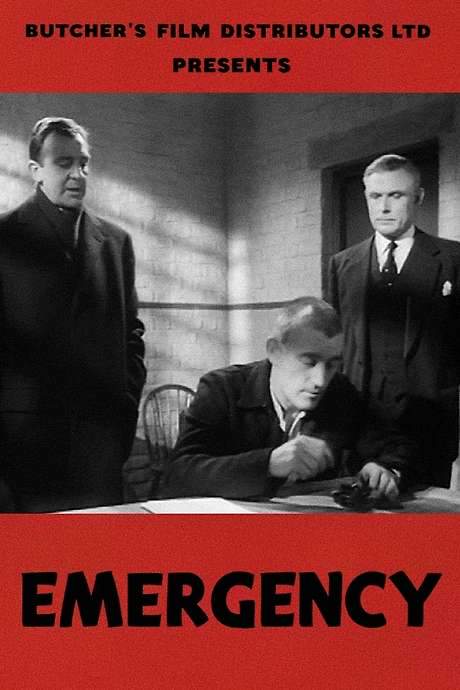
Emergency Call (1952) movie poster

Plot Summary

Emergency Call (1952) Plot Summary Explained

Release, runtime and language
1952 · 84 mins · English
Directed by
Lewis Gilbert
Starring
Peter Swanwick, Graham Stark, Jack Warner, Duncan Lamont, Eric Pohlmann, Arthur Lovegrove

A 5‑year‑old child is diagnosed with leukemia and given only days to live. The only chance for survival is a transfusion, but her blood type is extremely rare, prompting a frantic race against time to locate compatible donors. Doctors, nurses, and volunteers scramble across the region, reaching out to strangers in a desperate effort to save her.

On this page (5)
  1. 1 What happens: full plot
  2. 2 Plot questions answered
  3. 3 Movie threads
  4. 4 Movies like Emergency Call
  5. 5 Every angle

Full plot summary · contains spoilers

What Happens in Emergency Call: Full Plot Summary

The whole story of Emergency Call (1952) explained, from the opening scene to the final frame: every key event, every twist and what it all adds up to. Read it as a quick recap before the sequel, to check a scene you missed, or to finally understand what really happened.

On a race against the clock, the film follows the urgent mission to locate three donors, each able to donate one pint of a rare blood type, to save a young girl battling leukemia. The doctor in charge, Dr. Carter, enlists the help of Inspector Lane to coordinate the search and sift through potential candidates, turning a medical crisis into a tense police operation.

The donors come from very different walks of life. First, a white boxer Roberto offers a straightforward donation, needing only to steer clear of his manager who could complicate the arrangement. Next, a black sailor George Robinson faces a more tangled path; his willingness to give is tested by a wartime incident in which a dying Nazi officer refused his offer, a refusal he attributes to racism. He initially declines again, until the truth behind the Nazi’s choice—rooted in the master race ideology—is explained to him, easing his resolve.

The final donor is a murderer on the run, living under an assumed name. The police locate him, and he sustains a gunshot injury that forces a stark choice: donate the last pint and die from blood loss at the scene, or refuse and risk a brutal murder trial with a likely death sentence. The man Danny Marks ultimately opts to donate, and the young girl survives.

Across the story, the film threads together themes of sacrifice, duty, and the personal costs of doing the right thing, all set against a backdrop of urgency and moral ambiguity. The cast performances underscore the disparity of backgrounds, yet converge on a single life-saving outcome, illustrating how a community pulls together in a critical moment.

Last updated: February 24, 2026 at 10:04

Was this helpful?

Plot questions answered

Emergency Call Plot Explained: Your Questions Answered

The questions people ask most about Emergency Call (1952): what happens in the confusing scenes, why the characters do what they do, the twists, hidden details and what the ending means. Each answer contains spoilers.

Q1

Why did the sailor initially refuse to donate blood?

The sailor, George Robinson, initially refused because of a painful wartime memory. Earlier in his life, a dying Nazi officer refused his offer to donate blood, which Robinson attributed to racism. The memory haunted him and made him reluctant to offer his blood again, even to save a child's life.

  • sailor
  • blood donation
  • wartime
  • refusal
  • prejudice
Q2

Why did the Nazi officer refuse the sailor's blood offer during the war?

The Nazi officer's refusal was rooted in the master race ideology. He believed that accepting blood from a Black man would pollute his Aryan bloodline, even as he lay dying. This ideological racism, rather than simple prejudice, was the true reason behind his refusal, which was later explained to Robinson, easing his resolve to donate.

  • nazi
  • master race
  • blood
  • ideology
  • racism
  • wartime
Q3

Why did the fugitive choose to donate knowing it would kill him?

Danny Marks, a murderer on the run, faced a stark choice after being shot during capture: donate the last pint of blood and die from blood loss, or refuse and receive hospital treatment but face a murder trial with a likely death sentence. He chose to donate, seeing it as an opportunity for redemption and meaning, saving a child's life rather than dying for his crimes.

  • fugitive
  • sacrifice
  • death
  • redemption
  • murder
  • choice
Q4

How did the police find the third donor?

Inspector Lane coordinated with law enforcement to track down the murderer living under an assumed name. After locating Danny Marks, police confronted him, resulting in a gunfight where Marks was shot and wounded, leading to the critical decision about donating.

  • police
  • fugitive
  • search
  • location
  • inspector lane
Q5

What was the issue with the boxer's manager?

The white boxer, Roberto, faced pressure from his manager who wanted to protect the boxer's public image and career. The manager attempted to intervene and discourage the donation, but the boxer resisted and insisted on helping, completing his donation despite the manager's objections.

  • boxer
  • manager
  • pressure
  • donation
  • career
Q6

Did the girl survive at the end of the movie?

Yes, the young girl survived. With all three pints of rare blood secured through the desperate search, doctors completed the transfusion and she began to recover in the hospital. The sacrifice of the three donors, from vastly different backgrounds, resulted in a life-saving outcome.

  • girl
  • survival
  • transfusion
  • recovery
  • ending
Q7

How many donors were needed to save the child?

Three donors were needed, each providing one pint of the rare blood type required to save the 5-year-old girl with leukemia. The emergency operation mobilized across the city to locate all three compatible donors within the tight timeframe.

  • donors
  • pints
  • blood
  • rare type
  • leukemia
  • three
Q8

What made the sailor's donation process more complicated than the boxer's?

Unlike the boxer's relatively straightforward donation, the sailor's process was complicated by his wartime trauma. When his memory of the Nazi officer refusing his blood resurfaced, he hesitated and initially declined to donate. Only after understanding the ideological reason behind the Nazi's refusal did he agree to proceed.

  • sailor
  • donation
  • complication
  • memory
  • war
  • hesitation
Q9

Who was the third donor in the movie?

The third donor was Danny Marks, a murderer who was living under an assumed name to evade police. He was identified by Inspector Lane and the police as the third and final potential donor with the rare blood type needed for the girl's transfusion.

  • danny marks
  • fugitive
  • murderer
  • third donor
  • assumed name

Movie threads

More Movies Like Emergency Call, by Mood & Story

Curated lists built around what makes Emergency Call tick: the same mood, the same kind of story or the same emotional payoff. Each list explains why these movies belong together.

Frantic Countdown Thrillers like Emergency Call

High-stakes stories where every second counts and failure is not an option. If you liked the high-tension race against time in Emergency Call, you'll find similar suspense in these movies where a ticking clock drives the narrative and characters must act fast to avert disaster.

  • suspenseful
  • urgent
  • anxious
  • high-stakes
  • desperate
  • thrilling
  • Tone: tense, desperate
  • Pacing: fast, relentless
Why these movies?

The story pattern: Movies in this thread revolve around a central, urgent deadline. The plot structure is built around escalating attempts to solve a critical problem, with obstacles and setbacks intensifying as time runs out, creating a propulsive and nail-biting experience.

Why they belong together: They share a core focus on pacing and tension, using a literal or metaphorical countdown to create a consistent state of high anxiety and suspense, making the viewer feel the weight of every passing moment.

Bittersweet Redemption Stories like Emergency Call

Stories where a profound sacrifice brings hope, but at a heavy personal cost. Fans of the emotional weight and moral complexity of Emergency Call will appreciate these movies, where characters find redemption through sacrifice, resulting in a hopeful yet deeply bittersweet ending.

  • redemptive
  • melancholic
  • hopeful
  • moral dilemma
  • self-sacrifice
  • emotional
  • Tone: bittersweet, melancholic, redemptive
  • Pacing: steady, character-driven
Why these movies?

The story pattern: The narrative follows characters grappling with their past or moral failings. The climax hinges on a difficult, selfless choice that saves others but often comes with a significant personal loss, leaving the audience with a mix of sorrow and hope.

Why they belong together: They are grouped by their shared exploration of sacrifice as a path to redemption, their heavy emotional weight, and their distinctive bittersweet tone that acknowledges the cost of a hopeful outcome.

If you liked this

Movies Like Emergency Call

Similar movies to Emergency Call: the same genre, themes or kind of story. Each one comes with its own plot summary, timeline and ending explained.

Browse all movie summaries

Every angle

Emergency Call (1952) Explained: Plot, Timeline & Characters

Everything about Emergency Call in one place: what happens in the plot summary, the timeline in chronological order, the characters and meaning and a spoiler-free summary. What's After the Movie adds the cast, box office and post-credit scenes.

Coming soon on iOS and Android

The Plot Explained Movie Summary App

Plot summaries, endings explained and timelines on your phone. Catch up on any movie in minutes, save your favorites and never miss a twist again.

Be the first to know when we launch. Your email stays private, always.

Learn more about the app