Plot Explained Spoilers guaranteed!
Plot Explained

Browse by genre

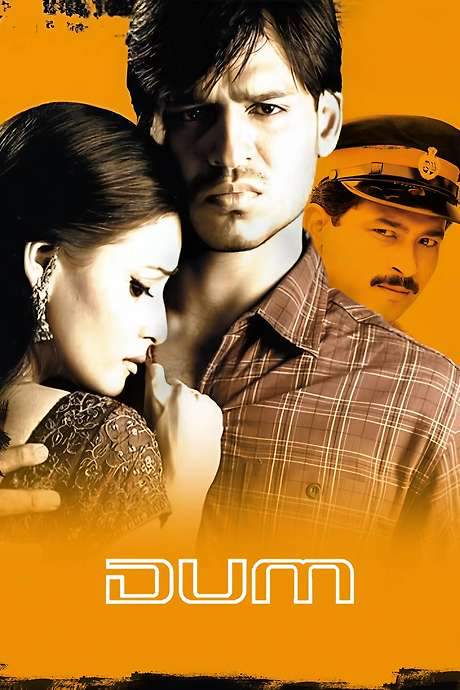
Dum (2003) movie poster

Plot Summary

Dum (2003) Plot Summary Explained

Release, runtime and language
2003 · 160 mins · Hindi
Directed by
Eeshwar Nivas
Starring
Sushant Singh, Atul Kulkarni, Yashpal Sharma, Mukesh Rishi, Govind Namdeo, Dia Mirza

Uday is driven by a fierce ambition to become a police officer and serve his country. As he embarks on this path, he confronts the corrupt officer Shankar, whose evil actions test his resolve. A chance meeting with Kaveri, a television employee, turns his world upside‑down and adds new challenges to his quest.

On this page (6)
  1. 1 Where to watch
  2. 2 What happens: full plot
  3. 3 Plot questions answered
  4. 4 Movie threads
  5. 5 Movies like Dum
  6. 6 Every angle

Where to watch

Where to Watch Dum (2003)

Where can you watch Dum? Stream, rent or buy it in the US, including on Fawesome, Hoopla and Plex: current JustWatch availability with up-to-date prices.

Streaming availability powered by JustWatch

Full plot summary · contains spoilers

What Happens in Dum: Full Plot Summary

The whole story of Dum (2003) explained, from the opening scene to the final frame: every key event, every twist and what it all adds up to. Read it as a quick recap before the sequel, to check a scene you missed, or to finally understand what really happened.

Sushant Singh as Mohan and Vivek Oberoi as Uday Shinde come from modest, lower-middle-class families and are stubbornly set on earning a police badge. They dream not just of status, but of proving themselves on merit, trusting that their capabilities will carry them farther than any recommendation. With no powerful connections and little leverage, luck finally smiles when they meet their training officer, Mukesh Rishi in the guise of Raj Dutt Sharma, a seasoned cop who believes in real talent over pedigrees. Under Sharma’s steady guidance, the two young men train hard, push through the grind, and slowly earn a reputation as no-nonsense, upright cops who embody a fresh, principled approach to law enforcement. The bond between mentor and trainees grows as they begin to carve out a place for themselves in a system that often rewards the well-connected more than the capable.

In the film’s broader world, a musically charged moment introduces a special appearance by Yana Gupta in the song Babuji Zara Dheere Chalo, a scene that hints at the film’s blend of grit with larger-than-life showmanship. The plot thickens when Uday’s girlfriend, Kaveri, played by Dia Mirza, witnesses Inspector Shankar—known in the force as Encounter Shankar, a hard-edged cop with a reputation for bending rules—urinating in a river. The witnessing of such a crude act unsettles Kaveri and exposes the darker facets of power within the department. Shankar tries to quiet the disturbance with aggression, attempting to slap Kaveri, but Uday intervenes and delivers a brutal beating, shattering any illusion that Shankar’s code of conduct is above reproach. The confrontation triggers a chilling vow from Shankar: revenge.

From Sharma’s perspective, Shankar’s behavior is not a rogue anomaly but a symptom of a corrupt ecosystem he helped to foster. Sharma explains that Shankar is egoistic, ruthless, and uses his authority to shield himself and others who push wrongdoing. The deeper corruption is traced to Minister Deshmukh, a political heavyweight whose orders set the stage for tragedy. Deshmukh, portrayed by Govind Namdeo, has backed Babu Kasai, a notorious goon, who killed a rival on the minister’s behalf. Babu Kasai is brought to life on screen by Yashpal Sharma. In the backstory, Sharma’s own wife Lakshmi, brought to life by Sheeba, becomes a key witness to the murder, and that testimony places the family in the crosshairs of a murderous power play. The violence doesn’t end there: Shankar himself barges into Sharma’s home and, in a horrific show of force, kills Sharma’s daughter in front of Lakshmi. After this brutal act, Shankar receives a promotion while Sharma is demoted and assigned to the grueling task of selecting new officers for training. These revelations help explain why Sharma took a chance on Mohan and Uday, seeing in them the potential to counterbalance the very system that punished him.

Mohan and Uday decide that they will not let this menace go unchallenged. But Shankar is not a man who accepts challenges silently. He escalates the conflict by killing Mohan, a blow that only hardens Uday’s resolve. In a fierce confrontation, Uday fights back and latches onto Shankar’s gun, using it to kill Babu Kasai. The scene sows confusion and fuels the belief that Shankar was the killer, turning the city’s fear toward the notion that the evil cop has prevailed. The murder, however, triggers Shankar’s most brazen counter-move: he kills Minister Deshmukh and frames Uday for the crime, flipping the public narrative and tightening the net around the two recruits.

As the investigation unfolds, the truth behind Babu Kasai’s fate begins to unravel: Babu Kasai’s death was staged, and he is alive, kept in captivity by Uday as part of a dangerous ruse designed to expose the corruption at the top. Unaware of this, Shankar launches a full-scale manhunt against Uday, determined to wipe out the threat he believes Uday poses. The chase intensifies as the trio—Uday, Kaveri, and the still-elusive Babu Kasai—are tracked across the city. A gunfight erupts, Babu Kasai is gravely wounded, and in a crucial moment, the dying criminal confesses his crimes to Kaveri on video, revealing the tangled web of deceit that had driven the events.

With the evidence mounting and the truth finally surfacing, the city’s commissioner arrives at the crime scene. The confession video, combined with the mounting evidence, compels a surrender from Shankar and Uday alike. Strapped with the legal jeopardy of the charges and the desire to see justice prevail, Uday tracks Shankar down in a final confrontation and kills him, bringing an end to Shankar’s reign of intimidation. After these climactic events, Uday surrenders himself and stands trial. The court’s verdict clears him of the charges, based on the broader evidence that the system had long concealed, and the film closes with a sense of vindication as the public cheers the renewed legitimacy of the police and the resilience of those who fought to restore it.

Last updated: October 09, 2025 at 15:23

Was this helpful?

Plot questions answered

Dum Plot Explained: Your Questions Answered

The questions people ask most about Dum (2003): what happens in the confusing scenes, why the characters do what they do, the twists, hidden details and what the ending means. Each answer contains spoilers.

Q1

Why does Shankar kill Sharma's daughter in the movie?

Shankar kills Sharma's daughter as a brutal display of power and intimidation. Sharma had become a threat by exposing Shankar's corrupt dealings and his connections to Minister Deshmukh. By murdering Sharma's daughter in front of his wife Lakshmi, Shankar eliminates a key witness to Babu Kasai's murder and simultaneously punishes Sharma for opposing him, demonstrating that anyone who stands in his way will face deadly consequences.

Foreshadowing: Earlier, Sharma explains that Shankar uses his authority to shield himself and those who commit wrongdoing, hinting at his capacity for extreme violence.

  • shankar
  • sharma
  • daughter
  • murder
  • corruption
  • revenge
Q2

How does Uday manage to fake Babu Kasai's death?

Uday stages Babu Kasai's death during a confrontation where he steals Shankar's gun. He kills Babu Kasai but makes it appear as though Shankar is the killer, turning public opinion against the corrupt cop. The death is later revealed to be staged, with Babu Kasai actually alive and held captive by Uday as part of his plan to expose the corruption at the top.

  • uday
  • babu kasai
  • faked death
  • captivity
  • frame job
  • exposure
Q3

Why does Shankar kill Minister Deshmukh after Babu Kasai's death?

Shankar kills Minister Deshmukh to eliminate the only person who can link him to the criminal underworld. With Babu Kasai believed dead, Deshmukh becomes a liability because he knows too much about Shankar's corrupt dealings. By murdering the minister and framing Uday for it, Shankar attempts to consolidate his power and silence the political connection that could expose his crimes.

Foreshadowing: Sharma earlier reveals that Shankar operates on Deshmukh's payroll, indicating their mutually beneficial but dangerous relationship.

  • shankar
  • deshmukh
  • minister
  • murder
  • frame up
  • corruption
Q4

Why does Uday keep Babu Kasai alive instead of killing him?

Uday keeps Babu Kasai alive to use him as evidence against the corrupt system. By capturing and hiding the criminal, Uday creates a living witness who can testify about the connections between Deshmukh, Shankar, and the goon operations. This allows Uday to build a case against the entire corrupt network rather than just eliminating one criminal.

Foreshadowing: After Mohan is killed, Uday becomes more strategic, seeking to expose the corruption rather than just fight individual battles.

  • uday
  • babu kasai
  • captive
  • evidence
  • expose corruption
  • plan
Q5

What triggers Shankar's personal vendetta against Uday?

Shankar's vendetta begins when Uday intervenes after Kaveri witnesses Shankar urinating in a river. Uday brutally beats Shankar, shattering the illusion that the corrupt cop is above accountability. This public humiliation, coupled with Uday's growing reputation as an upright cop who threatens Shankar's operations, transforms a professional rivalry into a deeply personal vendetta.

Foreshadowing: The riverbank confrontation is the first direct challenge Shankar faces from the new recruits, establishing the personal nature of their conflict.

  • shankar
  • uday
  • kaveri
  • river
  • vendetta
  • confrontation
Q6

How does the evidence against Shankar finally come to light?

The evidence emerges when Babu Kasai, now gravely wounded during the final confrontation, confesses his crimes to Kaveri on video before dying. This confession video, showing Babu Kasai detailing the murder he committed for Deshmukh and Shankar, becomes the crucial piece of evidence that exposes the entire corruption network and clears Uday's name.

Foreshadowing: Throughout the film, Uday's strategy revolves around capturing evidence rather than simply defeating Shankar physically.

  • babu kasai
  • confession
  • video
  • evidence
  • killer
  • exposed
Q7

Why does Sharma take a chance on Uday and Mohan as trainees?

Sharma mentors Uday and Mohan because he sees in them the potential to counter the very corrupt system that destroyed his own family. After his daughter was murdered by Shankar and he was demoted, Sharma lost faith in the force but believed that training honest officers could eventually bring change. Uday and Mohan represent the merit-based future Sharma once believed in.

Foreshadowing: Sharma's own backstory, including the murder of his daughter and his demotion, explains why he specifically seeks out recruits who embody integrity.

  • sharma
  • uday
  • mohan
  • mentor
  • training
  • corrupt system
Q8

How is Uday cleared of the charges framed against him?

Uday is exonerated when the confession video recorded by Kaveri is presented in court, combined with other evidence revealing the system's long-concealed corruption. The court recognizes that the framing was orchestrated by Shankar and Minister Deshmukh. With the truth finally exposed, Uday is found not guilty and hailed as a hero who fought against institutional corruption.

  • uday
  • exonerated
  • court
  • trial
  • confession
  • justice
Q9

Why does the plot kill off Mohan?

Mohan's death serves as the catalyst that hardens Uday's resolve and shifts his approach from professional policing to personal vengeance. Unlike Uday's earlier idealism, Mohan's murder convinces Uday that the corrupt system cannot be reformed through proper channels alone. His death also raises the stakes and demonstrates just how far Shankar will go to maintain his power.

Foreshadowing: Sharma's warning about Shankar's ruthlessness foreshadows that anyone opposing him will face deadly consequences.

  • mohan
  • death
  • shankar
  • uday
  • motivation
  • catalyst
Q10

What happens to Shankar in the final confrontation?

In the final confrontation, Shankar attempts to flee when the commissioner exposes his crimes using Babu Kasai's confession video. Uday tracks Shankar down and kills him, ending the corrupt cop's reign of intimidation. Shankar's death brings justice for his numerous crimes, including the murders of Mohan, Sharma's daughter, and Minister Deshmukh.

  • shankar
  • death
  • final confrontation
  • uday
  • justice
Q11

Why does Kaveri record Babu Kasai's confession?

Kaveri records the confession video because it provides concrete proof of the crimes committed by Deshmukh, Shankar, and Babu Kasai. As a television employee, she understands the power of visual evidence and uses her phone to capture Babu Kasai's dying admission. This video becomes the key piece of evidence that exposes the entire corruption conspiracy.

  • kaveri
  • confession
  • video
  • babu kasai
  • evidence
  • expose

Movie threads

More Movies Like Dum, by Mood & Story

Curated lists built around what makes Dum tick: the same mood, the same kind of story or the same emotional payoff. Each list explains why these movies belong together.

Movies like Dum where heroes fight systemic corruption

Idealistic heroes wage a high-stakes battle against entrenched, powerful corruption. If you liked Dum's intense battle against a corrupt police force, you'll enjoy these gritty stories. This collection features movies with determined heroes facing off against powerful, entrenched corruption, offering tense action and heavy emotional stakes in their quest for justice.

  • gritty
  • tense
  • determined
  • suspenseful
  • cathartic
  • vengeful
  • Tone: tense, gritty, determined
  • Pacing: fast, driven by confrontation
Why these movies?

The story pattern: Stories in this thread typically follow a moral protagonist who discovers a widespread conspiracy or systemic rot within an institution. They face significant danger, personal loss, and powerful antagonists, leading to a series of escalating confrontations. The journey is one of unwavering determination, often testing the hero's resolve but culminating in a hard-won victory for justice.

Why they belong together: These movies are grouped together because they share a core theme of battling institutional evil. They create a specific, tense vibe through high-stakes conflict, a gritty tone, and a focus on moral integrity versus absolute corruption, resulting in a cathartic but emotionally heavy experience.

Cathartic revenge stories with moral justice like Dum

Stories where personal tragedy fuels a relentless, morally justified quest for revenge. For viewers who appreciated the vengeful drive and ultimate catharsis in Dum, this list features movies with similar emotional arcs. These films focus on protagonists seeking vengeance for a grave injustice, blending heavy drama with action and culminating in a morally satisfying, happy ending.

  • vengeful
  • cathartic
  • tense
  • gritty
  • determined
  • suspenseful
  • Tone: vengeful, tense, cathartic
  • Pacing: fast, escalating
Why these movies?

The story pattern: The narrative pattern begins with a brutal inciting incident—often the murder of a loved one—that shatters the protagonist's world. This tragedy fuels a single-minded, often dangerous quest for revenge against clearly evil antagonists. The path is fraught with tension and violence, but the story's structure ensures a final, decisive confrontation that provides emotional release and vindication for the hero.

Why they belong together: These films are united by their core emotional engine: a quest for vengeance that feels morally justified. They share a high-intensity, tense mood driven by personal loss and a determined protagonist, ultimately delivering a cathartic and happy resolution that satisfies the audience's desire for justice.

If you liked this

Movies Like Dum

Similar movies to Dum: the same genre, themes or kind of story. Each one comes with its own plot summary, timeline and ending explained.

Browse all movie summaries

Every angle

Dum (2003) Explained: Plot, Timeline & Characters

Everything about Dum in one place: what happens in the plot summary, the timeline in chronological order, the characters and meaning and a spoiler-free summary. What's After the Movie adds the cast, box office and post-credit scenes.

Coming soon on iOS and Android

The Plot Explained Movie Summary App

Plot summaries, endings explained and timelines on your phone. Catch up on any movie in minutes, save your favorites and never miss a twist again.

Be the first to know when we launch. Your email stays private, always.

Learn more about the app