Year: 2000
Runtime: 95 mins
Language: Korean
An inventive anthology film composed of four distinct episodes, each presented in its own visual style. The stories interweave characters and themes, forming a layered exploration of male aggression. Together they offer a fairly comprehensive look at both tribal and individual causes and consequences of that aggression.
Warning: spoilers below!
Haven’t seen Die Bad yet? This summary contains major spoilers. Bookmark the page, watch the movie, and come back for the full breakdown. If you're ready, scroll on and relive the story!
Trace every key event in Die Bad (2000) with our detailed, chronological timeline. Perfect for unpacking nonlinear stories, spotting hidden connections, and understanding how each scene builds toward the film’s climax. Whether you're revisiting or decoding for the first time, this timeline gives you the full picture.
Last updated: January 28, 2026 at 12:45
Find frequently asked questions about the Die Bad (2000) timeline, including chronological order, nonlinear jumps, cause-and-effect links, and scene sequence clarifications. This timeline FAQ helps explain when key events happen, how moments connect, and why the story unfolds in that specific order.
Sung-bin joins Tae-hoon's organization because he saves the crime boss from a brutal beating. Impressed by his courage, Tae-hoon offers him protection and employment. After struggling to rebuild his life with little support from his resentful father and facing economic hardship, Sung-bin sees this as his only viable option, pulling him back into the criminal world he tried to escape.
Earlier, Sung-bin's nightmares about the man he killed already show his psychological struggle to stay on the right path, making his eventual fall back into crime more tragic.
When Tae-hoon goes to prison, Sung-bin takes advantage of the power vacuum and consolidates control over the criminal operation. He builds his own gang composed of marginalized youths who are pushed to the margins of society. Through brutal enforcement and intimidation, he rises to a position of leadership, though his control proves fleeting and ultimately fatal.
Tae-hoon's earlier offer of protection and employment planted the seeds for Sung-bin's ascent in the criminal underworld.
Suk-hwan was with Sung-bin the night of the original bar fight that led to the accidental killing. Later, while Sung-bin descends into crime, Suk-hwan takes a different path and becomes a police officer. Their trajectories diverge sharply, one embraces violence as a means of survival, the other enforces the law. Ultimately, they confront each other as enemies, with Suk-hwan killing Sung-bin.
The film establishes early on that Suk-hwan was present during the original violent incident, foreshadowing their eventual opposing positions.
Suk-hwan kills Sung-bin during their direct confrontation, ending the cycle of violence that has consumed their lives. The killing is portrayed as hollow because it comes at the cost of Suk-hwan's own brother, who is also killed in the same confrontation. This tragic outcome underscores the film's theme that violence creates endless cycles of retribution with no true winners.
The earlier documentary-style interview with Suk-hwan as a police officer already hints at the inevitable clash between his duty and his personal history with Sung-bin.
The four segments, Rumble, Nightmare, Modern Man, and Die Bad, interweave characters and themes while following Park Sung-bin across different stages of his life. Rumor establishes the original sin of the accidental killing. Nightmare shows his failed attempt at redemption. Modern Man provides documentary-style context about crime and law enforcement. Die Bad shows the consequences of his criminal ascent. Together they form a layered exploration of male aggression and its causes and consequences.
The persistent gravitational pull of that first night of violence echoes throughout all four segments.
Sung-bin recruits Suk-hwan's brother as a deliberate strategy to expand his criminal operation and create a personal connection to power. By bringing in Suk-hwan's brother, he ties the personal to the political, using familial bonds as leverage in his dangerous game of criminal influence. This recruitment ultimately proves catastrophic when the brother becomes caught in the violent confrontation.
The earlier tension between loyalty and law in the Modern Man segment foreshadows how personal relationships will become weaponized.
The final confrontation is triggered by Sung-bin's consolidation of power and his increasingly violent operations. As Sung-bin's gang escalates its criminal activities, Suk-hwan, now a police officer, moves against him. The confrontation represents the collision of their diverged paths: one who embraced the criminal underworld and one who chose to enforce the law. Both their personal history and professional duty drive them toward this deadly encounter.
The escalating violence in the Die Bad segment and the earlier fight between Tae-hoon and Suk-hwan set the stage for this final clash.
Sung-bin intervenes to save Kim Tae-hoon during a dangerous moment, displaying courage that impresses the crime boss. This act of bravery is what draws Tae-hoon into Sung-bin's life, offering him employment and protection. The salvation becomes Sung-bin's gateway back into the criminal world, demonstrating how one moment of heroism can lead to devastating consequences.
The earlier scenes of Sung-bin struggling to rebuild his life show his underlying desire to prove himself worthy of respect and belonging.
Suk-hwan's brother is killed during the confrontation between Sung-bin and Suk-hwan. As a member of Sung-bin’s gang, he becomes collateral damage in the violent encounter. His death underscores the brutal arithmetic of power the film explores, where personal relationships are turned into strategic pieces, and violence claims even those closest to those involved.
Sung-bin’s earlier recruitment of Suk-hwan's brother as an expendable enforcer foreshadows his fatal role in the conflict.
The bar fight in the first segment fundamentally destroys Sung-bin's future. What begins as a casual game of pool escalates into violence, and in the chaos, he accidentally kills another youth. He is sentenced to seven years in prison, which strains his family relationships and sets him on a path of criminal involvement. The consequences of that single night echo throughout all four segments of the film.
The opening scene's clinical depiction of how one night can rewrite a life explicitly foreshadows the film's relentless exploration of consequences.
Discover curated groups of movies connected by mood, themes, and story style. Browse collections built around emotion, atmosphere, and narrative focus to easily find films that match what you feel like watching right now.
Movies where characters are trapped in inescapable cycles of aggression and retribution.For viewers seeking movies like Die Bad, this list features gritty crime stories set in decaying urban landscapes. If you appreciated the exploration of inescapable violence and bleak outcomes, these films offer similar intense, emotionally heavy experiences focused on the futile nature of aggression.
Stories in this thread typically follow characters—often young men—drawn into violent conflicts that spiral out of control. The plot is driven by codes of honor, revenge, and tribalism, leading to a series of brutal confrontations. The journey is one of acceleration towards a preordained, tragic conclusion, emphasizing the pointlessness of the violence rather than any glory.
These movies are grouped together because they share a commitment to portraying violence not as a solution but as a destructive, cyclical trap. They feature similar dark tones, high emotional intensity, and a pessimistic view of redemption, creating a cohesive experience for viewers interested in hard-hitting, morally complex crime dramas.
Structurally ambitious films where separate stories connect to form a larger theme.Fans of Die Bad's unique structure will enjoy this collection of anthology films. Discover similar movies that connect disparate stories into a cohesive whole, offering complex narratives and thematic depth. If you liked the interlocking episodes exploring violence, these inventive films provide a comparable intellectual and narrative experience.
The narrative pattern involves telling several self-contained stories, often in different visual or narrative styles, that are cleverly linked. These connections might only become apparent as the film progresses, rewarding the viewer with a broader understanding of the central theme—such as fate, chance, or a specific social issue—than a single storyline could provide.
These films are grouped by their shared narrative ambition. They prioritize complex storytelling structures that challenge linear conventions. Viewers who enjoy piecing together how different perspectives or events interrelate to build a unified message will find a consistent and satisfying experience across this thread.
Don't stop at just watching - explore Die Bad in full detail. From the complete plot summary and scene-by-scene timeline to character breakdowns, thematic analysis, and a deep dive into the ending - every page helps you truly understand what Die Bad is all about. Plus, discover what's next after the movie.
Read a complete plot summary of Die Bad, including all key story points, character arcs, and turning points. This in-depth recap is ideal for understanding the narrative structure or reviewing what happened in the movie.
Discover the characters, locations, and core themes that shape Die Bad. Get insights into symbolic elements, setting significance, and deeper narrative meaning - ideal for thematic analysis and movie breakdowns.
Discover movies like Die Bad that share similar genres, themes, and storytelling elements. Whether you’re drawn to the atmosphere, character arcs, or plot structure, these curated recommendations will help you explore more films you’ll love.
Die Bad (2000) Plot Summary & Movie Recap
Die Bad (2000) Scene-by-Scene Movie Timeline
Die Bad (2000) Spoiler-Free Summary & Key Flow
Movies Like Die Bad – Similar Titles You’ll Enjoy
The Gangster, the Cop, the Devil (2019) Ending Explained & Film Insights
Bad City (2023) Ending Explained & Film Insights
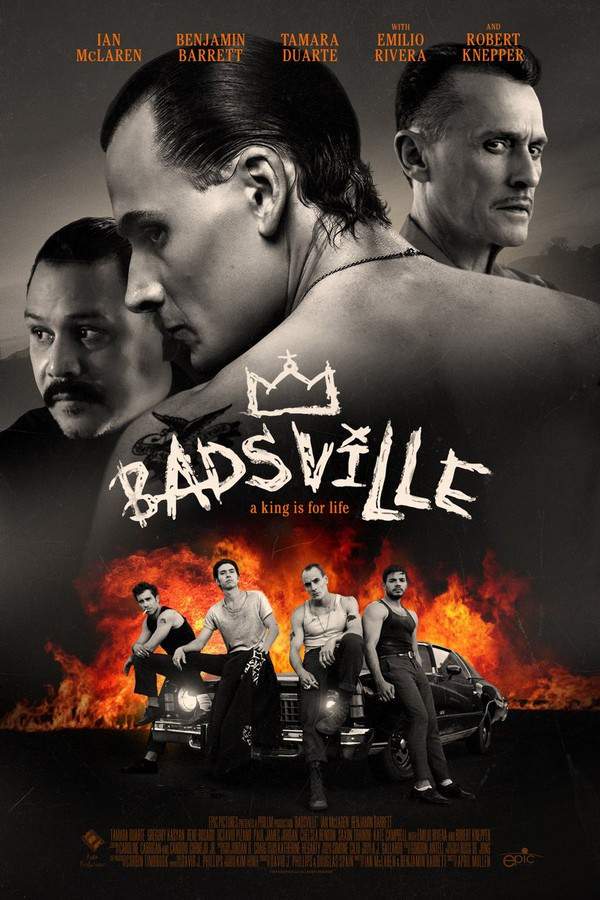
Badsville (2017) Full Movie Breakdown
Bad Boys: A True Story (2003) Story Summary & Characters
The Bad Guys: Reign of Chaos (2019) Ending Explained & Film Insights
A Dirty Carnival (2006) Detailed Story Recap
The Bad Kids (1000) Spoiler-Packed Plot Recap
Bad Girls (2021) Full Movie Breakdown
The Worst of Evil (1000) Full Movie Breakdown
Bad Lands (2023) Full Movie Breakdown
Bad Blood (1994) Detailed Story Recap
The Bad Pack (1997) Spoiler-Packed Plot Recap
Born Bad (1999) Complete Plot Breakdown
Bad Guys (1000) Complete Plot Breakdown
Bad (1999) Film Overview & Timeline