Plot Explained Spoilers guaranteed!
Plot Explained

Browse by genre

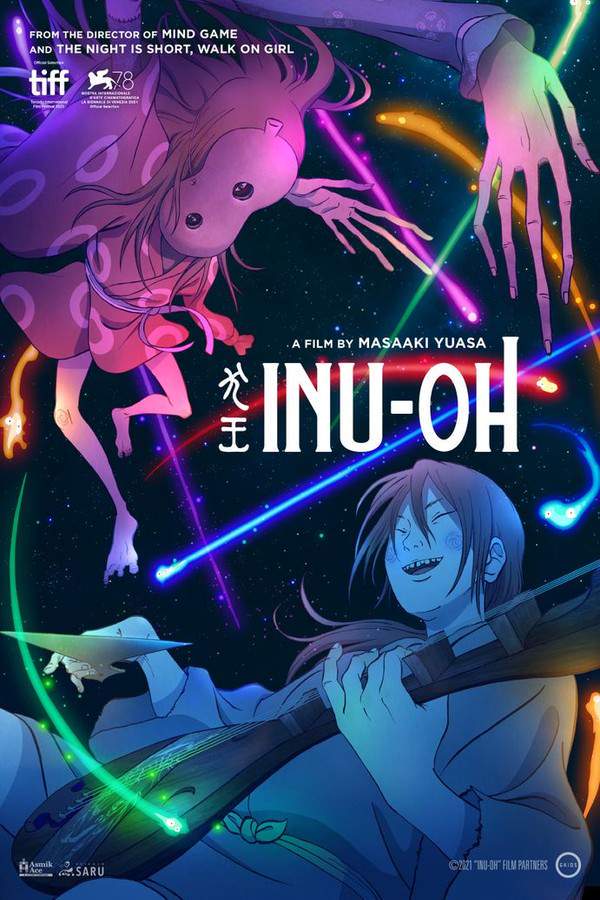
Inu-oh (2022) movie poster

Plot Summary

Inu-oh (2022) Plot Summary Explained

Release, runtime and language
2022 · 98 min · Japanese
Echo score 78
JustWatch #19,774 5
Directed by
Masaaki Yuasa
Starring
Kenjirô Tsuda, Mirai Moriyama, Tasuku Emoto, Yutaka Matsushige, Avu-chan

In a realm where music holds immense power, Inu-oh’s extraordinary story comes to life. Born into aristocracy but burdened by a mysterious curse, he discovers a passion for dance through an unexpected friendship with Tomona, a gifted musician. Their performances captivate audiences and propel them to fame, but this newfound success draws the unwelcome gaze of those seeking to exploit their talents. As they navigate a world of intrigue and hidden agendas, Inu-oh and Tomona must unite to understand the origin of their abilities and protect their unique connection.

On this page (7)
  1. 1 Where to watch
  2. 2 What happens: full plot
  3. 3 Plot questions answered
  4. 4 Movie threads
  5. 5 Movies like Inu-oh
  6. 6 Categories
  7. 7 Every angle

Where to watch

Where to Watch Inu-oh (2022)

Where can you watch Inu-oh? Stream, rent or buy it in the US, including on HBO Max, Amazon Video and Apple TV Store: current JustWatch availability with up-to-date prices.

Streaming availability powered by JustWatch

Full plot summary · contains spoilers

What Happens in Inu-oh: Full Plot Summary

The whole story of Inu-oh (2022) explained, from the opening scene to the final frame: every key event, every twist and what it all adds up to. Read it as a quick recap before the sequel, to check a scene you missed, or to finally understand what really happened.

A withered biwa player unfolds a captivating tale from 900 years ago, detailing the epic quest of the Genji clan as they sought the Imperial Regalia to unite the emperor's throne. Following their triumph over the rival Heike clan at the Battle of Dan-no-ura, a tragic fate befalls the child emperor, who drowns while clutching the Grasscutter Sword. Fast forward 300 years, agents of Ashikaga Yoshimitsu (Tasuku Emoto) recruit a young boy named Tomona (Mirai Moriyama) and his father for a perilous task: retrieving a box from a Heike shipwreck. Inside, they discover a sword that holds dire consequences. Unaware of its true identity as the Grasscutter Sword, Tomona's father unsheathes it, unleashing a devastating energy that claims his life and blinds Tomona in the process.

What follows is an arduous journey, as Tomona seeks the truth behind that fateful day, accompanied by the ghost of his father. During his travels, he encounters a troupe of blind biwa players, inspiring him to learn the instrument and become part of their ensemble. Embracing his new identity, he adopts the name "Tomoichi," although this transformation complicates his father’s spirit's search for him.

Parallel to Tomona's journey is that of a Noh dance troupe leader, who wears a demonic mask. The unfolding narrative sees a horrifying string of murders of biwa players, alongside the birth of the leader’s third son, a deformed child with three stunted limbs, an elongated arm, and scales covering his skin. Harboring a deep loathing for his son, the leader treats him cruelly—forcing him to wear a mask and behave like a pet. Yet, one day, as the deformed son observes his father teaching Noh dance, he secretly practices alongside his siblings, leading to a miraculous restoration of his legs.

Wandering through the village, the deformed boy crosses paths with Tomoichi. Their bond flourishes, untainted by appearances, as the boy reveals his chosen name "Inu-Oh," meaning "Dog King." Tomoichi shares with Inu-Oh the vision of his father's spirit, which leads him to recognize the multitude of Heike warriors' spirits surrounding Inu-Oh, each eager to tell their own stories. This revelation ignites their desire to create a new performing troupe, with Tomoichi rebranding himself as "Tomoari."

The duo’s significant debut on a bridge captures the attention of onlookers, as Tomoari showcases his hair metal-inspired performance while Inu-Oh dances beneath, dramatically narrating the plight of the Heike soldiers. Their act becomes an overnight sensation, propelling both Tomoari and Inu-Oh to fame.

However, their rising popularity does not go unnoticed by Ashikaga, who craves only his clan's rendition of the Heike tales. In a twisted plot to ignite jealousy, he manipulates Inu-Oh's father with promises of wealth, inciting conflict that culminates in the troupe’s performance unveiling Inu-Oh's tragic origins—the deal his father made with the demon mask for renown, which required the lives of biwa players and the innocence of his unborn child. The tragic consequence of this pact spurs the spirits of the Heike to flock to Inu-Oh, empowering his ascent while ultimately leading to his father’s demise when he attempts to betray him.

As Inu-Oh’s face is finally restored, tragedy looms again when Ashikaga’s forces quell the troupe. Despite Inu-Oh's concessions to perform a censored version of Heike history, Tomoari defiantly continues to share the truth, resulting in his execution. In the wake of despair, Inu-Oh experiences fleeting fame as a Noh dancer, only to be forgotten posthumously.

In a poignant twist, the narrator reveals himself as Tomoari's spirit, tethered to the physical world until modern times, now reclaiming the name “Tomona.” Inu-Oh’s spirit appears, explaining his lengthy search for Tomona due to his name change, and together they embrace their shared past through performance once more, sealing their legendary bond.
Last updated: November 15, 2024 at 20:35

Was this helpful?

Plot questions answered

Inu-oh Plot Explained: Your Questions Answered

The questions people ask most about Inu-oh (2022): what happens in the confusing scenes, why the characters do what they do, the twists, hidden details and what the ending means. Each answer contains spoilers.

Q1

Why does opening the sword blind Tomona?

The sword is the Grasscutter Sword, one of Japan's Imperial Regalia. When Tomona's father unsheathes it without knowing its true identity, the weapon releases its accumulated destructive energy. This catastrophic event kills his father instantly and blinds young Tomona, as neither was worthy or prepared to handle such a powerful artifact.

Foreshadowing: Earlier context establishes that the sword was lost during the child emperor's drowning at the Battle of Dan-no-ura, imbuing it with tragic, powerful energy.

  • grasscutter sword
  • tomona blinding
  • imperial regalia
  • heike shipwreck
Q2

What deal did Inu-Oh's father make?

Inu-Oh's father made a pact with a demon represented by the Noh mask in exchange for fame and renown as a Noh dancer. The terms of this dark bargain required killing biwa players and sacrificing the innocence of his unborn child, which resulted in Inu-Oh being born deformed with three stunted limbs, elongated arms, and scale-covered skin.

Foreshadowing: The Noh troupe leader is shown wearing the demonic mask early in the film, establishing the supernatural element that governs Inu-Oh's tragic origins.

  • demon mask
  • inu-oh father pact
  • inu-oh deformity
  • noh dance curse
Q3

Why are Heike warrior spirits attached to Inu-Oh?

The Heike warriors' spirits are drawn to Inu-Oh because of the curse placed upon him at birth through his father's demonic pact. These spirits, never able to tell their stories after the Genji defeated them at Dan-no-ura, find a vessel in Inu-Oh and use his performances to finally share their tragic tales with the living world.

Foreshadowing: When Tomoichi first sees Inu-Oh, he perceives the multitude of Heike warrior spirits surrounding him, each eager to tell their stories.

  • heike spirits
  • inu-oh powers
  • heike warriors
  • ghost performers
Q4

Why does Tomona change his name?

Tomona changes his name to Tomoichi after joining the blind biwa players, adopting this new identity as part of his transformation into a musician. Later, when forming the performance troupe with Inu-Oh, he rebrands again as Tomoari. This name change complicates his father's spirit's ability to find him, as the spirit continues searching for "Tomona."

Foreshadowing: Tomona's father haunts him seeking recognition, but the name change creates a metaphysical barrier between them.

  • tomona name change
  • tomoichi
  • tomoari
  • identity transformation
Q5

What happens to Tomoari at the end?

Tomoari is executed by Ashikaga's forces after defiantly continuing to perform the true Heike history despite censorship demands. His spirit remains tethered to the mortal world, eventually becoming the narrator who recounts this entire story, finally reclaiming his original name "Tomona" in the afterlife.

Foreshadowing: The film opens with an aged narrator establishing his perspective, suggesting from the start that he is speaking from beyond death.

  • tomoari execution
  • ashikaga
  • inu-oh ending
  • spirit narrator
Q6

Why does Ashikaga want to control their performances?

Ashikaga Yoshimitsu seeks to monopolize the retelling of Heike clan history for political power. He wants only his clan's version of the story told, viewing Tomoari and Inu-Oh's unauthorized performances as a threat to his historical narrative and authority. He attempts to exploit their talents exclusively for his own propaganda purposes.

Foreshadowing: Ashikaga's agents initially recruit Tomona and his father for the mission, establishing his interest in the Heike historical materials from the beginning.

  • ashikaga yoshimitsu
  • heike history censorship
  • political power
  • storytelling control
Q7

What is the significance of the Grasscutter Sword in the story?

The Grasscutter Sword is one of Japan's Imperial Regalia, the sacred treasures symbolizing imperial authority. It was lost during the Battle of Dan-no-ura when the child emperor drowned while clutching it. The sword's powerful energy remains tied to this tragic moment, and when improperly opened, it releases destructive forces that shape the fates of both Tomona and the broader narrative.

Foreshadowing: The opening legend establishes the sword's importance to the Genji clan's quest for the Imperial Regalia.

  • grasscutter sword
  • imperial regalia
  • battle of dan-no-ura
  • child emperor
Q8

Why does Inu-Oh's face get restored?

Inu-Oh's face is restored when the truth about his origins is revealed during the troupe's performance. The revelation of his father's demonic pact and the tragic sacrifice made by the Heike spirits causes them to flock to him in greater numbers, granting him temporary physical restoration. This empowerment coincides with his father's betrayal and death.

Foreshadowing: The build-up to the performance where Inu-Oh's origins are exposed creates the conditions for this transformation.

  • inu-oh face restoration
  • heike spirits empowerment
  • inu-oh appearance
Q9

Why does Inu-Oh's father betray him?

Inu-Oh's father is manipulated by Ashikaga, who promises him wealth and status in exchange for creating conflict within the troupe and revealing Inu-Oh's tragic origins. This manipulation plays on the father's guilt and ambition, leading him to betray his son. However, the betrayal backfires, resulting in the father's own death when Inu-Oh's powers activate.

Foreshadowing: Ashikaga's cunning manipulation of those around him is established early as a key character trait.

  • inu-oh father betrayal
  • ashikaga manipulation
  • inu-oh death
Q10

What is the connection between the 900-year-old story and the present?

The 900-year-old legend of the Genji clan's quest for the Imperial Regalia and the tragic drowning of the child emperor at Dan-no-ura directly shapes the present-day narrative. The Grasscutter Sword from that era resurfaces, causing Tomona's blinding. The Heike warriors defeated then become the spirits that empower Inu-Oh. The historical trauma and unfinished stories of the past drive the entire contemporary plot.

Foreshadowing: The film opens with the legend establishing the historical foundation that echoes throughout the story.

  • 900 years
  • genji clan
  • heike clan
  • historical connection
Q11

Why does Inu-Oh's father hate him?

Inu-Oh's father hates his son because he views him as the living proof of his shameful pact with the demon. Inu-Oh's deformities remind the father of the terrible price he paid for fame, sacrificing his child's innocence. This shame manifests as cruelty, as the father forces Inu-Oh to wear a mask and treats him like a pet rather than acknowledging him as his son.

Foreshadowing: The Noh troupe leader's treatment of his deformed third son establishes the abusive dynamic before the identity reveal.

  • inu-oh father abuse
  • parental cruelty
  • inu-oh childhood
  • noh troupe
Q12

How do Tomona and Inu-Oh meet?

Inu-Oh, having run away from his abusive father, wanders through the village where he encounters Tomoichi (Tomona's later identity). Despite Inu-Oh's frightening appearance and mask, Tomoichi sees past it and they form an immediate bond. This friendship becomes the foundation for their performing troupe, with Inu-Oh revealing his chosen name meaning "Dog King."
Foreshadowing: Both characters are established as outcasts, Tomona blinded and seeking truth, Inu-Oh deformed and escaping cruelty, setting up their destined meeting.

  • tomona inu-oh meeting
  • friendship formation
  • outcasts union

Movie threads

More Movies Like Inu-oh, by Mood & Story

Curated lists built around what makes Inu-oh tick: the same mood, the same kind of story or the same emotional payoff. Each list explains why these movies belong together.

Movies about tragic historical artists like in Inu-oh

Stories of marginalized artists whose brilliance is born from and consumed by tragedy. If you were moved by the story of Inu-oh and Tomona, explore more movies like this about gifted but doomed artists. These similar films feature brilliant outcasts in historical settings whose art defies convention but whose lives are marked by tragedy, censorship, or historical obscurity.

  • tragic
  • defiant
  • melancholic
  • historical
  • artistic
  • bittersweet
  • Tone: melancholic, tragic, defiant
  • Pacing: variable, with introspective and explosive sequences
Why these movies?

The story pattern: These stories follow gifted individuals—often disabled, disfigured, or socially ostracized—who find their voice through a specific art form. Their rise to fame or notoriety is fueled by defiance and personal trauma, but they ultimately clash with powerful forces, leading to a tragic demise or a bittersweet legacy where their art outlives them.

Why they belong together: Movies in this thread share a deep melancholic tone, a focus on the creative process as both salvation and burden, and a narrative arc that intertwines artistic triumph with personal tragedy. They explore themes of historical erasure, the price of genius, and the redemptive yet destructive power of art.

Anachronistic fantasy movies with rock music like Inu-oh

Fantastical stories where historical or mythical settings collide with modern musical rebellion. Fans of the bold, rock-opera style of Inu-oh will love these similar movies. Discover more anachronistic fantasy films where historical or mythical worlds are electrified by modern rock music and rebellious spirits, creating a unique and defiant cinematic experience.

  • anachronistic
  • defiant
  • energetic
  • fantastical
  • rebellious
  • musical
  • Tone: defiant, energetic, melancholic
  • Pacing: variable, from atmospheric to high-energy
Why these movies?

The story pattern: These narratives are set in worlds with a clear historical or traditional aesthetic, but the spirit and sound are defiantly modern. The anachronism is not just a stylistic choice but a narrative device to highlight themes of rebellion, the timeless nature of artistic expression, and the collision between oppressive old ways and liberating new ideas.

Why they belong together: These films are grouped by their unique tonal blend: the visual and thematic gravity of a historical or fantasy drama fused with the raw, high-energy release of modern performance, often rock music. They share a variable pacing that swings between slow world-building and explosive, cathartic musical sequences.

If you liked this

Movies Like Inu-oh

Similar movies to Inu-oh: the same genre, themes or kind of story. Each one comes with its own plot summary, timeline and ending explained.
Browse all movie summaries

Categories

Movie Lists Featuring Inu-oh

Inu-oh appears in these hand-built movie categories. Each one groups movies by a specific mood, theme or story type, with their plot summaries and endings explained.

View all movie categories

Every angle

Inu-oh (2022) Explained: Plot, Timeline & Characters

Everything about Inu-oh in one place: what happens in the plot summary, the timeline in chronological order, the characters and meaning and a spoiler-free summary. What's After the Movie adds the cast, box office and post-credit scenes.

Coming soon on iOS and Android

The Plot Explained Movie Summary App

Plot summaries, endings explained and timelines on your phone. Catch up on any movie in minutes, save your favorites and never miss a twist again.

Be the first to know when we launch. Your email stays private, always.

Learn more about the app