Plot Explained Spoilers guaranteed!
Plot Explained

Browse by genre

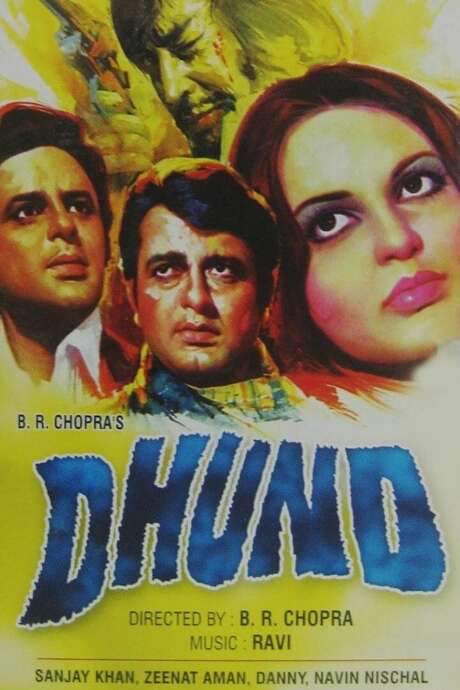
Dhund (1973) movie poster

Timeline

Dhund (1973) Timeline Explained – Every Event in Order

Release, runtime and language
1973 · 124 mins · Hindi
Directed by
B.R. Chopra
Starring
Danny Denzongpa, Zeenat Aman, Navin Nischol, Sanjay Khanna

The film follows Rani Ranjit Singh (Zeenat Aman), whose ailing husband Thakur Ranjit Singh (Danny Denzongpa) is found dead. As the investigation zeroes in on the grieving widow and her lover Suresh Saxena (Sanjay Khan), hidden motives surface and the true assassin proves to be an unexpected third party, turning the murder case into a tense mystery.

On this page (6)
  1. 1 Events in order (13)
  2. 2 Timeline questions answered
  3. 3 The book behind the movie
  4. 4 Movie threads
  5. 5 Movies like Dhund
  6. 6 Every angle

13 events in order · contains spoilers

Dhund Timeline: Events in Chronological Order

Every key event of Dhund (1973) in order, scene by scene, with when and where it takes place. Use it to untangle flashbacks, time jumps and parallel storylines, to refresh your memory before the sequel or to find the exact scene you are thinking of.

  1. Chandrashekhar's foggy-night accident

    On a foggy night, Chandrashekhar is driving at high speed and loses control, crashing near a house. He staggers inside seeking help and discovers the dead body of a wheelchair-using man. A beautiful young woman, Rani, stands nearby with a gun and declares that she has murdered her husband and asks him to call the police.

    When
    Foggy night
    Where
    Near the house
  2. Rani reveals the murder and asks for help

    Rani explains that Thakur Ranjit Singh was brutal and would shoot cats and dogs for amusement. She reveals that during an argument, she tried to wrest the gun away as he threatened her life. In the confusion, she says, she shot him in self-defense.

    When
    That night
    Where
    House
  3. Chandrashekhar agrees to help with fake robbery

    Deciding to help her, Chandrashekhar proposes they fake a robbery to mislead the authorities and create an alibi. They stage the crime so the murder appears to be a theft gone wrong, and they suggest a different time of death. The plan is to persuade the police that the crime occurred earlier.

    When
    That night
    Where
    House
  4. Police arrive and Chandrashekhar's cover story

    When the police arrive, Chandrashekhar says he bumped into a man leaving the house who dropped a gun, which Chandrashekhar hands over to the officers. He claims the foggy night prevented a positive identification of the stranger. The police begin to suspect an insider since the thief seemed to know the house.

    When
    That night
    Where
    House
  5. Investigation reveals suspicious clues

    Investigators find key evidence: the dead man's pocket watch, an empty cigar container, and a tea tray with fingerprints. The combination fuels a theory that the crime was not a simple break-in but involved someone familiar with the house. The police grow convinced the killer had intimate knowledge of the layout.

    When
    Night
    Where
    Ranjit's house
  6. Cigar and fingerprints point to Suresh; affair uncovered

    Fingerprints and the cigar container point to Suresh Saxena, a family friend who was having an affair with Rani. Suresh denies being at the scene and claims to have been at a party, though investigators discover he left the party for about an hour after receiving a phone call. The questioning leaves Chandrashekhar unable to positively identify the man he saw.

    When
    Night
    Where
    Ranjit's house
  7. Rani recounts her relationship with Suresh and the night of the murder

    Rani recounts how she met Suresh when he saved her from jumping off a cliff, and how he began visiting the house and their affair was discovered by Ranjit. On the night of the murder, Ranjit threatened to ruin Suresh's political career. After she overheard Suresh at the party, she confronted her husband, and in the ensuing struggle she shot him, with Chandrashekhar entering just then.

    When
    Night
    Where
    Ranjit's house
  8. Suresh is arrested; trial begins

    Suresh is arrested and charged with the murder. In court, the prosecutor argues the affair was the motive, and asserts that Suresh was present and that the murder happened earlier than Chandrashekhar claimed. He presents the pocket watch as crucial evidence to fix the time, noting a second bullet meant to mislead observers.

    When
    During trial
    Where
    Court
  9. Rani confesses and a mysterious visit

    Overwhelmed, Rani confesses in court and urges the judge to recall Chandrashekhar as a witness to the truth. She asks for the chance to be heard, believing that the real story will vindicate her. That night, a nun visits Chandrashekhar, hinting at deeper revelations to come.

    When
    That night
    Where
    Court
  10. Truths unfold in court: Chandrashekhar's past and revenge

    The next day, Chandrashekhar takes the stand and reveals his history with Ranjit: they were friends turned enemies after Ranjit framed him and had him imprisoned. He explains that after release he learned Ranjit's crimes against Kiran, which fueled his desire for vengeance. He describes the fatal confrontation at Ranjit's house, where a gun misfired and killed Ranjit, leading him to flee with a changed perspective.

    When
    Next day
    Where
    Court
  11. Wallet mishap leads to a chilling confrontation

    On the way home, Chandrashekhar realizes he forgot his wallet and returns to Ranjit's house under the pretense of retrieving it. Inside, he finds Rani holding the gun, ready to take the blame to protect Suresh. The scene intensifies as the true stakes of the case come to light.

    When
    That moment
    Where
    Ranjit's house
  12. Kiran revealed: the nun is Chandrashekhar's former beloved

    In court, the nun is revealed to be Kiran, the woman Chandrashekhar once loved. She explains how she survived a previous suicide attempt and became a nun. Her testimony reframes the relationships and the sequence of events surrounding the murder.

    When
    Court day
    Where
    Court
  13. Verdict: self-defense and reconciliation

    With the new testimony and the supporting evidence, the court rules it was self-defense. Chandrashekhar and Suresh are freed, while Rani and Suresh reconcile and Kiran departs. The narrative closes on Chandrashekhar watching the resolution unfold.

    When
    Verdict day
    Where
    Court and final scene

Last updated: October 09, 2025 at 11:07

Was this helpful?

Timeline questions answered

Dhund Timeline Explained: Your Questions Answered

When does it happen, and why in that order? The questions people ask about the chronology of Dhund (1973): time jumps, flashbacks, cause and effect between scenes and the correct order of events, each answered with spoilers.

Q1

Why was Chandrashekhar at Ranjit's house on the night of the murder?

Chandrashekhar came to confront Ranjit seeking vengeance. Years earlier, Ranjit had framed him for a crime, leading to five years of imprisonment. Upon release, Chandrashekhar learned that Ranjit had raped his lover Kiran, causing her to commit suicide. He intended to make Ranjit pay for destroying his life.

  • chandrashekhar
  • ranjit
  • revenge
  • vengance
  • motive
  • imprisonment
  • kiran
Q2

Who actually killed Thakur Ranjit Singh?

Chandrashekhar killed Ranjit, not Rani. During their confrontation, a gun went off in a struggle and Ranjit was accidentally shot. Chandrashekhar was already inside the house when Rani emerged with the gun, and he used her confusion to create a cover story.

  • chandrashekhar
  • ranjit
  • killer
  • death
  • murder
  • confession
Q3

What was Chandrashekhar's past relationship with Ranjit?

Chandrashekhar and Ranjit were once friends and business partners before Ranjit cruelly framed him for a crime he didn't commit, resulting in his imprisonment. This betrayal and the subsequent discovery of what Ranjit did to Kiran drove Chandrashekhar to seek revenge.

Foreshadowing: Chandrashekhar's willingness to help Rani stage a robbery hints at his deeper involvement from the start.

  • chandrashekhar
  • ranjit
  • history
  • friendship
  • business
  • framed
  • prison
Q4

What happened to Kiran after Ranjit attacked her?

Kiran survived the attack and did not actually commit suicide. After Ranjit raped her, she attempted to take her own life but survived. She later became a nun, taking the name Sister Mary, and appeared in court to testify on Chandrashekhar's behalf.

  • kiran
  • ranjit
  • rape
  • suicide
  • nun
  • sister
  • survived
Q5

Why did Rani confess to killing her husband when she didn't do it?

Rani confessed to protect Suresh, whom she believed was the actual killer. When she heard the argument between Suresh and Ranjit and found Ranjit dead afterward, she assumed Suresh was responsible. She was willing to take the blame to save him.

  • rani
  • confession
  • suresh
  • protect
  • blame
  • murder
Q6

What was the significance of the pocket watch in the murder case?

The pocket watch was crucial evidence because it had stopped at the exact time of the murder. The prosecution used this to establish when Ranjit was actually killed, contradicting Chandrashekhar's claim that the murder occurred at a different time during the staged robbery.

  • pocket watch
  • evidence
  • time
  • murder
  • hour
  • forensics
Q7

Why was there a second shot fired in Ranjit's house?

The second shot was fired by Chandrashekhar during his confrontation with Ranjit. This bullet was meant to mislead the investigation and support the staged robbery theory. It was one of the pieces of evidence that confused the police and contributed to Suresh's wrongful arrest.

  • second shot
  • robbery
  • mislead
  • evidence
  • bullet
Q8

Where was Suresh on the night of Ranjit's murder?

Suresh was at a party he hosted and left for about an hour after receiving a phone call from Rani, who warned him about Ranjit's threats. He was not at the house when Ranjit was killed, though the police initially suspected him based on the affair and forensic evidence.

  • suresh
  • party
  • alibi
  • phone call
  • absent
  • ranjit
Q9

Why did Chandrashekhar agree to help Rani stage a fake robbery?

Chandrashekhar used Rani's situation to cover his own tracks. By helping stage a robbery, he created a false timeline and misdirected the investigation away from himself, since he was the actual killer. This also served his deeper plan for vengeance against Ranjit.

Foreshadowing: His immediate willingness to help Rani with the cover-up reveals he had his own secrets to protect.

  • chandrashekhar
  • robbery
  • stage
  • cover
  • alibi
  • misdirect
Q10

Who was the nun who appeared in court?

The nun was Kiran, Chandrashekhar's former lover. She revealed she had survived her suicide attempt after being raped by Ranjit and subsequently became a nun. Her testimony confirmed Chandrashekhar's story and helped establish that Ranjit's death was a result of Chandrashekhar's confrontation, not premeditated murder.

  • nun
  • kiran
  • chandrashekhar
  • identity
  • testimony
  • court
Q11

How did police connect Suresh to the murder scene?

Police found fingerprints on a tea tray and an empty cigar container at the crime scene. Both matched Suresh, who was a family friend and regular visitor. His affair with Rani provided motive, and his hour-long absence from his party made him the primary suspect despite his denial.

  • suresh
  • fingerprints
  • cigar
  • evidence
  • arrest
  • suspect
Q12

Why was Chandrashekhar cleared of murder charges?

The court ruled Ranjit's death as self-defense based on Chandrashekhar's testimony and Kiran's revelation. Since Chandrashekhar had confronted Ranjit about his crimes against Kiran and the shooting occurred during a struggle with a misfiring gun, it did not constitute premeditated murder. Both Chandrashekhar and Suresh were freed.

  • court
  • verdict
  • self-defense
  • acquitted
  • freed
  • murder charges

Movie threads

More Movies Like Dhund, by Mood & Story

Curated lists built around what makes Dhund tick: the same mood, the same kind of story or the same emotional payoff. Each list explains why these movies belong together.

Twisty murder mysteries like Dhund

Murder investigations where nothing is as it seems, leading to shocking revelations. If you enjoyed the complex investigation and unexpected third-act reveal in Dhund, this thread features movies like it. Explore similar atmospheric whodunits where suspicion shifts dramatically and the true culprit is a surprise, keeping you guessing until the very end.

  • suspenseful
  • mysterious
  • tense
  • melancholic
  • unpredictable
  • atmospheric
  • Tone: tense, mysterious
  • Pacing: steady, methodical
Why these movies?

The story pattern: These narratives typically begin with a crime, often a murder, that initiates a formal or informal investigation. The plot is structured around uncovering clues and interrogating suspects, but key information is withheld or misdirection is employed. The central pattern is a deliberate redirection of blame—usually towards one or more innocent parties—before a final twist exposes the true perpetrator and their unexpected motive.

Why they belong together: Movies are grouped here for their shared focus on a puzzle-box murder plot, a tense and mysterious atmosphere, and a narrative structure built on misdirection that culminates in a satisfying, yet often bittersweet, revelation. They deliver a specific intellectual and emotional payoff for fans of classic mystery storytelling.
Heavy crime melodramas like Dhund

Emotionally charged stories where crime exposes deep-seated betrayal and moral costs. For viewers who appreciated the heavy emotional weight and themes of illicit romance, betrayal, and revenge in Dhund. This collection highlights similar movies where a crime unravels hidden secrets and forces characters to confront painful moral compromises and the bleak consequences of their actions.

  • oppressive
  • melancholic
  • anxious
  • suspenseful
  • heavy
  • tragic
  • Tone: tense, melancholic, oppressive
  • Pacing: steady, character-driven
Why these movies?

The story pattern: The narrative pattern revolves around a tense, emotionally charged crime that acts as a pressure cooker, forcing long-buried secrets—such as illicit affairs, abuse, or past injustices—to the surface. Character arcs are defined by guilt, vengeance, and the struggle for redemption or justice. The journey is morally complex, and the ending, while often providing a form of closure, is typically bittersweet or bleak, emphasizing the lasting scars of the events.

Why they belong together: These films are grouped by their shared blend of crime thriller elements with the high emotional stakes and thematic depth of a melodrama. They are united by an oppressive, anxious mood, a focus on the psychological toll of betrayal, and narratives where justice is intertwined with personal tragedy.

If you liked this

Movies Like Dhund

Similar movies to Dhund: the same genre, themes or kind of story. Each one comes with its own plot summary, timeline and ending explained.

Browse all movie summaries

Every angle

Dhund (1973) Explained: Plot, Timeline & Characters

Everything about Dhund in one place: what happens in the plot summary, the timeline in chronological order, the characters and meaning and a spoiler-free summary. What's After the Movie adds the cast, box office and post-credit scenes.

Coming soon on iOS and Android

The Plot Explained Movie Summary App

Plot summaries, endings explained and timelines on your phone. Catch up on any movie in minutes, save your favorites and never miss a twist again.

Be the first to know when we launch. Your email stays private, always.

Learn more about the app