Year: 1999
Runtime: 138 mins
Language: Telugu
Director: Kodi Ramakrishna
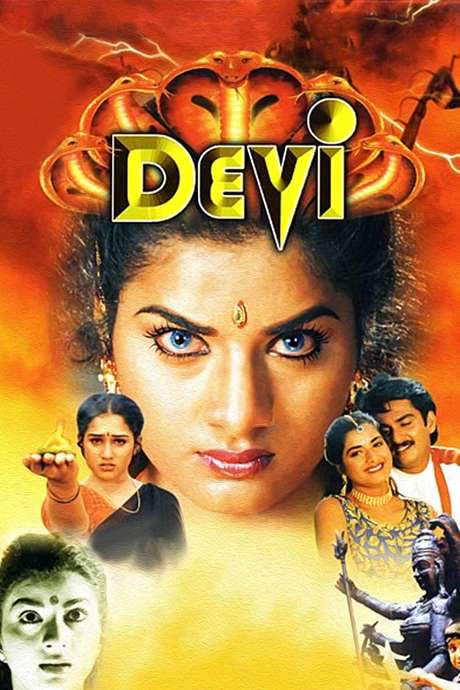
Goddess Devi, a snake goddess, stays on earth to protect the girl whose father saved her life from greedy relatives and from the snake demon, Dantra.
Find where to stream, rent, or buy Devi (1999) in the US with current JustWatch availability, up-to-date pricing, and platform listings for subscription, rental, and digital purchase options.
Warning: spoilers below!
Haven’t seen Devi yet? This summary contains major spoilers. Bookmark the page, watch the movie, and come back for the full breakdown. If you're ready, scroll on and relive the story!
Read the complete plot breakdown of Devi (1999), including all key story events, major twists, and the ending explained in detail. Discover what really happened, and what it all means.
Devi, a Nagini from Nagaloka, comes to Earth on the day of a solar eclipse with her friends to perform a sacred pooja. The elders warn that naginis must return before the eclipse begins, or their powers will wane until the eclipse ends. Devi’s attention is drawn away, however, by Dantra, a malevolent Naga who had been punished by Nagadeva and banished to hell. He pursues a cruel strategy and traps Devi in fire during the eclipse while her companions hurry back to Nagaloka.
Devi is saved by Suseela’s father, though he is killed by Dantra in the process. Grateful yet grieving, Devi resolves to repay the gesture by protecting Suseela from her turbulent relatives. She schemes to consolidate the two families by arranging a marriage between Suseela and her cousin, Raghava, and the plan succeeds as the lovers eventually wed after Devi helps mend the rift between their clans.
Nagadeva himself steps into Devi’s path, urging her to return to Nagaloka. Devi, however, refuses the ultimatum, intent on staying to safeguard Suseela. She pledges to come back only after Suseela bears a child, believing the newborn would be a blessed Godly presence that could shield Suseela from Dantra. Nagadeva grants her a power capable of restoring life itself, and a tendentious dynamic develops as Vijay, Raghava’s younger brother, falls for Devi, a feeling she avoids.
As time passes, Suseela becomes pregnant and the community rejoices. Yet Dantra, aided by another dark force, tightens his hold on Devi, imprisoning her for a spell and launching an assault on Suseela. The danger escalates when Suseela falls and the baby dies after a fall down the stairs. Devi, wielding Nagadeva’s power, resurrects the child and brings new life into the world—an event celebrated with a naming ceremony. But Dantra resurfaces, challenging Devi with the revelation that the child’s birth time is inauspicious, threatening Raghava’s life.
To safeguard Raghava, Devi arranges for Suseela to perform a pooja honoring the eight manifestations of Goddess Lakshmi. The blessings promise a long life for the couple, but the danger continues to loom. Devi then arrives with the information that Dantra’s curse is real and offers a possible remedy: a Durga pooja performed in the Himalayas would shield them from all evils. Humans, however, cannot endure the heights for long, and the Ashta Lakshmis declare that only a member of Suseela’s family can perform such a sacred rite.
Undeterred, Devi asks Suseela to carry out a nine-day home pooja while Devi herself departs to undertake a Durga ritual in the mountains. She hastily marries Vijay and leaves, though he does not know the full plan. Vijay’s happiness turns to bewilderment as he searches for Devi, whom he eventually finds at a small Durga shrine high in the mountains. Devi nears the end of the nine-day ritual, but on the final day—the day of the solar eclipse—Dantra, in a cruel ruse, disguises himself as Raghava and arrives at Suseela’s home, attempting to lure her away.
A tense confrontation unfolds between Vijay and the disguised Dantra posing as Raghava, while Devi’s hope that Durga will appear fades. In a devastating moment, Devi believes Durga has not answered, and she sacrifices herself by setting herself alight. Durga then materializes, revives Devi from the ashes, and, together with Devi, defeats Dantra. Raghava is saved by a friend during the ordeal, and Nagadeva arrives as the crisis resolves. Devi bids farewell and prepares to depart, but a final turn of fate returns her to Vijay, for she is no longer an unmarried Nagini.
Last updated: October 09, 2025 at 11:04
Explore frequently asked questions about Devi (1999) with spoiler-rich answers covering the full plot summary, major story beats, character motivations, hidden details, and ending meaning. This movie summary FAQ helps explain confusing scenes, plot twists, and narrative decisions in clear, searchable detail.
Devi stayed on Earth to protect Suseela after her father sacrificed his life to save Devi from Dantra's fire trap. Though Nagadeva ordered her to return to Nagaloka, Devi refused and promised to stay until Suseela gave birth, believing the child would be a blessed godliness that could shield Suseela from Dantra.
Earlier, the elders warned that naginis must return before the eclipse begins or lose their powers, showing Devi's commitment outweighed her supernatural limitations.
Dantra is a malevolent Naga who was punished by Nagadeva and banished to hell for his evil deeds. He pursues revenge against Devi and targets Suseela because Devi interfered with his plans and because Suseela's family represents the goodness he despises.
The initial eclipse scene establishes Dantra as a deliberate threat, showing his cruelty in trapping Devi during her vulnerable state.
Suseela's father intervened when Dantra trapped Devi in fire during the solar eclipse. He freed Devi from the flames but was killed by Dantra in the process. His sacrifice saved Devi's life, and Devi vowed to honor his memory by protecting his daughter.
The scene establishes the central debt of gratitude that drives Devi's entire mission on Earth.
Nagadeva granted Devi a special power capable of restoring life itself when she refused to return to Nagaloka. When Suseela's newborn died after falling down the stairs, Devi used this divine power to resurrect the child, bringing it back to life.
Nagadeva's granting of resurrection power earlier foreshadows this crucial moment where Devi must use it to save the family.
Devi married Vijay hastily before departing for the Himalayas to complete the Durga pooja because she knew the mission was dangerous and might kill her. She wanted to ensure Vijay would have a claim to her if she did not return, though she kept the full danger secret from him.
Vijay's earlier feelings for Devi established the romantic subplot that makes this sacrifice meaningful.
The solar eclipse is dangerous for naginis like Devi because their powers wane during the eclipse until it ends. Dantra exploits this vulnerability by trapping Devi in fire during the eclipse when she is weakest. The final battle also occurs during an eclipse, creating the same dangerous conditions.
The opening eclipse sets up the recurring pattern where Dantra attacks during eclipses when Devi's powers are diminished.
Dantra placed a curse on Raghava because the baby's birth time was inauspicious (during an unfavorable astrological moment). This curse threatened Raghava's life, prompting Devi to arrange protective rituals including the Ashta Lakshmi poojas and eventually the Durga pooja in the Himalayas.
The naming ceremony scene explicitly introduces this curse as the immediate threat the family must overcome.
When Dantra disguised himself as Raghava and approached Suseela's home while also trapping Vijay in the Himalayas, Devi believed Durga had not answered her prayers. In desperation, she sacrificed herself by setting herself alight, hoping her death would trigger divine intervention.
This moment subverts the typical hero victory trope by showing Devi's willingness to give everything, even her life.
After Devi sacrificed herself and was consumed by flames, Durga materialized from the ashes. Reviving Devi, the two goddess forces combined to defeat Dantra together. With divine power united, they destroyed the serpent demon once and for all.
Devi's sincere nine-day Durga pooja and her ultimate sacrifice created the conditions for Durga's appearance.
The feuding between Suseela's family and Raghava's family is established as an old clan rivalry that separated the cousins. Devi's primary mission involved mending this rift by bringing the families together through the marriage of Suseela and Raghava.
The reconciliation and wedding represent Devi's first major success in protecting Suseela's future.
Dantra trapped Vijay at the Durga shrine in the Himalayas, draining his powers as the eclipse progressed. Vijay eventually broke free with the help of a friend, and he assisted in saving Raghava during the climactic confrontation at Suseela's home.
Vijay's marriage to Devi moments earlier gave him personal stakes in the outcome of the battle.
Dantra disguised himself as Raghava to lure Suseela away from her home during the final confrontation. This was a cruel ruse to separate her from protection and create chaos, allowing him to attack while Devi's attention was divided between the Himalayas and Suseela's home.
This deception occurs specifically on the final day when Devi's powers are at their weakest due to the eclipse.
After defeating Dantra and completing her mission to protect Suseela and her family, Nagadeva returned Devi to Vijay. Since Devi had married Vijay during her Earthly stay, she was no longer an unmarried Nagini and could remain with her chosen partner instead of returning to Nagaloka.
Devi's hasty marriage to Vijay was the key to this outcome, making her transformation from nagini to human wife possible.
Discover curated groups of movies connected by mood, themes, and story style. Browse collections built around emotion, atmosphere, and narrative focus to easily find films that match what you feel like watching right now.
Stories where gods or spirits intervene to protect mortal lives from supernatural evil.Discover movies like Devi where divine beings act as guardians. If you enjoyed the tense, mythic battle between the snake goddess Devi and the demon Dantra, you'll find similar stories of supernatural protection, sacred duty, and the powerful intervention of gods in human affairs in these films.
These narratives typically revolve around a celestial or spiritual entity who forms a bond with a human, often out of a debt of gratitude or a sacred duty. The core conflict arises from a malevolent supernatural force threatening the human ward, leading to a series of tense confrontations, sacrificial acts, and climactic battles where the power of faith and devotion is ultimately tested and triumphs.
Movies are grouped here based on their core premise of divine guardianship, a shared tone of mythic tension, and a focus on the dynamic between a protector deity and those they swear to defend. They share a high-intensity, steady-paced structure where supernatural peril is balanced by hopeful, devotional themes.
Families besieged by ancient curses find hope through ritual and sacrifice.Explore movies similar to Devi that center on a family battling a supernatural curse. If you liked the themes of family protection, marriage arrangements under duress, and overcoming a snake demon's curse in Devi, these films offer comparable stories of mythic trials, sacrificial love, and familial bonds tested by dark forces.
The narrative pattern involves a family, often already dealing with internal strife, becoming the focus of a malevolent curse or a demon's vendetta. The plot unfolds steadily as the family uncovers the nature of the threat, seeks solutions through rituals or external help, and faces a series of escalating supernatural trials. The emotional journey is defined by loss, sacrifice, and the relentless drive to protect one's own, culminating in a triumphant resolution that reaffirms family unity.
These movies share a specific mood combining family drama with supernatural horror. They are connected by a steady pacing that methodically presents challenges, a tense tone undercut by hope, and a core thematic focus on protection, sacrifice, and the resilience of family against ancient evils.
Don't stop at just watching - explore Devi in full detail. From the complete plot summary and scene-by-scene timeline to character breakdowns, thematic analysis, and a deep dive into the ending - every page helps you truly understand what Devi is all about. Plus, discover what's next after the movie.
Track the full timeline of Devi with every major event arranged chronologically. Perfect for decoding non-linear storytelling, flashbacks, or parallel narratives with a clear scene-by-scene breakdown.
Discover the characters, locations, and core themes that shape Devi. Get insights into symbolic elements, setting significance, and deeper narrative meaning - ideal for thematic analysis and movie breakdowns.
Discover movies like Devi that share similar genres, themes, and storytelling elements. Whether you’re drawn to the atmosphere, character arcs, or plot structure, these curated recommendations will help you explore more films you’ll love.
Devi (1999) Scene-by-Scene Movie Timeline
Devi (1999) Movie Characters, Themes & Settings
Devi (1999) Spoiler-Free Summary & Key Flow
Movies Like Devi – Similar Titles You’ll Enjoy
Snake (2018) Film Overview & Timeline
Garuda (2004) Movie Recap & Themes
Mah (1991) Detailed Story Recap
The Devil (1981) Story Summary & Characters
Incarnation of the Snake Goddess (1990) Story Summary & Characters
The Snake Queen (1982) Ending Explained & Film Insights
The Curse of Snake Valley (1988) Ending Explained & Film Insights
The Hungry Snake Woman (1986) Detailed Story Recap
Snake Sisters (1984) Ending Explained & Film Insights
The Snake Queen’s Wedding (1983) Full Movie Breakdown
Snake 3: Dinosaur vs. Python (2022) Movie Recap & Themes
Devil Woman (1970) Story Summary & Characters
Devil Goddess (1955) Spoiler-Packed Plot Recap
Snake Woman’s Curse (1968) Full Movie Breakdown
Maa (2025) Spoiler-Packed Plot Recap