Plot Explained Spoilers guaranteed!
Plot Explained

Browse by genre

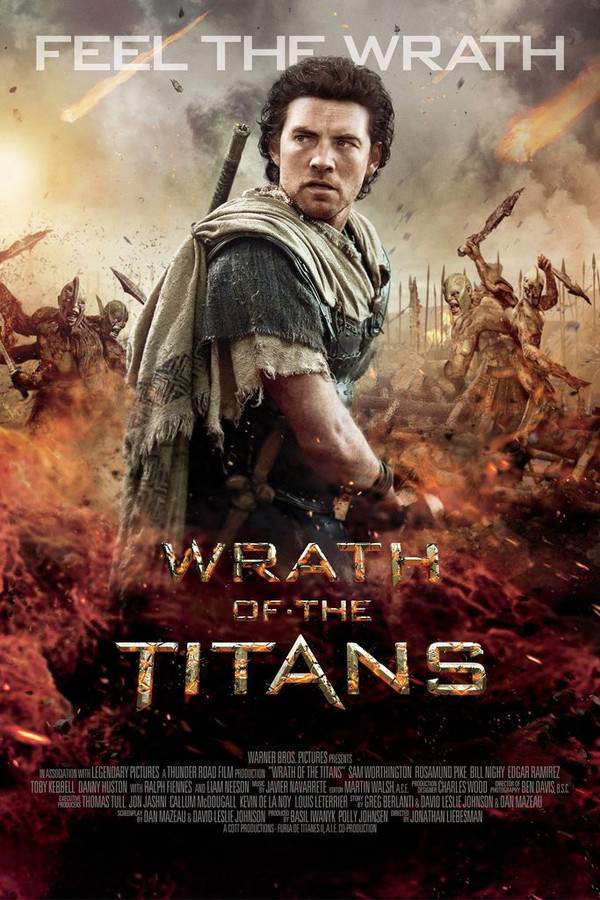
Wrath of the Titans (2012) movie poster

Plot Summary

Wrath of the Titans (2012) Plot Summary Explained

Release, runtime and language
2012 · 99 min · English
JustWatch #7,622 22
Directed by
Jonathan Liebesman
Starring
Liam Neeson, Sam Worthington, Rosamund Pike
Budget
$150M

A decade after defeating the Kraken, demigod Perseus lives a peaceful life as a fisherman. However, his tranquility is shattered when a power struggle erupts between the rulers of Olympus and the imprisoned Titans. As the gods’ strength diminishes and the Titans grow stronger, Perseus is drawn back into a desperate battle. He must team up with Andromeda, Argenor, and the blacksmith Hephaestus to rescue Zeus, confront the Titans, and prevent the world from falling into chaos.

On this page (6)
  1. 1 Where to watch
  2. 2 What happens: full plot
  3. 3 Plot questions answered
  4. 4 Movie threads
  5. 5 Movies like Wrath of the Titans
  6. 6 Every angle

Where to watch

Where to Watch Wrath of the Titans (2012)

Where can you watch Wrath of the Titans? Stream, rent or buy it in the US, including on YouTube TV, YouTube Free and Amazon Video: current JustWatch availability with up-to-date prices.

Streaming availability powered by JustWatch

Full plot summary · contains spoilers

What Happens in Wrath of the Titans: Full Plot Summary

The whole story of Wrath of the Titans (2012) explained, from the opening scene to the final frame: every key event, every twist and what it all adds up to. Read it as a quick recap before the sequel, to check a scene you missed, or to finally understand what really happened.

Ten years after his victory over the Kraken, Perseus (Sam Worthington), the demigod offspring of Zeus (Liam Neeson), has settled into a peaceful life as a fisherman alongside his ten-year-old son, Helius. This tranquil existence is marred by the grief of losing Io, his beloved wife. One fateful night, Zeus pays a visit to Perseus and reveals that the divine powers are diminishing significantly, leading to a catastrophic weakening of the gods. The prison walls of Tartarus, where evil is contained, are beginning to crumble due to humanity’s waning faith. Despite Zeus' desperate plea for assistance, Perseus shows little interest in getting drawn back into the battles of the gods.

In the meanwhile, Zeus travels to Tartarus and confronts his brothers, Hades and Poseidon, and his son Ares. Tensions rise as Hades expresses his anger over being exiled to the Underworld, and he refuses to align with Zeus to rebuild Tartarus. Instead, a surprise attack ensues, led by Ares, culminating in Poseidon receiving fatal injuries. Betrayed, Zeus is captured, and in a sinister agreement with Kronos, Hades and Ares strive to drain Zeus of his powers in a bid to revive Kronos, their ominous father.

After a fierce battle with a Chimera in his village, Perseus seeks guidance from the gods, only to find the dying Poseidon who implores him to rescue Zeus with the help of his demigod son, Agenor. In a heart-wrenching farewell, Poseidon bestows his powerful Trident upon Perseus before succumbing to his wounds.

Determined to help his father, Perseus sets off on a journey with Andromeda (Rosamund Pike), who has imprisoned Agenor for his misdeeds. Agenor reluctantly agrees to accompany them, sharing vital information about the legendary weapons forged by the god Hephaestus, instruments crucial for stopping Kronos. The group faces numerous trials, including an encounter with a swarm of Cyclopes, before acquiring a map to navigate through the labyrinth leading back to Tartarus.

The quest takes a dark turn when Ares finds them, resulting in the brutal slaughter of the soldiers protecting Perseus and his party. In a valiant effort, Hephaestus sacrifices himself, allowing Perseus and his companions to evade capture, while Ares continues his quest for vengeance.

Navigating the treacherous shifting paths of the labyrinth, Perseus must confront and defeat formidable foes, including the menacing Minotaur. Finally reuniting with his comrades, the team discovers Kronos regaining his strength, as Zeus suffers from his waning power.

An emotional reconciliation between Zeus and Hades follows as Zeus acknowledges his past mistakes, requesting Hades’ support against Kronos. However, their plans are thwarted as Ares ambushes them, leading to the demise of Zeus in a devastating betrayal.

In the face of overwhelming odds, Perseus and the remaining forces gather for a decisive battle against Kronos and his monstrous army. A spectacular confrontation ensues, culminating in Perseus wielding the combined power of the gods’ weapons to vanquish Kronos once and for all. As Zeus vanishes into dust, he passes his wisdom to Perseus, marking a poignant end to the age of the gods.

As the dust settles, Perseus embraces Andromeda and is determined to train his son Helius to safeguard their land against future threats, forging a path towards a new destiny and potential kingdom, united in their never-ending struggle against darkness.
Last updated: October 27, 2024 at 22:04

Was this helpful?

Plot questions answered

Wrath of the Titans Plot Explained: Your Questions Answered

The questions people ask most about Wrath of the Titans (2012): what happens in the confusing scenes, why the characters do what they do, the twists, hidden details and what the ending means. Each answer contains spoilers.

Q1

Why did Zeus ask Perseus for help?

Zeus approached Perseus because the divine powers were rapidly diminishing as humanity's faith waned. The prison walls of Tartarus, where the Titans were imprisoned, were crumbling, and the gods were too weak to contain the threat alone. Zeus needed a mortal demigod's strength since the gods themselves were weakened by the declining worship.

Foreshadowing: Earlier, the movie establishes that Perseus had already defeated the Kraken a decade prior, proving his capability against divine threats.

  • zeus
  • perseus
  • divine powers
  • tartarus
  • gods weakening
Q2

Why did Hades turn against Zeus?

Hades harbored deep resentment over being exiled to the Underworld while Zeus and Poseidon ruled their respective domains. He was angry at being relegated to the darkness of Tartarus and refused to help rebuild the prison. This bitterness made him willing to collaborate with Ares in a scheme to drain Zeus's powers and revive their father Kronos.

Foreshadowing: The tension between the brothers is established when Zeus travels to Tartarus and confronts them about their refusal to help.

  • hades
  • zeus
  • betrayal
  • kronos
  • underworld
Q3

Why did Ares betray Zeus and join Hades?

Ares sought vengeance against his father Zeus. Though the exact reason for his grudge isn't detailed in the summary, he allied with Hades to help drain Zeus's powers, which would both satisfy his revenge and enable them to revive Kronos, their grandfather.

Foreshadowing: Ares leads the surprise attack on Zeus in Tartarus, showing his hostility from the beginning.

  • ares
  • zeus
  • betrayal
  • kronos
  • revenge
Q4

Why did Poseidon give his Trident to Perseus?

Poseidon was mortally wounded by Ares during the battle in Tartarus. Before succumbing to his injuries, he entrusted his powerful Trident to Perseus, charging him with the mission to rescue Zeus. As a fellow demigod and Poseidon's nephew, Perseus was the only one capable of wielding such a divine weapon for the rescue mission.

Foreshadowing: The Chimera attack on Perseus's village serves as the catalyst that brings Poseidon to seek out Perseus.

  • poseidon
  • trident
  • perseus
  • weapon
  • death
Q5

How did Perseus defeat Kronos?

Perseus wielded the combined power of the legendary weapons forged by Hephaestus, including Poseidon's Trident and other divine weapons. By channeling the unified power of the gods' weapons, Perseus was able to overwhelm and vanquish Kronos in the final battle.

Foreshadowing: Earlier in the quest, Perseus and his companions specifically sought out Hephaestus's legendary weapons as the only means capable of stopping Kronos.

  • kronos
  • perseus
  • weapons
  • hephaestus
  • battle
Q6

Why did Zeus die at the end?

Zeus was killed by Ares during an ambush in Tartarus. After Zeus reconciled with Hades and the two brothers prepared to fight Kronos together, Ares betrayed them both and delivered a fatal blow to Zeus. This sacrifice marked the end of the age of the gods, with Zeus passing his wisdom to Perseus before disintegrating.

Foreshadowing: The reconciliation between Zeus and Hades appeared fragile from the start, and Ares's continued hostility foreshadowed his eventual betrayal.

  • zeus
  • death
  • ares
  • betrayal
  • passing wisdom
Q7

Why did Hephaestus sacrifice himself?

When Ares discovered Perseus and his group and slaughtered the soldiers protecting them, Hephaestus chose to sacrifice himself to create a distraction and enable Perseus and his companions to escape capture. His selflessness allowed them to continue their quest to rescue Zeus and stop Kronos.

Foreshadowing: Hephaestus had already provided crucial information about the legendary weapons needed for their mission, showing his commitment to their cause.

  • hephaestus
  • sacrifice
  • ares
  • escape
  • quest
Q8

Why did Zeus reconcile with Hades?

In Tartarus, Zeus acknowledged his past mistakes and asked Hades for support against the rising threat of Kronos. Recognizing that their combined strength was necessary to defeat the revived Titan, Zeus swallowed his pride and extended an olive branch to his brother, setting aside their longstanding feud.

Foreshadowing: This reconciliation occurs just before the ambush by Ares, showing how quickly the alliance was tested.

  • zeus
  • hades
  • reconciliation
  • kronos
  • brothers
Q9

Why was Agenor in prison?

Agenor, a demigod son of Poseidon, had committed some form of transgression that led Andromeda to imprison him. Despite his imprisonment, Perseus reluctantly recruited him because Agenor possessed crucial knowledge about the legendary weapons forged by Hephaestus, which were essential for stopping Kronos.

Foreshadowing: Andromeda's initial reluctance to release Agenor suggests he had done something worthy of punishment.

  • agenor
  • andromeda
  • imprisonment
  • demigod
  • weapons
Q10

What happened to Perseus's wife Io?

Perseus's wife Io had died prior to the events of the movie. Her death occurred sometime during the decade after Perseus defeated the Kraken, leaving him to raise their son Helius alone while living as a fisherman. The loss of Io is the source of the grief that shadows his peaceful life.

Foreshadowing: Perseus's reluctance to rejoin the gods' battle is partly rooted in his desire to keep his son safe after already losing his wife.

  • io
  • perseus
  • wife
  • death
  • helius
Q11

Why are the gods weakening?

The gods' power was directly tied to humanity's faith in them. As faith diminished over the years, the gods became progressively weaker. This weakening allowed the prison walls of Tartarus to crumble, releasing the Titans from their imprisonment and creating the crisis that drives the movie's plot.

Foreshadowing: Zeus explicitly mentions this connection when he first visits Perseus, explaining the root cause of the divine decline.

  • gods
  • faith
  • weakening
  • tartarus
  • titans

Movie threads

More Movies Like Wrath of the Titans, by Mood & Story

Curated lists built around what makes Wrath of the Titans tick: the same mood, the same kind of story or the same emotional payoff. Each list explains why these movies belong together.

Mythological epics with world-ending stakes like Wrath of the Titans

Epic battles where the fate of worlds hangs on the choices of gods and demigods. If you enjoyed the high-intensity action and mythological scale of Wrath of the Titans, explore more movies featuring epic godly conflicts, desperate quests to prevent cosmic collapse, and stories where personal sacrifice determines the fate of entire worlds. These films deliver similar fast-paced, heavy emotional fantasy adventures.

  • epic
  • intense
  • heroic
  • grieving
  • desperate
  • mythological
  • Tone: tense, epic, mournful
  • Pacing: fast, relentless
Why these movies?

The story pattern: These narratives typically follow a reluctant hero—often with divine heritage—forced into a desperate mission when cosmic powers threaten existence. The journey involves gathering allies, confronting monstrous enemies, and making personal sacrifices while navigating complex family dynamics among godly rulers.

Why they belong together: Movies in this thread share a blend of high-intensity action, mythological world-building, and heavy emotional weight centered on familial duty and sacrifice. They feature fast-paced, straightforward quest structures with tense atmospheres and bittersweet resolutions where victory comes at significant personal cost.

Fast-paced heroic quests against time like Wrath of the Titans

Characters pulled from peace into race-against-time missions to prevent catastrophe. For viewers who appreciated the urgent, action-driven narrative of Wrath of the Titans, this section showcases movies with reluctant heroes on desperate missions against time. These films share similar high-intensity pacing, straightforward rescue mission structures, and heavy emotional stakes where tranquility is shattered by world-threatening events.

  • desperate
  • urgent
  • heroic
  • action-packed
  • ominous
  • grieving
  • Tone: tense, desperate, somber
  • Pacing: fast, urgent
Why these movies?

The story pattern: The narrative pattern begins with a protagonist enjoying hard-won peace, which is abruptly shattered by a catastrophic threat. They must reluctantly assemble a team and embark on a linear, action-filled journey with clear objectives, facing escalating dangers while processing personal loss and duty.

Why they belong together: These films are grouped by their shared structure of interrupted tranquility leading to urgent missions, fast pacing with minimal downtime, high tension from imminent threats, and heavy emotional weight from personal sacrifice. They create a consistent experience of relentless forward momentum against overwhelming odds.

If you liked this

Movies Like Wrath of the Titans

Similar movies to Wrath of the Titans: the same genre, themes or kind of story. Each one comes with its own plot summary, timeline and ending explained.

Browse all movie summaries

Every angle

Wrath of the Titans (2012) Explained: Plot, Timeline & Characters

Everything about Wrath of the Titans in one place: what happens in the plot summary, the timeline in chronological order, the characters and meaning and a spoiler-free summary. What's After the Movie adds the cast, box office and post-credit scenes.

Coming soon on iOS and Android

The Plot Explained Movie Summary App

Plot summaries, endings explained and timelines on your phone. Catch up on any movie in minutes, save your favorites and never miss a twist again.

Be the first to know when we launch. Your email stays private, always.

Learn more about the app