Plot Explained Spoilers guaranteed!
Plot Explained

Browse by genre

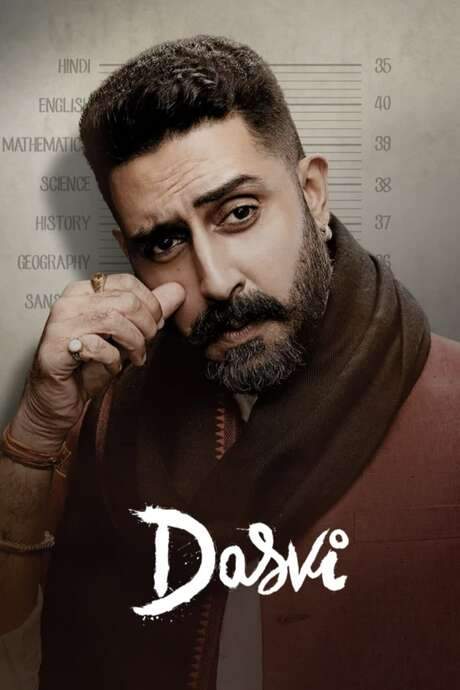
Dasvi (2022) movie poster

Plot Summary

Dasvi (2022) Plot Summary & Ending Explained

Release, runtime and language
2022 · 127 mins · Hindi
Echo score 68
Loading streaming availability…
Directed by
Tushar Jalota
Starring
Nimrat Kaur, Abhishek Bachchan, Chittaranjan Tripathy, Danish Husain, Yami Gautam, Rohit Tiwari
Budget
$280M

While serving a jail sentence, an uneducated politician decides to study for his high school equivalency, believing it's his right to education. As he focuses on his studies, his ambitious wife seizes the opportunity to further her own political aspirations. The film follows his unexpected journey and the schemes that unfold within the prison walls and beyond.

On this page (6)
  1. 1 Where to watch
  2. 2 What happens: full plot
  3. 3 Plot questions answered
  4. 4 How it ends
  5. 5 Movie threads
  6. 6 Every angle
Loading streaming availability…

Full plot summary · contains spoilers

What Happens in Dasvi: Full Plot Summary

The whole story of Dasvi (2022) explained, from the opening scene to the final frame: every key event, every twist and what it all adds up to. Read it as a quick recap before the sequel, to check a scene you missed, or to finally understand what really happened.

Ganga Ram Chaudhary, Abhishek Bachchan, the charismatic yet arrogant Chief Minister of the fictional state of Harit Pradesh, is swept up in a political scam and ends up in judicial custody. To preserve his grip on power from behind bars, he names his wife, Nimrat Kaur as interim Chief Minister until he can post bail. Initially meek and subservient, Bimla Devi “Bimmo” Chaudhary quickly learns the game, undergoes a deft image makeover, and begins to carve out real influence within the party and public life, signaling that the first lady of the administration may prove to be as shrewd as her husband.

Inside the jail, Chaudhary’s street-smarts and charisma continue to win him favors and a following among fellow inmates, while his fame earns him preferential treatment from some quarters. The arrival of a new superintendent, Yami Gautam as Jyoti Deswal, marks a sharp turn in his fortunes. Jyoti is incorruptible and no-nonsense, and she immediately dismantles Chaudhary’s privileges, treating him like any other prisoner and stripping away the comfortable cushions he had grown accustomed to. His attempts to bribe a judge fail, and his request for bail is denied, heightening the stakes of his situation.

A confrontation in the cell drives home a stark reality: Chaudhary is not simply a political ornament in jail. Jyoti’s discipline exposes him to a harsher, more honest routine. He is relegated to a prison workshop, where he must make chairs, a task that underscores his lack of formal qualifications for anything else. The setback becomes a catalyst, as Chaudhary resolves to educate himself, determined to obtain a 10th-grade diploma and earn a legitimate claim to power through schooling rather than manipulation. The legal framework allows this path, but Jyoti is skeptical, convinced it might be a ploy. Yet she cannot ignore the potential for real reform, and her hands remain tied by the letter of the law.

As Chaudhary dives into his studies, he finds inspiration in a history textbook detailing India’s struggle for independence. The narrative of resilience sparks a genuine shift in his attitude, and he begins to study with a seriousness he hadn’t shown before. He declares that if he cannot complete his exams, he will not return to politics, a vow that signals a dramatic break from his earlier self. Bimmo, meanwhile, grows more ambitious, plotting to secure the interim post for good by manipulating events, including suggesting that Chaudhary pretend to suffer from mental illness to gain asylum in a deluxe hospital. Jyoti uncovers these schemes and thwarts them, protecting Chaudhary’s political future but also revealing how fragile his newfound path could be.

Even as the struggle intensifies, Chaudhary experiences a health scare—a minor heart attack—that Jyoti helps him survive with CPR, an act that deepens their complicated dynamic: respect begins to replace old antagonism, though Bimmo watches this transformation with a wary eye. With the help of inmates who become his allies, Chaudhary continues his studies, even as he confronts a particular linguistic hurdle: Hindi presents him with difficulty, almost like a dyslexic barrier to visualizing the alphabet, a challenge he overcomes with steady practice and the encouragement of his new circle.

The political landscape shifts further when Chaudhary’s bail is cleared, but Jyoti withholds the news from him so he can stay focused on his studies and not be distracted by the timing of his release. He sits for the exams, uncertain of how he has fared, while the broader political arena simmers with activity in the run-up to elections. When the results arrive, Chaudhary learns the timing is symbolic: the election results and his exam scores are both due on the same day. He races back to the jail to discover that his education has paid off—he has passed the exams, a moment of personal triumph that also signals a political turning point.

In a gesture of gratitude and a quiet, symbolic gesture of his transformation, he gifts Jyoti a chair he crafted in the workshop, presenting it as Gurudakshina—a teacher’s gift of thanks from a student. His party goes on to win the general election, and Chaudhary makes a decisive shift, declining the Chief Minister role and accepting the post of Minister of Education instead. At his oath ceremony, he publicly acknowledges Jyoti and the inmates who supported him, making clear that the road to real leadership begins with education, integrity, and the courage to change. The film closes on a note of reconciliation with Bimmo, suggesting that their intertwined fates may continue to shape Harit Pradesh’s political future, tempered by the new commitments Chaudhary has embraced as he dedicates himself to education and public service.

Last updated: October 01, 2025 at 10:24

Was this helpful?

Plot questions answered

Dasvi Plot Explained: Your Questions Answered

The questions people ask most about Dasvi (2022): what happens in the confusing scenes, why the characters do what they do, the twists, hidden details and what the ending means. Each answer contains spoilers.

Q1

Why does Ganga Ram Chaudhary decide to study for his 10th grade in jail?

After Jyoti Deswal assigns him to the prison workshop to make chairs, she publicly humiliates him by pointing out his lack of formal education. This confrontation becomes the catalyst for his decision. He realizes that without credentials, he has no legitimate claim to power, so he resolves to earn his 10th-grade diploma and prove his worth through education rather than manipulation.

Foreshadowing: The workshop scene earlier showed Chaudhary receiving preferential treatment, setting up the contrast when Jyoti strips away his privileges.

  • education
  • 10th grade
  • prison
  • motivation
  • Chaudhary
Q2

Why does Bimla Devi Chaudhary become politically ambitious?

When Chaudhary appoints her as interim Chief Minister from behind bars, Bimmo experiences real political power for the first time. Initially meek and subservient, she undergoes an image makeover and discovers she can command respect and influence in the political arena. The taste of authority fuels her ambition to keep the position permanently, even at the cost of undermining her own husband.

Foreshadowing: Chaudhary names her interim CM specifically because he believes she will remain compliant, not realizing she would grow into a rival.

  • Bimmo
  • ambition
  • Chief Minister
  • politics
  • power
Q3

Why does Superintendent Jyoti hide Chaudhary's bail approval from him?

Jyoti deliberately withholds the news that Chaudhary's bail has been cleared because she fears it would distract him from his studies. She wants him to focus entirely on completing his exams rather than getting caught up in political calculations about timing his release. Her decision reflects her belief that his genuine transformation through education matters more than political maneuvering.

Foreshadowing: Earlier, Jyoti was skeptical of Chaudhary's study motivation, suspecting it might be a ploy, so she wants proof of his commitment.

  • bail
  • Jyoti
  • exam
  • release
  • prison
Q4

Why does Bimla Devi try to declare Chaudhary mentally unfit?

Bimmo schemes to have Chaudhary declared mentally ill so he can be transferred from prison to a deluxe psychiatric facility. This would give her an excuse to keep the interim Chief Minister position permanently while he receives "treatment." The plan would effectively remove him from political contention without outright removing him, allowing her to consolidate power.

Foreshadowing: Bimmo's growing ambition is shown earlier as she secures her position and begins making political moves.

  • mental illness
  • Bimmo
  • scheme
  • asylum
  • power grab
Q5

What causes Chaudhary's heart attack and how does it change his relationship with Jyoti?

Chaudhary suffers a minor heart attack while in prison, and Jyoti Deswal saves his life by performing CPR. This life-threatening moment transforms their relationship from antagonistic to respectful. He begins to see her not as a strict jailer but as someone who genuinely cares about his wellbeing, while she recognizes his vulnerability beyond the corrupt politician he once was.

Foreshadowing: The tension between them has been building since Jyoti first arrived and challenged his privileged status.

  • heart attack
  • CPR
  • Jyoti
  • health
  • transformation
Q6

Why does Chaudhary gift Jyoti the chair he made in prison?

Chaudhary gifts Jyoti the chair he crafted in the prison workshop as Gurudakshina, the traditional Indian teacher's gift from a student to their guru. This gesture symbolizes his gratitude for her support during his studies and represents his transformation from a arrogant politician to a humble learner. The chair carries deeper meaning as both a product of his labor and a symbol of his educational journey.

Foreshadowing: The workshop assignment that humiliated him eventually becomes the source of his most meaningful achievement.

  • chair
  • Gurudakshina
  • gift
  • teacher
  • gratitude
Q7

Why does Chaudhary choose to become Minister of Education instead of Chief Minister?

After his party wins the election, Chaudhary declines the Chief Minister position and instead accepts the Minister of Education post. This decision reflects his genuine transformation, he now believes real leadership comes from education and integrity, not holding the highest office. His experience in prison taught him the value of learning, and he wants to dedicate himself to reforming the education system rather than pursuing political power for its own sake.

Foreshadowing: His earlier vow to leave politics if he failed his exams shows his shift in priorities.

  • education minister
  • Chief Minister
  • transformation
  • politics
  • reform
Q8

How does the history textbook inspire Chaudhary to take his studies seriously?

While studying, Chaudhary reads a history textbook detailing India's struggle for independence. The narrative of resilience and sacrifice during the freedom movement sparks a genuine shift in his attitude. He realizes that education can be transformative, not just for himself but for society, and this inspiration fuels his commitment to studying seriously, eventually leading him to declare he will leave politics if he fails his exams.

Foreshadowing: The story of India's freedom struggle becomes a mirror for his own personal struggle to break free from his old ways.

  • history
  • independence
  • inspiration
  • study
  • India
Q9

Why does Jyoti work to thwart Bimmo's political schemes against Chaudhary?

Although Jyoti initially opposes Chaudhary's privileged status in prison, she ultimately protects his political future because she sees genuine potential for reform in him. When she uncovers Bimmo's scheme to declare him mentally unfit, she stops it not to help a politician, but to preserve the possibility of his transformation. Her actions reflect her belief in second chances and her growing respect for his educational journey.

Foreshadowing: Jyoti's skepticism about Chaudhary's study motivation gradually gives way to cautious optimism as she witnesses his change.

  • Jyoti
  • Bimmo
  • scheme
  • protection
  • politics
Q10

What happens to Bimla Devi Chaudhary's political career by the end of the film?

By the end of the film, Bimmo is still politically active but has been overshadowed by Chaudhary's transformation. When he returns from jail, he discovers she has usurped the Chief Minister position but lacks real party support. He ultimately reconciles with her, and the film suggests their intertwined fates will continue, though now tempered by his new commitment to education and integrity. She does not achieve permanent power as she had hoped.

Foreshadowing: Bimmo's earlier power grab sets up her eventual confrontation with Chaudhary's new values.

  • Bimmo
  • ending
  • reconciliation
  • politics
  • future
Q11

Why does Chaudhary join the coalition government after his release from jail?

After his release, Chaudhary learns that Bimmo has taken the Chief Minister position but has no genuine party support. To reset his political course and prevent her unqualified rule, he decides to join the opposition coalition. This move allows him to topple her government and redirect the political narrative, ultimately setting the stage for his party's victory in the subsequent election.

Foreshadowing: The tension between Chaudhary and Bimmo's competing political ambitions has been building throughout the film.

  • coalition
  • release
  • Bimmo
  • government
  • election

Ending explained

What Happens at the End of Dasvi?

How Dasvi (2022) ends, in short: the final scene, the last twist and what it means for the characters. The full ending explained, with every spoiler, lives on its own page.

Read the full ending explained

In the final stretch, the once‑boastful chief minister Ganga Ram Chaudhary is forced to confront the very weakness that has haunted him all his life—his inability to read and write. In the cramped cell, under the watchful eye of the pragmatic police officer Jyoti Deswal and with unexpected help from fellow inmates, he begins a grueling crash‑course in basic education. The film builds to the day he sits for the 10th‑standard board exam, a symbolic battle against the denial of knowledge that politics has often used as a weapon.

When the results arrive, Ganga’s name tops the list. His passing isn’t just a personal triumph; it becomes a public statement that learning can redeem even the most corrupt of leaders. Meanwhile, Bimla Devi, his meek wife who was thrust into the chief‑minister’s chair, discovers how intoxicating power can be. Seeing Ganga’s genuine transformation, she chooses to step back, allowing him to resume his political role—but this time with a promise to put education at the heart of his agenda.

Continue reading the ending (1 more paragraphs)

The movie closes on a hopeful note: Ganga, now humbled and literate, addresses a crowd with renewed purpose, while Bimla stands beside him, no longer as a figurehead but as a partner in the mission to rebuild the state on the foundations of learning and integrity. The ending reinforces the film’s central message—that true power lies not in titles, but in the ability to empower others through knowledge.

Dasvi ending explained in full

Movie threads

More Movies Like Dasvi, by Mood & Story

Curated lists built around what makes Dasvi tick: the same mood, the same kind of story or the same emotional payoff. Each list explains why these movies belong together.

Prison redemption stories like Dasvi

Stories of personal transformation sparked by an unexpected guide in a confined world. Discover movies like Dasvi where incarceration becomes a turning point for personal change. These films feature characters who find unexpected mentors and embark on uplifting journeys of self-discovery and moral awakening within the prison system.

  • redemptive
  • hopeful
  • inspiring
  • transformative
  • character-driven
  • uplifting
  • Tone: hopeful, redemptive
  • Pacing: steady, character-driven
Why these movies?

The story pattern: The narrative follows a flawed individual, often facing a crisis of identity, who is confined to a prison. An unlikely relationship with a mentor figure introduces a new purpose, typically through education, art, or introspection. The protagonist's internal struggle with their past misdeeds is paralleled with the external challenges of prison life, culminating in a hard-earned transformation.

Why they belong together: These films are grouped by their shared focus on hope and second chances within a punitive setting. They balance the grim reality of incarceration with an uplifting, character-driven arc, creating a specific vibe of constrained but determined optimism.

Political satires with heart like Dasvi

Humorous critiques of power and corruption that ultimately celebrate human integrity. If you liked the blend of political humor and sincere character growth in Dasvi, explore these movies. They cleverly satirize power struggles and corruption while delivering an ultimately hopeful and uplifting message about personal integrity.

  • satirical
  • inspiring
  • political
  • hopeful
  • thought-provoking
  • character-driven
  • Tone: hopeful, satirical
  • Pacing: steady
Why these movies?

The story pattern: The plot typically revolves around a self-serving politician or bureaucrat who becomes entangled in a system they once exploited. Through a series of comedic and dramatic events, their worldview is challenged, leading to a crisis of conscience. The narrative uses satire to highlight systemic flaws but ultimately pivots to a positive character arc where the protagonist chooses principle over power.

Why they belong together: These movies share a unique tonal blend: they are witty and critical of political machinations yet fundamentally optimistic about human nature. The steady pacing allows for both comedic moments and sincere emotional development, creating a satisfying experience that is thought-provoking without being bleak.

Every angle

Dasvi (2022) Explained: Plot, Ending, Timeline & Characters

Everything about Dasvi in one place: what happens in the plot summary, the timeline in chronological order, the characters and meaning, the ending explained and a spoiler-free summary. What's After the Movie adds the cast, box office and post-credit scenes.

Coming soon on iOS and Android

The Plot Explained Movie Summary App

Plot summaries, endings explained and timelines on your phone. Catch up on any movie in minutes, save your favorites and never miss a twist again.

Be the first to know when we launch. Your email stays private, always.

Learn more about the app