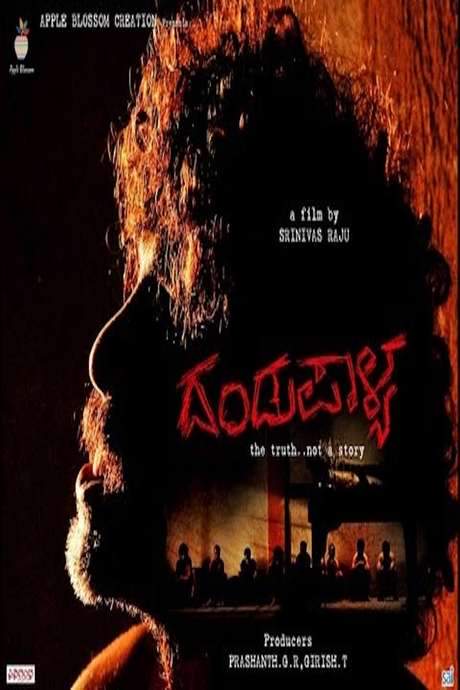
Dandupalya
Year: 2012
Runtime: 126 mins
Language: Kannada
Director: Srinivasa Raju
A ruthless gang terrorizes the countryside, committing robberies, rape, and murder. Chalapathy, a determined and resourceful police officer, vows to bring them to justice and stop their violent spree. He relentlessly pursues the criminals, striving to restore peace and uphold the law in the affected region.
Warning: spoilers below!
Haven’t seen Dandupalya yet? This summary contains major spoilers. Bookmark the page, watch the movie, and come back for the full breakdown. If you're ready, scroll on and relive the story!
Dandupalya (2012) – Full Plot Summary & Ending Explained
Read the complete plot breakdown of Dandupalya (2012), including all key story events, major twists, and the ending explained in detail. Discover what really happened—and what it all means.
Opening with tension, the film opens as a gang is led to the prison for execution, and the vigilant Inspector Chalapathi [p-ravi-shankar] warns the warden to stay on high alert. The atmosphere is tense, and the weight of impending justice hangs heavy as the law closes in. In the midst of this, Indian Express investigative journalist Abhivyakti “Abhi” begins a painstaking reinvestigation, challenging the official narrative and insisting that there was little to no circumstantial evidence, no fingerprints, and no semen tests to confirm the alleged rape and murders. Her relentless pursuit of the truth sends her through a web of secrets that the case seems to conceal.
Her inquiries begin with a local jeweler, who reveals a troubling truth: the stolen ornaments were remade and passed off as evidence in court, and even a witness from Singapore appears to be a fabrication. Abhi uncovers a cascade of anomalies, including the absence of a formal FIR and the troubling claim that the gang was hauled away for 40 days under coercive methods in the name of interrogation. As she digs deeper, she meets the grieving parents of the victims, who recount how no neighbor ever saw the victims in the locality and how they were led to believe the accused were guilty—only because the police allegedly presented the victims to them and explained how the crimes were supposedly committed. The parents question the fairness of the process, noting that the poor are easy targets for a rushed, opaque system.
Despite an initial setback, Abhi gains an opportunity to speak with the accused, who are later moved to another prison designated for execution. There, they share their side of the story, challenging the narrative and accusing the police of using torture to force confessions. The gang recounts a brutal chain of hardship: migrating to an unfamiliar land, surviving on scant food, living in slums, facing rejection for domestic work, and occasionally surviving by eating stray animals. They describe finding work as construction laborers, only to be ensnared in a climate of fear and coercion as the Dandupalya crimes—killings, thefts, and gang-rapes—put enormous pressure on the local police to deliver results.
A pivotal moment occurs after a late-night movie outing, when the Inspector notices two of the gang members and uses force to discipline them for not showing their tickets, shoving them back to their slum. The following night brings a new tragedy: another murder and theft, and the inspector’s quick intervention leads to the squint-eyed member stealing a gold ring to mend his wife’s leg, only to be stopped as the inspector arrives and strikes again. Soon after, the police pull the rest of the gang away to a secluded site and subject them to brutal torture, including the sexual assault of a female gang member. After forty days of sustained abuse, the gang capitulates, confessing to crimes they maintain they did not commit.
Abhi responds to the coercive truth with a published exposé, accusing the police of violence and false evidence. The inspector confronts her, and the narrative shifts toward the aftermath—the repercussions of power, the fragility of justice, and the ongoing struggle to separate truth from enforced fate. The tale unfolds as a stark meditation on how desperation, poverty, and institutional pressure can distort justice, and it leaves viewers pondering who is truly guilty and who pays the price for a system under siege.
Last Updated: October 27, 2025 at 16:47

Explore Movie Threads
Discover curated groups of movies connected by mood, themes, and story style. Browse collections built around emotion, atmosphere, and narrative focus to easily find films that match what you feel like watching right now.
Bleak investigative procedurals like Dandupalya
Gritty stories where the investigation uncovers deep corruption rather than easy answers.If you liked the grim, procedural nature of Dandupalya, this list features movies with similar crime investigations into systemic failure. These stories share a dark tone, heavy emotional weight, and an unsettling look at corruption, perfect for viewers seeking tense, realistic thrillers.














Narrative Summary
The narrative follows a linear investigation, methodically peeling back layers of deception to reveal a core of systemic injustice. The protagonist's quest for truth often leads to a moral quagmire where the pursuit of justice is compromised, and the ending is typically ambiguous or bleak, reflecting the intractable nature of the problem.
Why These Movies?
Movies are grouped here for their shared commitment to a realistic, oppressive atmosphere, a steady investigative pace, and a thematic focus on how institutions fail the individuals they are meant to protect. The similarity lies in the experience of a grim, unflinching look at crime and power.
Gritty and violent crime stories like Dandupalya
Unflinching depictions of violent crime and its devastating impact on society.For viewers who appreciated the raw and brutal realism of Dandupalya, this collection features similar movies with high-intensity violence and a dark, gritty tone. These films share a heavy emotional weight, disturbing themes, and a focus on the harsh realities of crime.













Narrative Summary
The narrative often portrays a spree of violent acts—robberies, assaults, murders—and the desperate efforts to stop them. The journey is characterized by a high level of tension and graphic content, creating a sense of pervasive dread. The line between victim and perpetrator can be blurred, emphasizing the degrading effects of poverty and violence.
Why These Movies?
These films are united by their uncompromisingly dark tone, high intensity, and focus on graphic, realistic violence and its consequences. The shared experience is one of intense stress and a heavy, oppressive mood that doesn't shy away from disturbing subject matter.
Unlock the Full Story of Dandupalya
Don't stop at just watching — explore Dandupalya in full detail. From the complete plot summary and scene-by-scene timeline to character breakdowns, thematic analysis, and a deep dive into the ending — every page helps you truly understand what Dandupalya is all about. Plus, discover what's next after the movie.
Dandupalya Timeline
Track the full timeline of Dandupalya with every major event arranged chronologically. Perfect for decoding non-linear storytelling, flashbacks, or parallel narratives with a clear scene-by-scene breakdown.

Characters, Settings & Themes in Dandupalya
Discover the characters, locations, and core themes that shape Dandupalya. Get insights into symbolic elements, setting significance, and deeper narrative meaning — ideal for thematic analysis and movie breakdowns.