










Plot Explained Spoilers guaranteed!
Plot Explained

Browse by genre

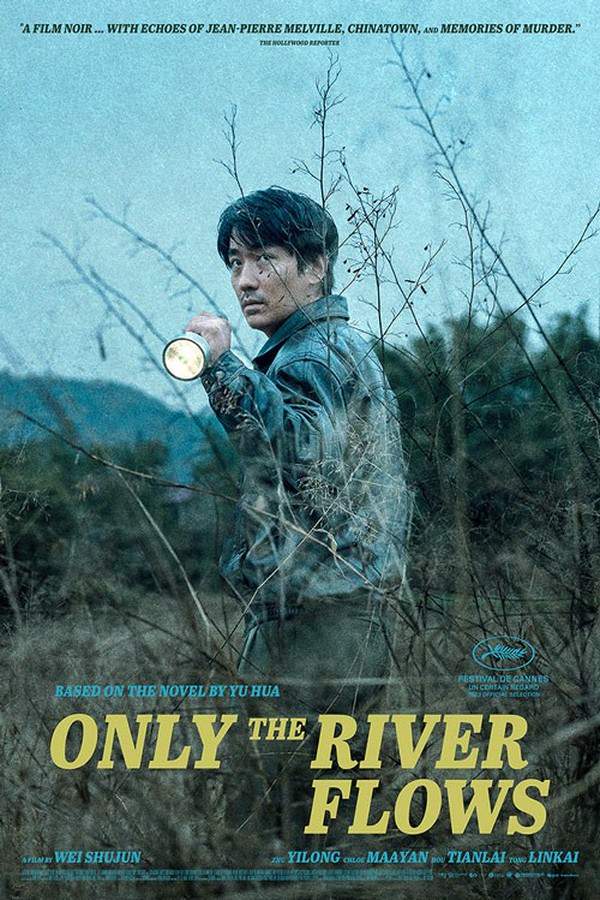
Only the River Flows (2024) movie poster

Timeline

Only the River Flows (2024) Timeline Explained – Every Event in Order

Release, runtime and language
2024 · 1 h 41 m · Chinese
Echo score 61
Directed by
Wei Shujun
Starring
Han Chen, You Zhou, Chloe Maayan, Moxi Zishi, Baisha Liu, Hou Tianlai

In 1990s China, the discovery of a body in a river triggers a murder investigation led by Chief Ma Zhe. Although a suspect is quickly convicted, Ma Zhe’s lingering doubts lead him to reexamine the case and uncover dark secrets within the close-knit community. He must confront powerful forces as he searches for the truth.

On this page (5)
  1. 1 Where to watch
  2. 2 Events in order (14)
  3. 3 Timeline questions answered
  4. 4 Movie threads
  5. 5 Every angle

Where to watch

Where to Watch Only the River Flows (2024)

Where can you watch Only the River Flows? Stream, rent or buy it in the US, including on Eternal Family, Metrograph and OVID: current JustWatch availability with up-to-date prices.

Streaming availability powered by JustWatch

14 events in order · contains spoilers

Only the River Flows Timeline: Events in Chronological Order

Every key event of Only the River Flows (2024) in order, scene by scene, with when and where it takes place. Use it to untangle flashbacks, time jumps and parallel storylines, to refresh your memory before the sequel or to find the exact scene you are thinking of.

  1. Granny Four murder shocks the town

    In 1995, Granny Four is murdered in a quiet riverside town. The crime drags police captain Ma Zhe into a case with secrets beneath rural life. Investigators sense there is more to this killing than a simple act of violence.

    When
    1995
    Where
    riverside town in rural China
  2. Ma Zhe takes command of the investigation

    Ma Zhe is appointed to lead the investigation into Granny Four's murder. He faces a case that resists easy solutions and invites difficult personal and political pressures. The start of the case sets the tone for a tense, scrutinized inquiry.

    When
    1995
    Where
    police station, riverside town
  3. Discovery of the cassette tape

    A cassette tape with emotional recordings between two secret lovers is found, shifting the focus from one crime to a web of relationships. The tape becomes a key clue, hinting at hidden lives and motives behind the murders. The discovery broadens the inquiry beyond the surface crime.

    When
    1995
    Where
    police station
  4. Clues point to a mysterious woman

    The tape leads investigators to talk of a mysterious woman with long wavy hair seen near the crime scene. Her presence ties the murders to clandestine meetings and poetic circles. The mystery deepens as investigators chase obscured connections.

    When
    1995
    Where
    crime scene area; town outskirts
  5. Wang Hong murdered in the same manner

    Wang Hong is killed in the same manner as Granny Four, complicating the case and creating a troubling pattern. The duplication suggests a calculated design rather than random violence. The investigators realize the killer is orchestrating a sequence rather than a single incident.

    When
    1995
    Where
    town; near the river
  6. Rising pressure from police superiors

    Higher-ups push for a quick resolution, threatening to close the case if results stall. Ma Zhe resists simple explanations, insisting that the evidence still doesn't fit neatly together. Pressure mounts as timelines tighten.

    When
    1995
    Where
    police headquarters
  7. Xu Liang emerges as a suspect

    Xu Liang, a troubled hairdresser with a criminal past, becomes a focal suspect. He strangely keeps asking to be arrested, complicating investigators' judgments. His behavior fuels suspicion while keeping the case unsettled.

    When
    1995
    Where
    police station; Xu Liang's neighborhood
  8. The madman is institutionalized

    The mentally ill drifter, known as the madman, is institutionalized in a psychiatric hospital. Authorities want the case closed quickly, leveraging institutional timelines to clear the file. Ma Zhe begins to see that the system is shaping the truth.

    When
    1995
    Where
    psychiatric hospital
  9. Ma Zhe's personal life deteriorates

    Ma Zhe's wife’s pregnancy becomes a source of emotional strain, with concerns about possible genetic disorders. The investigation's stress bleeds into his home life, fueling anxiety and obsessive behavior. He grapples with how personal fears intersect with the case.

    When
    1995
    Where
    Ma Zhe's home
  10. Ma Zhe obsessively revisits the cassette

    Ma Zhe revisits the cassette tapes obsessively, trying to fuse the scattered clues into a coherent picture. His mental state deteriorates as reality and speculation blur. The case begins to resemble a personal labyrinth for him.

    When
    1995
    Where
    office and home
  11. The madman escapes and chaos erupts

    The madman escapes from the hospital and returns to the town, where he kills the young boy who first found Granny Four's body. The escape triggers a full-scale manhunt and intensifies the drive for a quick resolution. The emotional stakes escalate as fear and doubt spread.

    When
    1995, late
    Where
    psychiatric hospital escape route; town riverside
  12. Final manhunt near the abandoned temple

    A climactic chase leads Ma Zhe and officers to the abandoned temple where the madman is cornered. Ma Zhe shoots and kills him, ending the immediate threat and the most visible thread of the mystery.

    When
    1995, climax
    Where
    abandoned temple
  13. Ma Zhe reflects on intention and fate

    After the shootout, Ma Zhe tells his chief that the madman may have orchestrated events so that Ma Zhe would be the one to kill him. The truth remains elusive amid confusion and doubt about coincidence, institutional pressure, and fate.

    When
    1995, post-climax
    Where
    police HQ
  14. Case declared solved, Ma Zhe awarded

    The case is officially declared solved, and Ma Zhe is honored with a merit award. Yet the ending leaves him psychologically damaged, unable to distinguish reality from coincidence.

    When
    1995, aftermath
    Where
    police headquarters

Last updated: June 12, 2026 at 08:45

Was this helpful?

Timeline questions answered

Only the River Flows Timeline Explained: Your Questions Answered

When does it happen, and why in that order? The questions people ask about the chronology of Only the River Flows (2024): time jumps, flashbacks, cause and effect between scenes and the correct order of events, each answered with spoilers.

Q1

Why was the mentally ill drifter arrested for Granny Four's murder?

The drifter, known as "the madman," was the primary suspect because he was a mentally ill drifter that Granny Four had taken in. His status as a vulnerable outsider living with the victim made him an easy target for police, especially under pressure to close the case quickly. However, Ma Zhe later realized the evidence didn't fit neatly together.

Foreshadowing: Earlier scenes establish the madman's erratic behavior and presence at the scene, though these details prove insufficient for a proper conviction.

  • madman
  • granny four
  • suspect
  • arrest
  • murder investigation
Q2

What important information did the cassette tape reveal?

The cassette tape contained intimate recordings between two secret lovers, Qian Ling and Wang Hong. These recordings exposed a hidden web of relationships in the town, including poetry gatherings and clandestine meetings. The tape became a key clue that broadened the investigation beyond the surface crime, leading police to discover connections between the victims and a mysterious woman with long wavy hair.

Foreshadowing: The discovery of the tape shifts the investigation's focus, suggesting the murders are connected to hidden relationships rather than random violence.

  • cassette tape
  • qian ling
  • wang hong
  • recordings
  • secret lovers
Q3

Who was the mysterious woman with long wavy hair mentioned in the film?

The mysterious woman with long wavy hair was seen near the crime scene and became a key figure in the investigation. Her presence tied the murders to clandestine meetings and poetic circles within the close-knit community. She represented the hidden sexual and romantic tensions beneath the town's respectable surface, though her exact identity remains ambiguous throughout the narrative.

Foreshadowing: Whispers about this woman appear early in the investigation, hinting at the deeper secrets the town is hiding.

  • mysterious woman
  • long wavy hair
  • poetry gathering
  • crime scene
Q4

Why was Wang Hong murdered in the same manner as Granny Four?

Wang Hong was killed in the identical manner as Granny Four, suggesting the killer was deliberately creating a pattern rather than committing random violence. This duplication indicated a calculated design, implying someone was orchestrating a specific sequence of events. The similar killings raised questions about whether the murders were connected through motive, or whether someone was manipulating circumstances to achieve a particular outcome.

Foreshadowing: The first murder establishes the method; the second confirms the pattern is intentional rather than coincidental.

  • wang hong
  • murder method
  • same manner
  • killer pattern
Q5

Why does Xu Liang constantly ask the police to arrest him?

Xu Liang, a troubled hairdresser with a criminal past, became a focal suspect partly because he strangely kept asking police to arrest him. His behavior was puzzling and contradictory, appearing to seek punishment or confession while simultaneously complicating investigators' judgments. This unusual request suggested either genuine guilt, mental instability, or an attempt to manipulate the investigation's direction.

Foreshadowing: Xu Liang's strange behavior appears early but remains unexplained, creating persistent suspicion throughout the case.

  • xu liang
  • hairdresser
  • ask arrest
  • suspicion
  • confession
Q6

Why did the madman escape from the psychiatric hospital?

The madman escaped from the psychiatric hospital and returned to the town, where he killed the young boy who first discovered Granny Four's body. The escape triggered a full-scale manhunt and intensified the pressure for a quick resolution. His return to the exact location connected to his original crime suggested either random violence or a more deliberate return to unfinished business.

Foreshadowing: The madman's institutionalization appears to close the case, but his escape reopens the investigation with deadly consequences.

  • madman
  • escape
  • psychiatric hospital
  • boy
  • kill
Q7

What did Ma Zhe mean when he suggested the madman orchestrated his own death?

After killing the madman at the abandoned temple, Ma Zhe told his Chief of Police that he suspected the madman may have orchestrated the entire sequence of events to force Ma Zhe into being the one to kill him. This disturbing possibility suggests the madman deliberately manipulated circumstances, through escape, return, and targeting the boy, to engineer his own death at a specific person's hands, potentially as a form of psychological revenge or symbolic sacrifice.

Foreshadowing: The madman's seemingly random actions throughout the film gain sinister meaning if viewed as a calculated plan.

  • madman
  • orchestrate
  • death
  • ma zhe
  • manipulation
  • fate
Q8

Why was Ma Zhe's wife's pregnancy important to the story?

Ma Zhe's wife's pregnancy became a source of emotional strain, with concerns about possible genetic disorders. The investigation's stress bled into his home life, fueling anxiety and obsessive behavior. This personal crisis paralleled his professional unraveling, showing how his obsession with the case consumed his mental state and blurred his ability to separate professional duty from personal fate.

Foreshadowing: Ma Zhe's personal anxiety about his unborn child appears early and intensifies as his mental state deteriorates.

  • wife
  • pregnancy
  • genetic disorder
  • stress
  • personal life
Q9

What is the meaning of the film's ambiguous ending?

The ending leaves a troubling ambiguity: the case is officially solved and Ma Zhe is awarded a merit, but he is psychologically scarred and unable to clearly separate reality, coincidence, institutional pressure, and fate. The truth about whether the madman truly orchestrated events, whether Ma Zhe was manipulated into killing, or whether everything was mere coincidence remains uncertain. This ambiguity reinforces the film's dark tone, suggesting some truths may never be resolved.

Foreshadowing: The entire investigation has been building toward this moment of uncertainty, where truth becomes indistinguishable from paranoia.

  • ambiguous ending
  • truth
  • reality
  • coincidence
  • fate
  • psychological damage

Movie threads

More Movies Like Only the River Flows, by Mood & Story

Curated lists built around what makes Only the River Flows tick: the same mood, the same kind of story or the same emotional payoff. Each list explains why these movies belong together.

Obsessive detective stories like in Only the River Flows

Where a single case consumes a detective's sanity and personal life. If you liked the psychological unraveling of the detective in Only the River Flows, you'll appreciate these other movies about obsessive investigators consumed by their cases. Discover similar dark crime thrillers and psychological dramas.

  • obsessive
  • paranoid
  • unsettling
  • exhausting
  • gritty
  • psychological
  • Tone: dark, paranoid, bleak
  • Pacing: steady, methodical
Why these movies?

The story pattern: These narratives follow a protagonist, typically a detective or investigator, who becomes singularly focused on solving a case. As they delve deeper, their obsession grows, compromising their mental health, personal relationships, and professional standing, often with ambiguous or bleak outcomes.

Why they belong together: Movies are grouped here based on their shared focus on the psychological deterioration of a detective figure, the dark tone of their investigations, and the heavy emotional weight of their personal sacrifices for the truth.
Atmospheric small-town crime mysteries like Only the River Flows

Where a close-knit community hides dark secrets beneath its surface. Fans of Only the River Flows will enjoy these other movies about small-town crime investigations that uncover dark community secrets. Find similar atmospheric thrillers and mystery dramas with oppressive settings.

  • oppressive
  • atmospheric
  • unsettling
  • gritty
  • melancholic
  • paranoid
  • Tone: dark, oppressive, morally ambiguous
  • Pacing: steady, atmospheric build
Why these movies?

The story pattern: These stories unfold in confined, often rural settings where communities maintain a facade of normality. A crime investigation acts as a catalyst, gradually peeling back layers of corruption, collective secrecy, and moral compromise among the residents, challenging the investigator's perception of truth.

Why they belong together: This thread groups movies based on their oppressive small-town atmosphere, the theme of hidden community corruption, the methodical uncovering of secrets, and the moral ambiguity that pervades both the investigators and the investigated.

Every angle

Only the River Flows (2024) Explained: Plot, Ending, Timeline & Characters

Everything about Only the River Flows in one place: what happens in the plot summary, the timeline in chronological order, the characters and meaning, the ending explained and a spoiler-free summary. What's After the Movie adds the cast, box office and post-credit scenes.

Coming soon on iOS and Android

The Plot Explained Movie Summary App

Plot summaries, endings explained and timelines on your phone. Catch up on any movie in minutes, save your favorites and never miss a twist again.

Be the first to know when we launch. Your email stays private, always.

Learn more about the app