




Plot Explained Spoilers guaranteed!
Plot Explained

Browse by genre

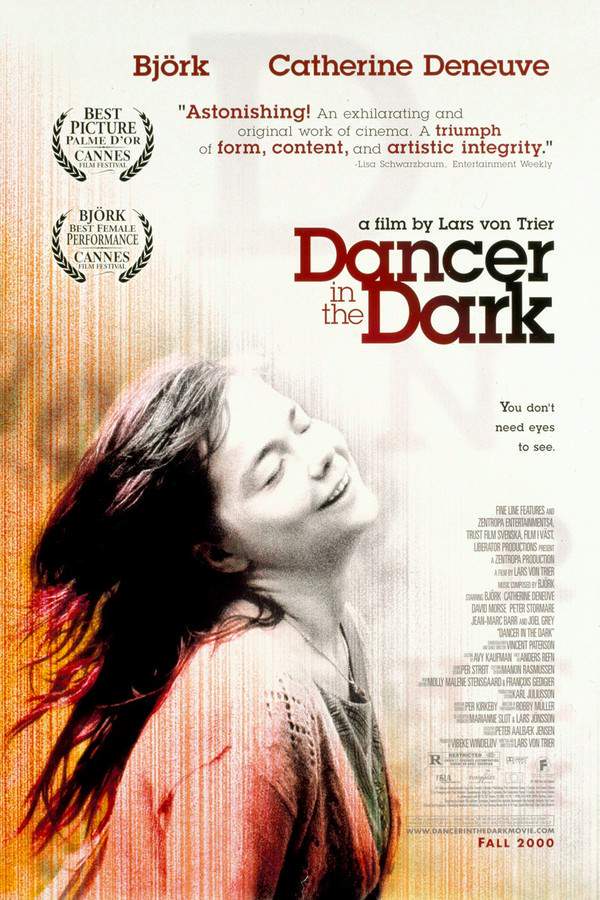
Dancer in the Dark (2000) movie poster

Plot Summary

Dancer in the Dark (2000) Plot Summary Explained

Release, runtime and language
2000 · 140 min · English
JustWatch #10,087 23
Directed by
Lars von Trier
Starring
Björk

A Czech factory worker and single mother, facing progressive blindness, finds escape and joy through her love of American musicals. Selma tirelessly works to save money for her son's operation, but a misunderstanding and false accusation lead to a devastating chain of events and a tragic turn of fate. The film explores themes of hope, despair, and the power of music in the face of adversity.

On this page (6)
  1. 1 Where to watch
  2. 2 What happens: full plot
  3. 3 Plot questions answered
  4. 4 Movie threads
  5. 5 Movies like Dancer in the Dark
  6. 6 Every angle

Where to watch

Where to Watch Dancer in the Dark (2000)

Where can you watch Dancer in the Dark? Stream, rent or buy it in the US, including on MUBI, Google Play Movies and YouTube: current JustWatch availability with up-to-date prices.

Streaming availability powered by JustWatch

Full plot summary · contains spoilers

What Happens in Dancer in the Dark: Full Plot Summary

The whole story of Dancer in the Dark (2000) explained, from the opening scene to the final frame: every key event, every twist and what it all adds up to. Read it as a quick recap before the sequel, to check a scene you missed, or to finally understand what really happened.

Selma is a young Czech mother residing in Washington state during the early 1960s. She is passionate about musicals; however, her vision is rapidly deteriorating, posing a significant threat to her employment at a local factory, and even jeopardizing her safety. At work, she assists her friend Cathy, who finds herself increasingly overwhelmed by Selma's mounting workload, which includes the tedious task of pinning hairpins to unbent cardboard as a side job.

Living in a mobile trailer, Selma has an ungrateful 12-year-old son who often gets into trouble, and they reside on the property of a local sheriff alongside his cheerful wife. One fateful day, the sheriff confesses a somber secret to Selma, prompting her to reveal her own dark fate: her impending blindness. This exchange leads Selma's life into a downward spiral, but she remains committed to safeguarding her friend's secret.

As tensions rise, Cathy becomes increasingly exasperated by Selma's choices. Yet, as the film reaches its intense climax, she recognizes that Selma's way of handling life was indeed justified. In a poignant moment during the final scenes, Cathy reassures Selma that she made the right decisions despite the odds stacked against them.

This film is a unique blend of satire and tragedy—filled with experimental camera techniques—that explores the profound themes of friendship and maternal love. It’s a story best experienced in the company of others!

Last updated: November 04, 2024 at 00:58

Was this helpful?

Plot questions answered

Dancer in the Dark Plot Explained: Your Questions Answered

The questions people ask most about Dancer in the Dark (2000): what happens in the confusing scenes, why the characters do what they do, the twists, hidden details and what the ending means. Each answer contains spoilers.

Q1

Why does Selma keep working at the factory despite her failing vision?

Selma continues working to save money for her son's operation. The film establishes early on that she is a dedicated single mother who needs to fund a genetic procedure that will prevent her son from also going blind, a condition she knows runs in her family. Her job represents her only means of achieving this urgent financial goal before her vision completely deteriorates.

Foreshadowing: The opening scene establishes Selma's passion for musicals being overshadowed by her deteriorating vision, immediately highlighting the tension between her condition and her determination.

  • Selma
  • factory job
  • blindness
  • son operation
  • money
Q2

Why does the sheriff confess his secret to Selma?

The sheriff confesses to Selma because he recognizes her as a trustworthy person living quietly on his property. Their proximity and Selma's reputation for discretion create a moment where he feels compelled to unburden himself to someone he believes will keep his confidence. This exchange then prompts Selma to reveal her own impending blindness, creating a bond of mutual vulnerability between them.

Foreshadowing: The sheriff's confession occurs shortly after we learn Selma and her son live on his property, establishing a relationship that allows for such intimate disclosure.

  • sheriff confession
  • trust
  • secret
  • Selma
Q3

Why does Cathy become frustrated with Selma's choices?

Cathy becomes frustrated because Selma's declining vision means she requires increasing help with her work at the factory, leaving Cathy to take on more of the physical workload. Additionally, Cathy likely observes Selma making choices that seem self-destructive or impractical, perhaps prioritizing daydreaming over practical concerns, or making decisions that put her already precarious situation at greater risk.

Foreshadowing: Early scenes establish Cathy as overwhelmed by Selma's mounting workload, setting the stage for growing tension between the friends.

  • Cathy
  • frustration
  • friendship
  • workload
  • factory
Q4

Why does the film use musical numbers if it's a drama about tragedy?

The musical numbers represent Selma's mental escape from her harsh reality. As her vision deteriorates and her circumstances become more desperate, these whimsical fantasy sequences provide brief respite from her struggles. The contrast between the bright, elaborate productions and her bleak circumstances intensifies the film's melancholic tone, making her moments of joy feel both precious and heartbreakingly fragile.

Foreshadowing: The opening establishes Selma's passion for musicals as a defining trait, laying the groundwork for how these sequences function throughout the narrative.

  • musical numbers
  • fantasy
  • escape
  • hope
  • reality
Q5

Why does Selma protect Cathy's secret at personal cost?

Selma remains committed to protecting her friend's secret despite the pressure it creates because their friendship is one of the few sources of stability in her difficult life. The film emphasizes that Selma values loyalty and human connection, choosing to bear her burdens alone rather than betray someone she cares about. This protective instinct connects to her broader maternal nature and her determination to shield those she loves.

Foreshadowing: The friendship between Selma and Cathy is established early as central to Selma's emotional support system.

  • Selma
  • Cathy
  • secret
  • loyalty
  • protection
Q6

Why does Cathy conclude that Selma's way of handling life was justified?

Cathy comes to understand that Selma's choices, however puzzling they may have seemed, were driven by impossible circumstances and an unwavering commitment to protecting her son. As the film's tragic events unfold, Cathy recognizes that Selma was fighting against overwhelming forces: her progressive blindness, economic hardship, and a system that ultimately fails her. This understanding transforms Cathy's frustration into recognition that Selma did what she had to do.

Foreshadowing: The film builds toward this moment through the escalating tension between the two friends, with each crisis revealing more about Selma's true motivations.

  • Cathy
  • justification
  • understanding
  • friendship
  • decisions
Q7

What triggers the downward spiral in Selma's life?

The sheriff's confession to Selma becomes the catalyst for her downward spiral. When he reveals his secret, Selma feels compelled to reciprocate by sharing her own impending blindness. This mutual exchange of vulnerable information marks a turning point, once her secret is out, the power dynamics shift and events begin to accelerate toward tragedy, though the precise chain of consequences unfolds in the film's devastating climax.

Foreshadowing: The sheriff's confession is framed as a pivotal moment that 'leads Selma's life into a downward spiral,' establishing it as the inciting incident of the film's second half.

  • sheriff
  • confession
  • downward spiral
  • turning point
  • tragedy
Q8

Why does the film blend satirical and tragic elements?

The blend of satire and tragedy serves the film's exploration of hope and despair. The satirical elements, such as exaggerated musical fantasies or darkly comic situations, highlight the absurdity of trying to maintain hope against impossible odds. Meanwhile, the tragic core underscores the genuine suffering and loss that define Selma's reality. Together, they create a layered portrait of a woman who uses imagination to survive, making the eventual loss of that coping mechanism devastating.

Foreshadowing: The description explicitly labels the film as 'a unique blend of satire and tragedy,' signaling this tonal balance as a deliberate artistic choice.

  • satire
  • tragedy
  • tone
  • hope
  • despair
  • musical
Q9

Why is Selma's son portrayed as ungrateful?

The son appears ungrateful partly because he is a typical troubled 12-year-old lacking appreciation for his mother's sacrifices, but also because he may intuitively sense her impending inability to care for him. His behavioral issues could reflect anxiety about their unstable circumstances. This portrayal adds to Selma's burden, she fights not only for her own survival but for a child who doesn't yet understand the depth of her struggle.

Foreshadowing: The mobile trailer living conditions establish their precarious family dynamic from the start.

  • son
  • ungrateful
  • family
  • struggle
  • mother
Q10

Why is the film described as best experienced with others?

The film emphasizes shared experience because its themes of isolation, struggle, and human connection resonate most powerfully when processed collectively. The meta note frames Selma's story as one meant to be witnessed in community, mirroring the film's thematic focus on friendship and maternal love. Experiencing such an emotionally intense, musically-driven tragedy together allows viewers to process its weight collectively, reinforcing the idea that no one should face overwhelming adversity alone.

Foreshadowing: This meta-statement appears at the end of the summary, serving as a final thematic seal on the narrative.

  • community
  • experience
  • together
  • connection
  • themes

Movie threads

More Movies Like Dancer in the Dark, by Mood & Story

Curated lists built around what makes Dancer in the Dark tick: the same mood, the same kind of story or the same emotional payoff. Each list explains why these movies belong together.

Movies about escapism and tragedy like Dancer in the Dark

Stories where artistic escape contrasts with a devastatingly bleak fate. For viewers seeking movies like Dancer in the Dark, this list features films where characters use creative worlds to cope with devastating realities. If you liked the contrast of joyous musical numbers and tragic fate in Dancer in the Dark, you'll find similar stories of heartbreaking sacrifice and artistic hope.

  • tragic
  • dreamlike
  • melancholic
  • hopeful
  • desperate
  • oppressive
  • Tone: melancholic, bittersweet, tragic
  • Pacing: steady, deliberate
Why these movies?

The story pattern: The narrative pattern follows an optimistic or artistic protagonist facing insurmountable hardship. Their creative escapes provide temporary relief, but ultimately, the grim reality closes in, leading to a sacrifice or tragic end that underscores the fragility of their hope.

Why they belong together: These films are grouped by their shared core of contrasting tones—the beautiful, dreamlike escape versus the oppressive, tragic reality. They create a specific, bittersweet emotional experience defined by the tension between hope and despair.

Movies about injustice and sacrifice like Dancer in the Dark

Heartbreaking tales of good people destroyed by a cruel misunderstanding or system. If you were moved by the themes of sacrifice and injustice in Dancer in the Dark, this collection features similar powerful dramas. Discover movies like Dancer in the Dark where a protagonist's love leads to a tragic downfall due to a false accusation or a flawed system, creating a deeply emotional experience.

  • tragic
  • unjust
  • desperate
  • sacrificial
  • heavy
  • heartbreaking
  • Tone: tragic, desperate, melancholic
  • Pacing: steady, methodical
Why these movies?

The story pattern: The narrative revolves around a sympathetic character making a tremendous sacrifice, often secretly, for someone else's benefit. A single misunderstanding or a moment of bad luck spirals into a fatal accusation, stripping them of control and leading to an inevitable, sorrowful fate that highlights systemic or personal cruelty.

Why they belong together: These films share a focus on the emotional devastation of unfairness and selfless sacrifice. They are united by a heavy mood, a steady build towards tragedy, and protagonists whose goodness is ultimately their undoing in the face of an uncaring world.

If you liked this

Movies Like Dancer in the Dark

Similar movies to Dancer in the Dark: the same genre, themes or kind of story. Each one comes with its own plot summary, timeline and ending explained.

Browse all movie summaries

Every angle

Dancer in the Dark (2000) Explained: Plot, Timeline & Characters

Everything about Dancer in the Dark in one place: what happens in the plot summary, the timeline in chronological order, the characters and meaning and a spoiler-free summary. What's After the Movie adds the cast, box office and post-credit scenes.

Coming soon on iOS and Android

The Plot Explained Movie Summary App

Plot summaries, endings explained and timelines on your phone. Catch up on any movie in minutes, save your favorites and never miss a twist again.

Be the first to know when we launch. Your email stays private, always.

Learn more about the app