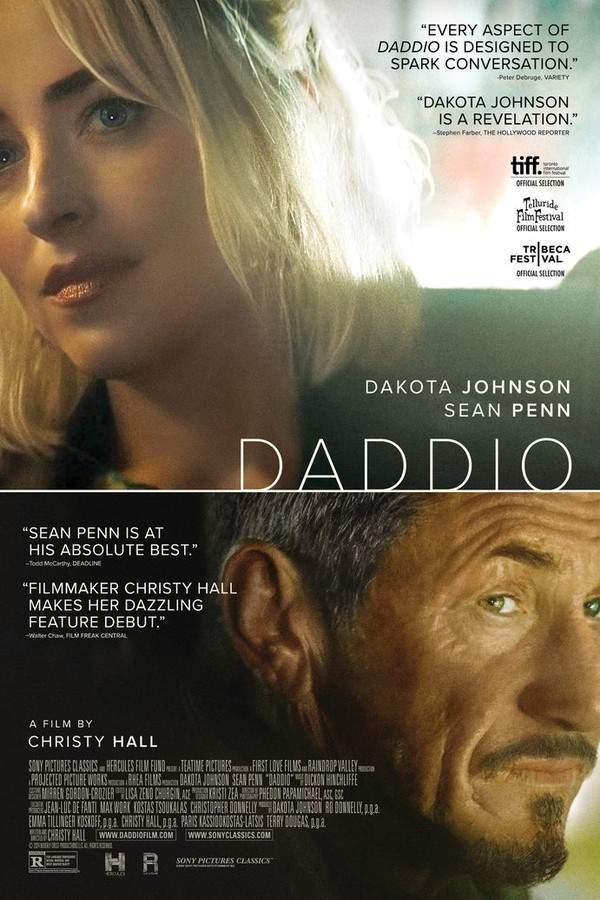
Upon arriving at JFK, Girlie, played by Dakota Johnson, hails a taxi to her Manhattan apartment. The cab driver, Clark, portrayed by Sean Penn, engages her in a conversation that evolves into a rich, multifaceted dialogue filled with insights about life and society. During their exchange, Clark passionately monologues about the impact of globalization, lamenting how the perception of value has shifted dramatically over time—from salt and gold to paper, and eventually to plastic, with the current trend heading towards a completely virtual reality.
He notes that traditional modes of transportation, like the yellow cab, are becoming obsolete, giving way to app-based services, and forecasts a time when human drivers will no longer be needed. Girlie, embodying the essence of a New Yorker, confirms her identity through her demeanor, style, and assertiveness in communicating her destination. In a vivid display of her independence, she chooses not to wear her seatbelt and quickly dismisses the "touristy" video that greets her as she enters the cab.
As the ride unfolds, Girlie has a frustrating interaction with a man over her phone, which leads her to delve into a conversation with Clark. Opening up about her origins, she shares that she hails from a small town in Oklahoma and has lived in New York for nine years as a programmer. Clark reminisces about his own background in what was once Hell's Kitchen—a working-class area fraught with drugs and crime—showing her how drastically things have changed as gentrification has settled in.
Their journey takes an unexpected turn as they hit a traffic jam caused by an accident, prompting Girlie to check her phone again. In a troubling instance, she receives a distasteful message from the man, which includes an unwanted explicit image, inciting her discomfort. Choosing to confide in Clark, she recounts her trip to Oklahoma and mentions her complicated relationship with her half-sister, affectionately calling her a "bitch" despite their shared experiences—including her sister's playful torment from their childhood where she would tie Girlie up to teach her how to escape.
Clark engages with Girlie on a deeper level, making astute observations about her charm and independence, and when he inquires about her age, she deftly sidesteps the question, highlighting the societal biases towards women regarding age. This interplay continues as Clark postulates that Girlie is involved with a married man, prompting an honest admission from her. While Girlie tries to protect her feelings, Clark is blunt, insisting she should never claim to love someone who is unlikely to leave their spouse, offering a candid perspective on the motives of men: "Men just want dumb women who give them dirty sex."
Despite Girlie asserting that not all men are like that, Clark concedes that while exceptions exist, many men are driven by a desire to enhance their status among peers. The dialogue flows into the tale of how Girlie met this man, revealing her motivation and the dynamics of their relationship. Clark astutely observes the father-daughter undertones in their connection.
As they exchange stories about their childhoods and bucket lists, Clark shares memories of his first marriage, prompting Girlie to open up as well. She recounts a poignant experience during her sister's rain dance, where she grappled with the emotional aftermath of a pregnancy loss, highlighting her vulnerability as she prayed for healing.
At the end of their profound journey together, Clark acknowledges Girlie's resilience with the statement that she has "won" in life. As their ride concludes, she expresses her gratitude in a surprising manner by tipping him $500, leading to a bittersweet farewell that reflects the deep connection they forged during their time together.