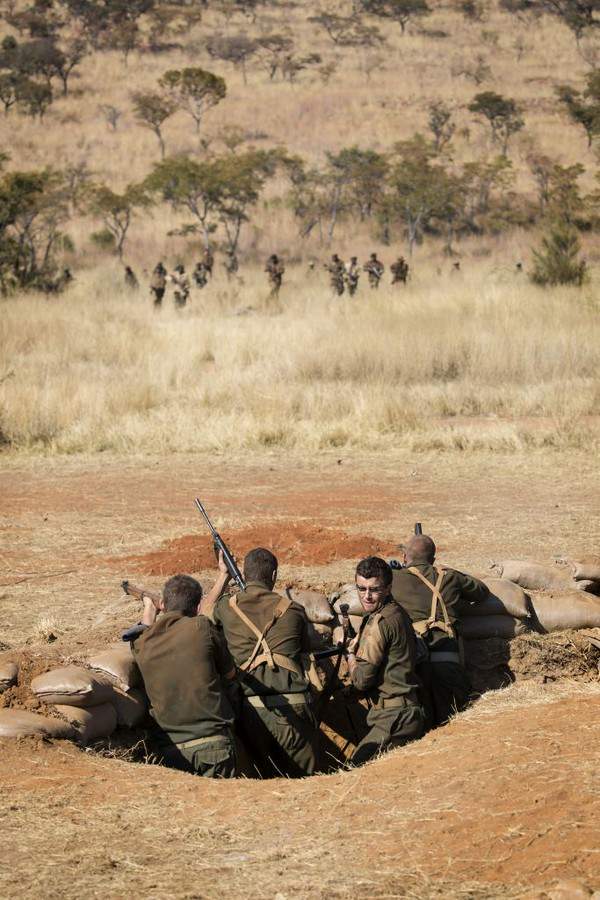
On the outskirts of Pisky, Ukrainian soldiers and volunteers transfer to an armored convoy, moving with a practiced urgency as the landscape around them crackles with distant artillery. A pro-Russian news crew broadcasts a false claim that Donetsk airport has fallen to DPR forces, a lie that hangs in the air as the convoy is hit by shelling. Fighters bail out and seek cover in a crater, and in the confusion a daring rescue unfolds: Serpen takes charge and pulls his team to safety in a waiting passenger van, turning a moment of panic into a calculated escape.
Amid sporadic fire, Hid shows the newcomers around the ruined terminal, guiding them toward a reinforced squad that had been forced out of a duty-free shop. The unit presses its advantage, retaking the shop and trading blows with an enemy that retreats down the escalators. An improvised explosive device is found and disarmed, the enemy’s Russian-supplied ammunition is seized, and the group dares a risky overlook from the badly damaged air traffic control tower before returning to their perch in the terminal, steady and focused in the face of danger.
Subota and Staryi share vodka pilfered from the duty-free as the squad settles into the rhythm of combat life. Serpen is given command and asks the team why they continue to fight, inviting raw honesty. Staryi speaks of the doublespeak surrounding the war and his own decision to volunteer when his son did, while Subota—a soldier bound by oath—describes his sense of honor and duty. Mars, meanwhile, speaks with a flame of hatred for the invaders and a personal hunger to avenge a fallen comrade, a motive that threads through the squad’s conversations and tensions alike.
After an argument with Serpen, Mazhor stalks the ruined runway and returns with a captured separatist, forcing a tense retort from the group under heavy fire. The clash of personalities boils over as Mazhor’s actions are debated; Mars reacts with lethal resolve, fatally shooting the prisoner in a moment that marks a breaking point for the squad’s chain of command and discipline. The consequences begin to ripple through the ranks as Mazhor faces orders to be removed for disobedience, while he casts blame on Serpen’s generation for Ukraine’s current state, accusing him of intolerance and clinging to outmoded values. Despondent and physically worn, Mars experiences a heart attack and is prepared for evacuation. Yet Mazhor refuses to walk away, handing Staryi a weapon he retrieved from a dead Russian and arguing for a different kind of resolve. Serpen and Mazhor clash once more over the meaning of history and leadership, with Serpen deriding Mazhor as a pseudo-liberal idealist who knows little of the country’s true history and attributing past defeats to his generation’s attitudes.
The squad returns to the duty-free shop, another round of pressure and peril shaping their morale. Staryi’s voice cuts through the tension as he begins to sing, emboldening the separatists who climb the escalators. He arms himself with the song, and the unit follows, descending and exchanging fire with the advancing attackers. The battle grows chaotic as the Ukrainians hold and maneuver through the terminal’s bones and corridors. Mazhor, briefly knocked out, wakes to the news that the Ukrainians won the battle, even as separatists briefly seize the terminal before being pushed back again.
A bitter, drawn-out prisoner exchange ensues, and Hid’s emotions flare when he recognizes one of the prisoners. The group keeps this man off the record, and Hid exacts revenge for torture endured earlier in the war. The separatists insist they are fighting a civil conflict born from a long, painful history since the USSR’s dissolution, while Serpen permits Mazhor to decide the fate of the captured man, only for the sniper’s bullet to end the matter—routing the chance for closure in a single instant.
Intelligence arrives with grim news: the DPR forces plan to burn the airport using Russian TOS-1 rocket artillery. One by one, the squad members are given permission to leave, yet they each offer humble reasons to stay and phone their families as a reminder of what is at stake. The thought of the scorched airfield is narrowly avoided when tanks appear on the horizon, shifting the danger from fire to armored steel. Headquarters orders a harsh response to any ceasefire violations, and a Ukrainian tank moves into a protective position, exchanging fire until it is disabled and its crew is rescued by the squad. Subota is wounded, and as a battlefield medic tends to him, Subota posts a selfie that quickly goes viral, a small moment of humanity captured amid the carnage.
In the final, devastating moments of the day, Serpen calls Mazhor to evacuate Subota and himself, but as he steps outside to seek a better signal, he is caught in a sniper’s crosshairs and fatally shot. The phone rings with the news for Serpen’s wife, and the squad is left to mourn in the ruins of Pisky. Mazhor helps Subota and Serpen’s body to safety, and a chaplain delivers a moving eulogy for Serpen as the wrecked airport bears quiet witness to the losses of war.
Weeks later, reinforcements arrive and the newcomers are asked about their motivations. Among them is Mazhor, signaling the ongoing cycle of memory and purpose that sustains the unit. A folk song drifts over the scene as the group is taken on a tour of the ruins, a reminder that life persists even amid the ruins of a long and brutal confrontation, and that every survivor carries a personal story woven into the larger fabric of the fight.